

General News
SAHCOL Operates Best Ground Handling Equipment in Nigeria- Owolabi


The Skypower Aviation Handling Company (SAHCOL), a member of the Sifax Group, currently operates the best ground handling equipment (GHE) in the Nigerian market, according to Mr Olu Owolabi, the managing director.
Owolabi made the remark while speaking with newsmen at SAHCOL’s new headquarters in Lagos, adding that with the state-or-the-art equipment the Company handles, on the domestic scene, almost 80% of the airlines.
While on the international, “we have 40% of the business”, he said.
The MD said in spite the acquisition of sophisticated equipment, the SAHCOL is not satisfied, as it moves to improve and expand on its service delivery.
He said, “We have the best ground handling equipment so far in the country. We are however not satisfied yet, because the more we improve and expand on our service delivery, the more we will need to acquire additional equipment to meet up with the demand of our clients. The type of equipment we use, are not the type you buy and keep. The more the need arises, the more equipment we add.
“As regarding our customer base, in this business you gain some and lose some. That is the game. I can assure you that those we handle enjoy our services very well. We look forward for more customers in 2015. Our customers come first in our in our line of thought before any other thing. So far, on the domestic scene we handle almost 80 per cent of the airlines while on the international we have 40 per cent of the business.
In view of the peculiarity of the industry, Owolabi advised the Federal Authorities to find ways of ending Double Taxations as sure way to help players succeed.
“It had always been serious issue which has not been resolved, but I understand that presentation has been made to the new Minister of Aviation, who has passed it to a committee to look into it and make appropriate recommendations.
“I am very positive that government will look into it and out ways to assist us. All the multi-million Naira equipment we invested and pay duties on are stationed at on the tarmac for our operations and cannot be parked on the street, yet we are still being billed by FAAN.
“Do you expect us to take our equipment like the FMC to the street? Government meant well for the industry when it said it was embarking on the upgrading of airports and at the same time, it should be supportive when handling companies are buying new equipment to be able to facilitate passengers and airlines needs.
“So, I sincerely belief that since airlines are enjoying zero tariff on aircraft spare parts, the same should be extended to handling companies on the equipment being imported by giving us duty free on spare parts. We have been agitating on this for long.
On Cargo Freighting & Passengers Facilitating, he said, “Facilitation go side by side with cargo handling depending on which side you want to focus and depending on the type of facilities that is provided by the Federal Airports Authority of Nigeria [FAAN]-our landlord and what we’ve been able to do to compliment government as one of the handling agents in the country.
“In terms of cargo handling, we are almost at the tail end of completion of our multi-million Naira bonded warehouse project which is going to be the best, not only in West Africa, but also in the whole of Africa in terms of facilities being provided.
“We sincerely hope that the government will be able to assist us in implementing the rules that govern the procedures of all of these issues that necessitated the closure of warehouses of handling companies recently for almost three weeks thereby making us lose billions of Naira in the process on both sides including us, the handling companies.
“Don’t forget that we have to engage extra hands to handle security aspects of peoples’ baggage. On cargo that litters the tarmac, we have to work extra hours with the men of the Nigeria Customs Service to decongest the tarmac because of the small size of the apron where the cargo freighters are parked. So, it’s a lot of workload”.
On passengers facilitation, the MD said, if the conveyor belts are not working or are not good, passengers do not want to know whether or not it’s SAHCOL’s responsibility. “So, we have to go extra length by doubling our staff on shift to meet the challenges. Don’t forget that we also pay overtime allowances to our staff for working extra hours to be able to meet passengers
On opening the SAHCOL new magnificent warehouse, he said that before the end of February 2015, “we will start the test running of the facilities provided in the warehouse. The type of facilities there are a complete village on its own. We are looking at March 2015 for the formal opening of the new warehouse”.
He added that, although in the provision of security gadgets to deter and detects dangerous ‘terrorists’ tools such as guns, bombs and other explosive materials is that of the governments, on its part, SAHCOL assist the government in the provision of X-ray machines, for the screening of exports and imports. It is therefore the job of of the Customs to screen all in-bound and outbound goods.
—



PalmPay Group has announced a strategic partnership with Lagos State Universal Basic Education Board (LASUBEB) to recognise and reward high-performing students in selected public schools across Lagos, as a broader commitment to supporting ambition and expanding opportunities for young Nigerians.

Nigeria continues to face a significant out-of-school children challenge. According to UNICEF, 18.3 million school age children are currently out of the classroom. While access to education has improved over time, keeping children in school requires more than enrollment alone. It also depends on motivation, support, and visible pathways that show young people the long-term value of education.
Through this collaboration, PalmPay will work with LASUBEB and educators across selected public schools to identify and reward outstanding students. Selected students will be rewarded with scholarships, shopping vouchers and branded school kits designed to support their learning needs and ease part of the burden on their families.
Speaking on the partnership, Chika Nwosu, Managing Director at PalmPay, said: “Recognizing and rewarding high-performing students goes beyond celebrating excellence. It reinforces the value of education, strengthens motivation, and supports families in keeping their children in school. Through our partnership with LASUBEB, we are contributing to an ecosystem where young people are encouraged to stay engaged and pursue their ambitions.”
By working directly within the public education system, the initiative is designed to deliver support where it can make the greatest difference. When students see their efforts recognized and rewarded, it strengthens their commitment to learning and helps families see that academic discipline and consistency can open doors to real opportunity.
The partnership reflects PalmPay’s broader commitment to economic and social inclusion. As the company continues expanding financial access across Nigeria, it is also investing in initiatives that help reduce barriers for families and create more pathways for young people to thrive.
By integrating education-focused support into its wider CSR agenda, PalmPay is contributing to ongoing efforts to strengthen community outcomes, encourage aspiration, and invest in the future workforce that will drive Nigeria’s growth.


Nigeria Centre for Disease Control (NCDC) has intensified nationwide disease surveillance following reports of a Hantavirus infection cluster connected to international cruise ship travel involving several countries.

Dr Jide Idris, director-general, NCDC, in a public health advisory, confirmed that Nigeria has not recorded any confirmed Hantavirus case and stated that the overall public health risk remains low.
According to the agency, the reported outbreak currently involves a limited number of confirmed and suspected infections linked to cruise ship exposure, while international investigations and contact tracing efforts continue.
The NCDC explained that the advisory was released to strengthen national preparedness and encourage vigilance against emerging infectious diseases amid growing global concern surrounding the outbreak.
Health authorities noted that Hantaviruses are mainly transmitted through exposure to infected rodents, their urine, saliva, droppings, or contaminated dust particles. Symptoms may include fever, fatigue, muscle pain, gastrointestinal illness, and in severe cases, respiratory complications.
The current outbreak has reportedly been associated with the Andes virus strain, which has shown limited human-to-human transmission through close contact in previous cases.
The NCDC stated that enhanced monitoring systems have been activated nationwide to support early detection and rapid response efforts.
The agency also urged Nigerians to maintain proper hygiene, prevent rodent infestations, safely store food items, and avoid exposure to rodents and contaminated environments.
Officials further advised the public to rely only on verified information from recognized health authorities and avoid spreading misinformation regarding the outbreak.
General News
Moniepoint Partners GDG Lagos, Women Techmakers to Empower the Next Generation of Women Architects in Tech

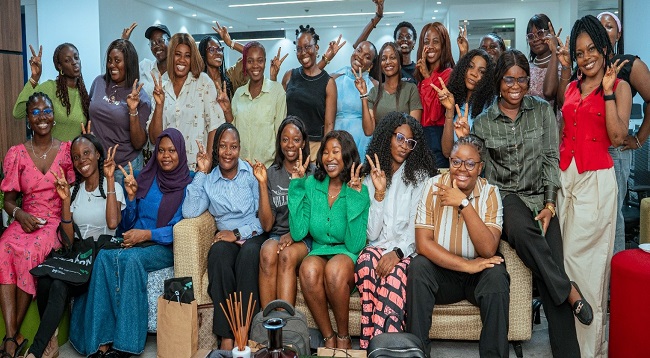
In a critical move to bolster talent density and accelerate Nigeria’s digital economy, Africa’s all in one financial ecosystem, Moniepoint hosted an International Women’s Day event bringing together women in technology for a day of leadership development and hands-on product building.

Held at Moniepoint’ Headquarters in Lagos, themed “Break the Pattern,” the event was organised in partnership with Women Techmakers Lagos and Google Developer Group (GDG) Lagos with participants spanning both technical and non-technical backgrounds, reflecting the breadth of women currently active across Nigeria’s digital economy.
In a keynote address delivered by Kemi Nwogu, Head of Product at Moniepoint Inc, titled “Breaking the Pattern: How Women Can Redefine the Future of Tech,” she made the case that progress for women in technology requires not just access to existing structures, but the tools and confidence to reshape them. Furthermore, Nwogu issued a bold call to action, urging attendees to move beyond traditional career playbooks and take ownership of shaping the industry’s future.
“From a young age, many girls have been subtly discouraged from pursuing science and tech. They are told sometimes directly, sometimes indirectly, that tech is too hard, too technical, or simply not for them. These patterns are not facts, they are constructs. And what has been constructed can be deconstructed! The future of tech needs leaders who build people, not just products, cultures, not just systems,”said Nwogu.
On building skills with purpose, she urged women to “show up everyday, make small, steady progress with online courses, coding bootcamps, open-source projects while leveraging the full ecosystem; take on challenging tasks as your greatest classroom using real problems to build real skills; while knowing why you’re building a skill as every learning goal can be tied to a career journey.”
This thematic fare of the event was further explored in a panel discussion, “Unscripted: Leading Beyond the Patterns We Inherited”, moderated by Atinuke Oluwabamikemi Kayode and featuring leaders from fintech, creative design, and software engineering space, including Chukwu Adaeze (Creative Director, CAV Digital), Chinenye Ogbu (Customer Experience Lead, Hydrogen), and Motunrayo Koyejo (Senior Software Engineer, Cowrywise).
The robust and extensive conversation examined the professional archetypes that have historically defined leadership in the Nigerian tech ecosystem: the engineering culture that equates output with exhaustion, the creative industry’s tendency toward top-down authority, the script-driven rigidity of customer-facing roles. The panelists also provided deep insights into how they had navigated and, in places, dismantled those patterns within their teams and organizations.
The event went beyond conversations to a hands-on workshop, Prompt to Production, facilitated by Taiwo Famakinde which guided attendees through modern product development from prompt design through rapid prototyping to the deployment of a functional application using AI tools.
A lot of the participants entered with little to no prior experience building software products. The workshop then fed directly into a Buildathon, where participants developed and deployed their own solutions in real time, with the strongest builds recognised and rewarded at the closing ceremony.
“IWD celebrations are often heavy on inspiration, but we wanted to offer something more, a proof of capability. Oftentimes, there is a gap between having ideas and actually building them, and we set out to bridge that by creating a space where women could easily deploy their ideas into live products with AI in just a few hours. By the end of the day, something that once felt complex due to the fast pace of AI started to feel possible.
“Our participants left with both the technical confidence to build and the leadership frameworks to navigate their careers on their own terms, ensuring they are no longer just participants in the tech ecosystem, but the architects of its future. They are now ready to test their ideas and lead without waiting for perfect conditions or a full team.” said Funke Olasupo, Co-organizer, Women Techmakers Lagos.
Interestingly, the “Break the Pattern” event sits within a broader investment in Nigeria’s technology talent pipeline that Moniepoint has deployed over the years. As one of Nigeria’s most significant fintech employers, the company runs a critical engine that sustains Nigeria’s formal and informal economy.
Moniepoint has invested in developer community partnerships including its ongoing collaboration with GDG Lagos as well as internal programmes designed to build engineering depth across product domains that include its highly successful Women in Tech initiative, DreamDevs, HatchDev and the government’s acclaimed 3MTT programme.

ATCON Says Telecom Network Under Threat, Urges Stronger Efforts to Protect Infrastructure

CBN Warns Non-Interest Banks against Governance, Compliance Risks

FG Seeks Fresh $1.25Bn Loan from World Bank to Create Jobs, Others

National Assembly to Review National Data Protection Act

Firm Shares Insights into Ransomware Trends and Tactics @ International Anti-Ransomware Day-2026

Kaspersky Discovers Vulnerability in Qualcomm Snapdragon Chips that can Lead to Data Loss & Device Compromise

MTN Suspends Data, Airtime Borrowing Service over New FCCPC Lending Rules

Vitel Wireless Partners Fintechs to Expand Access to Services

MTN, VDT, Zoracom, Digital Realty Back 2026 Girls in ICT Campaign

Bank Customers to Pay N1,500 for ATM Card Issuance, Replacement – CBN




 E-Financial2 days ago
Transcorp Excites Shareholders with ₦20.3 Billion Dividend @20th AGM

 Telecom1 day ago
MTN, Airtel, Glo Under Pressure as FG Demands Better Service Delivery

 E-Financial2 days ago
Africa Prudential Launches Sabivest to Boost Digital Investment Access

 Telecom2 days ago
PAFON 3.0: Agency Banking Key to Reaching Millions of Unbanked Nigerians – AMMBAN

 E-Financial1 day ago
Mastercard, BMONI Launch Multi-Currency Payment Cards in Nigeria

 E-Business1 day ago
Firm Warns of Phishing Attacks via Compromised Amazon Simple Email Service Accounts

 General News2 days ago
PIN Records 3.07Bn Media Reach, Expands Digital Rights Impact Across Africa in 2025

 General News2 days ago
Interswitch Inducts 3rd Interns into Its Developer Academy