

General News
How World Powers Plotted Jonathan’s Defeat

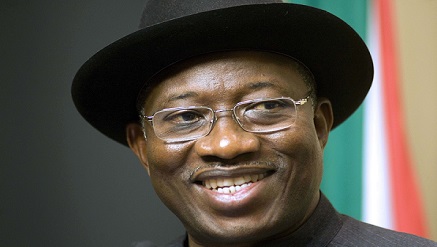
President Goodluck Jonathan lost his re-election bid several weeks before the March 28 poll to a web of plots hatched at home and honed abroad, according to the Tribune.
The Tribune said that last-minute contest between forces that wanted him to bow out and those that wanted him to hold out for as long as necessary even when it was evident that the news from the field pointed at a possible defeat.
It was learnt that as of 5.00 p.m. on Tuesday, hawks around the president were still at the Aso Rock Presidential Villa, piling pressure on him not to concede defeat.
Those working on him to concede and bow out, reportedly led by a former Head of State, General Abdulsalami Abubakar, were also said to have stayed put in the same Presidential Villa, persuading him that it was the most honourable way to go since it was clear that figures from the field were not in his favour.
The drama in the Presidential Villa was also said to be closely monitored by combined international forces that had concluded on post-Jonathan presidency, reportedly led by the United States of America and the United Kingdom.
One of those around the president persuading him to stay put was said to be a General in the army from a not-too-core Northern state, reportedly assuring him that the alleged irregularities in the North, underage voters, among other issues, which were beamed live by a national television station and shown on the Cable News Network (CNN) would be enough ground for him to reject the outcome.
The Tribune reported that the president was also allegedly told that he would be making General Muhammadu Buhari and the All Progressives Congress (APC) heroes by conceding to them, because all the good works he had done which were nearing fruition would blossom during their reign and would count as their achievements.
He reportedly told them that no matter how long he stayed in office, he would still leave one day and since crisis was certain to herald his opposition to the outcome, he would be reneging on his promise that no Nigerian blood would be worth his political ambition.
Convinced that it was the way to go, the president reportedly took “his own” by surprise by making the now-famous phone call to Buhari without telling them, although they were present at the president’s abode.
He was also said to have played a fast one on the hawks by making the call before the Independent National Electoral Commission (INEC) announced Buhari as the winner, following his assessment of the figures available to him, while those pressurising him to hang on reportedly thought the concession would be after the announcement by the electoral body as is usually the practice.
The western world, according to available information, keyed into the Buhari presidency project months before the election and the refusal to sell arms to Nigeria to fight the Boko Haram insurgency by Washington was said to be mainly predicated on the likelihood of Jonathan’s administration using same to quell possible civil disobedience if he manipulated the results to remain in power.
With political forces in the nation led by former President Olusegun Obasanjo reportedly concluded on getting him out at all cost, the western world, particularly the United States and the United Kingdom, were said to have been persuaded into the project on two main planks; corruption and insecurity.
Settled that Jonathan’s administration had been underwhelming in performance in those two critical areas and convinced that the incumbent was bent on retaining his job, the international coalition allegedly undermined his administration as much as possible, with allies elsewhere, including Africa, also allegedly brought into the Jonathan-must-go project.
A source pointed at two main happenings in the course of the election to show how deeply the international community was involved, while making the outgoing president to be at ease, despite the rug being pulled off his feet.
The US and the UK had been at the forefront of peace pacts across the nation, starting with Jonathan and Buhari in what came to be known as Abuja Peace Accord, with Jonathan’s government having to react angrily at a point at the perceived temerity with which top diplomats from the western world were handling peace pacts and activities regarding the electoral process.
“They almost became a parallel government in Nigeria. That is what you get when a leader is too pacifist,” a source in the government said.
The unprecedented joint statement by the US Secretary of State, John Kerry and British Foreign Secretary, Philip Hammond, overtly accusing Jonathan’s camp of moves to tamper with the incoming results of the presidential election was seen as the final move by them to show the side they were on in the contest.
The government source noted that APC was always calling on the international community to wade in when accusing Jonathan’s government of plots to manipulate the elections, because an understanding existed between them after Buhari’s appearance at Chatham House and his famous interview with the CNN.
After the field job was done and figures confirmed Jonathan’s loss, those behind the plot to ease him out and save the country from chaos were said to have moved to the last stage in the presidential contest, which was to persuade him to accept defeat, since his refusal of same could ignite the South-South and South-East and possible bloody attacks on Northerners in such states.
A predictable reprisal in the North was projected as possible fulfilment of the feared break-up. The oil interests of those western nations in the Niger-Delta also reportedly necessitated a negotiated peaceful exit for him by persuading him to accept defeat and assurance obtained from Buhari that Jonathan would face no harassment out of office.
Having fulfilled his own part, Buhari had also fulfilled his with public pronouncement that Jonathan had nothing to fear under his administration, while engaging in peace preachment to his supporters.
Apart from obtaining assurance from Buhari, the western world would also lead in global praise of Jonathan, aimed at attenuating the pains of making the wrong history of being the first defeated incumbent, while leading opposition figures were also said to be under firm instruction not to attack him in any ways until he steps down on May 29.
The US and UK were particularly said to have completely bought into the anti-Jonathan project following his decision to turn to Russia for purchase of arms, with a diplomat in foreign service saying that it would have been better for Jonathan to completely move over to Russia’s side instead of playing in the middle.
According to him, “whoever advised him to purchase arms from Russia when a real war was on with the United States misled the president. You don’t even do that during the Cold War, let alone during this “Hot War.” There was no way US intelligence circle would forgive a big nation like Nigeria making such diplomatic faux pas.
“These security experts have serious leverage over American presidents. Regardless of any friendship that could be between (American president, Barack) Obama and Jonathan, when such security goons say it is time for a leader of a nation to go, American presidents hardly say no and, obviously, Jonathan had no serious pact with (Russian president, Vladimir) Putin, beyond buying arms.”
Since the presidential election result was announced, President Obama had issued about three press statements on the outcome, Jonathan’s concession and the need for the two leaders to keep preaching peace to their supporters as well as asking that finest democratic ideals should be upheld in the conduct of the April 11 governorship election.
A government source explained that Obama’s unusual interest in the governorship election was borne out of fears that Jonathan might take his frustration of loss out on the process and tamper with it in a way to give his party, which would be in opposition from May 29, an edge in governorship spread by winning as many states as possible.
In days ahead, it was gathered that beyond the phone calls, Jonathan may be visiting the United States as a special guest of Obama which, an insider said, is aimed at retaining him as the face of peace offering to the Niger-Delta, which is feared could become the breeding ground for fifth columnists that would make the nation’s economy unmanageable for Buhari.


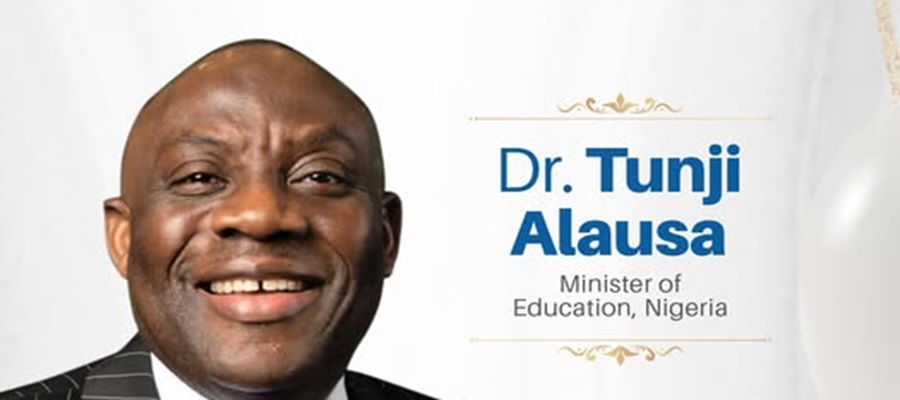
Federal government has announced plans to end the separation between Junior Secondary School (JSS) and Senior Secondary School (SSS) as part of efforts to improve school retention and reduce the high number of pupils dropping out before completing secondary education.

Tunji Alausa, minister of Education
Tunji Alausa, minister of Education, announced the proposal on Tuesday during the inauguration of the Ministerial Implementation and Monitoring Committee of the Universal Basic Education Commission (UBEC) in Abuja.
Alausa said the existing “disarticulation policy,” which requires junior and senior secondary schools to operate independently with separate principals, management structures and facilities, has failed to achieve its intended objectives and has instead worsened access to education.
According to him, the Federal Government will present a proposal to abolish the policy at the next meeting of the National Council on Education (NCE), the country’s highest education policymaking body.
“We have 20 million dropouts from primary school to JSS. Where are those students?” the minister queried.
“We also found we have 80,000 public primary schools and only about 15,000 junior secondary schools. That’s a one-to-eight ratio.”
He explained that the mismatch between the number of primary and junior secondary schools has created severe bottlenecks in the education system, leading to overcrowded classrooms at the junior secondary level while many senior secondary school facilities remain underutilised.
Alausa cited Kaduna and several northern states as examples where the policy has contributed to poor transition rates between basic and secondary education.
“This disarticulation policy has failed. We will phase it out. We can’t be creating positions because we want to create director-level appointments for people while we harm our education system. It’s about doing what is best for every Nigerian child,” he said.
The minister said the proposed reform forms part of broader efforts by the Tinubu administration to improve access to education, increase retention rates and enhance learning outcomes across the country.
He acknowledged previous shortcomings in tackling the out-of-school children crisis but expressed confidence that the current administration would reverse the trend.
“This government will not fail. We are fixing it,” Alausa declared.
At the ceremony, the minister also inaugurated the UBEC Ministerial Implementation and Monitoring Committee, chaired by Prof. Rashid Aderinoye, to supervise the execution of UBEC-funded Smart Schools, Bilingual Schools and Alternative Schools nationwide.
He said the committee had been tasked with ensuring that the projects are completed, handed over to state governments and opened for teaching and learning.
Although UBEC has invested in hundreds of Smart Schools and related educational projects across the country, Alausa lamented that many remain abandoned, unfinished or yet to admit pupils, describing the situation as an unacceptable waste of public resources.
He stressed that improving education requires more than constructing schools, insisting that completed facilities must become fully operational and accessible to learners.

Federal government has said that it plans to establish a National Skills Database as part of efforts to reduce unemployment, address the growing mismatch between available skills and industry needs, and strengthen workforce planning through data-driven policies.

The proposed database, to be developed under a Nigerian Skills Observatory, is expected to provide real-time information on the supply and demand of skills across sectors, enabling better job matching, improved policy formulation and targeted investments.
The plan was unveiled at the second National Skills and Industry Alignment Roundtable Series held in Abuja with the theme, “The Role of Data in Job Creation, Coordination and Linkages.”
Delivering the keynote address, Yemi Kale, group chief economist and managing director of Research and Trade Intelligence, Afreximbank, said Nigeria’s labour market challenge was no longer the absence of data but the inability to convert existing information into actionable intelligence.
“The challenge for us as a nation is not one of data accumulation. It is one of data integration and intelligence,” Kale said.
He explained that although vast amounts of information on education, employment, wages and skills development already exist across government agencies, educational institutions and the private sector, the data remains fragmented, making effective labour market planning difficult.
“Data tells you what exists. Intelligence tells you what is happening, what is likely to happen next and what actions should be taken,” he said.
Kale lamented that while Nigeria produces thousands of graduates annually, employers in critical sectors continue to struggle to recruit qualified workers, even as millions of Nigerians remain unemployed or underemployed.
“The problem is that employers are searching, workers are searching, policymakers are searching and investors are searching independently rather than collectively. Opportunities that should be visible remain hidden because the information needed to connect them is fragmented,” he said.
According to him, the disconnect has created structural inefficiencies that discourage investment, suppress productivity and prevent Nigeria from fully leveraging its youthful population.
He added that countries that successfully transformed their economies deliberately aligned education, skills development and workforce planning with the needs of industry.
Kale urged Nigeria to view its youthful population as an economic asset by ensuring young people acquire skills demanded by modern industries.
Speaking on the proposed National Skills Database, Rimam Nuhu, special assistant to the President on Workforce Development, said the platform would serve as the foundation of the Nigerian Skills Observatory.
“At the most foundational level, the Skills Observatory is to create a database on the demand and supply of skills,” Nuhu said.
He explained that the National Council on Skills, chaired by Vice President Kashim Shettima, would rely on data generated by the observatory to formulate evidence-based policies on workforce development.
“Skills development is an input for job creation. We have a market where there are a lot of skills mismatches. Understanding exactly where those shortages exist will help us plan better and improve workforce planning.
“Ultimately, that contributes to a more productive economy,” he added.
Nuhu acknowledged ongoing debates over whether Nigeria is facing an actual shortage of skilled workers or merely a mismatch between available skills and labour market demand, stressing that the database would provide the evidence needed to guide interventions.
Earlier, Akubo Adegbe, senior special assistant to the President on Coordination and Delivery, said the roundtable was convened to tackle the fragmentation of labour market information across government institutions and the private sector.
He noted that despite huge volumes of workforce data being generated daily, the lack of coordination often leaves policymakers without a comprehensive understanding of labour market realities.
“If our first Roundtable challenged us to better align skills with industry, this second Roundtable challenges us to better align information with action,” Adegbe said.
Also speaking, Massimo De Luca, head of Cooperation at the European Union Delegation to Nigeria and ECOWAS, said the EU would continue supporting Nigeria’s efforts to build a labour market capable of meeting investors’ needs.
“We have a shortage of skilled labour when it comes to big investment projects. On the other hand, we have a lot of untapped talent that is not adequately recognised.
“Those are realities that investors take into account,” De Luca said.
He commended the Office of the Vice President for leading reforms aimed at strengthening Nigeria’s skills development ecosystem.
The Federal Government’s plan comes amid persistent unemployment and skills mismatch in Nigeria, where many graduates remain jobless despite employers reporting shortages of qualified workers in critical sectors.
The National Skills Database will serve as the foundation of the proposed Nigerian Skills Observatory, an initiative designed to provide real-time labour market data to guide workforce planning, skills development and evidence-based job creation policies.


The average fare paid for domestic air travel in Nigeria rose by 20.8 per cent year-on-year to N157,552.19 in May 2026, according to the National Bureau of Statistics (NBS).

The figure represents an increase from the N130,361.85 recorded in May 2025, the bureau said in its latest Transport Fare Watch report.
The NBS said the average fare paid by air passengers for a specified domestic route (single journey) stood at N157,552.19 during the review period.
It stated that Kano recorded the highest average airfare at N184,139.29, followed by Lagos at N176,971.65.
According to the report, Gombe posted the lowest average airfare at N135,800.61, while Nasarawa recorded N138,999.14.
The bureau also reported increases across other modes of transportation.
It said the average fare paid by commuters for bus journeys within cities rose to N1,431.25 per trip in May 2026, representing a 38.63 per cent increase from N1,032.46 in the corresponding period of 2025.
Similarly, the average fare for intercity bus transportation increased to N9,699.55 per trip, up by 21.89 per cent from N7,957.41 recorded a year earlier.
The report further showed that the average fare for commercial motorcycle (Okada) transportation rose to N1,072.51 in May 2026, representing a 52.45 per cent year-on-year increase from N703.54.
For water transport, the NBS said the average fare paid by passengers on inland waterways stood at N2,276.48 during the month under review.
It noted that the figure reflected a 30.88 per cent increase compared with N1,739.32 recorded in May 2025.
The bureau attributed the data to its monthly Transport Fare Watch, which tracks changes in transportation costs across the country and provides insight into the movement of prices within the sector.

Lebara Nigeria Becomes Member of GSMA Network

FG to Abolish JSS-SSS Separation Policy after 20m Pupils Drop Out

Vitel Wireless Warns Public, Says it Not Running any Investment Scheme

Army Says Terrorists Now Recruiting, Raising Funds Online

FG Mulls National Skills Database to Tackle Unemployment

Mobile Internet Gender Gap Widest in Africa – GSMA

London Strengthens Global Investment Ties with Africa @ First Ever London-Africa Business Summit

FG Targets Alleged N3tn Capital Flight, Opens Airtime Credit Market to Nigerian Fintechs

Japan, UNESCO Boost Digital Learning in 15 CoEs with Donation of ICT Equipment

Good News for DStv Users: Watch over 160 Channels Without Paying Extra




 E-Business2 days ago
LG Showcases AI-Powered Smart Living Innovations @ Africa Technology Expo 2026

 E-Financial2 days ago
UBA mobilises employees across Africa for environmental clean-up, wellness campaign

 Telecom2 days ago
OADC Reaffirms Abundant Capacity in Data Centres in Nigeria to Host Financial Data

 General News2 days ago
LASTMA Launches 3367 Toll-Free Hotline for Emergency Response, Traffic Management

 E-Financial2 days ago
PalmPay Calls for Trust, Infrastructure and Responsible AI to Drive Payment Ecosystem Innovation

 Telecom2 days ago
ALTON Backs NCC’s Local Smartphone Manufacturing Drive to Widen Digital Access

 E-Business2 days ago
Want a Business Loan Without Interest? SMEDAN Launches N500m Fund

 E-Financial2 days ago
ngCERT Raises Alarm over Surge in Banks’ ATM Cyberattacks