

General News
Ex-Governors Have N172Bn Cases of Fraud- Punch

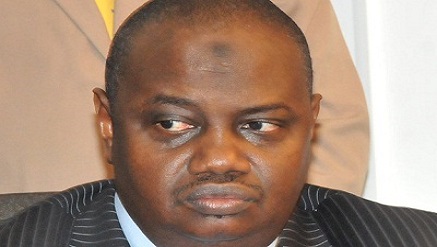
Saturday Punch has revealed that over N172 billion fraud cases are pending against some senators-elect who were formerly governors.
Over 15 ex-governors won senate seats in the March 28 election with many of them having cases of corruption ranging from misappropriation of public funds to money laundering hanging over their necks.
Some ex-governors have been in the senate before the last elections while a fresh set of former governors will be joining them when the new legislature is inaugurated on June 6, 2015 by the President-elect, Gen. Muhammadu Buhari (retd).
According to Saturday Punch, the list of the ex-governors elected as senators, who allegedly have fraud cases against them, whether old or new, include Bukola Saraki, Theodore Orji, Adamu Aliero, Sam Egwu, Joshua Dariye, Danjuma Goje and Abdullahi Adamu.
The immunity clause in Nigeria’s constitution protects the President, vice-president, governors and their deputies from prosecution while in office but even after these public office holders leave office, findings show that anti-graft agencies including the Economic and Financial Crimes Commission(EFCC) have failed to pursue their cases to logical conclusions.
Former Ebonyi State Governor, Dr. Sam Egwu, recently won the parliamentary election to represent Ebonyi North Senatorial District in spite of the corruption charges levelled against him.
Egwu allegedly misappropriated close to N80bn while in office as governor between 1999 and 2007.
He was also said to have left a debt profile of N10bn for his successor.
Also, the former Governor of Nasarawa State, Senator Abdullahi Adamu, who was in office between 1999 and 2007, became a senator four years later. Since that time, Adamu has been returned to the position after subsequent elections.
However, his record with the EFCC is also allegedly unclean but that is as far as it goes.
In February, 2010, Adamu was arrested by the EFCC for alleged embezzlement of public funds. On March 3 of the same year, he was arraigned in court alongside 18 others on a 149-count charge of fraud involving over N15bn, but the case has continued to drag in court with no headway.
Interestingly, in an interview in February 2011, as the Peoples Democratic Party’s candidate for Nasarawa West Senatorial seat, Adamu dismissed the EFCC case against him, describing it as “mere allegations.”
He boasted that the EFFC case would not affect his candidature and truly after the poll, Adamu emerged winner, beating his closest rival, Gen. Ahmed Aboki (retd).
Similarly, the former Gombe State Governor, Senator Danjuma Goje, and four others, were first arraigned in court on October 17, 2011 on conspiracy, fraud and money laundering charges. He allegedly embezzled N52bn public fund.
Senator Bukola Saraki, who is currently vying for the seat of the Senate president, has been a subject of investigations by the Special Fraud Unit of the Police following allegations of an N11bn loans scam preferred against him.
The said loans were allegedly secured by Saraki between 2004 and 2009 when he was the governor of Kwara State.
The SFU said the loans were used to purchase shares of blue chip companies and choice property in Lagos and Abuja, some of which were used to secure the loans.
In addition, Saraki has allegedly been receiving N100m monthly as an illegal pension from the current government of Kwara State.
Adamu Aliero was the Governor of Kebbi State between May 1999 and May 2007. Between December 2006 and August 2008, the EFCC and the Independent Corrupt Practices and Other Related Offences Commission received three petitions asking the anti-graft agencies to investigate Alierio over N10.2bn fraud. It was, however, learnt that the allegations were not investigated.
But following an ex-parte application by an indigene of the state, Alhaji Sani Dododo, for an order of mandamus compelling EFCC and ICPC to investigate the allegations, Justice Adamu Bello summoned Aliero to appear before it. The judge also summoned the two anti-graft agencies to explain why they failed in their statutory duties to investigate Aliero for alleged fraud.
Aliero will be one of the 109 senators that will be inaugurated on June 6.
On July 13, 2007, the EFCC arraigned a former Plateau State governor, Joshua Dariye, on a 23-count charge bordering on money laundering and other corruption charges.
The EFCC accused Dariye of diverting about N1.2bn of the state’s ecological funds into the account of Ebenezer Ratnen Venture, one of the companies through which the former governor allegedly siphoned public funds.
In spite of the allegations against Dariye, he won a senatorial seat in the 2011 polls. He also pleaded not guilty to the charges and went ahead to challenge the competence of the charges instituted against him and the jurisdiction of the Federal Capital Territory High Court to entertain the suit.
But in a unanimous judgement by a five-man Supreme Court panel on February 27, 2015, the court ordered the accused to return to the FCT High Court in Gudu, Abuja, to face his trial. Dariye’s interlocutory appeal had stalled the trial for eight years.
Justice Sylvester Ngwuta, who delivered the lead judgement, described the scenario played out in the entire case as a “sad commentary” on the nation’s fight against corruption.
The outgoing Governor of Abia State, Theodore Orji, was elected on May 29, 2007 and re-elected on April 26, 2011. He was formerly a career civil servant, serving as the Chief of Staff to his predecessor, Chief Orji Uzor Kalu.
Meanwhile, during his first tenure as governor, there were petitions to the ICPC to investigate Orji for money laundering allegations brought against him.
Since Orji could not be prosecuted at the time, ICPC detained the Accountant-General of the state, Mrs. Bridget Onyema, for two days and later granted her administrative bail.
The arrest was in connection with a series of petitions sent to the commission to investigate the whereabouts of about N1.9632bn allegedly transferred under the guise of travel estacodes to the governor, his deputy, their wives and families, as well as 23 other persons who swelled the governor’s entourage to the World Igbo Congress held in Tampa Bay, Florida, the United States, in 2008.
In 2015, the Budget office approved a sum of about N9.4bn for the EFCC for the year.
The agency’s Chairman, Ibrahim Lamorde, according to reports, lamented that the budget was a decline from the about N12.2bn appropriated for the agency in 2014.
The budget covers capital expenditures, personnel cost and overhead cost.
In 2014, the agency allocated N284.6m to hire competent and reputable lawyers to pursue the trial of former governors being prosecuted to a logical conclusion.
It will be recalled that an Ijaw leader, Chief Edwin Clark, recently said the EFCC had lost focus in its fight against corruption in the country.
The former Federal Commissioner for Information stated this against the background of the claim by the President-elect, Gen. Muhammadu Buhari (retd.), that his fight against corruption would start from May 29, 2015 when he would have been sworn-in as the President.
Clark said the implication of Buhari’s statement was that those who were facing corrupt charges or accused of corruption before May 29 would be pardoned.
When one of our correspondents contacted the Head of Media and Publicity of the Economic and Financial Crimes Commission, Mr. Wilson Uwujaren, on Thursday, he said that it was not the practice of the commission to give notification to those to be investigated.
He said only those who are entitled to enjoy immunity as provided for in the constitution would be excluded from prosecution.
Uwujaren said, “It is not the commission’s practice to give public notice ahead of investigation of persons, alleged to have committed financial crimes.
“Be assured that only persons that are constitutionally vested with immunity from prosecution by virtue of the office which they hold are excluded from prosecution by the EFCC for the period they are in such offices.”
Orji, however, said he was not afraid of any anti-graft agency “whether the EFCC or the ICPC”.
Orji, who spoke through his Special Adviser on Political Matters, Chief Ama Abraham, said he was not losing sleep over petitions of money laundering allegations against him during his first tenure.
Abraham said, “The governor is not afraid to render account of his stewardship as the governor of Abia State. The governor believes in the rule of law.”
In a telephone interview with one of our correspondents, Egwu also denied that he misappropriated N80bn during his time as Ebonyi State governor. He also denied that he left a debt profile of N10bn for his successor.
The former governor said, “Whoever is making that allegation must be suffering from a mental problem, he must be suffering from malaria that has refused to be cured.
“Instead of making allegations in the media, they should know the appropriate places to go to. They should go to the police, or the EFCC, (or) to the ICPC.”
Asked if the allegations will affect his duties as a senator, Egwu said, “Let them go ahead – constitutionally I am not under immunity as a senator.”
The Special Assistant to Saraki on Media Affairs, Mr. Bankole Omishore, said on Friday that the police and the office of the Solicitor-General of the Federation had since 2012 absolved his boss of any criminal allegation.
He also said that there was no case currently involving Saraki and any anti -graft agency.
Omishore told one of our correspondents in Abuja that the allegation of financial fraud was being played up against Saraki by his detractors.
Efforts to reach other elected senators like Aliero, Dariye, Goje and Adamu mentioned in the report on their telephones were not successful. Text messages sent to their telephones were also not replied.
Meanwhile, some Senior Advocates of Nigeria on Friday urged the anti-corruption agencies and the incoming Muhammadu Buhari administration to follow through the pending corruption charges instituted against the former governors who are now senators-elect.
The SANs – Prof. Itse Sagay, Dr. Joseph Nwobike, Messrs Femi Falana and Yusuf Ali- said the anti-corruption agencies, particularly, the EFCC, had no excuse for failing to ensure that the cases were brought to logical conclusion.
Sagay said with the election of Buhari as President, EFCC should be encouraged to perform its duties without any fear of victimisation.
He said, “They (the corruption cases against the former governors) are EFCC matters. There are institutions set up to do certain jobs. So EFCC should do its job.
“Buhari cannot be doing everything. The election of Buhari should encourage them that when they are doing their job, nobody will victimise them.”
Falana said alleged impunity which was responsible for indefinite adjournment of the corruption cases against the former governors must stop.
On his part, Ali said the election of the former governors into the Senate did not confer any immunity on them.
He said the anti-graft agencies had no excuse not to proceed with the cases against such senators-elect.
Ali said, “A criminal offence does not die until the person accused dies. An allegation that you have committed a crime is going to be there until the person that is accused dies.”
According to Nwobike, the former governors now senators-elect with pending criminal charges against them deserve no special treatment from the anti-corruption agencies.
He said, “They do not deserve any special consideration. Being elected into the senate does not confer any immunity on them.”
The Publicity Secretary of the Pan-Yoruba organisation, Afenifere Renewal Group, Kunle Famoriyo, said nobody should be above the law.
He said, “It is only in Nigeria that we belabour things like this; once you run foul of the law in a modern society, you have to face the consequences. So, there is nothing special about this if we really want a corruption-free country.
“After all, they are no longer protected by immunity; it’s over. They should face the consequences like every other Nigerian. Nobody should be regarded as being more superior than the law of the land.”
He called for accelerated hearings on cases by the judiciary, saying, “It’s when cases are delayed for so long that people come to try to influence the law, knowing the African society where we see one another as brothers and sisters. Everything is in the hands of the judiciary.”


Lagos State Government has unveiled an ambitious roadmap to end the “culture of blackouts” and establish a 24-hour electricity market driven by private sector investment, smart metering and independent power generation across the state.

Biodun Ogunleye, commissioner for Energy and Mineral Resources, middle at the press briefing
Biodun Ogunleye, commissioner for Energy and Mineral Resources, disclosed this during the 2026 Ministerial Press Briefing held in Alausa, Ikeja, on Monday, where he presented the achievements and strategic direction of the ministry under the Babajide Sanwo-Olu administration.
Ogunleye said the state had commenced aggressive reforms following the implementation of the Lagos State Electricity Law 2024, describing the initiative as a major step towards making Lagos the leading subnational electricity market in Africa.
According to him, the administration’s long-term objective is to deliver between 95 and 100 per cent grid availability, achieve full metering penetration and reduce energy losses to single digits by 2030.
“The administration’s plan for a farewell to the culture of blackouts rests on strong regulatory institutions, investor-friendly policies, independent power generation and full metering,” Ogunleye said.
He disclosed that the Lagos State Electricity Regulatory Commission (LASERC), had already begun licensing operators, enforcing regulatory standards and strengthening consumer protection mechanisms within the emerging electricity market.
Ogunleye revealed that 14 licences and permits had already been issued to compliant operators, while the state planned to commence a 100 per cent metering initiative from July 2026.
The commissioner said Lagos was also developing an Artificial Intelligence-powered monitoring system known as the “Electric Eye of Lagos” to provide real-time visibility across electricity trading and power delivery activities statewide.
According to him, the state was finalising market rules, grid interface guidelines and consumer supply codes to support a competitive and investor-friendly electricity ecosystem.
Ogunleye disclosed that Lagos currently has 12 Independent Power Producers under regulation, with seven already fully operational commercially.
He added that the state government was facilitating strategic energy infrastructure projects to improve reliability and industrial growth.
Among the major projects highlighted was the 37.7-kilometre Badagry electricity infrastructure corridor, which includes three high-voltage distribution towers crossing the Gbaji Lagoon and the rehabilitation of 33kV lines linking Gbaji, Seme, Owode and Apa.
The commissioner also announced plans for a major Lekki-Epe Integrated Energy Corridor featuring a 132kV bulk transmission line stretching from Ajah to Alaro City alongside a parallel gas pipeline network.
Ogunleye stated that the government had significantly expanded public lighting infrastructure through the deployment of 42,000 smart solar streetlights across major roads and highways in Lagos.
He said 22,000 conventional streetlights had already been replaced with solar-powered systems on corridors including Gbagada-Oshodi Expressway, Lekki-Epe Expressway, Lagos Island Expressway and Ikorodu Road.
The commissioner further disclosed that nearly 40,000 solar-powered streetlights were now operational across the state.
On power interventions in public institutions, Ogunleye said Gbagada General Hospital now enjoys between 21 and 22 hours of uninterrupted electricity daily following the installation of 2MVA and 1MVA transformers.
He added that renewable energy upgrades had also been completed in 52 secondary schools and 11 primary healthcare centres through lithium-ion battery replacement projects.


Paradigm Initiative (PIN) has thrown its support behind an ongoing constitutional case before the High Court of Tanzania challenging restrictions on access to X, formerly known as Twitter, in the East African country.

A determination on the matter is expected on May 22, 2026.
The case was filed in 2025 by Tanzanian lawyers, Tito Elia Magoti and Kumbusho Dawson Kagine, as a public interest constitutional challenge against the Minister for Communications and Information Technology, the Tanzania Communications Regulatory Authority (TCRA), and the Attorney General.
The applicants are seeking judicial intervention on the constitutionality of actions restricting access to digital platforms under the Constitution of the United Republic of Tanzania and the Basic Rights and Duties Enforcement Act.
The dispute stems from restrictions imposed on May 20, 2025, which have rendered X inaccessible to users in Tanzania except through the use of Virtual Private Networks (VPNs).
The applicants argued that the restriction violates constitutional rights guaranteed under Articles 18, 20 and 29, including freedom of expression, access to information and freedom of assembly.
They further contended that the measures were blanket in nature, disproportionate in impact and introduced without public consultation or clear legal justification.
According to court filings, the restriction has disrupted access to public health information, affected digital and media-related livelihoods, constrained journalistic activities and undermined civic participation.
The applicants also noted that forcing citizens to rely on VPNs imposes additional financial and potential legal burdens while fragmenting communication within the country.
Supporting the suit, PIN said restrictions of such nature undermine constitutional guarantees and risk establishing disproportionate state control over digital spaces.
Executive Director of PIN, Gbenga Sesan, said the case raises critical questions about the limits of state power in regulating digital platforms.
“Where restrictions are imposed, they must meet constitutional thresholds of legality, necessity and proportionality.
“Blanket disruptions of access to widely used platforms threaten not only freedom of expression but also the broader ecosystem of civic participation and access to information,” Sesan said.
In response, the respondents denied claims that the restriction on X in Tanzania constitutes a global concern.
They maintained that the action was lawful and necessary to ensure public safety, public health and public morals.
The respondents further argued that the owner of X had been given prior notice to comply with Tanzanian laws and procedures before the restriction was imposed.
They said access to the platform was restricted due to the owner’s alleged failure to comply with local regulatory requirements.
The case remains pending before the High Court of Tanzania, with observers saying its outcome could define constitutional boundaries for digital platform restrictions and shape digital rights jurisprudence across the region.
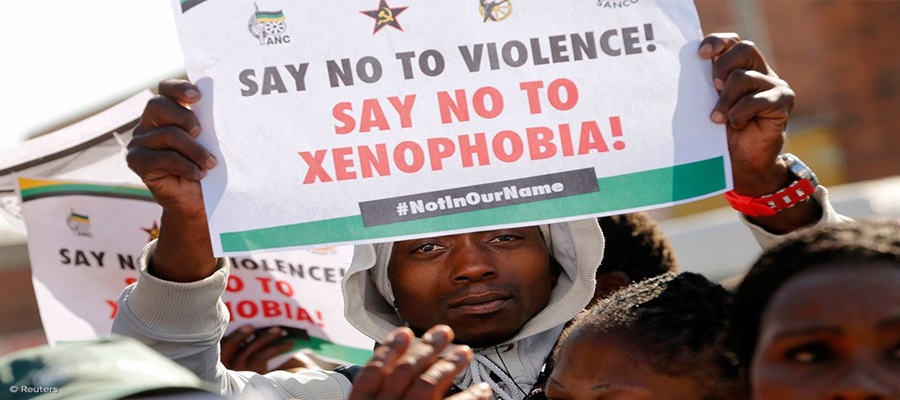
Anonymous Nigeria, hacktivism, known for launching coordinated cyberattacks and protests in support of socio-political movements, has threatened to leak stolen South African government data unless its demands were met.

The group, called for the department to stop xenophobic attacks on Nigerians in South Africa, or it will expose the data.
“They call themselves correctional services, but they can’t correct the citizens. What a shame,” the group said in its Telegram channel, MyBroadband reported.
“They killed a lot of Nigerians while the so-called correctional services watched and the ministry of justice.”
It is immediately know if Anonymous Nigeria is affiliated to Nullsec Nigeria.
But in a post on a hacker forum, Nullsec Nigeria included a link showcasing an example of data stolen from the department.
It included two bid invitation notices, bid results, a copy of the bids received, and a notice of a bid awarded in various formats.
“We’ll expose all your evil deeds for the world to see, unless this attack stops. But if not, we’ll leak everything they got,” Nullsec Nigeria said.
“Unless the government of South Africa ends these xenophobic attacks on Nigeria, we’ll expose everything about you, your evil deeds will be exposed, and the world shall know.”
MyBroadband asked the Department of Correctional Services about the claimed breach and Nullsec Nigeria’s demands, but it did not immediately respond to our questions.
Nullsec Nigeria also claimed responsibility for breaching several other entities in South Africa, while responding to an X post about its OpSouthAfrica campaign in its Telegram channel.
“I wanna express something here. I saw a report on the #OpSouthAfrica hack by Nullsec Nigeria, but it was stolen by another person,” it said. “Tag the real breachers next time.”
In a separate thread on the hacker forum, Nullsec Nigeria also claimed responsibility for breaching the Ephraim Mogale Local Municipality’s systems.
It claimed to have hacked the local government’s website and threatened to expose “everything you got for others to see how heartless you are. You killed mothers, brothers, students.”
Nullsec Nigeria said the breach and the threats were in response to the xenophobic attacks on and killing of Nigerians and the South African government’s supposed silence on the issue.
“These attacks are still going on in the dark, and we’ll expose them all. If the South African government doesn’t act first, the whole of South Africa will suffer,” it said.
“This is just a wave. These documents are about 11GB, but we decided to pull just this one.”
Its post included two images: one for a public hearing and another, a handwritten tender document for the appointment of an insurance service provider.
It also included a link to several other documents, including an old annual report, council resolutions, financial statements, and various other notices.
The Nigerian Government recently announced plans to bring citizens back to the country from South Africa after violent protests over foreign nationals in the country erupted earlier in May.
President Cyril Ramaphosa condemned the protests and criminal acts directed at foreign nationals in his From the Desk of The President weekly newsletter on 11 May 2026.
He emphasised the recent demonstrations and attacks did not represent the views of the South African people, nor the government’s policy.
“These are the acts of opportunists who are exploiting the legitimate grievances, particularly those of the poor, under the false guise of ‘community activism’,” The President said.
“Some of these people are assuming functions that only state officials are permitted to perform, including stopping people to check identification and conducting searches of private property.”
He added that such lawlessness would not be tolerated, regardless of who the perpetrators or victims were.

Identy.io, US Firm Eyes 1Bn Biometric Verification Transactions in Nigeria

FG Says All Taxable Nigerian Must Obtain Taxpayer ID

SEC Sets June 1 for Transition to T+1 Settlement Cycle

Lagos Unveils Plan for 24-hour Electricity Supply in the State

EFCC Which Handles Sensitive Data, Financial Records has No Privacy Policy on Website- FiJ

MTN, VDT, Zoracom, Digital Realty Back 2026 Girls in ICT Campaign

Vitel Wireless Partners Fintechs to Expand Access to Services

Kaspersky Discovers Vulnerability in Qualcomm Snapdragon Chips that can Lead to Data Loss & Device Compromise

Bank Customers to Pay N1,500 for ATM Card Issuance, Replacement – CBN

FCCPC Licenses 5 Firms for Airtime, Data Lending as Telcos Step Aside




 General News1 day ago
Xenophobic Attacks: Anonymous Nigeria Threatens to Leak South African Stolen Data

 E-Financial1 day ago
Chapel Hill Denham Says Banks Lose N2.5 Trillion Annually to High CRR in New Report

 Telecom1 day ago
MTN Targets 8m Homes in Fibre Expansion Drive

 Telecom1 day ago
GBB Says Cross-border Partnerships Key to Africa’s Digital Transformation

 E-Financial1 day ago
Lagos Sanctions 15 Money Lending Firms for Operational Violations

 E-Financial1 day ago
AfDB Approves $200m for BoI to Support MSMEs

 News1 day ago
WHO Says Ebola Outbreak Worse than Reported

 News1 day ago
Digital PayExpo 2026 to Convene Africa’s Most Influential Payments Leaders in Lagos