

Telecom
Smile Communications Says Nigeria Well-Positioned for Digital Economy

Smile Communications Nigeria Limited, the 4G LTE broadband provider of choice, has described the Nigeria’s digital economy as huge, and will impact virtually all segments of the economy.
‘Digital Economy’ was coined by Don Tapscott in 1995 to imply an economy chiefly triggered by digital computing technologies.
Thus, in the face of dwindling oil revenue with increasingly pressure on the economy evident in budgets deficit, infrastructural deficit, high unemployment rate, harsh business environment, corruption, amongst others, Mr. Michiel Buitelaar, managing director, Smile Communications Nigeria Limited, said that leveraging digital economy should be regarded as a sine qua non in sustaining the economy by the incoming administration led by Muhammed Buhari.
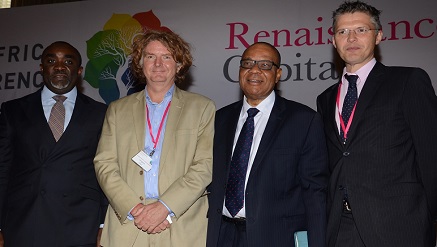
Buitelaar who was speaking during a panel discussion at the sixth (6th) Annual Pan-African 1:1 Investor Conference organized by Renaissance Capital in Lagos, identified infrastructural advancement as overriding factor for the immediate expansion of sectors such as agriculture, transportation, banking & finance, health-care/medicine, and education.
He said that Smile Communications aligns itself with the key statistics expected for the Nigerian Digital Economy by 2018 as released by the Federal Ministry of Communication Technology, especially for the emergence of an industry that is less fragmented.
According to the country’s target, the industry expects to attain 30 per cent broadband penetration by 2018 from the present less than 10 per cent.
The Smile MD said, “There are various advantages the digital economic providers have over the traditional. However, to make this happen faster, there are catalysts required for it to even drive other sectors outside the ICT. Digital economy will be the driver of the agricultural, transport, health-care/medicine, education, banking & finance, among others. In our company, for instance, we are talking to companies in those sectors and one recently said that ‘the software is eating the world’.
“We do believe the new digital ICT will influence other sectors. For example, in agriculture; like I have seen in other countries, the efficiency and productivity is very likely to explode once all the digital economy has entered into their arena. It is also our expectation that the impact will become more pronounced within the next ten years. For emphasis sake, sectors like agricultural, transport, health-care/medicine, education, commerce, in fact, the whole move of digitization will have impact on the emerging economy and Nigeria’s economy is well positioned to make their journey better than many others,” the Smile Communications boss said.
Specifically on expected broadband impact on digital economy, Buitelaar, extolled the outgoing administration of President Goodluck Jonathan for approving the National Broadband Plan (NBP), expressing confidence in the Buhari government’s compelling posture for firm implementation of the plans.
“I think the Federal Government is doing a quite well, especially, by releasing a National Broadband Plan (NBP), but I will argue that the next Government continues with the plan in an even ‘forceful’ manner. Similarly, spectrum allocations should be looked at too; it is more of technical, but very important in the nation’s quest for more ubiquitous broadband. There are sub-sectors that the broadband availability will immediately impact their operations such as the delivery viz a viz ecommerce, e-payment, education and other clusters of business. These are crucial reasons the digital economy should be allowed to blossom,” he said.
“Having been here for six months, Nigeria is a wonderful country. At the same time, the incoming government should do something as regards the image of the country and perception in the rest of the world. That alone is capable of convincing foreign investors about the country’s business climate. Secondly, on infrastructure, I do believe that the whole country will benefit in smart investments in infrastructure. There are issues in transport, power and payment systems; if these issues can be addressed, with a couple of other commitments, I believe in the next few years the country will be reaping large chunk of benefits from them,” he said.
Buitelaar added that the Company will not rest on its oars until Nigerians have access to qualitative and affordable broadband services.
He said, “From the Smile Communications’ perspective, we have penchant interest in the provision of high quality service. Later this year we will rollout service in a couple of other cities. We are serious about providing superfast broadband, high availability, high-quality and reliable offering, because Nigerians deserve qualitative service. If a small scale business is using your service, they ought to get maximum benefit; that is the way they can grow and employ more people. In that way you have impacted lives and the country’s GDP will feel the boost as well”.
Earlier, the Keynote speaker, Professor Pat Utomi, while addressing investors and captains of industries at the Conference, shared similar views with Mr. Buitelaar.
He said that thrust of the in-coming administration should be centered on making corruption costly and unattractive through public service entrepreneurship and goal oriented; reinvent sectors like mining and building clusters of strong institutions, leveraging ICT, among others.
Also, Global Chief Economist at Renaissance Capital, Mr. Charles Robertson, noted: “We see great long-term potential across Africa, particularly, in Nigeria, Kenya and Egypt.”
“We believe Nigeria will be a trillion dollar economy by 2025 and it will keep doubling in size every 10 years. GDP per capita is likely to reach around $15,000 by 2050. Following the April elections, the new government represents the best opportunity in recent years to push forward reform for Africa’s largest economy,” he said.
The sixth (6th) Annual Pan-African 1:1 Investor Conference organized by Renaissance Capital in Lagos attracted over 150 investors representing both global and frontier funds and 50 companies from across the African continent.
Smile Communications Nigeria Limited was founded in 2007 with the transformative objective of using the best and most innovative technologies to provide its customers with high quality, easy to use and affordable communication services.
Its vision and mission is to be the broadband provider of choice in Nigeria and enable its customers to fully benefit from the Internet world. Smile launched West Africa’s first true 4G LTE network in Ibadan in 2013 thereby revolutionizing the way people access the Internet.


National Information Technology Development Agency (NITDA) has entered into a strategic partnership with the Development Agenda for Western Nigeria (DAWN) Commission through the signing of a Memorandum of Understanding (MoU) aimed at accelerating digital literacy, innovation development, and economic growth across Southwest Nigeria.

Director General NITDA, Kashifu Inuwa CCIE, Director General DAWN Commission Dr Seye Oyeleye alongside representatives of both organisations, display signed copies of the Memorandum of Understanding (MoU) upon its signing at NITDA Headquarters, Abuja.
Speaking at the signing ceremony in Abuja, NITDA Director General, Kashifu Inuwa, described the agreement as a significant step toward leveraging human capital and fostering regional collaboration to drive sustainable national development.
He commended the Southwest region for its longstanding culture of cooperation, noting that collective action remains essential for national progress.
“The Southwest continues to inspire when it comes to collaboration because no one succeeds in isolation. Other regions can learn from this model of cooperation.
“For Nigeria to grow, we must understand our strengths at both the state and regional levels and build on them,” he said.
Inuwa emphasised that Nigeria’s greatest resource is its people, stressing that investments in digital skills, innovation, and technology are critical to creating prosperity and expanding economic opportunities.
According to him, the partnership will facilitate knowledge exchange, capacity building, and innovation-driven initiatives capable of empowering citizens to develop local solutions with national and global impact.
Highlighting NITDA’s ongoing efforts to deepen digital transformation nationwide, he said the Agency is scaling digital literacy programmes, supporting innovation hubs, and promoting technology development across the country.
He noted that innovation flourishes where talent, infrastructure, and supportive policies intersect, making it important for every region to identify and strengthen its comparative advantages.
“Lagos has already established itself as a fintech hub and the commercial centre of the country. Abuja is emerging as a GovTech cluster, while other regions can develop specialised ecosystems around manufacturing, commerce, and other sectors.
“Every region possesses unique strengths that can be transformed into thriving innovation clusters,” he stated.
The NITDA boss expressed optimism that the collaboration would accelerate the implementation of the Agency’s strategic initiatives throughout the Southwest.
He added that both organisations had already begun working together prior to the formalisation of the agreement and called for swift action following the signing.
“We are excited about this partnership and look forward to translating our shared vision into tangible outcomes. While engagements have already commenced, I would like to see even greater momentum after the signing of this MoU,” he added.
In his remarks, the Director General of the DAWN Commission, Seye Oyeleye, highlighted the importance of digital literacy in preparing citizens for future opportunities and ensuring meaningful participation in the digital economy.
He noted that the Commission, which coordinates development initiatives across Ekiti, Lagos, Ogun, Ondo, Osun, and Oyo States, views the partnership as a strategic vehicle for advancing Nigeria’s digital transformation agenda.
Oyeleye highlighted Nigeria’s target of equipping 100 million citizens with digital skills by 2030 through the Digital Literacy for All Initiative, stressing that the Southwest has a pivotal role to play in achieving the national objective.
“Nigeria has committed to equipping 100 million citizens with digital skills by 2030. Southwest Nigeria is not merely a contributor to that vision; it is central to its success,” he said.
He explained that the MoU formalises a shared commitment to ensuring the effective implementation of NITDA’s programmes, particularly the National Digital Literacy Framework, across the region.
He added that the Commission would leverage its extensive network and partnerships across the six Southwest states to bridge federal digital initiatives with local communities, institutions, and young people.
“We will work to ensure that NITDA’s frameworks are not only implemented but strengthened. Our reach across the Southwest positions us to connect federal digital infrastructure and programmes with communities and young people who require the skills needed to thrive in the digital economy,” he stated.
Oyeleye further assured NITDA of the Commission’s commitment to delivering measurable results throughout the five-year duration of the agreement, noting that the true value of development institutions lies in the impact they create rather than the agreements they sign.
The MoU reflects the shared determination of both organisations to advance digital literacy, strengthen innovation ecosystems, and create sustainable economic opportunities for citizens across Southwest Nigeria, further supporting the country’s journey toward a robust and inclusive digital economy.
This version improves readability, strengthens attribution, and adopts a more polished newspaper-style structure suitable for publication.

Airtel Africa Foundation, the philanthropic arm of Airtel Africa plc, has released its inaugural annual report, marking its first full year of delivery and impacting millions of learners and communities across Africa.

During the reporting period, the Foundation committed $6.2 million to interventions across its four strategic pillars; Financial Inclusion, Education, Environmental Sustainability and Digital Inclusion (FEED), with education receiving the largest share of investment.
Key achievements include connecting 1,028 schools to the internet through its partnership with UNICEF, bringing the total to 3,296 schools connected across 13 countries, reaching over 2 million learners and nearly 39,000 teachers. In addition, 64 zero-rated digital platforms enabled over 11 million learners to access free educational content.
The Foundation also improved the condition of public schools, with seven fully renovated and 43 undergoing upgrades under the School Adoption Programme that integrates infrastructure improvements with digital access and holistic student development.
Through the Airtel Africa Tech Fellowship, 257 full university scholarships were awarded in Malawi, Nigeria, Tanzania, the Democratic Republic of Congo, and Uganda, expanding access to STEM (Science, Technology, Engineering and Mathematics) education and building a pipeline of high-potential African technology leaders.
In addition to this, 30,530 youth and women were trained through digital skills initiatives delivered with national, multilateral, and private-sector partners.
Segun Ogunsanya, Chair, Airtel Africa Foundation said: “The Airtel Africa Foundation was established to help dismantle barriers caused by unequal access to opportunity. While talent and ambition are abundant, access to education, digital tools and economic participation remains uneven. Through partnerships and our continental reach, we are committed to investing in communities furthest from opportunity.”
The report also underscores the Foundation’s growing focus on measurable outcomes and long-term systems change.
The Foundation aims to scale proven interventions in the year ahead, including expanding its School Adoption Programme to over 80 schools, increasing scholarships to more than 600 youth, providing free internet connectivity to an additional 2000 schools, and extending digital skills and financial inclusion initiatives to underserved communities.
“As a Foundation, we are positioned to deliver skills development and lasting change at the individual and household level, while partnering with governments to unlock Africa’s economic transformation”, Mr Ogunsanya added.
Zoho Corporation, a global technology company and parent company of Zoho and ManageEngine, announced the launch of Nathu La, a designed-in-house server and a pivotal step in the company’s journey towards building its full technology stack, from the hardware layer to software applications.

Zoho
With Nathu La, Zoho has achieved equivalent performance with 12-18% lower power consumption and 20-30% lower total cost of ownership (TCO), thereby reducing inference costs. The Nathu La server, comprising Intel® Xeon® 6 processors, was developed collaboratively with Intel, leveraging their enablement capabilities and technical expertise.
“Zoho Corporation has invested in building its own technology stack from the ground up over the last three decades. The Nathu La server launch is in line with that goal,” said Kehinde Ogundare, Country Head, Zoho Nigeria.
“With our strategy of using contextual, right-sized models, running on our own platform, on our own servers, in our own data centres, we are compounding the benefits accrued from owning and operating our entire technology stack.
“This ensures that our solutions are more sustainable and accessible for businesses. These long-term R&D investments we are making at every layer of the stack are aimed at delivering customer value.”
Building the Full Technology Stack
The design philosophy behind Nathu La is rooted in the Open Compute Project (OCP), emphasising modularity, thermal efficiency, and ease of maintenance. This enables Zoho’s data centres to significantly reduce total cost of ownership and power consumption.
Zoho plans to host its applications on the Nathu La server platform, enabling the company to optimise the full software-hardware stack for its specific workloads, reduce costs, improve performance, and strengthen data governance for its global customers. This will also help bring down inference costs for Zoho’s AI usage.
Developed Hardware Engineering Talent
In 2020, Zoho established a small R&D team in Nagpur, a Tier 2 town in India, focused on projects such as server design and systems engineering. Members of the Nathu La R&D team include hires from SETU – short for Student’s Engagement for Transformative Upskilling – an initiative designed to build a pipeline of industry-ready engineers, with a focus on advanced learning in Electronics System Design and Manufacturing (ESDM).
The initiative directly addresses the growing need for stronger foundational engineering skills in an era increasingly influenced by AI-assisted development. By prioritising hands-on innovation and first-principles problem-solving, SETU helps cultivate deeper research capabilities, creativity, and applied engineering expertise. To date, over 300 students have been trained through the programme, some of whom have joined Zoho.
What’s Inside
The Nathu La server motherboard and chassis platform is the result of five years of R&D across hardware, firmware, and systems management. Based on Intel® Xeon® 6 Processors, the server is designed to optimise performance for virtualisation (VM), High Performance Computing (HPC), AI inference, and storage applications. This results in improved performance of Zoho applications for end users.
The server features customised power delivery subsystems, an in-house DC-SCM (Data Centre Secure Control Module) design, and modular chassis options compatible with diverse end-user environments, offering flexibility across deployment types.

All modular components – including the DC-SCM and NIC (Network Interface Card) – were designed in-house by Zoho’s hardware engineering team and assembled through electronics manufacturing partners, enabling tighter integration and quality control across the platform. Over five patents have been filed covering advanced thermal management and cost-optimised server architecture designs.
Moving Towards Technological Sovereignty
Nathu La is engineered with hardware-rooted security at every layer of the stack. The platform’s indigenous IP-driven approach reduces dependency on external entities for security audits, firmware updates, and licensing continuity.
The solution aligns with open-source software principles and reflects Zoho’s broader commitment to building sustainable, secure, and scalable digital infrastructure. It also supports the growing global focus on digital sovereignty, local innovation ecosystems, and high-performance computing capabilities.

UK, Nigeria Launch £15m Growth Programme to Accelerate Economic Transformation

Haleon Introduces New Corporate Identity in Nigeria

Elon Musk Makes History as the World’s First Trillionaire

NITDA Unveils Ambitious Strategy to Turn Southwest into Nigeria’s Next Innovation Powerhouse

Airtel Africa Foundation Publishes Inaugural Annual Report

CBN Extends PoS Geo-Fencing Enforcement Deadline to August 2026

Jumia Nigeria Records Strong Q1 2026 Growth as Technology-Led Strategy Drives Market Expansion

NCC Drafts New Rules for Virtual Mobile Operators

TD Africa, HPE Drive Conversations on the Future of Intelligent Networking

Anthropic Raises $65 Bn to Expand AI Research, Innovation




 Telecom3 days ago
NDSF 2026: Teniola, Ebeledike Inducted into Hall of Fame as NiRA, MTN, Digital Realty sweep top honors

 News3 days ago
Mobile Internet Gender Gap Widest in Africa – GSMA
 Telecom3 days ago
Airtel Africa Foundation Publishes Inaugural Annual Report

 E-Financial3 days ago
Access Holdings Affirms Long-Term Value Strategy @ 4th AGM

 Telecom3 days ago
Zoho Unveils Homegrown Server, Takes Bold Step Toward Tech Independence

 General News3 days ago
Kaspersky Warns of “Grey” Scam Websites Exploiting User Trust
 News2 days ago
UK, Nigeria Launch £15m Growth Programme to Accelerate Economic Transformation
 General News2 days ago
Haleon Introduces New Corporate Identity in Nigeria