

General News
We Need More Switching Companies-Kadiri


Mr. Deji Kadiri is the managing director of ZeeSoft an application service provider which specializes in web based eBusiness tools that form one complete integrated application to help manage important business processes. He has worked in several information and communications technology companies in his over a decade experience in the sector. He spoke to chike onwuegbuchi on issues around online business opportunities and challenges.
Using Website to Generate Revenue
One thing Nigerians are aware of is that Nigeria has moved from being a low Internet country to the largest number of Internet subscribers in Africa right now. We have over 11 million subscribers which puts us ahead of South Africa, Egypt and other people. What we do at Zeesoft is that we look at the kind of services you offer, which one can be delivered across the web? For instance, are you a newspaper publishing company? Do people read newspapers online? You could divide your news into the free version and the subscribed version, where people go online and subscribe for your news. There are lots of Nigerians in diaspora who would love to visit a newspaper site and read about what is going on in Nigeria. Are you releasing all your news for free? You don’t have to. The Economists don’t do that, the Financial Times of London don’t release all their news for free. There are free news to be an appetizer and we have a kind of news people would pay for. They pay a token per annum with their credit card or whatever. Depending on what you do, we have helped a lot of insurance companies move insurance online. You don’t need to show up at an insurance company, so there are many areas just look at your business, what aspect of your business does not require people showing up, then move it online.
Websites as income for Newspapers
They need to stick to a web consultant whereby the consultant looks at the website, revamp it and advice them on shaping them into an ecommerce website. Like I said, news are of two types, there is the free information and there is the premium. Just offer two services, the free service and the premium service. Once you do that, you can make money from online advertisements but the problem with online advertisement in Nigeria is that people seem to go directly through the company, but things are coming up now where people would be able to pay for adverts online and have it delivered on their choiced website.
Scepticism about Online Payments
Online payment is not new to Nigeria, this has been done by advanced countries decades before we heard of it. They had the same kind of problems we have so we are not the first to do it, people have gone ahead of us. We can study what they did to curb this fraud. Once we studied it, we will have the idea but that aside, one thing is sensitization. The people involved in online transactions spend huge amount of money on adverts. They still need to put a small percentage of advert budget on sensitizing Nigerians. Of course, they have done a lot but they need to do more. Let the Central Bank of Nigeria (CBN) have a public list of certified eCommerce sites so that you can go and verify from the CBN. InterSwitch had already published its certified list of merchants so you do not fall victim to fake merchants but Nigerians need to realize that InterSwitch will never ask for your PIN, a bank will never ask for your PIN. I noticed that when you go to an ATM, it has now been enclosed but with a little more effort and advert towards that, Nigerians would be sensitized and we would feel safe.
eCommerce and Internet Penetration
Penetration is a few percentage but in terms of number like I said before, we are the largest Internet market. We have 11 million people on the Internet in Nigeria; that is larger than any other country in Africa. That puts us number one in Africa and eCommerce is working well in South Africa, which is number four in terms of subscribers online. We have done it with telecoms, we have more mobile subscribers than the population of the United Kingdom which I never hesitate to tell them in my International Conferences. There are large Nigerian companies that make money from advertisements; there are large online job communities. InterSwitch and etranzact have millions of subscribers but we need more payment systems and we need to lower the entry barrier. We achieved it in telecoms because for as low as N2,000 you can get a phone. I think the charge of N150,000 by Interswitch for registration, etranzact charge N130,000 is high for the average entrepreneur right now. We are an eCommerce company and a lot of young entrepreneurs come to us everyday complaining that N150,000, and N130,000 respectively is too high for them. If they could lower it and focus more on the transactions, then I am sure a lot of Nigerians have smart ideas of what they can do but the N150,000 is beyond the reach of many young entrepreneurs and it is young entrepreneurs that drive the economy. Look at America, there are young entrepreneurs. The Google guys, if they had to pay huge amount of money to set up Google, they would not have set up Google or the Yahoo guys. So, we need to think of that and do things that will encourage eCommerce so that people do not have to register with huge amount of money, to integrate a merchant. Moreover, registering more switches will bring that price down. I think a price of N5,000, or N10,000 would be okay and we would see a boost in eCommerce.
National Central Switch to the Rescue?
The idea of a central switch makes sense in that I heard that nobody will connect directly to InterSwitch or etranzact but that everybody will connect through the central switch. In theory, it should lower barriers to bring in more switches. If there are switches, the prices will go down. I feel the government should encourage the private sector to do that. We know how government dabbling into business works in any country, especially in Nigeria. In every country, government is trying to get out of business; the United States government has pulled out of business. Let government create an enabling environment for switch. They can create it and tell Nigerians to buy into it and run it privately.
Mobile Money Solving Integration Challenges
Mobile money is a good idea in any economy. The aim is to make payments offsite, you don’t need to carry cash around. Whether you are carrying a card which makes you mobile, or a device that can enable you make payments, it is welcomed because the more secured devices we have that can make payments, the easier it becomes for eCommerce to flourish. But the card is not the problem but the switches to enable merchants go online quickly and at a lower cost. We have the money, we have the cards, there are millions of Nigerians carrying cards. I’m sure we might have 30 million card holders right now and we only have 76 million mobile phone subscribers so the problem is not in the people who wants to make payments but in making them confident to make payments securely. The banks have a role to play. They have reacted in a funny way to fraud by blocking their cards. What they do not realize is that they are shooting themselves on the leg; by blocking cards, you are blocking eCommerce which is another avenue and the banks get a cut of every transaction. But in Nigeria, we have not realised that micro charges can result in huge profits. Google is the largest eCommerce company in the world, they make billions but those billions come from the little money people pay on adverts as low as three cents but across billions of subscribers. They should look for ways of making cards more secured so that people can make payments with it. Before you know it, we will have millions of transactions online and if you are getting the micro charge on all of this, before you know it the money will become huge. Government should be enablers rather than stiflers of eCommerce.
Local Content in eCommerce
These are situations where government can play a huge role. Let us not forget that the origin of Internet in the first place was the US government building a huge infrastructure of interconnectivity, which they now realize has a commercial value. Now private ownership has taken over and the likes of AT & T and major firms now have huge fibre optic infrastructure that exceeded the original one but the government started it. There is nothing that prevents the Nigerian government from embarking on a large project of laying fibre throughout the country. For instance, linking all major cities by fibre and throwing it open to the private sector. Build it and sell it. That will be a more judicious use of our oil money. I’m sure if the government built a fibre infrastructure and throws it open at the stock market, in a day it will be over subscribed. The money is there, people will over subscribe so the government will make a tidy profit from it, and then those who subscribe will then put together the technicalities to maintain it.
Certification of Web Developers
Personally, I have read about eCommerce entrepreneurship, especially as it relates to information technology the world over. Certification is a good way for people to prove their worth but I do not think certification is working in Nigeria in that the average Nigerian is geared towards passing exams. In our schools, innovation is not encouraged. We go to school, we cram to pass. Ask the average student who is passed his exams serious question; you will realize that you will find no innovation in him or her. We just cram and pass and that is my fear for certification in Nigeria. Running a software firm, I’ve interviewed a lot of certified people and at the end of the day; you will find out that they crammed to pass their certificate exams. But be that as it may, I do not think we should come in and stifle entrepreneurship. Those kids you say carry laptops about are solving a problem. A lot of them are good, we’ve taken on a lot of them for employment, we’ve contracted jobs to some of them, a lot of them are good and some are not. If somebody comes in and you want to give him a job, simply ask for references. Which jobs have you done? Let me look at these jobs and when you look at these jobs, talk to the references. If you said you worked for company XYZ, call the people in company XYZ; if it is okay then fine.
I have people abroad who have worked under me and their companies call me to find out about those people. If people can do reference checks on people, you can do reference checks on their jobs. It is as simple as that. But allow them to express their entrepreneurial minds. Information technology is one area we can catch up with the developed world because Windows in Nigeria is Windows in America. If you are an engineer in Nigeria, you will never have to access what your American counterparts have access to.
Bill Gates made a statement that, with information technology and the Internet, even developing countries like ours will be able to catch up with the developed world. If you bought a laptop and it runs on Windows and Word, you will become a guru in Word in Nigeria. It is that same Word they are using in America but you cannot become a guru in Automobile engineering in Nigeria because you do not have what your counterparts in America have access to; we do not make cars in Nigeria. But with IT, you can become a guru because if you read a book, it is the same book. All you need to become a guru in the United States are books, the Internet and the software and those things are the same everywhere. The Internet is just slower in Nigeria but those things are still the same. That is one opportunity for us in Nigeria to be as good as people in other parts of the world.


General News
Union Bank Looted: How Former Directors Gambled with Billions and Nearly Destroyed a National Bank


The former directors and owners of Union Bank did not just fail, they engineered a financial disaster. They manipulated reports, hid massive losses, diverted foreign loans and treated depositors’ money like a private wallet.

Union Bank
Investigators uncovered billions of dollars in misconduct. These directors buried over ₦250 billion in losses, piled a $300 million foreign loan onto the bank without protection and then forced Union Bank to carry the burden. They even used the bank’s own funds to buy its shares, an outrageous betrayal of trust.
It didn’t stop there. Over $100 million was pulled out improperly, leaving the bank exposed and struggling. Loans meant for customers were secretly diverted into shady transactions. False reports were sent to lenders. The system was deliberately deceived.
This was not incompetence. It was exploitation.
By 2025, their actions had created nearly ₦400 billion in losses and over ₦147 billion in unpaid charges. The bank was on the edge.
The Central Bank of Nigeria (CBN) stepped in just in time. Without that intervention, Union Bank could have collapsed, dragging others down with it.
Now, the bank is stabilising. But let’s be clear: this recovery is happening in spite of those former directors, not because of them.
They didn’t build value. They destroyed it.
And Nigerians deserve to never forget who was responsible.


Federal government, The European Union (EU), and the United Nations Industrial Development Organisation (UNIDO) have called for urgent and coordinated action to curb food waste and promote sustainable consumption and production practices.

They warned that when food is wasted, the water, energy, and labour invested in its production are also lost, accelerating climate change and undermining global efforts to build a zero-waste, circular economy.
Speaking in Abuja at the commemoration of this year’s International Zero Waste Day, themed “Food Waste Reduction: Minimisation and Valorisation,” Zissimos Vergos, deputy Ambassador of the EU Delegation to Nigeria and ECOWAS, disclosed that Nigeria wastes approximately 38 million tonnes of food annually, more than any other country in Africa.
He further noted that globally, in 2022 alone, nearly one billion tonnes of food—almost one-fifth of all food available to consumers—was wasted.
“This is not just a loss of food; it is a squandering of precious resources, a missed opportunity to combat hunger, and a direct threat to our planet’s health,” he said.
Vergos stressed that food loss and waste are major drivers of environmental degradation, contributing up to 10 per cent of global greenhouse gas emissions—nearly five times the emissions of the entire aviation sector—and accounting for as much as 40 per cent of global methane emissions.
Highlighting Nigeria’s ongoing efforts, he said: “The Nigeria Circular Economy Roadmap, the establishment of the Interministerial Circular Economy Committee, the push to develop a National Plastic Waste Management Regulation, these are not small gestures. These are structural shifts.
“They signal that Nigeria is not waiting for someone else to solve its problem; it is building the system to solve it from within. Now, today’s theme: food waste reduction, minimisation and valorisation, is the right conversation at the right moment.”
Vergos also shared three key lessons from the EU’s experience to support Nigeria’s efforts. First, he urged investment in rural infrastructure, including roads, storage, and cold chains, to address post-harvest losses beyond the farm gate. Second, he emphasised the need to promote agro-processing by converting fresh produce into value-added products such as tomato paste and cassava flour, while linking smallholder farmers to processors and markets.
Third, he called for embedding zero-waste principles, recycling, and resource efficiency into school curricula from the primary level to foster a culture of sustainability among future generations.
Reaffirming the EU’s commitment, he stated, “The EU stands ready to be your partner in that work, through funding, through technical cooperation, and through genuine solidarity.”
In his keynote address, Balarabe Abbas Lawal, minister of Environment, reiterated the Federal Government’s commitment to environmental protection and sustainable practices aimed at safeguarding the health and well-being of Nigerians.
“Food waste remains a significant challenge that affects not only our environment but also our economy and society. Every discarded meal represents wasted resources such as water, energy, labour, and capital, while Nigerians continue to face food insecurity.
Addressing food waste is therefore central to sustainable development and ensuring a healthier future for all,” he said.
He added: “The Federal Ministry of Environment, in this year’s national appropriation, has developed projects on food waste elimination in major markets around Nigeria. And this is to show you that the Federal Ministry of Environment is tackling the issues of food waste at its core, especially post-harvest losses.”
Stressing the broader impact, he noted that addressing food waste aligns with the Ministry’s core objectives. “Reducing food waste will not only help to lower pollution and greenhouse gases, but also conserve valuable resources and promote more efficient and responsible consumption patterns across households, businesses, and institutions,” he added.
Also speaking, Amb. Philbert Johnson, Director and Representative of UNIDO’s Sub-Regional Office in Nigeria, emphasised that food must not be wasted, especially in a country grappling with food insecurity and malnutrition.
“Food is far more than a commodity: it is a foundation of wealth, a driver of health, and a pillar of security. It sustains our homes, supports industries, and underpins the stability of our societies.
“When food systems function efficiently, they generate income, enhance resilience, and improve well-being. When food systems fail, when food is lost or wasted, the consequences ripple across our economies, our environment, and our communities.”
He reaffirmed UNIDO’s commitment to supporting Nigeria in building resilient, inclusive, and sustainable agro-industrial systems.
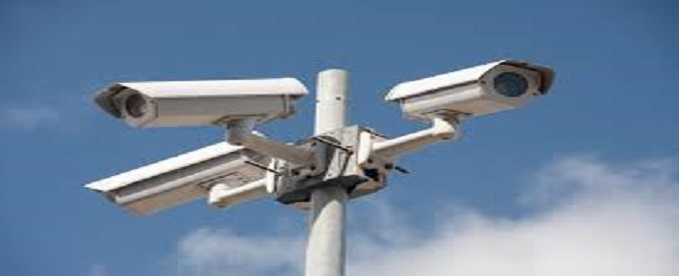
President Bola Ahmed Tinubu has directed the immediate installation of 5,000 CCTV cameras across identified flashpoints in Plateau State as part of urgent measures to address the worsening security situation in the state.

The President gave the directive during an emergency visit to Plateau on Thursday, where he held a brief stakeholders’ meeting at the Yakubu Gowon Airport following the recent killings in Angwan Rukuba, Jos, where at least 28 persons were killed by unidentified gunmen.
Tinubu also approved the formation of a delegation of key stakeholders to engage in further deliberations on lasting solutions to the security challenges in the state.
He condoled with families of the victims and directed that support be provided to cushion their losses.
President Bola Tinubu while expressing deep sympathy to families of victims said the installation of surveillance cameras was part of a deliberate move towards addressing the kind of attacks that befell residence of the recent attack in the State.
In his remarks, Governor Caleb Mutfwang appreciated the President’s visit and show of concern, but expressed worry over the recent wave of attacks in the state, describing the situation as disturbing and requiring urgent attention.
The meeting had in attendance, former Governors, serving and former National and State Assembly members, traditional rulers, government appointees as well as relatives of those killed in the Angwan Rukuba attack.

Union Bank Looted: How Former Directors Gambled with Billions and Nearly Destroyed a National Bank

N4.65 Trillion in the Vault, but is the Real Economy Locked Out?

FG, Others Say Nigeria Wastes 38m Tonnes of Food Annually

Ecobank Assures of Seamless Easter Banking Services

Anchor Gets Nigerian, Canadian Licences as Transactions Crosses $2.5Bn

Spotify’s Loud & Clear Report Reveals Over ₦60Bn Revenue for Nigerian Artists in 2025

Madonna University Taps Tech Guru Adote for Strategic Board Role

China Threatens to Shut Nigeria’s Satellite Over $11.44m Unpaid Debt

Healthcare Under Attack: Why Cybersecurity is Now Critical Care

Police Says Victims Enable Cyber Attacks Out of Ignorance




 E-Financial2 days ago
UBA Beefs Up Mobile App Security to Stop Fraudulent Debits, Withdrawals

 Telecom2 days ago
Bharti Airtel Crosses 650m Users

 General News2 days ago
FG Orders Installation of 5000 CCTV Cameras for Surveillance in Plateau

 E-Financial2 days ago
Ghana Makes History as First African Country to Integrate Payment National Identity Card

 E-Financial2 days ago
CBN Plans New Payment Systems Vision

 E-Financial2 days ago
Flutterwave Secures Nigerian Banking License, Boosts Financial Autonomy

 E-Business2 days ago
Nigeria Mulls National Cybersecurity Council

 Broadcasting2 days ago
Nigeria’s Joeboy Headlines Easter Edition of African Voices