

General News
Drawing line between Term, Life Insurance and Assurance

Life insurance is quite popular among the classes of insurance in Nigeria. Popular as it may be, most people including those who are into any form of life insurances do not know the difference between life insurance and life assurance. Unfortunately, the industry is not still playing the needed awareness creating role that is expected of it. Many players even in this global age are yet to fully adopt modern technology in doing the business, preferring to stick tenaciously to the conservative pattern which held the industry captive for decades. People spend much money on complicated financial products and it is sometimes difficult to track which of these products they keep the tasks to perform. Knowing the basic information of your expected type of coverage, would help to guarantee informed buy. This neglect could cause disagreement between insurers and the insured, with consumers buying overpriced products that may not be suitable to their needs simply because they feel they should have some financial protections, without having knowledge of details of their choice.
One of the most frequently asked questions in relation to many consumers is the difference between insurance companies and policyholders. Simply put, insurance companies cover the cost of an event that happens as long as the policyholder pays the needed premium in the occurrence of an event that could certainly happen. One thing about this type of insurance is that the insurance company only pays once or a certain time in the occurrence of the insured event. Therefore, if no claims are made within the period the policy is made, then they have no residual value.
But for an assurance policy, it is different. One notable feature about an assurance policy is the guaranteed payment. Assurance policies always pay off. For example, life insurance generally pay at the death of the insured or upon reaching the age of 65 years of age. How does this policy work? Assurance policy combines two elements. That is an insurance element that will pay off when the person dies early. This is then used to pay for the funeral or the support of his family. But then there is an additional payment each year and that is the investment portion. The insurance company invests this part of the premium on behalf of the insured and upon reaching the age of 65 this money is then paid out to the insured. Life insurance policies are therefore often referred to as a method of life and as a method of saving for retirement.
It may not be easy to withdraw cash early from the investment portion of life insurance, although it is possible in principle. However, there are usually some penalties attached to this. It is advisable not to cash in early if you do not have strong reasons to do so. The distinction between insurance and assurance is also more and more blurred. Some insurance companies offer both types of policies or functions as a new kind of policy added to another in order to make them more attractive. Important as this distinction may be, it is important that the insured knows know what it is and also demand to know what type of facilities are available for the insurance of your life and provision for the future.On the other hand, Term insurance is the most common in life insurance. It is one of the several types of insurances that cover the insured only for a certain defined time. The term of the insurance stipulates that that is the only time to pay the insurer as the need arises. It is the most common in life insurance. Term insurance is also one of the cheapest ways to insure. But what makes this the right choice?
This class of insurance is used by many. It is one of the cheapest ways to stay insured. The operation is simple. You pay for the insurance, like any other insurance. Under this cover, if the insured dies during the period that the policy is in force, the insurance company will pay as the policies described. But if the person dies after the expiration of the insured term, then the insurance company is not likely to pay, as the insurance covers only the death that occurs during a stated period.
Why would anyone want to take this kind of policy? The fact is that this type of insurance has some advantages, especially when you consider why you need insurance in the first place. If the insured dies, there is provision that could cater for the family left behind.
It is important that the insuring public make careful choice having understood the different provisions of these classes of insurance. The decision as to whether this is the right kind of insurance for your needs is necessary. It takes a lot of understanding, but understanding the difference between each type of insurance would be of immense help to the insuring public.


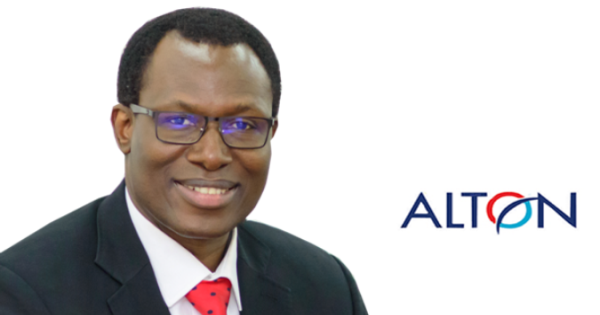
Association of Licensed Telecommunications Operators of Nigeria (ALTON), official industry body and advocacy group for major telecommunications providers in Nigeria, has backed the Central Bank of Nigeria’s (CBN) directive requiring banks and fintechs to host payment transaction data locally.

Gbenga Adebayo, chairman, ALTON
Gbenga Adebayo, chairman, ALTON, said this in an interview with the News Agency of Nigeria (NAN) in Lagosat the weekend.
His position follows a recent CBN directive mandating that banks, fintechs, and other payment service providers store payment transaction data generated in Nigeria on local servers from January 1, 2027.
The directive forms part of measures aimed at strengthening oversight of the country’s rapidly growing digital payments ecosystem.
Adebayo said data sovereignty required countries to take responsibility for their entire data value chain.
According to him, this covers data collection, management, storage, and integrity assurance.
“We cannot continue to outsource that to other jurisdictions.
“The more we host our data locally, the better for us,” he said.
Adebayo said local hosting would enable Nigeria to manage data end-to-end and guarantee the integrity of critical information.
He noted that hosting payment data outside the country increased communication requirements, latency, and retrieval costs.
“For every transaction involving data hosted outside our shores, communication has to take place from your location to the host and back.
“It increases latency and also increases the cost of data retrieval,” he said.
The ALTON chairman described the directive as an important first step toward achieving national data sovereignty.
He also dismissed concerns about infrastructure readiness, saying Nigeria already had significant data center capacity.
According to him, several Nigerian-owned facilities currently host data for organisations operating from other jurisdictions.
“I’m happy to say that we have a lot of data centres owned and managed by Nigerians that are hosting data from other jurisdictions.
“If people overseas can host their data here, why can’t we host our own data here?” he queried.
Adebayo argued that local hosting would reduce dependence on foreign infrastructure while improving national control over data security.
He said concerns about security and reliability should not justify continued reliance on foreign hosting providers.
“No one can protect your house better than yourself.
“You have more at stake in terms of security and safety than somebody else hosting your data,” he said.
The telecom industry leader also highlighted the cost implications of local hosting.
He said organisations that host data locally would pay in local currency rather than foreign currency.
According to him, this would help reduce exposure to exchange rate pressures and lower long-term operating costs.
Adebayo said Nigeria currently had about six Tier III data centres, with additional facilities under development.
He, however, stressed that capacity was more important than the number of facilities.
“It’s not just about the numbers; it’s about the capacity of what they can host.
“So far, we can,” he said.
He urged stakeholders to accelerate efforts toward domestic data hosting and management.
“The earlier we begin to domesticate our data hosting and data management, the better for us,” Adebayo added.

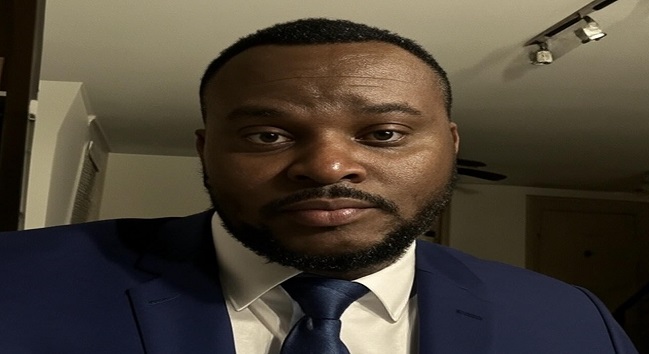
Ifeanyi Nwanegbo, a distinguished Data Scientist and Applied Data Science professional, has been honoured as the Outstanding Innovator in Applied Artificial Intelligence and Data Science at the 2024 Africa Digital Awards (ADA). The prestigious event, held recently at the Oriental Hotel in Lagos, brought together the continent’s tech elite to celebrate pioneers pushing the boundaries of the digital economy.

In a formal recognition letter signed by Tayo Adewusi, the Publisher and CEO of ICT Watch Magazine, organizers of the awards, the body noted that Nwanegbo’s selection was in deep appreciation of his leadership role in reshaping core business operations through technology.
“His ability to build complex predictive models and robust data pipelines using Python, SQL, and AWS has positioned him as a transformative figure in the field of applied analytics,” the letter reads.
Nwanegbo’s professional journey highlights a consistent track record of converting raw data into strategic assets. With a Master of Science in Data Analytics and Information Systems from Texas State University, he has demonstrated expertise in transforming disparate datasets into actionable insights. His work focuses on feature engineering, statistical analysis, and machine learning to drive high-level business decisions and operational improvements.
His impact has been felt across major global and local organizations, including a significant tenure as a Data Scientist at MTN Group. During his time with the telecommunications giant, Nwanegbo analyzed large-scale customer and operational datasets to support data-driven decision-making across commercial teams.
He successfully transformed transactional and behavioral data into structured analytical sets, enabling more accurate customer segmentation and trend analysis.
At Texas State University, Nwanegbo led critical projects as an Analytics and Data Systems Associate, including a full-scale migration of departmental data systems from Gato to Calico. This project involved redesigning schemas and restructuring ingestion workflows to ensure long-term system reliability.
His work supported KPI tracking and student engagement analysis, providing academic leadership with the repeatable analytical workflows necessary for modern institutional management.
Beyond his corporate and academic roles, Nwanegbo has distinguished himself through high-impact technical projects, such as developing an end-to-end sales demand forecasting and inventory optimization pipeline. By utilizing Python and ARIMA models, he improved forecast accuracy to reduce stockouts and holding costs, demonstrating the tangible economic value of applied AI in supply chain management.
The Africa Digital Awards recognition serves as a testament to Nwanegbo’s technical certifications, including his status as an AWS Certified Solutions Architect, Professional and a Project Management Professional (PMP).
As the continent continues its digital shift, innovators like Nwanegbo remain central to building the high-velocity smart systems that will define Africa’s industrial and technological future.

Every June 19th, the world pauses to recognize something that, for millions of families, never pauses at all. World Sickle Cell Day is observed across the globe to bring sickle cell disease out of the shadows; to name it, to understand it, and to stand with the people who live with it every single day.

This year, the world marks the day under the theme “Closing the Survival Gap: Equity in Sickle Cell Disease.” It’s a phrase that asks a hard, necessary question: why should where you’re born, or what your family can afford, decide whether you live well, or live at all?
For us at Indwelt, that question isn’t abstract. It has names and faces we know.
Why this day means something to us;
Here in Nigeria, sickle cell isn’t a distant statistic. Our country carries the heaviest burden of the disease anywhere in the world; roughly 150,000 babies are born with it here each year, and millions of Nigerians live with it into adulthood. Behind those numbers are real people: managing pain that often goes unseen, navigating crises that arrive without warning, and carrying on with a quiet courage that most of us will never fully understand.
Some of those people are our colleagues.
Since our inception, we’ve had and still have team members who live with sickle cell. They show up, they create, they pour themselves into the work we’re proud to put our name on; and they do it while carrying something most of us never have to think about.
Our team member with sickle cell, put it to us simply:
“People see the work I deliver, but they don’t see the days I show up after a night I didn’t think I’d get through. Sickle cell is part of my story, but it isn’t the whole of me; and being a part of an organization that understands that, supports me and let’s me do work I’m proud of continues to make a difference for me. I don’t want sympathy. I want a world that takes this seriously enough to change the odds for the next person.”
Supporting them, through medical interventions and through simply being a workplace that sees them fully, has never felt like a policy or a perk. It’s felt like family looking after family.
That’s where our commitment began. Not in a boardroom, but in the everyday reality of caring for our own.
If you’ve ever asked; this is the reason we’ve chosen to anchor our Corporate Social responsibility around sickle cell, supporting initiatives that improve care, and backing the research working toward a future where this disease no longer steals so many years from so many lives.
We believe the survival gap can close. We’ve seen what changes when someone living with sickle cell is met with the right care, the right understanding, and the right support; they don’t just survive, they thrive. They build, they lead, they make beautiful things. We know this because we work alongside them.
So, our promise is simple: to put our resources, our voice, and our craft behind the people and the science fighting for better outcomes. To keep learning. To keep listening to those who live this reality. And to use whatever reach we have to make sure that, in this country with the world’s heaviest burden, no one feels they’re carrying it alone.
For someone living with sickle cell, care that comes to you and care you can actually afford aren’t luxuries; they’re often the difference between a crisis managed and a crisis survived. We’re proud to walk alongside teams doing that quiet, necessary work.
To anyone living with sickle cell, today and every day; we see your strength; including the kind that doesn’t look like strength, the kind that’s just getting through a hard day and showing up for the next one. You are not your diagnosis. You are not a burden. You are someone we’re honoured to stand beside.
And to everyone reading: you don’t need a CSR budget to make a difference today. Learn what sickle cell really is. Know your genotype. Have the conversation. Give blood if you can. Be gentle with the people around you who may be carrying more than they let on.
Awareness is where compassion begins; and compassion, multiplied, is how survival gaps close.
This World Sickle Cell Day, we’re thinking of our own. And we’re committed to doing our part, not just today, but in all the days that follow.
To our clients, we owe a particular thank you. Every brief you trust us with, every project we build together, every time you choose Indwelt; you are doing more than growing your business. You are helping fund the care, the awareness, and the research behind this cause. The work we do for you is quietly working for someone living with sickle cell, too. That partnership means more to us than you may realise, and we’re deeply grateful for it.
Awareness is where compassion begins; and compassion, multiplied, is how survival gaps close. This World Sickle Cell Day, we’re thinking of our own. And we’re committed to doing our part, not just today, but in all the days that follow.

Galaxy Backbone @ 20, Unveils New Identity

ALTON Backs CBN on Local Data Hosting Rule for Banks, Fintechs

MTN Nigeria Commits to Ethical Conduct with IFRS S1, S2 Compliance

NDPC to Review Data Law to Address AI, Privacy Concerns

FG Moves to End Double Taxation

CBN Extends PoS Geo-Fencing Enforcement Deadline to August 2026

London Strengthens Global Investment Ties with Africa @ First Ever London-Africa Business Summit

FG Targets Alleged N3tn Capital Flight, Opens Airtime Credit Market to Nigerian Fintechs

Japan, UNESCO Boost Digital Learning in 15 CoEs with Donation of ICT Equipment

African Electric Vehicle Platform Raises $215m to Scale Electric Mobility in Nigeria, Others




 Telecom3 days ago
TikTok, ICC Gather Nigeria’s Entrepreneurs to Drive Small Business Growth and Digital Transformation

 E-Business3 days ago
Payaza Launches AI-powered Storefront Platform to Drive Cross-border Commerce

 Telecom3 days ago
Nigeria Moves to End Solar Imports as NASENI, REA Seal Major Renewable Energy Deal

 Telecom3 days ago
How a New NITDA-TikTok Partnership Could Transform Thousands of Nigerian Businesses

 E-Business3 days ago
FG Bans Use of Gmail, Other Personal Emails for Civil Service Operations

 E-Financial3 days ago
NAICOM’s 18 Months Management Spill @ African Alliance Ends

 General News3 days ago
Indwelt Studios Seeks Increased Awareness @ World Sickle Cell Day

 E-Financial3 days ago
Standard Bank Targets $15.4b SME Growth in Nigeria, Others with Trade Expansion Drive