

/home/kenneth/web/nigeriacommunicationsweek.com.ng/public_html/wp-content/themes/zox-news/parts/post-single.php on line 153
">
Warning: Undefined array key 0 in /home/kenneth/web/nigeriacommunicationsweek.com.ng/public_html/wp-content/themes/zox-news/parts/post-single.php on line 153
Warning: Attempt to read property "cat_name" on null in /home/kenneth/web/nigeriacommunicationsweek.com.ng/public_html/wp-content/themes/zox-news/parts/post-single.php on line 153
Nwosu, Global Express Boss Calls for Postal Sector Consolidation

Joe Nwosu, managing director/ chief executive officer of Global Express Limited, has stressed the need for consolidation in the postal industry.
Nwosu emphasized that for courier companies to come out big and render efficient service as well as add value to what they are doing that what happened in the banking industry should also happen to the courier industry. Consolidation is inevitable, he said. He decried the present practice whereby new courier companies are springing up now and then while some of them do their businesses in a room office.
Nwosu said that such courier companies don’t add value to their services and called on the Courier Regulatory Department, a body that licenses and registers new courier companies to review the registration fee upward from the present N1million so as to encourage people to come together to form courier companies .
He believes that if the registration fee is made substantial that it will prevent every Dick, Thom and Harry from wanting to register a courier firm simply because they can afford the one million naira registration fee. "A hike in the registration fee will make people to form courier companies. Con solidation will add content value to what they are doing’, he said.
Nwosu assured that Global Express, a courier company that specializes in mail and parcels services, is prepared to give the specialized service the client requires and said that as a courier company you don’t just come into the market because you want to make money. He advised that to be in the courier business that you have to segment the market and know the people you want to service and said that once you are able to offer specialized service that you have gotten the market. Further, Nwosu said that in addition to this that his courier firm goes a step further to ask its clients their areas of need.
Continuing, Nwosu frowns at the activities of unregistered courier companies who go ahead cutting corners, cutting prizes and dumping mails saying that their activities undermine the growth of the sector even as he called on government to assist the industry in the areas of road, light and provision of basic infrastructure for practioners to be able to make profit and pay their staff salaries. Nwosu submitted that running generators for 24hours increases the overhead cost and said that courier is not a business where you keep on increasing the prize. No economy moves without proper communication and courier is the main stay of every economy because you have to move services, move your hard copies, Nwosu said.
Describing the courier as a living business, he said the dynamic nature of the industry which comes up with new innovations every day elicits that companies have to train their workers to keep abreast of the new innovations. According to him, Global Express trains its workers at least three times in a year and said it is the only way of embracing new technologies. He explained that IT works hand- in- hand with the courier. For instance, tracking he said, was not there when Global Express was established in 1992 but now you cannot do without the technology. However he said that the level of ICT tools they use here in the postal industry cannot be compared with those used abroad. Sorting of mails for example, he said,. is not done manually overseas.
In this regard, he called on government to encourage entrepreneurs and said that you cannot talk about entrepreneurship without being involved with your environment. With necessary technology in place, Nwosu believes the incidence of drug barons sending their parcels through courier companies will be checked and minimized. He said drug barons come up with various means and to fight the scourge it needs the cooperation of every body considering the endemic nature of drugs which he said is capable of eliminating a whole country like Nigeria if everyone gets into using it. He lamented the dearth of technology devices to scrutinize contents of consignments. In that case, he said anything can happen.
Nwosu advocated for professionalism of the courier sector in line with other sectors like the banking where practitioners operate under the umbrella known as the Chartered Institute of Bankers (CIB) and their counterparts, Nigeria Insurance Council of Nigeria (Nicon) for the insurance.
Nwosu also suggested professionalism for the sector and said that for one to be a courier practitioner that one has to be trained and certified before becoming a member. The present practice whereby operators pay one million naira to get a license and in addition acquire a bike to start the business is decried by Nwosu .He said it is necessary to ensure that operations render standard service and customers getting satisfied. He advocated for a forum where customers could have the opportunity to come and voice out and commended the Nigerian Communications Commission (NCC) for wonderfully doing well in the telecoms sector.


Warning: Undefined array key 0 in /home/kenneth/web/nigeriacommunicationsweek.com.ng/public_html/wp-content/themes/zox-news/parts/post-single.php on line 493
Warning: Attempt to read property "cat_ID" on null in /home/kenneth/web/nigeriacommunicationsweek.com.ng/public_html/wp-content/themes/zox-news/parts/post-single.php on line 493

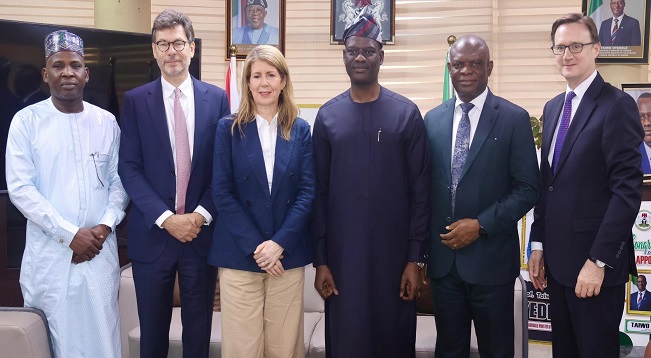
The UK Minister for Africa and International Development, Baroness Jenny Chapman, has concluded a two-day visit to Nigeria, during which she announced a new £15 million Growth Programme, deepened cooperation on digital transformation and health, and visited communities benefiting directly from UK investment on the ground.

The visit, spanning Abuja and Kaduna, underscored the breadth and depth of the UK–Nigeria Strategic Partnership and marked a significant step towards both countries’ shared priorities.
The UK–Nigeria Growth Programme
The centrepiece was the meeting with Nigeria’s Minister of Finance and Coordinating Minister of the Economy, Mr. Taiwo Oyedele. During their meeting, they discussed the new UK–Nigeria Growth Programme. Over three years, it will accelerate economic transformation, unlock private investment and support Nigeria’s transition from macroeconomic stabilisation to sustained, reform-led growth.
Alongside the Growth Programme, the UK announced deeper collaboration on Nigeria’s digital economy through the SPRIRET initiative, delivered under the UK’s Digital Access Programme. SPRIRET will support digital governance reforms across five Nigerian states, reducing regulatory barriers and enabling greater investment and innovation in broadband, digital services and emerging technology.
The Minister of Finance and Coordinating Minister of the Economy, Mr. Taiwo Oyedele said: “We continue to value the UK–Nigeria relationship, one of the most important partnerships for both our countries. Today, that relationship extends beyond traditional ties and now focuses on development, growth, and shared prosperity.
“The UK–Nigeria Growth Programme helps bring this partnership to life—supporting capital market development, technology investment, small businesses, and technical assistance. We look forward to seeing how these opportunities deliver lasting benefits and drive progress for both countries.”
Trade and bilateral ministerial meeting
During the visit, Baroness Chapman met with the Minister of Industry, Trade and Investment, Dr Jumoke Oduwole. Discussions covered progress under the Enhanced Trade and Investment Partnership (ETIP), including boosting exports via the Developing Countries Trading Scheme, fintech and capital markets links.
Kaduna: building on two decades of partnership
In Kaduna, Baroness Chapman met with Governor Uba Sani to take stock of over 20 years of UK–Kaduna partnership and explore how cooperation can deepen shared priorities. She heard from the business community and key institutional investors about their investment aspirations and the role of the UK in supporting investment mobilisation and enabling climate finance.
She met with community animal health workers and livestock breeders to discuss the UK’s support on breeding techniques, animal health and livestock vaccines. She also visited Unguwan Sanusi Primary Health Care Centre, which serves approximately 20,000 people in Kaduna South, hearing directly from patients and frontline health workers about the impact of UK-supported health programmes.
At the end of the visit, the UK Minister for Africa and International Development, Baroness Jenny Chapman, said: “This visit has reinforced everything I believe about the UK–Nigeria partnership.
“That it is deep, it is real, and it is moving in the right direction. From launching our new Growth Programme with Honourable Minister Oyedele, to meeting from frontline health workers in Kaduna — every conversation this week has shown me a country full of ambition and a partnership that is genuinely delivering for both sides.
“Nigeria is a partner that the UK is proud to stand alongside and I leave more convinced than ever that the next chapter of this partnership is its most exciting yet. The UK is here for the long term, and we are ready to grow together.”
Haleon, a global consumer health company with a purpose to deliver better everyday health, is introducing its corporate identity across Nigeria in a phased transition. Trusted brands such as Panadol, Sensodyne, Macleans, Otrivin, Voltaren, Cac 1000 and Andrews Liver Salts remain unchanged in formulation, quality, and effectiveness.

Following the formal demerger from GSK, Haleon was launched on July 18, 2022, as an independent company 100% focused on consumer health. Haleon is the new home for brands like Sensodyne, Panadol, Centrum and others, trusted by millions worldwide for their proven effectiveness in improving everyday health.
From relieving tooth sensitivity or pain to providing essential vitamins and nutrients, our products are designed to fulfil Haleon’s purpose: to deliver better everyday health with humanity.
This revised corporate identity is a branding change only and does not affect the safety, quality, or efficacy of the products. Haleon is sharing this update as part of its commitment to transparency and consumer confidence, helping consumers continue to choose the brands they know and trust.
Haleon’s collaboration with Fidson Healthcare forms part of this approach, reinforcing the value of local production in supporting trusted everyday health brands in Nigeria.
Panadol Extra 100s and Panadol Pain & Fever 100s are currently being produced and supplied to the market under the Haleon identity. Sensodyne Rapid Action will bear the Haleon corporate identity from mid-June, followed by Andrews Liver Salts later this year.
In due course, additional brands—including Otrivin, Voltaren, Cac 1000, Macleans, and the wider Sensodyne portfolio—will also transition to the Haleon identity.
Haleon remains committed to ensuring consumers can continue to access the same high-quality brands at pharmacies, supermarkets and other retail outlets across Nigeria.
“As Haleon introduces its identity in Nigeria, we want consumers to feel informed and reassured. The trusted products they rely on remain the same in quality, formulation and effectiveness.
“At the same time, our local production approach in partnership with Fidson Healthcare supports reliable access to high-quality everyday health products in Nigeria,” said Himanshu Raj, Haleon General Manager for Sub-Saharan Africa.


Tech entrepreneur and SpaceX founder, Elon Musk, has become the world’s first trillionaire after the successful public listing of SpaceX pushed his net worth beyond the $1 trillion mark.

Elon Musk
According to multiple financial reports, Musk’s fortune surged to approximately $1.1 trillion following SpaceX’s historic stock market debut on June 12, making him the first individual in history to achieve the milestone.
The sharp increase in wealth was driven primarily by SpaceX’s initial public offering (IPO), which valued the company at more than $1.7 trillion at listing before rising above $2 trillion during its first day of trading. Musk’s holdings in SpaceX, combined with his stakes in Tesla and other ventures, significantly boosted his net worth.
Musk, 54, is also the founder or co-founder of companies including Tesla, SpaceX, Neuralink and The Boring Company. He acquired social media platform X, formerly Twitter, in a $44 billion deal and has remained one of the most influential figures in technology and business.
Financial analysts noted that Musk’s wealth now far exceeds that of any other billionaire.
Matt Durot, deputy editor at Forbes Wealth, said the gap between Musk and the world’s second-richest individual had widened significantly, with no other person currently close to the trillion-dollar threshold.
Despite the historic achievement, Musk’s vast wealth has reignited debates over global inequality and the responsibilities of ultra-wealthy individuals in addressing humanitarian challenges.
Advocacy groups have frequently pointed to issues such as hunger, disease eradication and access to education as areas where large-scale private philanthropy could make a significant impact.
In 2021, Musk publicly challenged the United Nations to provide a detailed plan showing how billions of dollars could help combat world hunger. Although a proposal was later presented, no donation followed.
Analysts note that much of Musk’s wealth remains tied to company shares rather than liquid cash, meaning his net worth can fluctuate significantly with market movements.
Nevertheless, the SpaceX IPO marks a historic moment in global finance, placing Musk in a wealth category previously considered unimaginable.
Commenting on Musk’s business achievements, Jamie Dimon, chief executive officer of JPMorgan Chase, described him as “the Edison of our time.”
Musk’s rise from co-founding internet startup Zip2 in the 1990s to becoming the world’s first trillionaire is regarded by many analysts as one of the most remarkable wealth creation stories in modern history.

UK, Nigeria Launch £15m Growth Programme to Accelerate Economic Transformation

Haleon Introduces New Corporate Identity in Nigeria

Elon Musk Makes History as the World’s First Trillionaire

NITDA Unveils Ambitious Strategy to Turn Southwest into Nigeria’s Next Innovation Powerhouse

Airtel Africa Foundation Publishes Inaugural Annual Report

CBN Extends PoS Geo-Fencing Enforcement Deadline to August 2026

Jumia Nigeria Records Strong Q1 2026 Growth as Technology-Led Strategy Drives Market Expansion

NCC Drafts New Rules for Virtual Mobile Operators

TD Africa, HPE Drive Conversations on the Future of Intelligent Networking

Anthropic Raises $65 Bn to Expand AI Research, Innovation




 Telecom3 days ago
NDSF 2026: Teniola, Ebeledike Inducted into Hall of Fame as NiRA, MTN, Digital Realty sweep top honors

 News3 days ago
Mobile Internet Gender Gap Widest in Africa – GSMA
 Telecom3 days ago
Airtel Africa Foundation Publishes Inaugural Annual Report

 E-Financial3 days ago
Access Holdings Affirms Long-Term Value Strategy @ 4th AGM

 Telecom3 days ago
Zoho Unveils Homegrown Server, Takes Bold Step Toward Tech Independence

 General News3 days ago
Kaspersky Warns of “Grey” Scam Websites Exploiting User Trust
 News2 days ago
UK, Nigeria Launch £15m Growth Programme to Accelerate Economic Transformation
 General News2 days ago
Haleon Introduces New Corporate Identity in Nigeria