

E-Financial
UBA Wins Big at The Bankers Award, the Oscars of the Financial Industry


United Bank for Africa (UBA) Plc, Pan-African financial institution, has once again proven its leadership on the continent, as the Banker Magazine crowned UBA the “African Bank of the Year 2017”.
This Banker Award is premier for Nigeria, as it marks the first time a Nigerian-headquartered bank will be wining the prestigious and highly coveted regional award.
To further demonstrate the group’s strength and dominance in the financial sector on the continent, four of UBA Group’s operations in Africa also led contenders in their respective countries to emerge the Best Bank of the Year 2017 in their respective markets.
UBA Congo, UBA Tchad, UBA Gabon and UBA Senegal emerged the Best Bank of the Year in Congo, Tchad, Gabon and Senegal, reinforcing the strong franchise of the Group across its chosen markets in Africa.
Notably, UBA Gabon and UBA Senegal won the same awards in 2016, as both subsidiaries of UBA Group remain the Banks to beat in Gabon and Senegal.
A publication of the Financial Times Newspaper, The Banker Magazine is a global financial intelligence magazine that provides global bank ratings/analysis and it is the definitive reference in international banking for high level decision makers globally.
According to the magazine, the aim of the award “is to highlight industry wide excellence within the global banking community.
The winner is selected from participating banks in each of the 120 countries from which entries are received for the competition.”
Explaining the rationale behind UBA carting multiple categories in its December issue, the Banker’s Magazine noted that Africa’s economic landscape has been unpredictable in recent times which resulted in recession in some of Africa’s best performing economies, while the region as a whole only expanded by about 1.3% in 2016.
“In these conditions only the most diversified and innovative of regional banks can prosper. And this is precisely why the United Bank for Africa (UBA) has scooped the 2017 regional winner award. For one, the lender registered impressive top- and bottom-line growth over the review period,” it noted.
The magazine went further to enumerate the various achievements recorded by UBA group during the period, noting that earnings for the year reached N384bn ($1.07bn) signalling 22% growth from its 2015 performance while profit before tax also grew, by 32%, to reach N91bn.
According to the organisers, “Equally impressive is UBA’s capital adequacy ratio which, at the end of 2016, stood at 20%, while its nonperforming loan ratio was a healthy 3.9%. Operating across 19 markets in Africa, the bank serves more than 14 million customers.”
It added that the Pan-African bank’s foray into various ventures in Africa also helped to clinch its activities in the year under consideration, stating, “Beyond the numbers, the bank has won and acted on a number of headline deals. These include the financing a new stadium in Douala, Cameroon, for the 2019 Africa Cup of Nations for $285m. In Senegal, more than $250m of trade finance was provided to the state oil company, while the lender acted as arranger and bank agent in the raising of $160m to finance road infrastructure. The bank’s digital tax collection solutions are also helping regional governments in Senegal and Burkina Faso.”
The organisers noted that UBA is making impressive strides in the digital space, adding that in terms of internet banking, the organisation processed 7 million transactions valued at more than N600bn in 2016.
Mobile banking processed transactions valued at N70bn over the same period. UBA has also launched eMailMoni, a service that lets customers transfer funds via e-mail, while Chat Banking allows clients to perform basic transactions through social media platforms. “For these reasons, and others, UBA is the winner of our 2017 African Bank of the Year award,” the Magazine stated.
Mr. Kennedy Uzoka, group managing director/chief executive officer, UBA Plc, who was delighted by the recognition from The Bankers said; “These awards mark another milestone for UBA Group and is a testament of the diligent execution of the bank’s strategic initiatives on customer service. Being recognized as Africa’s best bank complements positive feedback from customers and is a recognition of our improving efficiencies, service quality and innovation. I therefore dedicate it to our growing loyal corporate and retail customers, who are our essence. Given our heritage commitment to Africa’s development, we continue to impact lives through our service as well as funding to individuals, businesses and government.”
Uzoka added; “The bank remains focused on its goal of democratizing banking in Africa, leveraging on new technologies and our rich pool of talent. It is satisfying that our efforts towards leadership are yielding great results. We continue to gain market share across our chosen markets, as we deepen financial inclusion, meeting basic and complex financial service needs of the growing African population. We are Africans and determined to change the narrative of financial services in Africa and this is just the beginning,” he noted.
On his part, Mr. Emeke Iweriebor, regional CEO, UBA Francophone Africa, described the awards as exciting, stating that the bank’s great work in Africa is increasingly being recognized.
Iweriebor who dedicated the awards to the bank’s esteemed customers, said “Our pioneering innovations in the African banking sector are undoubtedly critical to the growth and development of the continent. Africa’s banking sector has come a long way but we still have a lot to do. We at UBA Group are dedicated to being a critical part of this transformation.”
He added that the bank will continue to leverage its local knowledge, global exposure as well as presence to drive positive change in Africa, working actively with the government, local businesses, regulators and other stakeholders in deepening financial services.
The Banker award’s “Bank of the Year Awards” are widely regarded as the Oscars of the Banking Industry. For 90 years, The Banker has been the world’s leading monthly journal of record for the banking industry. The organisers note that the aim of the awards programme is to highlight industry wide excellence within the global banking community.
The Banker selects one winning bank for each of the 120 countries that are covered. Over 1,000 applications are entered and judges select winning banks based on the ones that have made most progress over the past 12 months.
UBA was incorporated in Nigeria as a limited liability company after taking over the assets of the British and French Bank Limited who had been operating in Nigeria since 1949.
The United Bank for Africa (UBA) Plc merged with Standard Trust Bank in 2005 and from a single country operation founded in 1949 in Nigeria – Africa’s largest economy – UBA has become one of the leading providers of banking and other financial services on the African continent.
The Bank provides services to over 14 million customers globally, through one of the most diverse service channels in sub-Saharan Africa, with over 1,000 branches and customer touch points and robust online and mobile banking platforms.
UBA was the first Nigerian bank to make an Initial Public Offering, following its listing on the NSE in1970. It was also the first Nigerian bank to issue Global Depository Receipts.
The shares of UBA are publicly traded on the Nigerian Stock Exchange and the Bank has a well-diversified shareholder base, which includes foreign and local institutional investors, as well as individual shareholders.



The International Monetary Fund (IMF) has warned that the rapid expansion of stablecoin usage in Nigeria could significantly weaken demand for the naira and reduce the effectiveness of domestic monetary policy.

This is coming as the country recorded about $59 billion in crypto-asset inflows between July 2023 and June 2024.
The IMF said in it’s report titled “Stablecoins in Nigeria: A Growing Cross-Border Channel,” that the growing adoption of dollar-pegged digital assets for payments, remittances, and savings reflects deeper macroeconomic pressures in Nigeria, including elevated inflation, foreign exchange scarcity, and persistent currency depreciation.
According to the Fund, these conditions have increased the attractiveness of stablecoins as both a store of value and a medium of exchange, particularly among individuals and businesses seeking stability amid exchange rate volatility.
The IMF warned that the widespread use of U.S. dollar-denominated stablecoins effectively represents a form of “digital dollarisation,” which could erode demand for the naira and weaken the Central Bank of Nigeria’s (CBN) ability to transmit monetary policy through interest rates and exchange rate interventions.
Nigeria remains one of the world’s most active digital asset markets, ranking second globally in Chainalysis’ 2024 Global Crypto Adoption Index and sixth in the 2025 edition.
The IMF further noted that the country accounts for nearly 60 per cent of stablecoin inflows into sub-Saharan Africa since 2019, underscoring its dominant role in regional crypto activity.
The report also highlighted the appeal of stablecoins in reducing transaction costs and improving the speed of cross-border payments.
However, the IMF cautioned that the increasing shift of payment activity from traditional banking systems to crypto exchanges and digital wallets may create regulatory blind spots.
It warned that such developments could complicate the monitoring of capital flows and increase exposure to illicit financial risks, including money laundering.
Despite these concerns, the Fund did not advocate restrictive measures. Instead, it called for a balanced policy approach that addresses the structural drivers of stablecoin adoption while strengthening oversight frameworks.
Key recommendations include maintaining macroeconomic stability to support the naira, enhancing regulatory clarity for stablecoin-related activities, and strengthening coordination between the Central Bank of Nigeria (CBN) and the Securities and Exchange Commission (SEC).
The IMF also urged improved transaction data collection through blockchain analytics and continued investment in efficient, regulated payment infrastructure.
The Fund noted that stablecoin growth is largely driven by inefficiencies in cross-border payment systems, stressing that policy efforts should focus on narrowing these gaps while ensuring emerging risks remain effectively contained.

VeendHQ has said that its AI-powered credit platform, Vida AI, helped recover N69 million from a N172.5 million portfolio of loans that were more than 90 days overdue, in a pilot that highlights the growing role of technology in loan recovery and portfolio management.

The result comes at a time when lenders are under increasing pressure to improve recovery outcomes while managing the cost, reputational risk, and operational burden associated with overdue loans.
For many credit providers, the challenge is no longer only how quickly loans can be approved, but how effectively repayment can be monitored and delinquent loans can be recovered after disbursement.
According to VeendHQ, the pilot delivered a 40 percent recovery rate on the overdue loan portfolio.
The company said the result significantly outperformed traditional recovery benchmarks, where a five percent recovery rate on a similar loan book would amount to about N8.6 million.
VeendHQ said the pilot demonstrates how Vida AI can support lenders beyond credit assessment, extending into repayment monitoring, collections, and recovery.
“Credit access is only one side of lending. The bigger challenge for many lenders is what happens after disbursement,” said Olufemi Olanipekun, co-founder and CEO of VeendHQ.
“Vida AI helps lenders make smarter decisions across the credit lifecycle, from approval to repayment and recovery.”
VeendHQ, a Nigerian fintech company building digital credit infrastructure, developed Vida AI as an artificial intelligence-powered platform for lenders, merchants, and financial institutions.
The platform supports credit assessment, identity verification, repayment collections, and loan management workflows.
With the recovery pilot, the company is positioning Vida AI beyond loan origination, as a tool for lenders seeking to improve repayment performance and manage overdue portfolios more efficiently.
Delinquent loans remain a major cash-flow challenge for lenders.
Once loans exceed 60 to 90 days past due, recovery becomes more difficult, expensive, and unpredictable. Traditional approaches such as manual calls, recovery agents, and legal escalation often increase costs without significantly improving recovery rates.
VeendHQ said Vida AI’s recovery workflow enables lenders to upload overdue loan records, verify borrower information, assess repayment capacity, and trigger automated recovery actions.
This gives lenders better visibility after disbursement and allows recovery teams to prioritize overdue portfolios more effectively.
“If lenders cannot recover efficiently, they become more conservative with lending. That affects consumers, small businesses, and the wider credit market,” Olanipekun said.
“Better recovery infrastructure gives lenders more confidence to lend, manage risk, and keep credit flowing.”
The company said the recovery use case is especially relevant for banks, microfinance institutions, digital lenders, cooperatives, and merchants managing loans that are 60 to 180 days past due.
It added that it plans to deepen Vida AI’s recovery capabilities for credit providers seeking to improve recovery performance without relying solely on manual methods.
“As lending expands across Nigeria and Africa, recovery infrastructure is becoming as critical as origination,” Olanipekun said. “Tools that improve both will define which lenders can scale sustainably.”
The pilot, VeendHQ says, points to a broader shift in the credit market: approval speed alone is no longer enough. Increasingly, lenders will be defined by how effectively they monitor repayment, recover overdue loans, and manage portfolio risk over time.

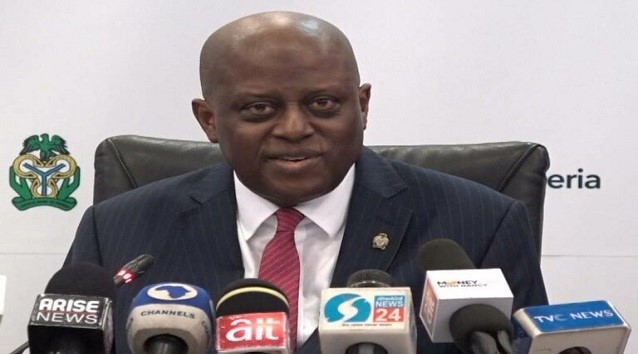
The Central Bank of Nigeria has directed banks, fintech firms, and other payment service providers to store payment transaction data generated within the country on local servers from January 1, 2027, as part of new measures to strengthen oversight of the fast-growing digital payments ecosystem.

The directive was contained in a circular issued by the Payments System Supervision Department of the CBN on Monday and addressed to deposit money banks, microfinance banks, mobile money operators, switching and processing companies, payment terminal service providers, payment solution service providers, super agents and other licensed operators in the payments industry.
The circular, signed by the Director of the Payments System Supervision Department, Rakiya Yusuf, also introduced new market structure rules, beneficial ownership disclosure requirements and systemic oversight measures for payment service operators.
According to the apex bank, the reforms became necessary following the rapid expansion of electronic payments and digital financial services across the country.
The CBN said it had observed “significant structural developments within the Nigerian Payments ecosystem, characterised by rapid growth in electronic payments, increasing adoption of digital financial services, and the emergence of operators with substantial market presence across key payment activities.”
It noted that while the growth had improved innovation, efficiency and financial inclusion, it had also created concerns around market concentration, operational dependence, ownership transparency and the storage of critical payments data.
To address these concerns, the regulator ordered all financial institutions facilitating payments in Nigeria to ensure that transaction data generated within the country are stored domestically.
The circular stated, “All Financial Institutions and participants facilitating payments within Nigeria shall ensure that payments transaction data generated within Nigeria are stored and managed in Nigeria in accordance with data protection laws and regulations applicable in Nigeria.”
It added that “all affected Financial Institutions shall fully comply with this requirement effective January 1, 2027.”
The move is expected to strengthen regulatory oversight, enhance data sovereignty and ensure that sensitive payment information remains within Nigeria’s jurisdiction.
It also aligns with broader efforts by regulators globally to localise critical financial data and reduce reliance on offshore infrastructure.
Beyond data localisation, the CBN ordered banks, payment service providers and other financial institutions with digital payment operations to disclose the ultimate beneficial ownership of significant shareholders.
According to the circular, institutions must maintain accurate and up-to-date records of their ultimate beneficial owners and make such information available to the apex bank upon request.
The regulator said the disclosure requirement must comply with existing anti-money laundering, counter-terrorism financing and counter-proliferation financing regulations.
The directive builds on previous CBN efforts to strengthen beneficial ownership transparency as part of wider measures to combat money laundering and illicit financial flows in the financial system.
The central bank also introduced fresh competition rules aimed at limiting excessive market dominance in the payments industry.
Under the new framework, any financial institution that controls more than 25 per cent of the card-issuing market in a rolling 12-month period will not be allowed to hold more than 15 per cent of the merchant-acquiring market during the same period.
Similarly, operators with more than 25 per cent market share in merchant acquiring activities will be restricted to a maximum of 15 per cent market share in card issuing activities.
Merchant acquiring refers to processing card payments on behalf of merchants, while card issuing involves providing payment cards to customers.
The CBN said all regulated entities would be required to submit monthly market share returns based on prescribed templates and timelines.
It further directed affected institutions to take the necessary measures to achieve full compliance with the market structure requirements by December 31, 2026.
The apex bank said the new measures were designed to “improve transparency through beneficial ownership disclosure, address concentration risk, promote a fair, competitive, and resilient payments ecosystem.”
According to the regulator, the reforms are also intended to “safeguard the integrity of the Nigerian payments system and ensure the localisation of payments transaction data within Nigeria.”
The CBN warned that it would closely monitor compliance and impose sanctions where necessary.
“The CBN shall monitor compliance with the provisions of this Circular and may, where necessary, impose supervisory sanctions in accordance with applicable laws, regulations, and guidelines,” the circular stated.
The latest directive comes amid a rapid expansion of Nigeria’s digital payments industry, with electronic transactions reaching record levels and regulators increasing oversight of banks, fintech firms and other payment operators to address operational, cybersecurity and systemic risks.

Nigeria Launches FreeTV Nationwide

NIPOST Plans Digital Postcodes for Every Building in Nigeria

Enugu to Host The Gathering on 100 as MTN-Backed Youth Movement Expands Across Nigeria

Prof. Dzidonu Urges Universities to Produce Deep Thinkers for AI Age

FG Debunks Claims of Plans to Introduce Telecoms, Fuel Taxes

CBN Extends PoS Geo-Fencing Enforcement Deadline to August 2026

NCC Drafts New Rules for Virtual Mobile Operators

London Strengthens Global Investment Ties with Africa @ First Ever London-Africa Business Summit

FG Targets Alleged N3tn Capital Flight, Opens Airtime Credit Market to Nigerian Fintechs

Easybuy Partners WAWUAfrica to Upskill 10 Million Youths and Women, Boosting Nigeria’s Economic and Financial Inclusion




 E-Business2 days ago
Galaxy Backbone @ 20, Pledges Nationwide Connectivity, Data Sovereignty

 E-Financial2 days ago
CBN Orders Banks, Fintechs to Host Payment Data Locally

 E-Financial2 days ago
Analysts Warn of Growing “Crowded Trade” in Foreign Exchange Markets

 Telecom1 day ago
MTN Foundation Commits N32Bn in Projects across Nigeria

 Telecom2 days ago
Nigeria Innovation Summit 2026 Set to Convene West Africa’s Brightest Minds to Shape the Future of Innovation

 Telecom2 days ago
UK Bans TikTok, Instagram, Facebook for Under-16s in Landmark Crackdown

 E-Financial2 days ago
ACAMB Kicks-off 30th Anniversary Celebration With Tree Planting Initiative

 News2 days ago
PalmPay Joins Industry Leaders @ Digital Pay Expo 2026