

General News
Optimism Builds that Dollar Turning Corner Lower


By Jameel Ahmad, Global Head of Currency Strategy & Market Research at FXTM
Currencies throughout Asia have welcomed the news that the Dollar has tumbled to a near 3-month low. A number of different currencies in the region have advanced against the Greenback, with the weakening momentum for the Dollar benefiting the Indian Rupee the most at time of writing.
Indications that the market is turning more negatively towards the Greenback would represent very positive news for emerging market currencies, in particular those having received a pounding over the past couple of months in response to prolonged Dollar strength. This can be seen during trading today with the Thai Baht, Chinese Yuan, Philippine Peso, Indonesian Rupiah, Malaysian Ringgit and Indian Rupee all strengthening.
The exact catalyst behind why the Dollar is weakening is not easy to point out, but the main contender is that fading fears over trade tensions are providing traders with a reason to take profit on Dollar positions that have been building for months. Another round of reassuring comments from authorities in China indicating that the Yuan will not be used as a weapon during-trade tensions has also been looked upon positively by the market.
It does go without saying overall that the prospects for more potential weakness in the Dollar moving forward would of course be widely welcome news for a long list of currencies across the globe.
As we head into the conclusion of the trading week the South African Rand has benefited the most from weakness in the Greenback. The Rand has strengthened above 4% over the past five days, with traders looking very positively on the news that the South African Reserve Bank (SARB) was able to leave monetary policy unchanged yesterday. The news earlier this week that inflationary pressures in South Africa unexpectedly eased in August allowed the SARB to maintain resilience and not follow the recent path of both the Russian and Turkish central banks to raise interest rates, which was a move needed in both the cases of Russia and Turkey to ease inflationary pressures and defend both the Ruble and Lira from further weakness.
It is not surprising that the Turkish Lira remained volatile and has shifted between both gains and weakness in the aftermath of Turkey’s finance minister announcing his plan to combat the Lira currency crisis. The market, as you would expect, has looked negatively upon the announcement that there has been a sharp downgrade in GDP growth forecasts for both 2018 and 2019. Growth is now expected to slow below 4% this year and narrowly above 2% in 2019, which is sharp contrast to the overall growth of 7.4% that the economy enjoyed last year.
I would keep a very close eye on the British Pound over the upcoming sessions despite the news that the Cable has rallied to its highest levels in nearly three months. Traders appear to have repositioned in recent sessions that there will eventually be a breakthrough in the UK and EU negotiations over Brexit. However, the latest summit in Salzburg failed to result in a positive outcome and the rally in the Pound could fall like a house of cards if markets begin to reprice into the market a potential hard-Brexit eventuality.


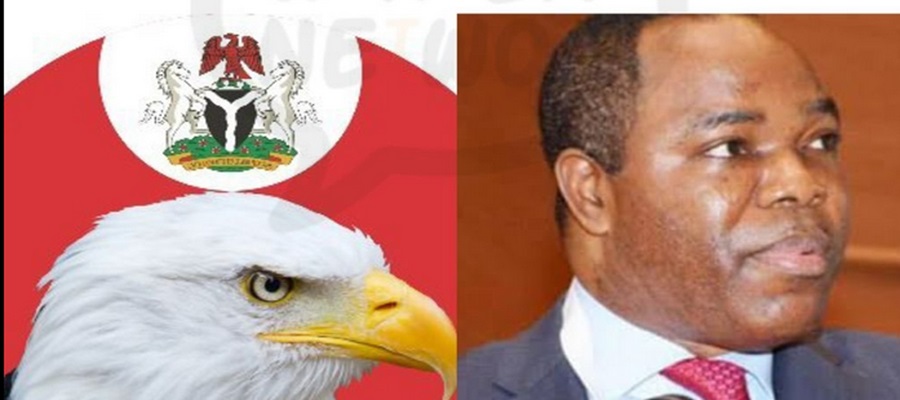
Economic and Financial Crimes Commission (EFCC), has detained Tunde Ayeni, former chairman of defunct Skye Bank Plc, for alleged fraud involving N36.5 billion and $30 million.

Tunde Ayeni, former chairman of defunct Skye Bank Plc,
This follows the probe of alleged diversion of N36.5 billion and $30 million secured as loans from Polaris Bank Plc through companies linked to Ayeni.
He was arrested by EFCC operatives in Abuja on April 23, 2026, and is still been held in custody as at the time of filling the report.
Dele Oyewale, spokesperson, EFCC, confirmed the arrest on Friday but declined to provide further details.
Ayeni is under investigation for diverting funds obtained for marine security, electricity distribution, and real estate projects into other unknown projects.
Investigators allege the loans were instead channelled into telecom investments tied to NITEL/MTEL assets via a NATCOM account.
About 12 firms believed to be connected to Ayeni are also under investigation for their role in securing the loans.
The EFCC is expected to file charges once the investigation is concluded.


Summit Household Solutions Limited has opened its ultra-modern manufacturing facility in Ota, Ogun State, as part of its efforts to scale production of home and personal care products in Nigeria.

The plant, which started operations in April 2025, produces items such as dishwashing liquids, handwash, sanitisers and multipurpose liquid soaps, with an annual capacity estimated at 7,000 tonnes.
Commissioning the facility on behalf of Governor Dapo Abiodun, the Permanent Secretary, Ministry of Commerce, Trade and Investment, Mr Kehinde Akintomide, said the investment reflects growing confidence in Ogun State’s business environment.
He noted that the state hosts over 6,000 manufacturing firms and described the development as consistent with ongoing efforts to promote industrialisation, attract investment and reduce reliance on imports under the Federal Government’s Renewed Hope initiative.
Akintomide disclosed that the factory has already employed more than 50 Nigerians, with projections to exceed 250 jobs as operations expand.
In his remarks, the General Manager of the company, Mr Sadiq Ali, said the facility represents a major step in Summit’s growth plans, adding that its flagship brand, 2Sure, currently leads production at the plant.
He also revealed that the company is preparing to introduce new home and personal care products later this year.
Summit Household Solutions manufactures the 2Sure brand and has expanded into the personal care segment with Lewar, a premium beauty soap line positioned for quality and affordability.
Among dignitaries present were the Onikotun of Otun, Ota, Oba Abdulakeem Odunaro, representing the Olota of Ota, Prof. Adeyemi Abdulkabir Obalanlege; the Agba Akin of Ota, Chief Dada Olusola; Director of Investment, Ms Yemisi Folarin; Director of Industrial Promotion, Mr Femi Adeboye; former Managing Director of 7Up Bottling Company, Mr Ziad Maalouf; and the Chief Executive Officer of OmniRetail, Mr Deepanker Rustagi.
Speaking at the event, Maalouf, who conceived the 2Sure brand during his time at 7Up Bottling Company, expressed satisfaction with its growth and commended Summit Solutions Limited for advancing the brand.
The special guests were conducted around the facility, and the programme was concluded with a luncheon.



NCC Blames Growing Data Demand Network Quality Issues

EFCC Detains Ayeni, Ex-Skye Bank Chairman over Alleged N36.5Bn, $30m Fraud

Bank Customers to Pay N1,500 for ATM Card Issuance, Replacement – CBN

Summit Factory Opens in Ogun, Targets Hygiene Market Expansion

Kaspersky Discovers Vulnerability in Qualcomm Snapdragon Chips that can Lead to Data Loss & Device Compromise

NITDA Takes Over National Digital Architecture System

FG to Gift Nigerians over 100 Free TV Channels from May 15

FG Shifting Focus to “Meaningful Connectivity” to Drive Inclusion – Minister

Microsoft Revamps Copilot in Workplace AI Push

Dangote Refinery Debunks Speculations on IPO




 Telecom3 days ago
NCC Orders Telcos to Give Users Free Airtime for Poor Network Service
 Telecom2 days ago
NCC Blames Growing Data Demand Network Quality Issues
 E-Financial2 days ago
Bank Customers to Pay N1,500 for ATM Card Issuance, Replacement – CBN

 E-Financial3 days ago
EXPLOSIVE: How Titan Trust Bank Allegedly Used Union Bank’s Own Assets to Fund Its Takeover

 Telecom3 days ago
MTN to Pay Subscribers After NCC Cracks Down on Service Failures

 E-Financial2 days ago
ATM Card Fees Jump to ₦1,500 as CBN Scraps Maintenance Charges
 E-Business2 days ago
Kaspersky Discovers Vulnerability in Qualcomm Snapdragon Chips that can Lead to Data Loss & Device Compromise

 News2 days ago
CADEF, Stakeholders Push for Zero Added Sugar Standards in Infant Foods