

Broadcasting
GSMA, Mofilm Call for Short Films at Mobile World Congress

The GSM Association (GSMA), the global trade group for the mobile industry and Mofilm, a pioneer of short films for mobile and on-line distribution, last week announced the first Global Mobile Film Festival at the Mobile World Congress in 2009, with an official ‘call for films’ to international film-makers.
The Global Mobile Festival follows the success of the GSMA’s previous partnerships with the Sundance Film Festival to create the Global Short Film Project, which debuted at the Mobile World Congress in 2007; and this year, showcasing with Mofilm, the work of short film directors representing the Cannes, Locarno, Shanghai and Sundance Festivals supported by the actor, director and film maker Robert Redford and the actress, writer and director Isabella Rossellini.
"We have found there is avid interest and appeal in the idea of showcasing short films on the mobile screen, not just in terms of the ability to reach audiences in a very personal and direct way, but also in the potential scale and the viral nature of the medium," said Michael O’Hara, chief marketing officer of the GSMA.
"There are already more than three billion screens in the hands of users and with increasing sophistication of mobile broadband networks and rapidly evolving device capabilities, the time is right to create a festival devoted to small screen movies and to invite international film makers to participate for the first time."
Andy Baker, managing director of Mofilm said "I’m delighted that what started as an experimental project with leading film makers in 2007 will now become a key part of the mobile and film industry calendar. Mobile represents a huge opportunity for content and we are proud to be working within both industries to showcase the very best talent, globally for mobile."
GSMA and Mofilm are seeking films up to five minutes in length, made both using traditional film making techniques by established and upcoming film directors, as well as films made using mobile devices themselves. Submission forms and films can be uploaded on-line at the Mofilm website:
www.mofilm.com until the deadline of November 28th 2008.
Films will be judged by an international jury of film, festival and mobile content experts, with the best films showcased at the GSMA’s Mobile World Congress, the world’s largest communications industry event that attracts more than 55,000 visitors from the mobile, entertainment and many other industry sectors to Barcelona each February.
Mofilm will present Awards for the Best Film at the Congress, selected by a special jury of film directors and film festival executives.
GSMA represents more than 750 GSM mobile phone operators across 218 countries and territories of the world. The Association’s members represent more than 3 billion GSM and 3GSM connections – over 86% of the world’s mobile phone connections. Its primary goals are to ensure mobile phones and wireless services work globally and are easily accessible, enhancing their value to individual customers and national economies, while creating new business opportunities for operators and their suppliers.
Mofilm however, is a pioneer of content for mobile and online services, working with the mobile industry and film makers to promote exciting and usable services. Based in the UK, Mofilm has worked previously with GSMA and leading film festivals and specializes in creating compelling ‘in show’ experiences, content distribution and provides a range of consulting services.


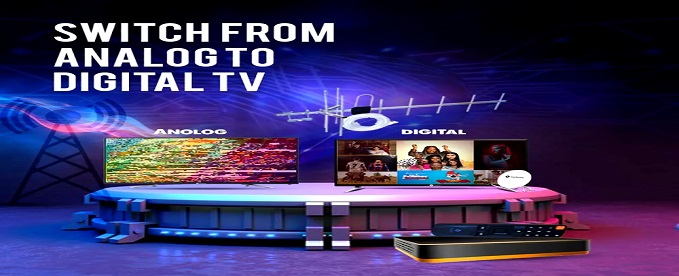
National Broadcasting Commission (NBC) has unveiled a new “Big Picture” strategy aimed at achieving full nationwide Digital Switch-Over (DSO) by December 31, 2028.

DSOis designed to provide Nigerians with superior picture and sound quality while unlocking an estimated N605.2 billion in advertising revenue and generating over $1 billion from digital spectrum auctions.
Charles Ebuebu, director-general of NBC, in a statement issued on Monday, said the revised strategy adopts a converged broadcasting model combining Direct-to-Home (DTH), Digital Terrestrial Television (DTT) and Internet Protocol (IP) systems to expand access to digital television services nationwide.
The Commission also announced June 17, 2026, as the official national launch date for the renewed rollout, describing the framework as a more practical pathway toward a sustainable and affordable digital broadcasting system after nearly two decades of delays.
Ebuebu, said that the transition is no longer being treated as a competition between technologies but as a unified access solution tailored to Nigeria’s geographic and infrastructure realities.
“The Big Picture strategy recognises convergence as the future of broadcasting and aligns with the 2012 DSO White Paper, which adopted both terrestrial and satellite standards including DVB-T and DVB-S2 technologies,” the statement said.
NBC said the Nigerian Communications Satellite Limited (NIGCOMSAT) would play a central role in national content distribution, particularly in underserved and remote areas where terrestrial infrastructure remains weak.
The Commission cited countries such as the United Kingdom, Australia, Kenya, South Africa and Morocco as examples of jurisdictions that successfully adopted hybrid digital broadcasting models to accelerate migration from analogue systems.
On affordability, NBC assured Nigerians that the proposed FreeTV platform would remain subscription-free for baseline access, adding that compatible DVB-S2 decoders currently cost between N15,000 and N25,000. It said discussions were ongoing on possible subsidy arrangements and financing options for low-income households.
The regulator also defended its plan to support both local manufacturing and transitional importation of set-top boxes, noting that Nigeria would require millions of devices over several years to complete the migration.
Beyond transmission, NBC disclosed plans to introduce a national audience measurement system under the GARB ratings framework to improve advertising transparency and broadcasting analytics.
It projected that the DSO programme could unlock Nigeria’s estimated N605.2 billion advertising market while also freeing up valuable digital dividend spectrum estimated at over $1 billion.
NBC further said Nigeria’s creative industry, valued at about N5 trillion and employing more than 4.2 million people, stands to benefit from expanded distribution channels and improved content monetisation.
Broadcasters, it added, would enjoy free carriage on the platform for 18 months, alongside wider national reach, indigenous language channels and improved commercial opportunities.

Association of Licensed Set-Top Box Manufacturers of Nigeria (STBMAN) has warned that the unilateral implementation transition from analogue to digital broadcasting, could trigger confusion, legal disputes, and disruptions capable of undermining the credibility of the 2027 general election.

STBMAN urged President Bola Ahmed Tinubu to urgently intervene and halt what it described as a unilateral implementation process, pending wider consultations with stakeholders in the broadcasting industry.
Sir Godfrey Ohuabunwa, chairman of the association in statement in Abuja, faulted the current implementation process by the National Broadcasting Commission’s (NBC).
STBMAN said that although it supports Nigeria’s digital migration programme, the approach currently being pursued by the NBC appeared rushed and inconsistent with the 2012 Digital Switchover (DSO) White Paper approved by the Federal Executive Council.
The association argued that the arrangement being presented as a Digital Switchover was merely the aggregation of channels on NigComSat platforms rather than a fully Digital Terrestrial Television (DTT) migration as originally envisioned under the national DSO framework.
According to the group, failure to carry critical stakeholders along could erode public confidence, weaken access to information, and create avoidable disruptions in the broadcasting sector at a politically sensitive period ahead of the 2027 elections.
It noted that millions of Nigerians still depend on free-to-air broadcasting for information dissemination, civic education, election coverage,e and public enlightenment.
The group stressed that any poorly coordinated migration process could result in signal disruptions, public confusion, and unequal access to information during the election season.
STBMAN also expressed concern that the NBC risked creating a conflict of interest by acting simultaneously as regulator and content aggregator, contrary to the spirit of the 2012 White Paper and global best practices guiding digital broadcasting migration.
The association, therefore, called for an urgent national stakeholders’ roundtable, an independent legal and technical review of the DSO process, review and update of the 2012 DSO White Paper, nationwide public sensitisation on the implications of digital migration, and measures to protect local broadcasting and public interest.
It maintained that it was not opposed to digital migration but insisted that the process must be transparent, inclusive, lawful, and technically sound.
The group warned that failure to properly manage the transition could weaken democratic communication structures, waste public resources, and negatively affect national cohesion and the credibility of the 2027 elections.
“Mr. President, Nigeria cannot afford confusion in its broadcasting system at a time the nation is preparing for another critical democratic transition. The time to act is now,” the statement added.
Association of Licensed Set-Top Box Manufacturers of Nigeria, represents domestic electronics manufacturers responsible for producing the decoder boxes needed for the country’s transition from analogue to digital broadcasting.
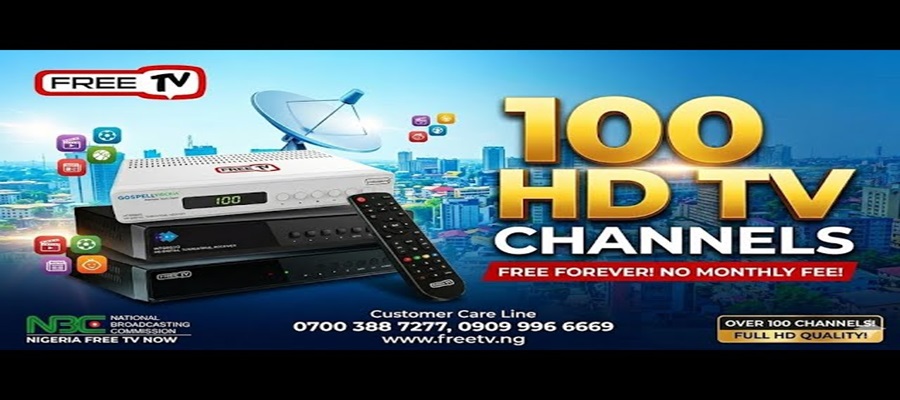
Federal government, yesterday, said that it will now launch the so-called FreeTV, with over 100 channels for news, sports, education, entertainment and children’s programming in multiple Nigerian languages on June 17.

National Broadcasting Commission (NBC) had initially scheduled for May 15 for the launch.
But the new date was announced by Mohammed Idris, minister of Information and National Orientation, on Wednesday during a facility tour of NIGCOMSAT, alongside Dr Charles Ebuebu, director general of the National Broadcasting Commission (NBC) and other stakeholders.
Idris said the long-awaited migration from analogue to digital broadcasting had finally become a reality after years of failed attempts and delays, describing the project as a major breakthrough for Nigeria’s broadcasting industry.
“I have been grappling with this idea of the DSO for many years. Moving our transmissions from analogue to digital has now happened and is ready to be commissioned by June 17,” the minister said.
He revealed that several channels had already been bundled onto the platform, adding that the digital transition would transform broadcasting, advertising and television consumption across Nigeria and Sub-Saharan Africa.
According to him, the new platform introduces scientific audience measurement tools capable of tracking viewership patterns in real time, thereby giving advertisers reliable data for targeted campaigns.
“Now science is at play. If you are viewing a station, we know who is watching what and how many people are watching. Advertisers can now take informed decisions about the kind of programming Nigerians want to watch across all demographics,” Idris stated.
The minister said the collaboration between NIGCOMSAT, NBC, the Ministry of Communications and the Ministry of Information had made the digital transition possible, while commending President Bola Tinubu for providing the necessary support and resources.
He described previous DSO efforts as limited and expensive due to encrypted set-top boxes but noted that the new system would be free and accessible to millions of Nigerians.
“In the past, the boxes were encrypted and costly. Now this is free. Government has taken off some of those costs on behalf of Nigerians,” he said.
Idris stressed that unlike earlier pilot phases restricted to a few cities, the new digital platform would have nationwide and regional reach through NIGCOMSAT’s satellite infrastructure.
“Everybody can now watch whatever he wants in real time and painlessly. Free TV everywhere for everybody”, he declared.
The minister also hinted that the platform would challenge the dominance of existing pay-TV operators by offering Nigerians wider viewing options at no cost.
“I don’t want to always use the word ‘substitute’, but this offers opportunities you didn’t get before. You no longer have that monopoly again. Competition is going to set in. Content will grow and viewership will grow,” he said.
He added that the platform would initially launch in standard definition, SD, before quickly transitioning to high definition, HD, bringing Nigerian broadcasting in line with global standards.
“Soon after the launch, we are moving to HD. Nigeria will now compete globally. What you watch here is what you get anywhere,” Idris said.
The minister further disclosed that the service was already available via mobile application and had successfully undergone testing ahead of the official unveiling.
Also speaking during the tour, managing director and chief executive officer of NIGCOMSAT, described the collaboration between NIGCOMSAT and NBC as a strategic partnership that has strengthened service delivery and raised operational standards within Nigeria’s digital broadcasting ecosystem.
According to her, ongoing investments and satellite expansion plans under the current administration will guarantee reliable and continuous service delivery.
“The work has only just started. The work has only just begun,” she said.
Among those who accompanied the Honourable Minister on the tour were Salihu Abdullahi Dembos, director-general, Nigerian Television Authority (NTA); Jibrin Baba Ndace, director-general, Voice of Nigeria (VON); Mohammed Bulama, director-general, Federal Radio Corporation of Nigeria (FRCN); and Lanre Issa-Onilu, director-general, National Orientation Agency (NOA), alongside other senior government officials and dignitaries.

Kaspersky Reveals NFC Relay Attacks on Smartphones Surged by 188% in 2026

Coscharis Technologies, Huawei Unveil IdeaHub S3 Interactive Board in Nigeria

Pope Calls for ‘Disarming’ of AI, Warns of “New Forms of Slavery”

NITDA Raises Alarm over Fake ‘CPM’ Platform Extorting Victims Using Agency’s Name

NBC Sets 2028 Deadline for Full Digital Switch-Over

MTN, VDT, Zoracom, Digital Realty Back 2026 Girls in ICT Campaign

Vitel Wireless Partners Fintechs to Expand Access to Services

FG Okays 112 as Toll-Free National Emergency Response Number

Opay Plans IPO in US, Targets $4Bn in Valuation

Elon Musk Launches XChat with Video Calling to Take on WhatsApp, Messenger




 Telecom1 day ago
NITDA Inaugurates Regulatory Sandbox Team to Drive Digital Innovation

 E-Financial1 day ago
Transfers Fail as Banks Suffer USSD Glitches

 Telecom1 day ago
Meet the 25 Media Professionals Chosen for MTN’s Elite Innovation Programme

 General News1 day ago
FG Classifies Ebola Importation into Nigeria as High Risk

 General News1 day ago
Court Orders FG to Reveal Identity of Local Contractors in $460m Abuja CCTV Project

 General News1 day ago
NCAA Suspends Services to Air Peace, Others over Debts

 News1 day ago
Legend Internet Repays N10Bn Commercial Paper

 News8 hours ago
Moniepoint Group Commits to Boost Hands-on, Entrepreneurship in Three Nigerian Universities with ₦3B Innovation Hubs