

News
Lafarge Trains Entrepreneurs to Bridge Skills Gap

Lafarge Holcim has instituted a three-year training programme aimed at increasing local content of its operations in Nigeria in order to bridge skills gap in the cement industry.
The programme is in partnership with the National Board for Technical Education, NBTE, Industrial Training Fund, ITF and National Consultative Assembly, NECA.
Speaking, Cross River State Governor, Ben Ayade at the 2018 Lafarge Community Day celebration in Mfamosing, Akamkpa Local Government Area of the state, lauded the company for its contributions towards reduction of unemployment among youths in the state.
He stated that the cement company has added value to the economy of the state by creating jobs as well as alleviating poverty in the state.
Ayade who was represented by his Special Adviser on Administration, Barrister Mark Obi said the government and people of Cross River were very delighted with Lafarge Holcim for all their contributions to the economy of the state.
“As a government, we are happy with what the cement giant is doing towards unemployment reduction and poverty eradication in the state.
“We are happy with your stride, government is ready to do everything within the limit of its powers to support the cement company in its quest to succeed in its good works.”
Earlier, Plant Manager of Lafarge Holcim Plc, Cross River State, Peter Robson said the company invested over N150 million in provision of health/safety, education, economic empowerment and infrastructure development which according to him, would provide succor to the host communities of Mfamosing green field plant situate in Akamkpa LGA of Cross River State.



President Bola Tinubu on Thursday urged Nigerians to pay their taxes, because the revenue is critical for his administration’s Renewed Hope Agenda to fund public infrastructure like roads, hospitals, and amenities across the country.

President Bola Tinubu
He spoke during the commissioning of interchange at Arterial Road N16 – Ring Road III Intersection linking Jahi District to Gwarimpa District of the FCT.
The project was among those earmarked to celebrate his third year anniversary and he was represented at the commissioning by Godswill Akpabio, Senate President.
He said: “I’m very proud to stand here to commission this Arterial road interchange N16 linking Jahi district to Gwarimpa District of the FCT.
“This is not just a bridge and slip roads, this is freedom of movement and time returned to the people, this is renewed hope that you can even drive on. This intersection used to choke the entirety of Abuja, gridlock stretched from Maitama to Gishiri, from Jahi to Gwarimpa; hours lost, fuel wasted, business were lost but today that story ends.
“This interchange opens up critical districts of the FCT and connects them smoothly to the rest of the FCT. Workers will get home earlier, security will improve because criminals strive when security stands still.
“Ladies and gentlemen, infrastructure is the foundation of prosperity which is the cardinal principle of this administration. Roads are the arteries of a nation, when we connect districts we connect destines and that is the logic of the renewed hope agenda, build the roads unlock the economy and let Nigerians strive.
“The Jahi-Gwarimpa interchange is prove that Nigeria is not beyond redemption. With focus, discipline, and political will, Nigeria will deliver and we are delivering, the FCT is delivering.”
The president also charged Nigerians and residents of the FCT to pay their taxes.
According to Tinubu, it would allow his administration to provide more infrastructural projects.
“Also pay your taxes and levies so that government can do even more for you,” he added.
News
MTN ASAP Enugu Stakeholders’ Conference Rallies More Action Against Youth Drug Abuse, Unveils N33Bn ASAP Impact

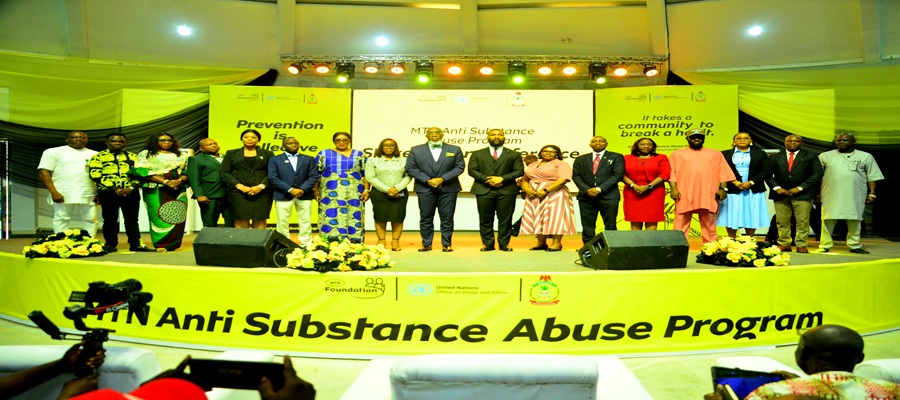
In a renewed push to confront the rising tide of drug abuse among Nigerian youth, stakeholders converged on Tuesday, June 9, 2026, at the ICC Dome, Enugu, for a State Stakeholders’ Engagement convened under the Anti-Substance Abuse Programme (ASAP).

The conference brought together government representatives, educators, development partners, and civil society actors to chart a unified path against substance abuse, with disclosures at the gathering revealing that an estimated ₦33 billion has so far been committed to developmental projects, programmes, and initiatives across the country, interventions that have impacted more than 33 million Nigerians directly and reached over 100 million through advocacy and awareness campaigns.
The Executive Governor of Enugu State, Barr. Peter Mbah, represented by the Secretary to the State Government, Prof. Chidiebere Onyia, commended the Foundation for its sustained investment in youth development and the fight against substance abuse.
He noted that the state’s transformation agenda is anchored in youth empowerment, education, healthcare, and human capital development – areas where the Foundation’s ₦33 billion commitment was already making a measurable difference.
“The MTN Foundation’s investment in youth development and the fight against substance abuse aligns directly with our administration’s transformational agenda. Initiatives like ASAP are exactly the kind of partnerships that move the needle on national development,” Prof. Onyia said.
He further urged other private sector players to emulate the Foundation’s example, stressing that the scale of Nigeria’s drug abuse demands sustained collaboration between government, the private sector, development partners, and civil society.
Addressing stakeholders, Odunayo Sanya, Executive Director of the MTN Foundation, said the Foundation, established in 2004 and fully funded by MTN Nigeria, was created to drive impact across health, capacity building, and economic empowerment, with deliberate focus on young people, who constitute the majority of Nigeria’s population.
She explained that the ASAP initiative, launched in 2019 in partnership with the National Drug Law Enforcement Agency (NDLEA) and the United Nations Office on Drugs and Crime (UNODC), was designed to reduce first-time drug use among young Nigerians through awareness campaigns and school-based interventions.
“We have reached over 50,000 students across the country and trained about 1,556 teachers as part of our efforts to create anti-drug ambassadors in schools and communities.”
“For us at the MTN Foundation, saving even one young person from substance abuse is a worthwhile achievement. The consequences go beyond the individual and affect families, communities, and the nation at large,” Odunayo said.
Looking ahead, she disclosed that the Foundation plans to reach more than 20,000 additional students in 2026 through expanded stakeholder engagements, school-based interventions, teacher training programmes, and community awareness campaigns.
She described substance abuse as a major threat to families, communities, and national development, stressing the urgent need for collective action to shield young people from addiction.
According to her, the Foundation’s mission is rooted not just in numbers, but in human outcomes – the lives, families, and futures it helps preserve.
The Executive Director, on her part, called on parents, educators, faith leaders, and community influencers to remain active partners in safeguarding the next generation from the dangers of substance abuse.
The intervention comes at a critical time. Fresh data presented at the conference indicate that over 360,000 youths in Enugu State – approximately 13.4% of the state’s young population – are actively involved in drug use.
Currently, the MTN Foundation (MTNF) and the United Nations Office on Drugs and Crime (UNODC) are conducting a comprehensive National Substance Use Survey to gather grassroots data on drug abuse, especially among secondary school students.

PalmPay has called for stronger infrastructure and better access to finance for small businesses as essential to the next phase of financial inclusion and economic growth in Nigeria.

This position was shared by Chika Nwosu, Managing Director of PalmPay Nigeria, during a panel session at Digital Pay Expo 2026, where regulators, fintech leaders, payment operators and other key ecosystem stakeholders gather to discuss the future of digital payments in Africa.
Speaking during a session focussed on advancing financial inclusion and SME growth, Nwosu said that while the micro, small, and medium enterprises remain central to economic activity, many still face real barriers around access to credit, reliable payment infrastructure, and the relevant digital tools needed to grow sustainably.
According to him, meaningful financial inclusion must go beyond onboarding more users into the formal financial rail. It must also address the structural issues that limit how small businesses participate, transact, and scale.
“SMEs contribute 40 per cent of the country’s GDP. For us in PalmPay, Financial inclusion is not just about enabling transactions. It is also about helping businesses access the tools and support they need to expand, build resilience, and create jobs.
He also highlighted the importance of digital literacy, noting that as digital tools and AI become more embedded in financial services, business owners must be equipped to use them effectively and responsibly.
For PalmPay, the future of inclusion will depend not only on innovation, but on how well the ecosystem reduces friction for small businesses and provides the infrastructure and financial support they need to grow.
Discussions at the event also pointed to the need for stronger collaboration across the ecosystem and more practical approaches to helping SMEs move from awareness to adoption of digital financial services.
PalmPay’s MD noted that unlocking the full potential of Nigeria’s SMEs will require a combination of accessible finance, financial education, trusted platforms, and coordinated ecosystem support.

Telcos Lose 30m Subscribers in 3-Year Slump due to NIN-SIM Link Policy

Pay Your taxes for Me to Do More – Tinubu

NCC Launches Maiden Women’s Leadership Mentorship Programme

FG Proposes Africa-Wide Payment Card without Conversion through US Dollar

Providus, Unity Bank Begin Integration Phase after Supreme Court Nod

CBN Extends PoS Geo-Fencing Enforcement Deadline to August 2026

London Strengthens Global Investment Ties with Africa @ First Ever London-Africa Business Summit

FG Targets Alleged N3tn Capital Flight, Opens Airtime Credit Market to Nigerian Fintechs

Mobile Internet Gender Gap Widest in Africa – GSMA

Japan, UNESCO Boost Digital Learning in 15 CoEs with Donation of ICT Equipment




 News2 days ago
PalmPay MD Seeks Stronger Infrastructure, Access to Finance for SMEs @ Digital Pay Expo 2026

 Telecom2 days ago
Africa Projected to Lead Global 5G Growth

 News2 days ago
Kaspersky Identifies over 336 Unique Domains Impersonating the Official World Cup Website

 Broadcasting2 days ago
Lebara Nigeria Launches Lebara Play, Africa’s First Telecom-Owned Micro-Drama Platform

 General News2 days ago
Paystack Launches Programme to Support Nigerian Businesses

 Telecom1 day ago
NITDA Unveils Bold Vision to Make Nigeria an AI Powerhouse

 E-Financial2 days ago
SEC Bars Dangote Refinery IPO Adverts

 E-Business1 day ago
Privacy Crisis May Undermine Local Hosting of Data by Banks, Fintechs