

General News
Mobile Specific Taxes Hinders Connectivity-Solomon

Gabriel Solomon is senior vice president, The GSMA which represents 750 mobile operators in more 220 countries in Africa, Asia, America and Europe. Solomon builds, leads and develops the GSMA’s public policy agenda and thought leadership programme to ensure that the Association plays an influential role in shaping the global regulatory agenda. He is responsible for raising the GSMA’s profile internationally through effective communications and relationship development with a large number of key audiences. Solomon spoke to hilary okeke.
Mobile Broadband in Africa
The GSMA is promoting HSPA as the pivot for penetration of mobile broadband. If you look across sub-Saharan Africa, broadband penetration is very low and for mobile, HSPA technology will benefit from global economies of scale – total cost of ownership will be much lower than any alternative technology, which is why I think in Africa, you need HSPA to drive access to mobile broadband. It will stimulate an accelerated growth in mobile broadband and prices will be coming down, strictly for handsets and dongles over the next few years, making it more affordable for millions of Africans. With HSPA, you will see a base station capable of having 84MB. That, to your laptops or handsets is huge. Do you need another technology? No. The total cost of owning an HSPA device – whether it is a phone or a dongle on a laptop or embedded on a laptop will come down massively. We are expecting a billion HSPA subscribers by 2012. The price of handsets for GSM users will come down as low as $30. From Qualcomm’s presentation, a low-end HSPA handset is now $53. This is an affordable technology for the mass market.
Mobile Broadband Internet Centres in Nigeria
We are holding talks with operators in Africa such as Vodacom, MTN. We are very open to working in Nigeria on certain projects but at the moment, there is nothing on ground. You know, things move quickly and we are still considering the projects here having spoken with the operators.
Connecting the Unconnected
Well, it depends on the context in which you are speaking. For example in Nigeria, the licences only came in some seven years ago. Now typically, there is an international average – you look at the average market, it takes 10 years to get 90-95per cent of the population connected. Look at what is happening in Africa, there is a massive amount of investment and this is driving coverage in rural areas. I think about 10 African countries have covered above 90per cent of their total populations and that is going to increase tremendously over the next few years. What we are seeing is a massive connection of rural communities, for example, the village phone concept in which MTN Uganda has connected about 500 unconnected people. So long it is the rural area, connection there includes other basic services and in that way, people are getting leverage in ICT, leverage in mobile network. It is true that there is a dearth of connectivity in the rural areas right now and that is regrettable.
Operators, GSMA Going Green
The GSMA development fund has a programme called ‘Green Power for Mobile.’ It is targeted at re-capitalizing the market; provide scale so that green installations become more affordable because for operators, that is the way out. At the moment, many of the green installations are quite capital intensive. Already we have seen green initiatives happening where solar and wind are used to generate power and operators are investing in these installations.
GSMA and Green Projects
The fund really is used in partnership with equipment vendors – solar panel providers, wind turbine providers. Being a new alternative means to generating power, most of our members are looking at it. If it is affordable and makes business sense and not too capital intensive, they will go for it but it has to be reliable and also has to make sense financially. And that is where the fund is trying to have an impact, to lower the prices of the solution and ensure that they operate at typically grade specifications that operators demand. When power is out, the network can be interrupted, calls drop and no one is happy.
Removal of Mobile Specific Taxes and Rural Connectivity
Obviously, people in the rural areas are poorer than those in the cities and affordability is a critical factor. When you impose specific taxes on handsets or airtime, it increases the price and makes services less affordable. It makes it harder for people in the rural areas to connect. Effectively, what these taxes do is constrain the market size, making products and services affordable by only a few people. We are not saying remove Mobile and Mobile services taxes; we are saying treat it like a normal good, not like diamond or caviar.
GSMA Projects for Africa
We are doing a lot in East Africa – in refugee camps. We are connecting refugee camps in Uganda and Rwanda with MTN and Zain’s ‘one network.’ We have leveraged on those to provide connectivity for places you could not imagine possible. There are lots of activities going on there.
Highlights of Abuja CTO
Well, the last time I came here, probably six months ago, I had a lot of calls dropping from my network but this time, I have not had a drop call yet and I am very impressed. So, I think the quality of service issues should be addressed here in Nigeria and I think the operators due to their investments are committed to building capacity and extend their network. I am very happy to see that because it is really happening; and also the roll out of Mobile broadband again, being able to connect my laptop through HSPA – it is all becoming fantastic!
African Regulatory Bodies and Growth of Telecom
I think the regulatory bodies are doing a very good job and what our members need is consistency and transparency and when you have that; when you have a regulator and a government that do not seek to get windfall from the industry now but seems to partner the industry for the long term, that is when you see fantastic results. That is why our members invest as much as their potential. When you see inconsistent regulation, when you see government demanding windfalls from the industry, say from licences; that is when you see constraints in investment; that is when the potentials to invest plummet. We did the research and saw how regulatory inconsistencies can reduce investment by 25% in sub-Saharan Africa and as you probably know, our members have committed to investing $50 billion in Africa for the next 5 years. This is the amount for GSM alone. You will also have investments for CDMA and probably fixed lines. What is going to be very important in underpinning the mobile broadband age in Africa, I think is open access on the sea cable linking Africa to the rest of the world, providing an umbilical cord to the global economy. Those are critical. A cable from West Africa to the rest of the world, I think has a lot of commercial potentials and can deliver a lot of values. So, guaranteeing regulatory consistency means that we might actually increase that investment by $12.5 billion, amounting to $62.5 billion.
Challenges to Growth of Telecoms in Africa
A lot of the challenges have to do with the infrastructure – you talk about getting network to rural areas, there are no roads, there is no electricity, there are no distribution points. For example, if our members in Europe want to connect someone in a very rural area, they have the capacity to do so – electricity, roads to carry out maintenance and other cost effective factors powered by infrastructure. That is not the case in Africa. I believe there is a strong argument for the telecom sector to work in conjunction with other infrastructures in the area – power, roads, railways – and leverage on those. I think also in Africa, electricity is maintained by the state; there is the need to liberalize this sector. I know certainly that in some countries, Mobile operators invest in generators and then provide electricity. They are effectively doing the job of the electricity company. For the investment in Mobile broadband, they are going to need 6 transmission pipes for fibre to effectively carry all these data and doing that in an affordable and efficient manner means you have to look across the industry to see where you can effect a change.
Competition Between GSM and CDMA in African
I think there has been competition particularly as fixed lines have used CDMA at the 450 level, which is quite a good spectrum for them. But the fixed line operators are suffering greatly. In Kenya, they have the CDMA network but they have had to now have a GSM network. Across the world, we are seeing CDMA operators replacing their network with GSM. I think the CDMA market share would decline significantly over the next few years while Mobile broadband would take up that share.
Mobile broadband
One of the issues is about affordability which is the bottom-line particularly in Africa. I think that the great demand for broadband needs the services delivered in an affordable way. How do you do that? How do you issue the licence? How much does the government want to licence the operators for these technologies? In Tanzania and South Africa, operators have been given long term licences and they have not been charged a premium for Mobile broadband services. The NCC would play a critical role in ensuring that there is enough spectrum here for Mobile broadband.


General News
PalmPay Strengthens Data Protection Culture with Employee Privacy Workshop and Privacy Champions Programme

PalmPay has reinforced its commitment to responsible data governance and customer information protection through a specialised two-day data protection workshop for employees and the launch of its internal Privacy Champions Programme, an initiative designed to strengthen awareness, accountability, and responsible data handling across the organisation.

The initiative comes at a time when data protection is increasingly critical following recent reports of recorded 281,500 compromised user accounts in the first quarter of 2026, ranking 34th among the world’s most breached countries, according to a new quarterly data breach analysis by cybersecurity firm, Surfshark.
Facilitated by the Nigeria Data Protection Commission (NDPC) and leading Data Protection Compliance Organisation (DPCO) TechHive Advisory, the two-day workshop equipped employees with practical knowledge on privacy governance and data protection obligations, incident awareness, and the role each employee plays in protecting personal data.
The initiative forms part of PalmPay’s ongoing efforts to advance compliance with the Nigeria Data Protection Act (NDPA) 2023. It also reflects the company’s continued investment in safeguarding customer information and fostering a culture where privacy remains everyone’s responsibility.
The Privacy Champions Programme establishes a network of employee representatives across business functions who will support awareness, promote best practices and help strengthen the organisation’s privacy culture. By integrating privacy considerations into day-to–day activities the initiative aims to further enhance accountability and reinforces customer trust.
Speaking on the initiative, Managing Director of PalmPay, Chika Nwosu, stated: “At PalmPay, protecting customer information is fundamental to maintaining the trust our customers place in us everyday, and remains central to our operations. Statistically, 10 out of 100 Nigerians have been affected by data breaches.
Hence, we have a greater responsibility to ensure that personal information is collected, processed, stored, and protected responsibly. This specialised training reflects our continued investment in strengthening internal awareness and ensuring our teams remain equipped to uphold the highest standards of data privacy and protection.”
As a digital financial services platform serving millions of users, PalmPay reaffirmed that privacy and data protection remain embedded in its operational culture, with continuous investments in data governance practices.
PalmPay also encourages customers to remain vigilant and adopt safe digital practices, including protecting account credentials, exercising caution when sharing personal information online, and reporting suspicious activities promptly. The company maintains that building a secure digital ecosystem requires a shared commitment from organisations, regulators, and users alike.


The Gathering on 100 made its latest stop in Enugu over the weekend, bringing together hundreds of young Nigerians for a day of networking, fun, entertainment, and business opportunities.

The event, previously held in Lagos and Aba, arrived in Enugu as the city gains recognition as one of Nigeria’s emerging innovation and startup hubs. Recent ecosystem reports rank Enugu among the country’s leading startup cities. The South-East region now accounts for more than half of identified startups across the South-East and South-South, highlighting the region’s growing role in Nigeria’s entrepreneurial landscape.
A major highlight of the Enugu edition was the Pitch-a-thon competition, where three entrepreneurs received a combined ₦5 million in grants to support their business growth. More than 100 entrepreneurs applied for the competition, with 10 finalists selected to pitch before a panel of judges. At the end of the contest, Velas Global Nutrition Limited emerged as the overall winner, securing ₦2.5 million. Werxio, founded by Donatus Prince, received ₦1.5 million, while Whipcare Company was awarded ₦1 million.
These grants address a persistent funding challenge. According to the Small and Medium Enterprises Development Agency of Nigeria (SMEDAN), the country is home to over 39 million MSMEs, contributing nearly half of Nigeria’s Gross Domestic Product and accounting for about 84 per cent of employment nationwide. Despite this, access to finance remains a significant obstacle to business growth.
For Chizoba Osuji, founder of Velas Global Nutrition Limited, the funding facilitates the expansion of a business built on years of research. Her company processes indigenous crops into shelf-stable blends, supporting nutrition and local women smallholder farmers. “This is motivation to keep making Nigerians healthier through better food,” she remarked, noting the grant will fund semi-automated equipment to increase production capacity to 20 tonnes monthly.
She added that the ₦2.5 million grant would be used to acquire semi-automated equipment capable of increasing production capacity to about 20 tonnes monthly. Beyond increasing output, the expansion is expected to create additional opportunities for women smallholder farmers across the South-East who supply many of the raw materials used by the company.
Speaking on the initiative, MTN’s Regional General Manager (Sales), Callima Inino, represented by Peter Kajovo, said The Gathering on 100 was designed to provide young Nigerians with platforms to connect, learn, showcase their talents and access opportunities that can help them grow.“We want to encourage youths to live their best lives and have fuller expressions of themselves,” he said.
As the Enugu edition concludes, the energy of the South-East’s startup scene remains evident. The Gathering on 100 continues its nationwide tour, connecting more young founders with the visibility and support they need. Stay tuned to discover where the tour will land next as it moves to its next exciting location.
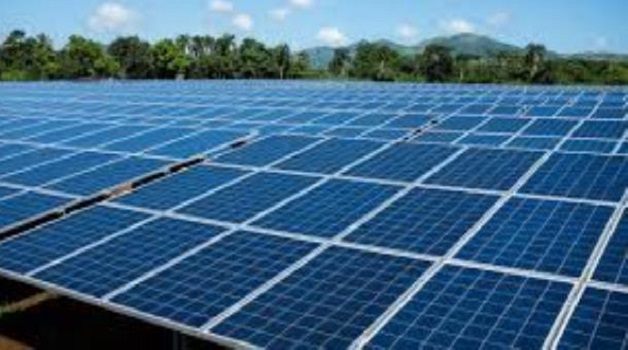
Renewable energy firm Daystar Power Group has expanded its installed solar capacity across West Africa through a partnership with Nestlé, bringing total deployments to 6,884 kilowatt-peak (kWp), or nearly 7 megawatts (MW), in what the company describes as one of the largest commercial and industrial solar partnerships in the region.

Four manufacturing facilities across Nestlé sites in Côte d’Ivoire, Ghana and Senegal are now operational, with installations located in Abidjan, Tema and Dakar.
Daystar Power has installed 3,447 kWp across two sites in Abidjan, Côte d’Ivoire. In Ghana, a 2,547 kWp system powers Nestlé’s Tema factory, while in Senegal an 890 kWp installation operates at the Dakar facility.
The company said each system is designed to deliver measurable environmental impact, including reduced greenhouse gas emissions and improved energy resilience.
The installations are tailored to local operational and grid conditions to ensure reliable renewable energy supply while supporting Nestlé’s net-zero ambitions and its commitment to reducing greenhouse gas emissions.
“Nearly 7MW across four Nestlé facilities is a number we are proud of, but what it represents matters more than the figure itself. It means that one of the world’s most demanding manufacturers has tested our model, trusted it, and come back. Our job now is to keep earning that across every market where industry needs energy it can count on,” said Yischai Beinisch, CEO of Daystar Power Group.
Samer Chedid, CEO of Nestlé Central and West Africa Region, said: “This investment reflects our commitment to building a business that not only grows but does so responsibly.
“By advancing solar energy projects in Ghana, Côte d’Ivoire and Senegal, we are embedding sustainability into our growth, reinforcing our role as a force for good, creating long-term value for communities and ensuring that our footprint actively contributes to a cleaner, more resilient future.”

FCMB Turns Normal Banking into Rewards with New Mobile App Upgrade

Despite Warnings, FG Draws Down $1.5Bn as First Tranche of FAB $5Bn Loan Deal

PalmPay Strengthens Data Protection Culture with Employee Privacy Workshop and Privacy Champions Programme

Paystack Unveils AI-powered Payments Tools

NRS, CITN Deepen Partnership to Strengthen Tax Awareness

CBN Extends PoS Geo-Fencing Enforcement Deadline to August 2026

London Strengthens Global Investment Ties with Africa @ First Ever London-Africa Business Summit

FG Targets Alleged N3tn Capital Flight, Opens Airtime Credit Market to Nigerian Fintechs

Mobile Internet Gender Gap Widest in Africa – GSMA

Japan, UNESCO Boost Digital Learning in 15 CoEs with Donation of ICT Equipment




 Broadcasting3 days ago
Lebara Nigeria Launches Lebara Play, Africa’s First Telecom-Owned Micro-Drama Platform

 E-Business2 days ago
Privacy Crisis May Undermine Local Hosting of Data by Banks, Fintechs

 Telecom2 days ago
NITDA Unveils Bold Vision to Make Nigeria an AI Powerhouse

 E-Financial3 days ago
SEC Bars Dangote Refinery IPO Adverts

 Telecom2 days ago
GSMA Launches Global Satellite Regulatory Playbook to Help Policymakers Build Future-Ready Connectivity Frameworks

 Telecom1 day ago
6 Easy Ways to Enjoy the 2026 World Cup with Google and Gemini

 E-Business2 days ago
How to Build a Safer Cyberworld for People, Business, and Society

 General News2 days ago
NCGC, SMEDAN Partner on MSME Financing Support