

E-Financial
Nigeria’s Economy Under Threat as Oil Prices Collapse

The staggering depreciation in Oil prices could not have come at a more disruptive and critical time for the Nigerian economy.

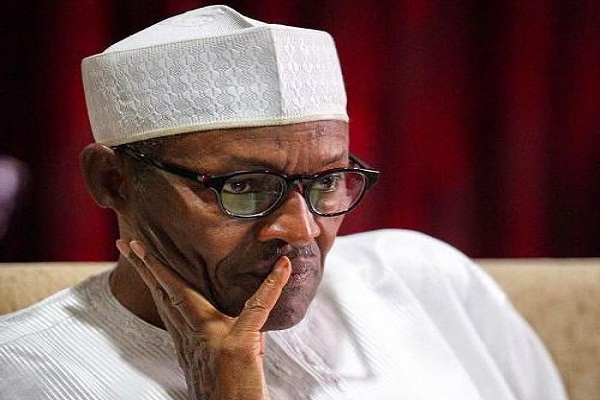
Pres, Buhari
Oil tumbled more than 30% overnight and now sits below $34 a barrel. These levels have not been seen since early 2016. The fall comes after Saudi Arabia announced massive discounts to its official prices for April as a response to the OPEC allies failing to reach a middle ground over deeper supply cuts. Oil prices are on a slippery decline with more negative headlines on the coronavirus outbreak compounding downside losses.
At this point in time it is difficult to pinpoint where the floor is on Oil which has depreciated over 43% since the start of 2020, and this is bad news for many emerging market energy producers including Nigeria
The country’s export earnings and government revenues will take a direct hit from the steep decline in Oil prices. This will hit foreign exchange earnings, the Central Bank of Nigeria’s ability to defend the Naira, and may even result in rising inflationary pressures. Questions will be raised over Nigeria’s ability to effectively implement the 2020 budget which has set the benchmark for Oil at $57 – with an Oil revenue goal of N2.64 trillion. If severely depressed Oil prices hit export earnings, reduce government revenues, weaken the Naira and stoke inflationary pressures, Nigeria’s economy will be under threat in 2020.



House of Representatives Public Accounts Committee (PAC) says it has recovered over ₦521 million in unremitted Value Added Tax (VAT) from the Central Bank of Nigeria (CBN).

This is part of an ongoing investigation into revenue leakages and outstanding funds owed to the federal government.
Bamidele Salam, chairman of the Committee, disclosed this while providing an update on the probe into transactions conducted through the Remita platform.
According to Salam, the investigation was initiated following a resolution of the House of Representatives to examine alleged revenue leakages, non-compliance with standard operating procedures and breaches of service level agreements linked to the Remita payment platform.
He said the committee had uncovered several outstanding liabilities and led to multiple recoveries.
Salam revealed that the committee discovered that the CBN failed to remit VAT amounting to ₦521,765,134.17, representing tax deductions on fees earned from Remita transactions.
He described the recovery as evidence of the effectiveness of legislative oversight in promoting accountability and safeguarding public resources.
The lawmaker maintained that the committee would recover all outstanding funds due to the Federal Government and blocking avenues for revenue leakages across public institutions.
It added that the CBN has been directed to remit the outstanding amount into the Federal Government Treasury and provide evidence of compliance.
The Public Accounts Committee is expected to continue its hearing on the matter on Monday, June 8, 2026, at the National Assembly in Abuja.
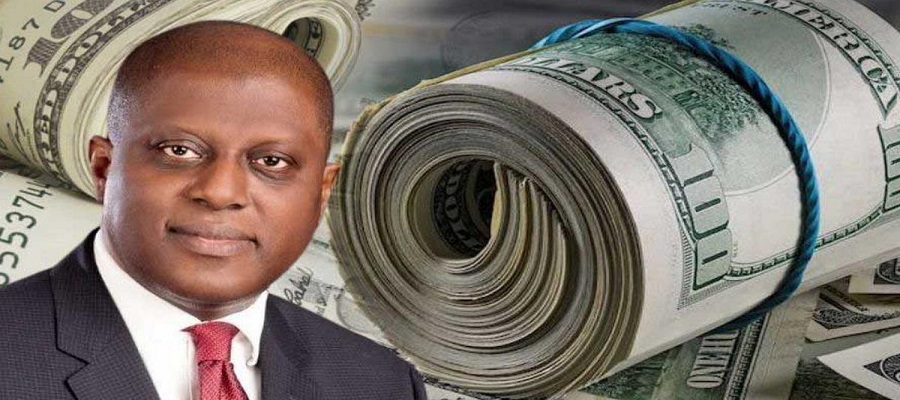
Central Bank of Nigeria (CBN) has said that any authorised dealer bank the processes foreign exchange (forex) transactions without proper documentation will be fined N100 million.

In addition, the bank will pay N10 million for each transaction involved.
The sanctions are contained in the fourth edition of the Foreign Exchange Manual, which serves as a guide for participants in Nigeria’s forex market.
According to the CBN, the updated manual aims to improve compliance, increase transparency, and strengthen confidence in the foreign exchange system.
Banks are now required to obtain, verify, and keep all necessary documents before releasing foreign currency to customers.
Similar documentation requirements apply to forward and swap transactions, where proof of the underlying trade or obligation must be provided before settlement.
For import transactions, importers must continue to provide documents such as Form M, invoices, certificates of origin, packing lists, and shipping documents.
They must also submit Exchange Control Documents within 90 days after negotiating shipping documents through overseas correspondent banks.
The CBN warned that failure to meet documentation requirements will attract escalating sanctions.
A first violation will result in a 90-day suspension from forex transactions, a second violation will attract a 180-day suspension, and a third offence will lead to a one-year suspension.
A fourth violation could result in a complete ban from participating in forex transactions.
Banks that fail to report cases of default to the CBN will also face sanctions.
The apex bank further tightened reporting requirements. Institutions that submit required daily or monthly returns late will be fined N500,000, while those that fail to submit returns at all will pay a minimum of N5 million, plus an additional N500,000 daily until compliance is achieved.Afternoon Paper Subscription
The revised manual also strengthens oversight of banks’ foreign currency exposure.
Financial institutions that exceed approved Net Open Position limits will receive a warning for the first offence, a 10-working-day suspension from the Nigerian Foreign Exchange Market for the second offence, and a 90-day suspension for the third violation.
The CBN also imposed sanctions on unauthorised reallocation of foreign exchange funds. Any bank found engaging in such practices will be fined N10 million per transaction and may face additional disciplinary action under the Bankers’ Committee ethics framework.
According to the CBN, the new measures are aimed at promoting transparency, strengthening market discipline, reducing abuses, and improving investor confidence in Nigeria’s foreign exchange market.
E-Financial
BOI Wins Dual Honours @ EMEA Finance Awards for Sustainability and Social Impact Leadership


The Bank of Industry (BOI) has been recognised with two prestigious awards at the recently concluded EMEA Finance Achievement Awards, reinforcing its position as a leading development finance institution driving inclusive and sustainable economic growth across Africa.

The Bank received the Best Sustainability Deal in Africa Award for its financing intervention under the Nigeria Distributed Access through Renewable Energy Scale-up (DARES) Project and the Best Social Development Deal in Africa Award for its flagship Guaranteed Loans for Women (GLOW) programme.
The award-winning DARES initiative is being implemented by BOI in collaboration with the Rural Electrification Agency (REA) and supported by the World Bank through a $750 million International Development Association (IDA) credit facility. The programme is designed to expand electricity access across underserved and unserved communities through the deployment of solar mini-grids.
The initiative forms part of BOI’s broader Power and Utilities portfolio, through which the Bank disbursed ₦27 billion to eight businesses in 2025. According to BOI’s 2025 Annual Development Impact Report, all supported projects demonstrated 100 per cent financial additionality, indicating that they would not have proceeded without BOI’s intervention.
The Bank’s Power and Utilities portfolio also recorded the highest Development Impact Framework score across all sectors financed by BOI, underscoring the transformational impact of its investments in sustainable energy infrastructure.
Similarly, the GLOW programme was recognised for advancing financial inclusion and economic empowerment for women-owned and women-led businesses across Nigeria.
Designed to address longstanding barriers faced by female entrepreneurs, including limited access to affordable finance, collateral constraints, and capacity gaps, GLOW provides tailored financing, business support services, and capacity-building opportunities to women-led enterprises across multiple sectors of the economy.
Beyond financing, GLOW provides training, mentorship, market access support, and opportunities for women-owned businesses to strengthen their competitiveness and expand into regional and international markets, including opportunities presented by the African Continental Free Trade Area (AfCFTA).
Speaking on the awards, Dr. Olasupo Olusi, MD/CEO BOI, described the recognition as an affirmation of BOI’s commitment to financing initiatives that create lasting developmental impact.
“These awards reflect the Bank of Industry’s deliberate focus on supporting projects and programmes that deliver measurable economic, social, and environmental outcomes for Nigerians. Whether it is bringing reliable electricity to underserved communities through renewable energy solutions or empowering women entrepreneurs by providing access to affordable finance and growth opportunities, our goal remains the same: to build a more inclusive, resilient, and sustainable economy. We are honoured by this international recognition and remain committed to deepening our impact across sectors that matter most to national development.”
The dual recognition further underscores BOI’s growing reputation as a catalyst for sustainable development and inclusive industrialisation, leveraging innovative financing solutions to address critical development challenges while unlocking opportunities for businesses and communities across Nigeria.
As Nigeria’s foremost development finance institution, BOI continues to play a pivotal role in advancing the Federal Government’s economic transformation agenda through strategic investments that stimulate enterprise growth, create jobs, improve livelihoods, and strengthen the country’s long-term economic competitiveness.

SSDC Warns Businesses against Cyber, Election-Related Risks

FCCPC Refutes Airtime Market Takeover Claims

Reps Committee Recovers N521m Unremitted VAT from CBN

NITDA Okays NiRA’s Annual, Business Report

Price of Data in Nigerian Mobile among Top Four Cheapest Globally – MTN CEO

FG to Launch Nationwide Free Digital TV Platform June 17

CBN Extends PoS Geo-Fencing Enforcement Deadline to August 2026

MTN, Airtel, Glo Under Pressure as FG Demands Better Service Delivery

Jumia Nigeria Records Strong Q1 2026 Growth as Technology-Led Strategy Drives Market Expansion

Metro Digital, Nigerian Firm Accuses Multichoice Of Refusal to Obey Court Judgements




 Telecom3 days ago
TikTok Tax Scam Exposed: Two Arrested Over Alleged £153 Million Fraud Scheme

 E-Financial3 days ago
IFC, NGX Group Unveil Nigeria Gender Programme

 Telecom3 days ago
NITDA Backs NiRA’s Ambitious 2026 Plan to Drive Massive .ng Domain Adoption

 General News3 days ago
NITDA, Benin’s Digital Agency Strengthen Ties on Digital Transformation

 Telecom3 days ago
FG Targets Alleged N3tn Capital Flight, Opens Airtime Credit Market to Nigerian Fintechs

 Telecom3 days ago
MTN Dismisses Data Theft Claims, Blames Network Challenges on Fibre Cuts, Vandalism

 E-Financial20 hours ago
BOI Wins Dual Honours @ EMEA Finance Awards for Sustainability and Social Impact Leadership

 E-Financial20 hours ago
CBN Imposes N100m Penalty on Dealing Bank Inadequate Processing of Forex Documents