

E-Financial
How is the Coronavirus Impacting Nigeria’s Economy?

By Lukman Otunuga, Senior Research Analyst at FXTM
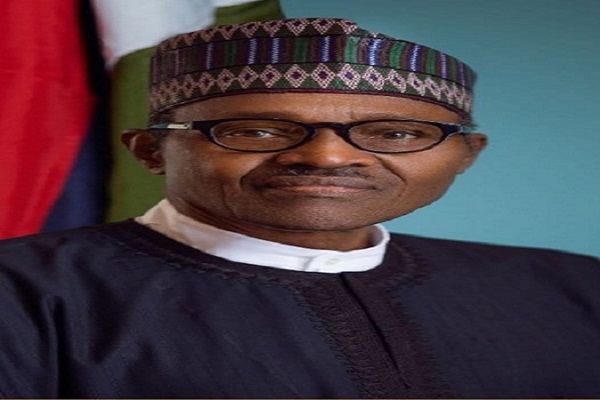
On March 26, Nigeria joined many other nations banning flights into the country and urging shelter-in-place, social isolation practices amid the coronavirus COVID-19 pandemic. President Buhari approved a 10-billion-Naira grant to the epicentre Lagos to fight the outbreak in the region and a five-billion-Naira grant to support the Nigeria Centre for Disease Control.
Exports of Oil and Gas will continue and more fiscal and monetary policy measures will be needed, said the president. Having left interest rates unchanged during its March meeting, the Central Bank of Nigeria (CBN) still has scope to reduce its key rates if inflationary pressures recede.
This raises the central question of what will happen to inflation levels. Food prices may rise sharply if measures are not taken to cap them under the current circumstances. Prices of pharmaceuticals, masks, and hand sanitiser in Europe were capped as part of governmental measures to control skyrocketing prices for these goods, for example.
Other goods which feed into price benchmarks are gasoline and electricity. These are expected to fall along with the price of Oil and government coffers should see some relief from the fuel subsidy, which had risen on the back of higher Oil prices earlier this year.
Additionally, the Naira is weakening and may fall further against other currencies if foreign reserves decline below $30 billion. A weaker Naira would add to inflationary pressures.
All told, the coronavirus pandemic is expected to have an unprecedented impact on the Nigerian economy. The disease represents a major threat to the economy because of plummeting Oil prices and close trading ties with China. While China is in the recovery stage of its coronavirus outbreak, the country’s industrial growth fell by 13.5 percent in the first quarter.
As industry is one of the biggest consumers of Oil with transportation being another, Oil prices could fall further than the 60 percent they already have since the beginning of the year. The International Monetary Fund (IMF) estimates that with each 10 percent fall in Oil prices, Oil exporting countries like Nigeria will see a 0.6 percent drop in GDP and an increase in fiscal deficits of 0.8 percent of GDP. Under the current circumstances, the federal government appears well aware after announcing a 10.6-trillion-Naira cut in the 2020 budget and a change in the benchmark Oil price from $50 to $30 per barrel.
The emergency should be a wakeup call for Nigeria to reduce its dependence on the Oil industry in order to weather future storms and black swan events. This was the direction taken by the CBN during its Growth 2.0 roundtable. Along with an initiative to depreciate the rate of foreign exchange sales to foreign portfolio investments (FPIs) to roughly N380.00, the reinvigorated drive towards diversification may help to stimulate interest in Nigeria’s financial instruments.
Nonetheless, the CBN may be forced to cut interest rates in the second half of the year if global conditions fail to improve. Fiscal measures may need support from an IMF loan after the fund expressed concerns over the global landscape and the impact of the coronavirus pandemic on African countries, extending emergency financing of up to $50 billion.
There is little doubt that aggressive monetary policy and strong fiscal responses must be put in place to cushion the damage inflicted by the coronavirus outbreak in Nigeria. Such steps would increase confidence for FPI’s to keep investing in Nigeria’s financial instruments and position the economy on the path to recovery after the pandemic is over.



Central Bank of Nigeria (CBN) and commercial banks are reviewing the large number of transaction alerts sent to customers and the complaints about bank charges.

So called bank alert refers to real-time SMS or email notifications from your financial institution about transactions, balances, or security updates.
Olayemi Cardoso, governor, CBN, said this in Abuja after the 305th Monetary Policy Committee meeting.
He explained that many bank customers are confused because they receive too many debit alerts for a single transaction.
To address this, the CBN has created a quarterly meeting system involving its consumer protection team, commercial banks, and the top 10 microfinance banks. The goal is to resolve customer complaints faster and improve banking services.
Cardoso said one major issue being studied is how banks send multiple notifications for one transaction.African Politics Analysis
He said this often confuses customers and suggested that alerts should be simplified and combined so people can clearly understand what each debit is for.
He added that the issue is still being worked on and solutions will be proposed soon.
On the N50 stamp duty charge, the CBN governor explained that it is not a bank charge.
He said the charge comes from tax authorities, while banks only collect it and send it to the government.
He advised customers who notice wrong charges to first complain to their bank. If the issue is not resolved, they can escalate it to the CBN’s consumer protection department.
Cardoso also said the CBN has strengthened its monitoring system to ensure banks handle complaints properly, compensate customers when needed, and improve customer service.
The CBN is also reviewing how banks apply rules on charges and customer complaints, with the aim of improving transparency and reducing repeated issues in the banking system.
E-Financial
Griffin Capital Group Launches Integrated Financial Services Group Positioned to Strengthen Capital Formation in Nigeria, Africa

Griffin Capital Group Limited has announced its official market entry as a fully integrated financial services group, bringing together investment banking, asset management, trusteeship, lending, and insurance capabilities under a unified institutional platform.

The launch reflects a deliberate response to the evolving demands of Nigeria’s financial ecosystem, where the need for disciplined capital deployment, stronger Corporate Governance frameworks, and deeper market liquidity continues to shape the next phase of growth.
Structured as a multi-business financial services group, Griffin Capital is designed to operate across the full spectrum of capital formation, from origination through innovatively structuring complex financial transactions in a simplified manner; to execution, distribution, and investment management. This enables us to both advise on and actively participate in transactions.
The Group enters the market with a leadership team whose experience spans investment banking, Insurance brokerage, capital markets, corporate finance, development finance, and investment management across Africa and global financial centers.
Griffin Capital’s operating model reflects a clear emphasis on institutional discipline, combining advisory expertise with balance sheet strength to support more efficient capital allocation and improved transaction quality.
As Nigeria’s economic reforms continue to unlock new opportunities across infrastructure and project finance, financial advisory, and private capital markets; the Group is positioned to support both issuers and investors through a structure designed for scale, transparency, and execution.
Commenting on the launch, the Group Chief Executive Officer, Babatunde Obaniyi said: “The opportunity in Nigeria’s financial markets is significant, but unlocking it requires more than capital. It requires structure, governance, and the ability to deploy capital with discipline. Griffin Capital Group has been built to address these fundamentals. Our model allows us to operate across the full lifecycle of transactions from advisory to execution, while maintaining a strong focus on risk management and long-term value creation.
“We are entering the market with a clear sense of responsibility, particularly in how capital is structured, deployed, and preserved. Our ambition is to build an institution that contributes meaningfully to market development while maintaining the highest standards of governance and execution.”
The Chairman of the Group, Musa Bello added: “Financial institutions play a critical role in shaping economic outcomes, particularly in emerging markets where capital must be deployed with both precision and purpose. Griffin Capital Group represents a long-term commitment to building an institution that combines local market understanding with global standards of governance and execution.
“As Nigeria continues to deepen its capital markets and expand private sector participation, institutions with the capacity to structure, mobilize, and manage capital effectively will be essential. Our focus is not only on participating in this evolution, but on contributing to it in a meaningful and sustainable way.”
With a medium-to-long-term strategy focused on growth in assets under management and expanded participation across key sectors, Griffin Capital Group intends to play an active role in facilitating capital flows within Nigeria and across the African continent.
The Group’s integrated platform is expected to support a broad range of clients, including retail, corporates, institutional investors, development finance institutions, government institutions, and high-net-worth individuals, through tailored financial solutions and disciplined execution.

A High Court of the Federal Capital Territory, presided by Justice Christopher Oba, has ordered Globus Bank Ltd to pay a total of N256 million to an Abuja-based company, Haril Global Solutions Ltd, for breaching a contractual agreement.

In the suit marked; FCT/HC/CV/1456/2026, Haril Global Solution Ltd, Chinedu Mba, Idris Olayiwola and the Economic and Financial Crimes Commission (EFCC), were listed as Defendants to the counterclaim filed by the bank.
The Claimant filed the suit by way of Writ of Summons, wherein it complained of breach of contractual agreement and wrongful deductions running into millions of naira by the bank.
Delivering judgement on the matter, Justice Oba declared that there was a valid and subsisting contract between the Claimant and the Defendant, pursuant to the letter of offer of facility dated July 4, 2023, signed by both the Claimant and the Defendant and the Overdraft Facility Agreement executed between the Claimant and the Defendant dated July 4, 2023.
Subsequently, the Court made a declaration that the Claimant is entitled to the return of the Debt Service Reserve Fee Sum of One Hundred and Nine Million Naira (N109M) wrongfully withdrawn by the Defendant from the Claimant’s Debt Service Reserve Account with account number 4000006572 and transferred to the Claimant’s Overdraft with account number 1000085336 on December 29, 2023, contrary to the Overdraft facility Agreement executed between the Claimant and the Defendant dated July 4, 2023 and the letter of offer of facility dated July 4, 2023.
The Court also mandated the Defendant to return the sum of Twenty-Six Million, Seventy-Six Thousand, Three Hundred and Eighty-Eight Naira Thirty-Two, kobo (N26,076,388.32) wrongfully withdrawn on January 31, 2024, from the account of the Claimant with account number 1000085336 as interest despite the fact that a Post-No-Debit has been placed on the Claimant’s account as a result of which the Claimant could not carry out his business.
In addition, the Judge ordered Globus Bank to return the sum of Fifteen Million Naira (N15,000,000.00) wrongfully withdrawn from the account of the Claimant on February 6, 2024, with account number 1000085336, with interest despite the fact that a Post-No-debit has been placed on the Claimant as a result of which the Claimant could not carry out its business.
The Court equally ordered the Defendant to pay the Claimant Five Million Naira (N5M) as general damages for breach of contract, as well as pay the Claimant the sum of One Million Naira (N1m) as the cost of this suit.
According to the Court, the Defendant breached the accepted Letter of offer of facility dated July 4, 2023, overdraft facility agreement executed between the Claimant and the Defendant dated July 4, 2023.
“A declaration of this honourable court is hereby made that the contract between the Claimant and the Defendant pursuant to the Letter of offer of facility dated the 4th July, 2023, and the Overdraft Facility Agreement executed between the Claimant and the Defendant dated 4th day of July 2023, is discharged by the breach occasioned by the Defendant.
“A declaration of this Honourable Court is hereby made that the defendant is liable to the Claimant for breach of contract thus liable to pay the Claimant general damages for breach of contract.
However, the court dismissed the counterclaim by Globus Bank on the ground that it failed to adduce credible evidence to establish its claims for fraud or unlawful interference with the contract terms by Haril Global Solutions Ltd.
The Counter-Claimant had alleged that the Claimant manipulated the system by debiting other merchants to credit its own account.
“However, no evidence was led to show which specific merchants were debited or to provide testimony from such third parties, the court stated.
Regarding the Police investigation report (Ex Q1-2), the court stated that the report did not indict the Claimant for the alleged fraud, noting that the report mentioned a figure of N900 million, which was vastly different from the N2.5 billion sought in the Counter-Claim.
The Judge held that the Police Investigation Report was a mere report and not a judicial pronouncement that the court can use to determine the allegation of fraud against the Claimant.
“Consequently, the Counter-Claimant has failed to provide cogent, credible, and compelling evidence to establish its claims for fraud or unlawful interference with trade.
“The reliefs sought in the Counter-Claim are declaratory and monetary in nature, and such reliefs cannot be granted on the basis of unsupported allegations or documents that have been expunged by the Court.
“In the circumstances, I find that the Counter-Claimant has failed to discharge both the legal and evidential burden of proof required by law.
“I hereby dismiss the counter-claim in its entirety for lack of merit. On the whole, the case of the Claimant succeeds” Justice Oba said.

NCC Begins Review of Nigeria Telecoms Policy after 26 Years

STBMAN Warns of “Broadcasting Crisis”, Urges Tinubu to Halt NBC’s DSO

MTN to Turn its African Tower Network Into a Distributed AI Compute Grid

Elon Musk to Become First World’s Trillionaire with SpaceX Historic IPO

Army Acquires New Drones to Boost Surveillance, Precision Strikes — COAS

MTN, VDT, Zoracom, Digital Realty Back 2026 Girls in ICT Campaign

Vitel Wireless Partners Fintechs to Expand Access to Services

Kaspersky Discovers Vulnerability in Qualcomm Snapdragon Chips that can Lead to Data Loss & Device Compromise

Bank Customers to Pay N1,500 for ATM Card Issuance, Replacement – CBN

FCCPC Licenses 5 Firms for Airtime, Data Lending as Telcos Step Aside




 General News2 days ago
US to Deploy Wireless Technology in Nigeria, Others

 General News2 days ago
UAE’s Exit from OPEC: Eroding Pricing Power, Saudi Arabia’s Response, and the Implications for Nigeria

 E-Financial2 days ago
Court Orders Globus Bank to Pay Firm N256m for Breach of Contract

 Telecom2 days ago
Lagos Warns against Fake Emergency Calls, Says Rising Misuse Put Lives at Risk

 E-Financial2 days ago
AFC Invests $100m in Africa-focused Technology Fund Managers

 News2 days ago
Systems, Not Skin Colour, Hold the Key to Africa’s Development, Says Evans Woherem

 General News2 days ago
Pantami, Ex Minister of Communication Withdraws from Gombe APC Governorship Primaries over Alleged Electoral Violations

 Telecom1 day ago
Google unveils Gemini-powered advertising, commerce tools at Marketing Live 2026