

E-Financial
Market Turmoil Resumes as Virus Fears Deepen

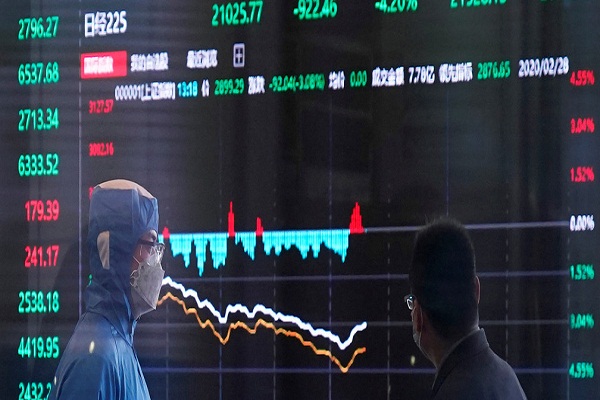
Investors have suffered a tough start to the second quarter due to the coronavirus pandemic. After climbing 17.9% from its low in the past seven trading days, the S&P 500 kicked off the new quarter with a 4.4% decline.
It seems most of the global fiscal and monetary stimulus measures have been priced in and the things that matter most at this stage are the infection and death rates of Covid-19.
Psychology has a great impact on asset prices, and with more people realising that the virus could reach them in some way or have already infected someone they know, that’s a good enough reason for explaining why risk assets are unloved.
The upward move in equities we’ve seen over the past week may prove to be a temporary recovery, a dead cat bounce or a bear market rally. Call it whatever you like, but as long as infection rates continue to grow at the current pace, this more or less guarantees weak economic performance going forward and a collapse in earnings.
With global infections likely to reach one million later today and deaths surpassing 50,000, investors are focusing on capital preservation and are looking to return to cash. That suggests another leg lower in equity prices over the next couple of weeks, until investors have a better understanding on how the current crisis will end.
Of course, no one knows with certainty how bad this pandemic will impact global economies and corporate earnings. But it is obvious that corporate buybacks, a major component of the past decade’s bull market, will be missing in 2020 and probably in 2021 depending on how long the crisis persists. These buybacks have been by far the greatest course of demand for stocks since the 2008 crisis.
While some investors may want to take this opportunity of extreme pessimism to begin accumulating stocks, they may soon realise that we haven’t reached the capitulation stage yet. That is when investors surrender or give up trying to recapture lost gains as a result of falling stock prices and is generally considered to be a sign of a bottom in prices.
Today’s US weekly jobless claims release for the week ending March 28 is going to be of more importance than Friday’s non-farm payrolls report. That’s because the NFP will only include data through March 14, so it doesn’t reflect the impact of the last two weeks when millions of Americans filed for unemployment benefits.
Jobless claims may have risen 3 – 5 million in the past week, and we could even see a higher revision of the last week’s 3.28 million print. That suggests April’s NFP may show job losses in 8 digits, which could turn out to be the darkest day ever in the US job market.



The Central Bank of Nigeria has directed banks, fintech firms, and other payment service providers to store payment transaction data generated within the country on local servers from January 1, 2027, as part of new measures to strengthen oversight of the fast-growing digital payments ecosystem.

The directive was contained in a circular issued by the Payments System Supervision Department of the CBN on Monday and addressed to deposit money banks, microfinance banks, mobile money operators, switching and processing companies, payment terminal service providers, payment solution service providers, super agents and other licensed operators in the payments industry.
The circular, signed by the Director of the Payments System Supervision Department, Rakiya Yusuf, also introduced new market structure rules, beneficial ownership disclosure requirements and systemic oversight measures for payment service operators.
According to the apex bank, the reforms became necessary following the rapid expansion of electronic payments and digital financial services across the country.
The CBN said it had observed “significant structural developments within the Nigerian Payments ecosystem, characterised by rapid growth in electronic payments, increasing adoption of digital financial services, and the emergence of operators with substantial market presence across key payment activities.”
It noted that while the growth had improved innovation, efficiency and financial inclusion, it had also created concerns around market concentration, operational dependence, ownership transparency and the storage of critical payments data.
To address these concerns, the regulator ordered all financial institutions facilitating payments in Nigeria to ensure that transaction data generated within the country are stored domestically.
The circular stated, “All Financial Institutions and participants facilitating payments within Nigeria shall ensure that payments transaction data generated within Nigeria are stored and managed in Nigeria in accordance with data protection laws and regulations applicable in Nigeria.”
It added that “all affected Financial Institutions shall fully comply with this requirement effective January 1, 2027.”
The move is expected to strengthen regulatory oversight, enhance data sovereignty and ensure that sensitive payment information remains within Nigeria’s jurisdiction.
It also aligns with broader efforts by regulators globally to localise critical financial data and reduce reliance on offshore infrastructure.
Beyond data localisation, the CBN ordered banks, payment service providers and other financial institutions with digital payment operations to disclose the ultimate beneficial ownership of significant shareholders.
According to the circular, institutions must maintain accurate and up-to-date records of their ultimate beneficial owners and make such information available to the apex bank upon request.
The regulator said the disclosure requirement must comply with existing anti-money laundering, counter-terrorism financing and counter-proliferation financing regulations.
The directive builds on previous CBN efforts to strengthen beneficial ownership transparency as part of wider measures to combat money laundering and illicit financial flows in the financial system.
The central bank also introduced fresh competition rules aimed at limiting excessive market dominance in the payments industry.
Under the new framework, any financial institution that controls more than 25 per cent of the card-issuing market in a rolling 12-month period will not be allowed to hold more than 15 per cent of the merchant-acquiring market during the same period.
Similarly, operators with more than 25 per cent market share in merchant acquiring activities will be restricted to a maximum of 15 per cent market share in card issuing activities.
Merchant acquiring refers to processing card payments on behalf of merchants, while card issuing involves providing payment cards to customers.
The CBN said all regulated entities would be required to submit monthly market share returns based on prescribed templates and timelines.
It further directed affected institutions to take the necessary measures to achieve full compliance with the market structure requirements by December 31, 2026.
The apex bank said the new measures were designed to “improve transparency through beneficial ownership disclosure, address concentration risk, promote a fair, competitive, and resilient payments ecosystem.”
According to the regulator, the reforms are also intended to “safeguard the integrity of the Nigerian payments system and ensure the localisation of payments transaction data within Nigeria.”
The CBN warned that it would closely monitor compliance and impose sanctions where necessary.
“The CBN shall monitor compliance with the provisions of this Circular and may, where necessary, impose supervisory sanctions in accordance with applicable laws, regulations, and guidelines,” the circular stated.
The latest directive comes amid a rapid expansion of Nigeria’s digital payments industry, with electronic transactions reaching record levels and regulators increasing oversight of banks, fintech firms and other payment operators to address operational, cybersecurity and systemic risks.

Foreign exchange markets are entering a phase where how traders are positioned may matter as much as the economic fundamentals driving those positions, according to a new market analysis from JustMarkets.

JustMarkets
The brokerage’s latest commentary points to a build-up in trades tied to the US dollar and to carry strategies, bets that exploit interest rate differentials between currencies, as a growing source of risk heading into the coming weeks.
The dollar has been supported by elevated US interest rates and pushed-back expectations for rate cuts, conditions that have encouraged more traders to pile into similar carry positions. While the macro case behind these trades remains intact for now, JustMarkets cautions that when positioning becomes this lopsided, even sound trades can become vulnerable to sudden, sharp reversals.
A “crowded trade” isn’t inherently a red flag, the analysis notes, it can simply reflect a widely shared, fundamentally sound view. The danger emerges when too many participants are leaning the same way and conditions shift: traders rush to exit together, stop-loss orders cluster around similar price levels, and liquidity can evaporate just as prices move fastest. The combination, JustMarkets says, often produces a cascade effect that accelerates price moves in the opposite direction.
Notably, the analysis argues that reversals in crowded trades rarely require a major shock. Instead, minor developments, a softer-than-expected economic print, a subtle shift in central bank language, or fresh geopolitical headlines, can be enough to make traders question whether their positions still make sense. Once that doubt spreads, unwinding tends to happen in unison, amplifying both the speed and scale of the move.
Carry trades are singled out as particularly exposed in this environment. They tend to perform well during calmer periods but can unravel quickly once markets shift from “risk-on” to “risk-off,” triggering rapid liquidations and sharp corrections in carry positions.
JustMarkets argues that the current backdrop, marked by elevated geopolitical tension, persistent inflation, and lingering uncertainty over the path of monetary policy, leaves markets more exposed to positioning-driven swings than in previous cycles. Trader sentiment, the analysis suggests, is playing an outsized role alongside the usual response to economic data and headlines.
With crowded conditions raising the odds of fast, disorderly moves, the quality of trade execution becomes more consequential, the analysis notes, citing slippage, wider spreads, and order delays as factors that can compound losses during volatile swings.
On managing risk, JustMarkets’ analysts recommend that traders: Avoid overexposure to the dominant macro narrative of the moment, pay closer attention to positioning and sentiment indicators, maintain disciplined stop-loss orders ahead of potential downturn and pPrepare for higher volatility and faster price action than usual.
Markets become crowded periodically, and when they do, the risk of a sharp, sudden reversal rises with them. For now, JustMarkets’ broader message to traders is one of caution: with positioning levels elevated across USD and carry trades, vigilance on execution and risk management will likely matter more than usual in the weeks ahead.

Association of Corporate Communication and Marketing Professionals in Banks (ACAMB) on the 11th of June kicked off activities, marking its 30th anniversary celebration with a tree-planting exercise on Providence Street, Lekki Phase 1, Lagos.

L-R: President, Association of Corporate Communication and Marketing Professionals in Banks (ACAMB), Jide Sipe; Representative of Wema Bank, Precious Akpan; Vice President 2, Morolake Onifade, Representative of Alpha Morgan, Tolu Onipede and General Secretary, ACAMB, Olugbenga Owotoomo during a tree planting initiative, put together to flag-off the 30th anniversary celebration of ACAMB, held at Providence Street, Lekki Phase 1, Lagos
Held in Lagos recently, the initiative, the initiative was part of the associations efforts aimed at promoting environmental sustainability while commemorating 3 decades of advancing corporate communications and marketing excellence within Nigeria’s banking industry.
The well attended exercise, led by President of ACAMB, Jide Sipe and the Registrar/Chief Executive Officer of the Chartered Institute of Bankers of Nigeria (CIBN), Akin Morakinyo, in the company of Vice President 1, Chinwe Bode Akinwande; Vice President 2, Morolake Onifade; Executive committee Members, both past and present, alongside, Group Heads of marketing and Corporate communications, and Heads of Departments across banks waded through the heavy downpour, planting trees in the rain in a display of commitment that set the tone for the milestone celebration.
A tree was planted, by representatives of banks in the country and named after each bank.
ACAMB President, Jide Sipe, who welcomed members and dignitaries to the exercise, reaffirmed the Association’s commitment to the reputation and growth of the banking industry.
“Thirty years ago, a handful of professionals chose to put the reputation of the banking industry above rivalry. We are standing today on the foundation they laid, and every tree we plant here is a promise to keep building and most importantly deepen credibility by proactively addressing issues which directly improve our collective brand image and customer loyalty,” he said.
“What ACAMB is doing also coincides with our 30th anniversary celebration. One of the best ways to celebrate this milestone is to contribute to the environment by the planting of trees that will on the long run be environmentally and economically impactful to the society at large.
“We are planting trees in honour of banks in the country and each of the trees will be named after them.
Outlining the anniversary programme, Sipe announced a series of activities running through September 2026, including a Golf and Networking Experience on June 27, 2026, at Ikoyi Club, Lagos, with the celebration culminating in a grand Gala Night on September 30, 2026.
“We are marking three decades the way they should be marked, with substance and with joy,” he said.
The Registrar and Chief Executive Officer of the Chartered Institute of Bankers of Nigeria (CIBN), Akin Morakinyo, HCIB, unveiled the Association’s 30th anniversary logo and commended ACAMB for its longstanding collaboration with the Institute.
“This anniversary is dedicated to the glory of God and the service of humanity,” he said. “I charge every member to hold firmly to professionalism and ethics in the discharge of their duties.”
A founding member of the association, Dr Nkechi Ali Balogun, offered a historical reflection on its formation. ACAMB was established in 1996 by representatives of five institutions: IBWA (later Afribank), Union Bank, NEXIM Bank, First Bank, and the Central Bank of Nigeria (CBN).
“The late Mr. Dangogo of the CBN gathered us at Kuramo Lodge with a simple idea, that banks could compete and still respect one another,” she said.
Member of the Association’s Board of Trustees, Ogie Eboigbe, traced the formation to concerns over banks de-marketing one another.
“Banks were winning customers by tearing down their rivals, and it was hurting public confidence in all of us,” he explained.
The tree-planting exercise reflects ACAMB’s commitment to environmental sustainability and stands as a fitting symbol of the Association’s growth and impact over the past three decades.

Galaxy Backbone @ 20, Pledges Nationwide Connectivity, Data Sovereignty

KidsCook Showdown 2.0 Set to Empower Public School Pupils with Culinary, Life Skills

CBN Orders Banks, Fintechs to Host Payment Data Locally

PalmPay Joins Industry Leaders @ Digital Pay Expo 2026

UK Bans TikTok, Instagram, Facebook for Under-16s in Landmark Crackdown

CBN Extends PoS Geo-Fencing Enforcement Deadline to August 2026

NCC Drafts New Rules for Virtual Mobile Operators

TD Africa, HPE Drive Conversations on the Future of Intelligent Networking

London Strengthens Global Investment Ties with Africa @ First Ever London-Africa Business Summit

Easybuy Partners WAWUAfrica to Upskill 10 Million Youths and Women, Boosting Nigeria’s Economic and Financial Inclusion




 E-Business1 day ago
CSOs Raise Alarm over Nigeria’s Data Protection Crisis

 E-Business1 day ago
AI-Powered Cyber Threats Put Nigerian Banks on Alert

 General News1 day ago
₦5m up for Grabs as 10 Startups Clash at the Gathering on 100 Pitchathon Aba

 E-Financial1 day ago
CBN to Expand eNaira for Salaries, Pensions and Welfare Payments

 General News1 day ago
CBN Moves to Stop Banks From Using Customers’ Money for Fintech Subsidiaries

 Telecom1 day ago
NITDA Reveals Why AI Could Be Nigeria’s Biggest Wealth Creator, Not Oil

 E-Financial1 day ago
CBN to Bar HoldCos from Influencing Banks’ Lending Decisions

 Telecom1 day ago
NASENI Unveils Ambitious Plan to Produce 600 Million Diagnostic Kits Annually