

E-Business
Spontaneous Deregulation tests Regulatory Gaps on Digital Platforms

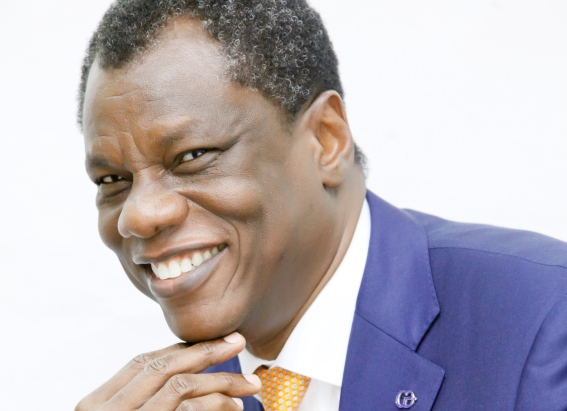
By Austin Okere
There is a perfect storm brewing on Twitter between the President of the United States of America, Donald J. Trump and Twitter Founder, Jack Dorsey.

“The Trump-Twitter fight ropes in the rest of Silicon Valley” was the screaming headline on Politico.com on Sunday, May 30, 2020.
President Donald Trump tweeted earlier this week about mail-in voting, alleging without evidence that the effort would lead to voter fraud.
For the first time, Twitter marked the tweet with a small notice that read “Get the facts about mail-in ballots,” which linked to facts-based reporting on the subject.

Twitter’s fact-check led Trump to issue an executive order targeting social media companies. The order involves Section 230 , part of a 1996 law that gives websites (including companies like Twitter and Facebook) the ability to moderate content on their sites without worrying about First Amendment violations.
Legal experts have said the move is possibly illegal and difficult to enforce. Facebook, meanwhile, has tried to stay out of the clash, with CEO Mark Zuckerberg weighing to say he has a much different view from Twitter on how Social Media Platforms should handle controversial political speech. Companies like Facebook and Twitter, Zuckerberg said, should not act as “the arbiter of truth.”
The relationship between platforms and regulation has been thorny right from the start and can at best, be described as a keg of gunpowder waiting to be triggered.
Has the time come for the trigger to be pulled? I wrote this article four years ago in June 2016, and it still captures the essence of this feud. What are your views on this fractious issue?
I facilitated a seminar for the Lagos Judiciary at the Lagos Business School in May 2016, with theme Digital Economy and Legal Regulation.
The aim of the program was to share insights on the emerging Digital Economy with their Lordships and draw attention to the imperative for regulatory evolution in the face of the pervasiveness of Online Platforms of the kind operated by technology giants such as Facebook, Google, Uber and Airbnb. There is hardly an area of economic and social interaction these days that is left untouched by these Platforms in some shape or form.
The Regulatory Gaps
Justice Opeyemi Oke, representing the Chief Judge of Lagos State receiving the certificate of Participation
To fill the regulatory gaps in the digital economy, these behemoths have resorted to what could be referred to as spontaneous deregulation.
I first encountered this term in an article by Benjamin Edelman and Damien Geradin, and have arisen as a result of digital disrupters ignoring laws and regulations that appear to preclude their business model, which is typically based on providing platforms for crowd sourcing and giving rise to the sharing economy.
Believing in the efficacy of their utility model and its appeal to a pent-up global demand, these disrupters seem to see many rules and regulations as belonging to the past and impractical for today’s innovative clime.
They therefore simply ignore them, opting for their own version of self-regulation, usually based on a mutual rating system between service providers and consumers. It is this skirting of existing regulation that is referred to as spontaneous private deregulation.
These disrupters make the rules for themselves as they go along, because in fairness to them, as their platforms reshape markets, the scope of activity subject to regulation tends to decrease, and various forms of protection disappear.
These companies operate in interstitial areas of the law because they present new and fundamentally different issues that were not foreseen when the governing statutes and regulations were enacted.
Two major areas in which these digital czars have riled the establishment are in transportation and hospitality; the major ‘culprits’ being UBER and Airbnb. UBER, until recently a relatively unknown company out of Silicon Valley in California employs 160,000 drivers today and is adding an average of 20,000 drivers every month.
This transport services disrupter is now valued at $41b and operates in many major cities across the globe. Airbnb, a previously obscure company with similar roots and reach, has over 1.5m accommodation on her platform, and is now valued at $25b.
The need for ‘platform fairness’
Axelle Lemaire, French secretary of state in charge of all things digital, insists that France is open to platform operators, but consumers have to be protected. She is sponsoring a law to be passed by the French Parliament which will create the principle of ‘Platform Fairness’.
Karnataka state in India, where Uber piloted its India service two years ago has directed taxi aggregators such as Uber to stop operations in the state until they secure a licence from the government, triggering sharp reactions from the corporate world.
Getting a licence would mean no more surge pricing, complying with the maximum fares fixed by the government periodically and registering with local transport authorities. The question is why has it taken the Karnataka government such a long time to wake up to regulatory gaps in her transport sector? And how many other cities are in this quagmire?
The U.S Supreme Court recently ended a decade-long battle over Google’s massive book-scanning project, declining to take up an appeal by authors who claimed the company violated copyright law ‘’on an epic scale’’.
The justices denied certiorari in Authors Guild v. Google, 15-849, leaving in place a ruling last year by the U.S. Court of Appeals for the Second Circuit that said Google’s project was permissible. The appeals court decision invoked the ‘’Fair Use’’ doctrine, which permits some ‘’socially beneficial’’ use of published works such as news reporting or research, that would otherwise constitute copyright infringement.
Airbnb has had its fair share of issues with one of her largest markets, New York. A major concern is the legal regime within which Airbnb operates; one that is marked by poorly drafted laws that fail to account for challenges presented by the sharing economy.
As explained by Airbnb cofounder Brian Chesky, “There were laws created for businesses, and there were laws for people. What the sharing economy did was create a third category: people as businesses,” to which the application of existing laws is often unclear. These new business models raise complex questions that have not yet been addressed by either legislatures or courts.
Because the threat of enforcement actions can have a chilling effect on start-ups and their users, state and local government officials should consider how their actions may affect burgeoning businesses. Officials should encourage the sharing economy’s growth through collaborative efforts rather than seek to protect incumbent businesses.
Regulation seems too slow in catching up
The slow pace of regulation evolution seems to strongly suggest that the legal profession itself is ripe for a technology revolution that will optimise the largely manual and laborious process of enacting laws and regulation in the face of the aggressive pace of digital innovation.
I recall the indignation of their Lordships when I cautioned that the learned profession could be more vulnerable than they think when it comes to disruption, and that emerging technologies like cognitive computing and other forms of machine learning can help narrow the gap between regulation and innovation.
Much as it may sound improbable, given its intrinsic consultative nature, I was not surprised when I came across an article on the World Economic Forum’s collaborative platform, announcing that a Law firm Baker & Hostetler has done just that!
Green shoots of technology in Law and Regulation
According to the article, Baker & Hostetler has announced that they are employing IBM’s AI Ross to handle their bankruptcy practice, which at the moment consists of nearly 50 lawyers.
Ross, “the world’s first artificially intelligent attorney” built on IBM’s cognitive computer Watson, was designed to read and understand language, postulate hypotheses when asked questions, research, and then generate responses (along with references and citations) to back up its conclusions. Ross also learns from experience, gaining speed and knowledge the more you interact with it.
“You ask your questions in plain English, as you would a colleague, and ROSS then reads through the entire body of law and returns a cited answer and topical readings from legislation, case law and secondary sources to get you up-to-speed quickly,” the website says. “In addition, ROSS monitors the law around the clock to notify you of new court decisions that can affect your case.”
Ross also minimizes the time it takes by narrowing down results from a thousand to only the most highly relevant answers, and presents the answers in a more casual, understandable language.
It also keeps up to date with developments in the legal system, specifically those that may affect your cases. According to CEO and co-founder Andrew Arruda, other firms have also signed licenses with Ross, and they will also be making announcements shortly.
This disruption, happening to the most unlikely profession, with a highly codified ethic is a clear manifestation that no industry is immune from disruption in the impending fourth industrial revolution.
Any industry that does not figure out how to be a part of it might as well write their obituaries. My take expressed to their Lordships after the seminar was that the digital revolution is like a train whose drivers are the entrepreneur disrupters.
The passengers are the global customers with a pent-up demand for the value and convenience that they provide. Naysayers to this phenomenon can stand in front of the train and be crushed, stay on the platform and be left behind, or come on board for a ride into progressive partnerships.
Regulators still have much to learn about how to deal with platforms. They have no choice than to get more involved and get the needed expertise. But will they? The jury is still out.
Austin Okere is the Founder of CWG Plc, the largest ICT Company on the Nigerian Stock Exchange & Entrepreneur in Residence at CBS, New York. Austin also serves on the Advisory Board of the Global Business School Network, and on the World Economic Forum Global Agenda Council on Innovation and Intrapreneurship. Austin now runs the Ausso Leadership Academy focused on Business and Entrepreneurial Mentorship.


Nigeria Data Protection Commission (NDPC) has commenced a forensic investigation into the University of Lagos (UNILAG), Lotus Bank and Hackerbella Ltd over alleged violations of data protection laws involving students’ personal information.

The investigation follows public complaints alleging that students’ personal data were used to open bank accounts without a lawful basis.
Dr Vincent Olatunji, national commissioner and chief executive officer of the NDPC, directed the investigation team to conduct a comprehensive assessment of the circumstances surrounding the collection, processing, use and disclosure of the affected students’ personal data.
The investigation will also determine the respective roles and responsibilities of UNILAG, Lotus Bank and Hackerbella in the alleged processing of the data.
According to the Commission, the investigation will assess the data protection compliance obligations of the parties under the Nigeria Data Protection Act, 2023 (NDP Act), as well as potential risks posed to the rights and freedoms of the affected data subjects.
The NDPC said the probe would cover several areas, including Data Protection Impact Assessments (DPIAs), the lawfulness and transparency of credit scoring or profiling activities, and the use of automated decision-making systems.
It will also examine the adequacy of privacy notices, data-sharing arrangements, lawful bases for processing, data minimisation and purpose limitation.
Other areas include data retention policies and the adequacy of technical and organisational measures put in place to safeguard the rights and personal data of affected students.
The Commission reiterated that institutions entrusted with the personal data of students, staff and other members of their communities have a heightened responsibility to ensure that such information is processed lawfully, fairly, transparently and securely.
The NDPC therefore warned educational institutions that are yet to comply with its existing data protection compliance directives to take immediate steps to achieve compliance.
The Commission said it would continue to exercise its regulatory mandate to protect the privacy rights of Nigerians and ensure that organisations processing personal data comply with the provisions of the Nigeria Data Protection Act, 2023.
Microsoft is planning to unveil its new Maia 300 AI chip this fall, potentially as soon as next month, The Information reported on Monday, citing people with direct knowledge of the plans.

The company introduced its Maia AI chip in November 2023 but has lagged rivals such as Alphabet and Amazon in scaling up its in-house chip efforts as it seeks to reduce its reliance on Nvidia’s costly processors.
Google began recognizing revenue from direct sales of its custom AI chips, called Tensor Processing Units, in the quarter ended June, while Amazon has also seen growing adoption of its processors, including its Trainium chips.
Microsoft has been in talks with chipmaker TSMC to secure manufacturing capacity for more than 300,000 units of the chip for delivery in 2027, according to the report. It is also looking to significantly ramp up production and persuade major cloud customers such as Anthropic to adopt the chip.
Microsoft ultimately aims to secure capacity for more than 1 million Maia 300 chips, though component supplies and ongoing capacity negotiations with TSMC could constrain its plans, according to the report.
It unveiled its second-generation Maia 200 in January, built by TSMC using 3-nanometer technology.
Microsoft packed the chip with a significant amount of SRAM, a type of memory that can provide speed advantages for AI systems handling large numbers of user requests.


X has announced plans to discontinue its Revenue Sharing programme and introduce a new Original Content Rewards programme to reward creators for producing original content on the platform.

The social media company announced the changes at the weekend in a post on its X Creators handle, saying the new programme would reward creators who contribute original content.
“Today, we’re introducing the Original Content Rewards Program, a new way to reward creators who bring original ideas, expertise, reporting, creativity, and commentary to X,” the company said.
X said it would stop accepting new enrolments into the Revenue Sharing programme from Friday, while existing participants would continue earning until September 7, 2026.
“Starting today, we’re no longer accepting new enrollments into Revenue Sharing,” it said.
According to the company, existing Revenue Sharing participants will receive three final payouts, with two scheduled for August 14 and August 28, while the final payment for earnings accrued through September 7 is expected around September 11.
X said existing Revenue Sharing participants would begin getting access to apply for the new programme from September 8, subject to meeting its eligibility requirements.
The first payout under the Original Content Rewards programme will be made on August 28, 2026, while existing Revenue Sharing creators who enrol in the new programme from September 8 will receive their first payment on September 25.
Under the new programme, eligible creators will earn from qualified impressions generated by their original content, with payments made every two weeks.
X defined qualified impressions as unique impressions from Premium users on the Home Timeline feed, where at least 50 per cent of a post is visible.
On the other hand, “The following are excluded from qualified impressions: impressions from the same account counted more than once per post; paid, promoted, or artificially generated impressions; and fraudulent impressions,” it said.
To qualify, creators must be at least 18 years old, live in a country where the programme is available, maintain an account in good standing and have either a personal or vusiness account.
They must also subscribe to X Premium, Premium+ or Premium Business, have at least 500 verified followers and record at least 500,000 Home Timeline impressions from verified users within the previous 90 days.
X said creators must also regularly post original content to remain eligible.
“We want to recognize creators who break news, share expertise, tell stories, create entertainment, and contribute meaningful perspectives to the conversation,” the company said.
The platform said original content could include threads, videos, memes, graphics, illustrations, reporting, analysis, commentary and reactions that add meaningful value to existing conversations.
It said creators who use content produced by others would need to add meaningful commentary, context, analysis, humour or creative transformation for such posts to qualify.
“Building on existing conversations is a core part of X, but simply reposting someone else’s content is not enough,” it said.
X said minor edits such as cropping, filters, borders, watermarks, speed adjustments or simple text overlays would generally not qualify as meaningful transformation on their own.
It also warned that content copied or substantially reproduced from another creator, content downloaded and re-uploaded from X or another platform without being the original author’s, automated content, disinformation and misleading content would be ineligible.
The company said accounts that violate the programme’s requirements could be temporarily or permanently removed from it, depending on the severity of the violation.
It added that creators would be responsible for ensuring they had the necessary rights, permissions or licences to use content created by others.
“Original content is content you personally create that reflects your own voice, perspective, expertise, or creativity,” X said.
The company said the new programme was intended to reward creators who make the platform more valuable by bringing original ideas and perspectives to its conversations.
“The Original Content Rewards Program is designed to reward the creators who start them, shape them, and move them forward,” it said.

NUPRC Warns of Counterfeit, AI-Generated Appointment Letters

KudiWave Asks for Clarification over N750m Transfer from PalmPay Account

NCC Reports over 5,000 Fibre Cuts in 6 Months

PalmPay Reinforces Commitment to Youth Empowerment on International Youth Day

ipNX Joins Calls for Innovation-Friendly Ecosystem and Stronger Local Opportunities at Regenesys AI Summit

EFCC Busts NIS Visa Overstay Racket, Uncovers N700m in an Account

Fact-Check: Elon Musk’s “Tesla Pi Phone” is Internet Rumor

NBC Tasks Broadcasting Stations over 2028 DSO Global Deadline

NBC Scraps Annual Digital Access Fee on DSO

Glo Sponsored African Voices to Feature Netflix’s “The Polygamist” Stars




 E-Business3 days ago
X Replaces Revenue Sharing wit New Creator Rewards Programme

 Telecom3 days ago
MTN Alerts Subscribers over Fake 25GB Anniversary MTN Data Giveaway

 E-Financial3 days ago
Interswitch, Temenos Commit to Advancing Nigeria’s Digital Banking Technology

 E-Financial3 days ago
FG Spent N3.1 Trillion on Domestic Debt Servicing in Q1- DMO

 General News3 days ago
Fake Agency: ICPC Indicts NITDA, Others over Inadequate Due Diligence

 General News3 days ago
UNESCO Taps Oguamanam,Nigerian Scholar to Advisory Body on Science, Tech Ethics

 General News3 days ago
Tax Reform Built on Taxing Prosperity, Not Poverty– Adedeji

 News2 days ago
Moove Achieves Unicorn Status With $250m Funding