

Broadcasting
NBC Says no Going Back on New Broadcasting Code

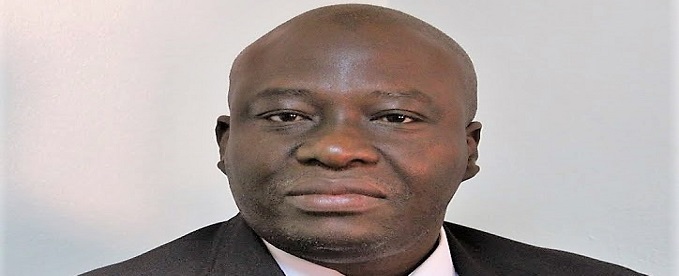
Armstrong Idachaba, director-general of the National Broadcasting Commission (NBC), says the commission is not backing down on the controversial amendment to the country’s broadcasting code.

Idachaba said the new broadcasting code is to break the monopoly of “greedy capitalists” who “call themselves dominant players” and allow local payTV platforms to thrive.
In March 2020, the NBC released the 6th edition of its broadcasting code, which mandates sub-licensing of premium content and kills the idea of exclusivity.
Broadcasters, columnists, and Multichoice, one of the dominant players in the Nigerian payTV industry, have spoken against the code, which they say further stifles the growth of the industry.
But Idachaba disagrees; according to him, “the amendments have been made, no going back because we believe it is good for our country, they are already operational”.
Speaking with Osasu Igbinedion on The Osasu Show, Idachaba said the NBC has licenced several local payTV platforms, but they do not survive due to the presence of the likes of DStv.
When asked about the negative effect the lack of exclusivity clause may have on DStv, Idachaba said: “Let me give you a poser as background: Why is it, have you ever thought, that our local tv, cable, paid services are nonexistent? There is no Nigerian that is active on the payTV platform, no Nigerian company.
“NBC licenced several, up to 30 Nigerian firms to offer paid television services in Nigeria and none of them succeeded. Why, because they cannot compete in the international content market.
“And what happens to the international content market, the people with the big purse, the global capitalist, those that call themselves dominant players, they go to acquire those rights and keep it to themselves in the guise of exclusivity and deny all other operators an opportunity for sublicensing.
“What does that do? What it does is to create a monopolistic economy for whoever is the buyer of that content and the person is able to maximize profit unhindered. That is why you find internet penetration in Nigeria is increasing by the day. That is why you find that all those big monopolies break even and make tonnes of money.
“What we are saying is that when you go to acquire these rights, because you are acquiring them for the Nigerian market, because your intent is to exploit the Nigerian audiences and viewers, we want you also to give back by sublicensing to local Nigerian players that may be interested.”
Idachaba said DStv must now sub-licence the English Premier League to other players in the industry, who may be interested.
“If you bring EPL for instance and say I am the owner of EPL, only me can show EPL and on my platform alone, so whoever wants to watch premier league would have to buy DStv, even if you have Startimes, you cannot watch,” he added.
“If you are on open television, the open terrestrial, where low-income earner, those on the lower social ladder, where they thrive, then they are denied which is class stratification in itself on account of content acquisition.
“We are saying create these windows. If you get the rights, fine, we welcome you, invest in Nigeria, but create channels for sublicensing”
Confronted with the fact that Multichoice, the owners of DStv, don not have the rights to sub-licence the English Premier League (EPL) Idachaba said “whoever is giving them the rights has to understand” that there is a new NBC code.
“If you are going to acquire your rights, you know that in the Nigerian Broadcasting Code, we have plainly said you can’t have exclusive right. So whoever, if giving you that right has to understand that he cannot give it to only you in Nigeria.
“If any other Nigerian is interested in that right, they must also discuss at mutually agreed price. Because what has happened over time is that this exclusivity is used to shut other people who are willing to participate. You shut the window.
“How then do you develop an economy? We have thousands of young promising Nigerian entrepreneurs, you know that premium content derives advertising. If these channels are made available at lower window levels through sublicensing to local little operators, they too will be able to attract some level of advertising.
“But Capitalist are greedy, they are extremely self-centered, they don’t want to give it out. But we know it is important for our own economy and creative subsectors that this happens.”
The DG, who has worked at NBC for over 28 years called on Nigerians to “have an ideological, philosophical understanding of the motive of the policy, what does it intend to achieve”.
He said the policy is to “redynamise and redistribute wealth in a way that there would be more participation, more engagement and more opportunities”.
“What makes the capitalist think that by keeping content to themselves, they maximize all the profits? Chances are that by sublicensing, you make more. The more you share to people based on the agreed sum, you are more likely to make more money quickly. It doesn’t reduce your own large share but creates open windows.”


MTN Group has begun rolling out MTN One TV, a new entertainment proposition designed to make digital video content more accessible, relevant, and flexible for customers across African markets.

Introduced in line with MTN’s Ambition 2030 strategy, MTN One TV brings together local storytelling, live channels, international programming, and market-specific viewing options tailored to how customers across the continent access and pay for digital entertainment.
The proposition is designed to give customers greater choice in how they watch content, with viewing models that may vary by market and can include free-to-view content, advertising-funded experiences, pay-as-you-watch access, and subscription offerings.
Depending on local availability, customers may also be able to pay through airtime, Mobile Money, and other locally supported payment methods, helping to reduce common barriers to streaming access.
Beyond enhancing customer experiences, MTN One TV creates new opportunities for African creators, broadcasters, advertisers, and ecosystem partners by helping connect content to wider audiences through MTN’s scale across connectivity, payments, and digital services.
By bringing together a broad mix of content experiences under a single proposition, MTN aims to support greater content discovery, broader audience reach, and sustainable growth across Africa’s digital entertainment ecosystem.
Anchored in MTN’s strategic platforms of Connectivity, Fintech, and Digital Infrastructure, MTN One TV forms part of the Group’s broader ambition to build digital experiences that create value for customers while enabling participation and growth across Africa’s digital economy.
“Entertainment is increasingly becoming an important gateway to digital participation,” said Selorm Adadevoh, MTN group chief commercial, strategy and transformation officer.
“Through MTN One TV, we are leveraging the scale of our connectivity, fintech, and digital capabilities to make relevant content more accessible while creating new opportunities for Africa’s creative and digital economies. This is aligned with our ambition to deliver digital solutions for Africa’s progress.”
MTN One TV is being introduced progressively across MTN markets through a phased rollout approach that reflects local market needs, existing services, and partnership opportunities.
Over time, MTN will bring together a combination of video capabilities, content partnerships, and customer experiences under the MTN One TV brand to create a more consistent and scalable entertainment proposition across its footprint.
Through MTN One TV, MTN continues to extend its role beyond connectivity by combining entertainment, payments, and digital services to deliver experiences tailored to the needs of African consumers.
The rollout supports MTN’s Ambition 2030 vision of leading digital solutions for Africa’s progress while expanding access to digital entertainment across the continent.
International Air Transport Association (IATA) has identified Nigeria as one of the most expensive countries in the world for airline operations, citing high taxes, charges and operational costs that continue to weigh heavily on local carriers.

IATA’s Regional Vice President for Africa and the Middle East, Kamil Al-Awadhi, disclosed this during the association’s Annual General Meeting held in Rio de Janeiro.
Al-Awadhi said that although Nigeria’s Minister of Aviation and Aerospace Development, Festus Keyamo, had been pursuing reforms aimed at improving the aviation sector, airlines operating in the country still faced enormous cost pressures.
According to him, the high-cost operating environment has continued to affect the profitability and competitiveness of Nigerian airlines, making it difficult for the industry to realise its full potential.
He noted that excessive taxes, regulatory charges and other operating expenses remained major obstacles to airline growth across the region, with Nigeria ranking among the most challenging markets from a cost perspective.
Al-Awadhi urged member states of the Economic Community of West African States to adopt a proposed 25 per cent reduction in aviation taxes and charges to ease the burden on airlines and passengers.
According to him, lowering taxes and charges would reduce airfares, stimulate passenger traffic and strengthen the competitiveness of carriers operating within West Africa.
He stressed that a more supportive policy environment was critical to unlocking the economic benefits of aviation, including increased trade, tourism and regional integration.
Industry stakeholders have consistently advocated lower taxes and regulatory fees, arguing that the current cost structure makes air travel less affordable and limits the growth of the sector.
IATA’s latest remarks add to calls for governments in West Africa to implement policies that will promote a more sustainable and competitive aviation industry across the region.
Broadcasting
NASENI Trains 50 Women in Kano on Renewable Energy Technologies Under She-Powers Initiative

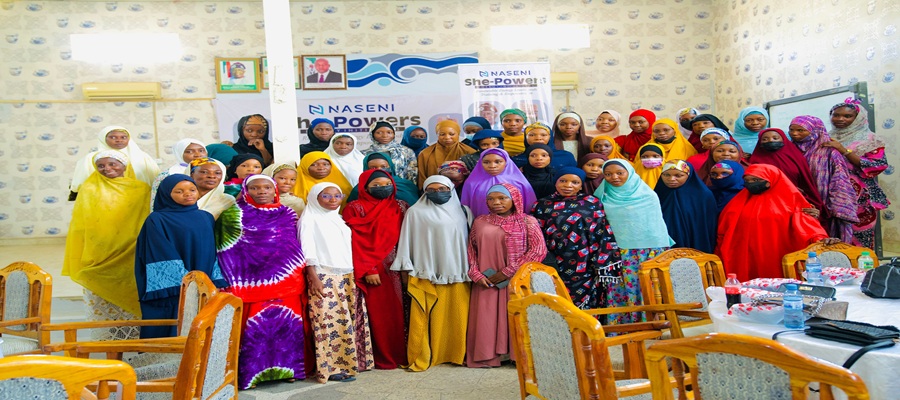
The National Agency for Science and Engineering Infrastructure (NASENI), under the leadership of its Executive Vice Chairman/CEO, Khalil Suleiman Halilu, has trained 50 women in Kano State on inverter and battery technologies through its She-Powers Energy Initiative.

The three-day programme, held at the Technology Incubation Centre, Farm Centre, Kano which ended yesterday, was designed to equip participants with practical renewable energy skills, promote women-led enterprises, and enhance sustainable livelihoods.
The initiative forms part of NASENI’s broader commitment to empowering women, creating economic opportunities, and expanding participation in Nigeria’s growing clean energy sector. It also aligns with the Renewed Hope Agenda of President Bola Ahmed Tinubu by supporting job creation, entrepreneurship, and inclusive economic development.
Through targeted interventions such as the She-Powers Energy Initiative, NASENI continues to demonstrate its commitment to leveraging technology and innovation to improve lives and drive sustainable development across the country.
Photos: Participants at the She-Powers Energy Initiative training organised by the National Agency for Science and Engineering Infrastructure (NASENI) held at the the Technology Incubation Centre, Farm Centre, Kano yesterday.

AI-Powered Cyber Threats Put Nigerian Banks on Alert

Guinea-Bissau Taps United Nigeria Airlines to Establish AIR BISSAU, National Carrier

IMF Urges FG to Introduce Fuel, Telecom Taxes

CBN to Expand eNaira for Salaries, Pensions and Welfare Payments

CSOs Raise Alarm over Nigeria’s Data Protection Crisis

CBN Extends PoS Geo-Fencing Enforcement Deadline to August 2026

NCC Drafts New Rules for Virtual Mobile Operators

TD Africa, HPE Drive Conversations on the Future of Intelligent Networking

London Strengthens Global Investment Ties with Africa @ First Ever London-Africa Business Summit

Easybuy Partners WAWUAfrica to Upskill 10 Million Youths and Women, Boosting Nigeria’s Economic and Financial Inclusion




 News3 days ago
UK, Nigeria Launch £15m Growth Programme to Accelerate Economic Transformation

 General News3 days ago
Haleon Introduces New Corporate Identity in Nigeria

 General News3 days ago
Elon Musk Makes History as the World’s First Trillionaire

 Telecom3 days ago
NITDA Unveils Ambitious Strategy to Turn Southwest into Nigeria’s Next Innovation Powerhouse

 General News21 hours ago
₦5m up for Grabs as 10 Startups Clash at the Gathering on 100 Pitchathon Aba
 E-Business21 hours ago
CSOs Raise Alarm over Nigeria’s Data Protection Crisis
 E-Financial21 hours ago
CBN to Expand eNaira for Salaries, Pensions and Welfare Payments

 E-Financial21 hours ago
CBN to Bar HoldCos from Influencing Banks’ Lending Decisions