

News
Resilience of the Labour Markets During COVID-19


Gregory Kronsten
It is said by some analysts thatCOVID-19 is responsible for irreversible changes in our economies, including patterns of employment. It was therefore a revelation to read the latest national income dynamics study-coronavirus rapid mobile survey (NIDS-CRAM) from South Africa.

Based upon a sample of 10,000 individuals, wave 3 (the most recent published data) shows that active employment in the country in October was just 0.15 per cent lower than the level in pre-COVID February.
The recovery has been strong. In April, when the domestic lockdown was at its height, employment was 40 per cent lower than in February and in June, when most restrictions had been eased, it was still 20 per cent down. Additionally, the data suggests that the recovery has been in all forms of employment, and not just part-time posts created by employers nervous about future economic prospects.
The three academic authors of the section of the surveys covering the labour market, two based in the US and one in the UK, noted similar trends in other emerging markets (EMs): from the low point in April, the recovery was well underway by June in Brazil and Mexico, and by August in India and Ghana.
Closer to home, we refer to COVID-19 impact monitoring, a series of publications by the National Bureau of Statistics (NBS) in partnership with the World Bank. The narrative is similar from the sixth and latest instalment of this smaller survey, which covers 1,950 households: 87 per cent of respondents were employed in October, compared with 86 per cent at the pre-COVID base (mid-March).
Reflecting the structure of the economy, households are divided between urban and rural. Employment was a little behind March for the former, a little ahead for the latter.
A clear trend is apparent across selected emerging markets. There is a familiar lag in the release of data from academic sources, research foundations and official statistical bodies. Job losses may have picked up again in South Africa due to the resurgence of COVID-19 and reimposition of some restrictions in late 2020/early 2021. This does not detract from our broader argument that these economies display resilience in employment terms once controls are eased.
We are not looking for parallels with advanced economies because of a point we have often made in these columns: that they have fiscal and other resources on a scale of which emerging market governments can only dream. You can close down the economy and pay your employed citizens not to work through a furlough scheme in an advanced economy.
You can then reopen the economy and subsidize meals out for the family. In EMs your choices are far more limited. A core tool of the South African government, for example, is its social relief of distress grant, which is received by 35 per cent of all households.
Three other conclusions from the three waves of NIDS-CRAM are worth highlighting. First, the employment trends are consistent with monthly production data from Statistics South Africa, the local counterpart of the NBS. This is true of mining, manufacturing and retail but not, for obvious reasons, of tourism.
Second and tentatively, there has been an unusual increase in jobs in sales and services. Thirdly and again cautiously, earnings may have risen slightly between February and October.
If we attempt to read across to Nigeria, we do not have the data for the first two conclusions while the fourth instalment of COVID-19 impact monitoring noted that two thirds of households surveyed reported a fall in earnings.
Gregory Kronsten is Head, Macroeconomic and Fixed Income Research, FBNQuest



More than 810 million women across low- and middle-income countries (LMICs) remain offline, with Sub-Saharan Africa recording one of the world’s widest mobile internet gender gaps.

According to the GSM Association’s (GSMA’s) Mobile Gender Gap Report 2026, released this week, women in LMICs are still 12% less likely to use mobile internet than men, leaving an estimated 200 million fewer women connected than their male counterparts.
This is despite mobile internet becoming the primary gateway to the digital economy, according to new research from the GSMA.
The report reveals that of the 810 million women who remain offline globally, more than two-thirds live in Sub-Saharan Africa and South Asia −regions that continue to experience the widest disparities in digital access.
The findings highlight significant implications for Africa, and the challenges facing governments, mobile operators and development agencies seeking to expand digital inclusion.
The report notes that Sub-Saharan Africa’s mobile internet gender gap stands at 26%, second only to South Asia’s 25%. The divide becomes even more pronounced outside major cities.
“In LMICs, the gender gap in mobile internet adoption tends to be two to three times wider in rural areas than urban areas. In 2025, across all LMICs, the gender gap in mobile internet adoption was more than three times wider in rural areas than in urban areas.
“There is also a difference at the regional level, where the gender gap in mobile internet adoption is wider in rural than urban areas of LMICs in every region except Europe and Central Asia.”
For Africa, the rural challenge is particularly severe, the report warns.
The GSMA found that the gender gap in mobile internet adoption reaches 34% in rural areas of Sub-Saharan Africa, compared to 21% in urban centres.
Device challenge
Smartphone ownership remains a major obstacle to digital inclusion. The report found that women across LMICs are 13% less likely to own a smartphone than men, representing approximately 210 million fewer women with access to internet-enabled devices.
Across Sub-Saharan Africa, only 34% of women own smartphones, with the region recording a smartphone ownership gender gap of 22%, with access to internet-enabled devices remaining one of the most important factors influencing whether women eventually adopt mobile internet services.
“The type of mobile device a person owns matters, as it typically affects whether and how they use the internet. Once someone owns a smartphone, they are much more likely to be aware of mobile internet, adopt it and use it regularly and in a variety of ways. In fact, once women own a smartphone, these metrics more closely resemble those of men,” notes the report.
Barriers persist
Despite growing awareness of mobile internet and its benefits, women continue to face multiple barriers to meaningful participation in the digital economy.
The report identifies affordability, literacy and digital skills as the leading barriers preventing women from getting online.
Even after gaining access, women frequently report safety and security concerns, data costs and connectivity quality as obstacles to broader internet use.
The report notes: “Addressing rural gender gaps is essential to advancing digital inclusion for women overall. In particular, women who live in rural areas tend to have limited physical access to essential services and may have the most to gain from better access to mobile and mobile internet.
“Addressing gender gaps in mobile ownership, particularly of smartphones, and in mobile internet use can help women in rural areas benefit from these digital technologies to the same extent as men.”
Claire Sibthorpe, head of digital inclusion at the GSMA, warns that progress is not happening quickly enough and emerging technologies such as artificial intelligence risk creating new forms of digital exclusion.
“While there has been a slow narrowing of the mobile gender gap since 2022, much more is needed to address the persistent and significant gender gaps in mobile internet adoption and use.
“We live in an increasingly digital world and the proliferation of technologies such as AI are creating greater digital divides and inequities, elevating the need to ensure digital inclusion for all.”

Payaza Africa, a payments infrastructure company, has earned strong credit ratings from four major rating agencies, reinforcing its growing reputation as a resilient and credible player in Africa’s financial services ecosystem.

The payment company recorded upgrades across the board, with DataPro raising its rating from A to AA-, Intelligence Africa assigning it an A- investment-grade rating, Agusto upgrading it from BBB to A-, and GCR, an affiliate of Moody’s, also moving it from BBB to A-.
A credit rating reflects a company’s financial strength and its ability to meet debt obligations, indicating how safe it is for lenders and investors to extend credit.
In a statement on Monday, the company described the achievement as a validation of its disciplined growth trajectory and operational resilience in a dynamic fintech landscape. It added that the upgrades position Payaza as a future-ready brand with increasing relevance not only within Africa but also in the global fintech space.
Commenting on the development, Seyi Ebenezer, the Chief Executive Officer of Payaza Africa, said the ratings reflect years of deliberate effort to build a sustainable and globally competitive institution.
“This milestone is a strong affirmation of the work we have done to build Payaza on a foundation of discipline, trust, and long-term value creation. Receiving these upgraded ratings sends a clear message that Payaza is not only growing, but growing with strength, structure, and sustainability,” he said.
Ebenezer noted that the recognition goes beyond financial performance, highlighting the company’s ability to execute strategically while maintaining strong risk management practices.
“For us, this is bigger than recognition. It reflects our commitment to building a world-class institution that can compete globally while continuing to serve businesses and consumers across the continent with excellence.
“Over time, our ratings journey has reflected more than strong financial performance. It speaks to a business built on disciplined execution, prudent management, and the ability to scale responsibly in a dynamic market. This has helped us stand out not only as an innovator in digital payments, but as a maturing financial institution with the operational depth to compete globally.
“These new ratings are expected to further strengthen Payaza’s standing with investors, regulators, partners, enterprise clients, and the wider financial community. In a sector where trust, resilience, and compliance are increasingly central to long-term success, independent ratings remain a powerful endorsement of a company’s ability to manage risk, meet obligations, and sustain growth,” Ebenezer said.
Payaza Africa provides payment infrastructure solutions focused on collections, payouts, embedded finance, and digital commerce enablement for businesses across Africa.
The company has also continued to expand its product ecosystem with solutions such as Payaza Checkout for payment collections and payouts, Chat and Pay by Payaza for WhatsApp-based transactions, Payaza Give for donations and digital contributions, and Shopaza, its e-commerce platform designed to help businesses sell and receive payments more efficiently.
News
London Strengthens Global Investment Ties with Africa @ First Ever London-Africa Business Summit
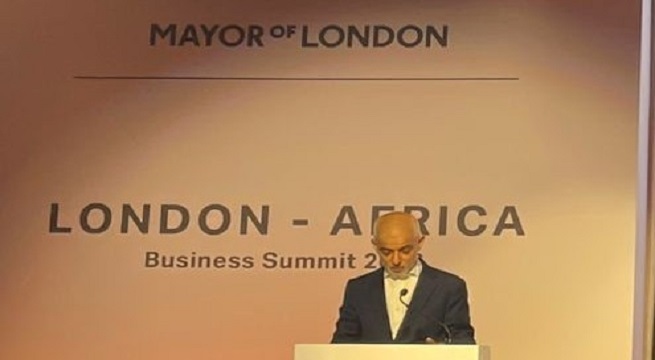
The Mayor of London, Sadiq Khan, has today hosted City Hall’s first ever London-Africa business summit, bringing together 200 business and political leaders from across the continent to strengthen trade and investment ties between London and Africa.

Held in the heart of the City of London, the summit included the Minister of Trade for Agribusiness and Industry in Ghana and representatives from SOAS, the Nigerian Exchange Group, Ventures 54 and London Africa Network to showcase London as the global city of choice for African companies looking to expand internationally and attract investment.
The Mayor announced the summit during his 2025 trade mission to Nigeria, Ghana and South Africa, where he led a delegation to promote London as a global destination for investment. Since the visit, African businesses have invested more than £30 million into London through foreign direct investment.
117 African organisations are listed on the London Stock Exchange, spanning sectors from telecoms and finance to energy and technology. Companies include telecoms giant Airtel Africa and energy supplier Seplat Energy. By comparison, fewer than 20 African organizations are listed on the New York Stock Exchange, underlining London’s deep economic and cultural links with the continent.
The summit builds on growing economic momentum between the UK and Africa. Total UK-Africa trade reached approximately £52 billion in 2025 despite continued global economic uncertainty, while UK exports to Africa increased to nearly £26.2 billion, reflecting rising demand for UK goods and services across African markets.
Africa is increasingly recognised as one of the world’s most important long-term growth regions, driven by rapid urbanisation, infrastructure investment, population growth and expanding consumer markets.
The UK remains among Africa’s top 10 supplying markets and continues to strengthen trade relationships through agreements covering 18 African countries. There are also huge community links between the UK and Africa. The UK has the second largest Nigerian diaspora population, second only to the US, with an estimated 215,000 Nigerians living here.
The Mayor’s London Growth Plan identified the need to attract more foreign direct investment to help grow London’s economy by £107 billion by 2035 and support the creation of 150,000 good jobs by 2028. London continues to lead as the top destination for African foreign direct investment in Europe and the US, ranking second globally outside Africa behind only Dubai.
The summit also highlighted major opportunities for collaboration across sectors, including financial services, digital technology, education, healthcare, energy transition, infrastructure and the creative industries, with London well positioned to deepen its role as a strategic trade and investment partner for African markets.
The Mayor of London, Sadiq Khan, said: “I am proud to host City Hall’s first ever London-Africa business Summit, bringing together investors, entrepreneurs and businesses to showcase London as the best city in the world for African companies to expand internationally and attract investment.
“With more African companies listed on the London Stock Exchange than any other exchange, it is one of the most globally important growth regions. I am delighted that my African trade mission last year has encouraged both inward investment and outward expansion, creating jobs and further strengthening the links between us. I look forward to more opportunities developing from this Summit as we continue to build a better, more prosperous London for everyone.”
Mr. Mark Smithson, Country Director, UK Department for Business and Trade, Nigeria, and Anglo West Africa said: “The London-Africa Business Forum has brought together ambition, capital and creativity, reinforcing London’s role as a global gateway for African enterprise.
“As we look to the next chapter, we are deepening partnerships that drive sustainable growth, shared prosperity and long-term opportunity across both regions. In Nigeria, we are working closely with key partners, businesses and investors to unlock investment, create jobs and deliver tangible economic outcomes.”
Soren Nikolajsen, Managing Director, Industry Engagement Defence and Trade at Natwest said: “London remains one of the world’s leading destinations for international investment, underpinned by its deep financial expertise and global connectivity. Bringing together investors from across Africa in this way is a valuable opportunity to strengthen relationships, showcase the breadth of opportunity here, and support long-term, mutually beneficial growth.”
Olukorede (K.O.) Adenowo, Chief Executive Officer, FirstBank UK, said: “FirstBank UK is proud to support the strengthening of the Africa–UK corridor, where growing demand for capital and expertise continues to drive cross-border opportunity. London remains a powerful gateway for African businesses seeking to scale internationally, while Africa offers compelling long-term investment potential.
“At FirstBank UK, we are focused on supporting cross-border trade and facilitating capital flows by connecting clients to global markets and structuring bankable opportunities. Through stronger collaboration, we can unlock greater investment and deliver sustainable growth across both regions.”
Dylan Martin, Chief Executive Officer of Teybridge Capital said: “Our expansion in London marks an important milestone for Teybridge Capital Europe and reflects the strength of our growth in the UK market. With over 60 per cent of our client base in the UK, this was a natural step in deepening our presence on the ground and investing in a high-performance, locally based team to support our next phase of growth.”

Airtel Africa Foundation Publishes Inaugural Annual Report

Mobile Internet Gender Gap Widest in Africa – GSMA

Kaspersky Warns of “Grey” Scam Websites Exploiting User Trust

Access Holdings Affirms Long-Term Value Strategy @ 4th AGM

Zoho Unveils Homegrown Server, Takes Bold Step Toward Tech Independence

CBN Extends PoS Geo-Fencing Enforcement Deadline to August 2026

FG to Launch Nationwide Free Digital TV Platform June 17

Jumia Nigeria Records Strong Q1 2026 Growth as Technology-Led Strategy Drives Market Expansion

NCC Drafts New Rules for Virtual Mobile Operators

FG to Balance Innovation with National Security with Stronger Drone Regulations




 E-Business3 days ago
Kaspersky Report Shows Early 2026 Witnessed an Increase in Cyberattacks on the Manufacturing Sector

 E-Business2 days ago
Firm Discovered a New Corporate Phishing Technique using a Popular AI Web Development Platform

 Telecom3 days ago
Nigeria, Others Stuck on WiFi 4 As World Adopts WiFi 6, WiFi 7

 E-Financial2 days ago
Senate Moves to Regulate Crypto Sector, Seeks Investor Protection

 Telecom3 days ago
Yuno Partners with Onafriq to Unlock Pan-African Payments for Global Merchants

 General News2 days ago
IMF Warns Nigeria of Risks in $5Bn Swap Deal with First Abu Dhabi Bank

 Telecom2 days ago
Airtel Nigeria Launches Web Data Calculator to Give Customers Greater Visibility into Data Usage

 Telecom2 days ago
No More Deleting and Reposting: Instagram Unveils Long-Awaited Profile Update