

General News
E-commerce through and through: My experience with Konga.com

By Edward Mekoma, an estate developer, lives in Lagos
With the covid-19 pandemic still threatening global economies and altering hitherto established social orders, the world is looking to e-commerce as both today’s and tomorrow’s trade solution to overcome the drawbacks created by the pandemic.
Last December, in the midst of the pandemic and its many restrictions on movement, online purchase came in handy for my family. We had stocked up for the Yuletide but we needed to add more choice wines to our wine cellar and guaranty our power supply with a back-up generator. Having not been an e-commerce freak and still old-fashioned about shopping, my wife and I turned to our children for a guide in online shopping.
It was no brainer for them to recommend Konga as our surest bet. On matters of this nature, it was easy to trust their judgement. They are internet denizens and cyberspace is their playground. We had no locus whatsoever to doubt their recommendation or suspect their verdict. But why Konga? Almost in unison, they ran up a SWOT analysis of the top e-commerce outfits in Nigeria and concluded that with Konga, what you see is what you get (WYSIWYG).
They also added that while others may not only deliver a lower or substandard version of what was advertised, they are more likely not to deliver in good time. We trusted their judgement and decided to take the risk with Konga.
An assortment of bottles of wine and a generator was on our shopping list. Because as at the time we placed our order, the hours have raced from morning to afternoon, we had concluded that delivery would happen the next day or in the next 48 hours. But to our pleasant shock, we got our order delivered same day, in the evening which was our preferred option.
This was a pleasant shock. Knowing all the downsides listed by our children about delivery services offered by almost all the other e-commerce houses, we were ecstatic when the delivery man made a call and in a matter of minutes showed up at our gate.
Our shock did not end with the urgency in delivery. Guess who showed up with our order? A senior manager at Konga whom we have never met but was well known to us by reputation. So, why would you be the one to make our delivery, navigating through the often crazy Lekki, Lagos traffic to locate our address? We asked.
“All our delivery staff are on transit, making deliveries. This period is usually our busiest and I thought to make the delivery myself as I reckon you might be needing the services of the generator tonight,” he intoned, betraying no emotions but only exuding a rare sense of dignity in labour and professionalism. We could barely suppress our elation at such sense of duty.
He did not only make our delivery; he took time to give us a short tutorial on how to identify sub-standard generators in an apparent show of confidence in the product (a 7.5kva iTEC generator) he has just delivered. And then, another pleasant surprise: the 7.5kva iTEC generator was able to power the same appliances that a 9.5kva of another brand could not power which include the two air-conditioning units in our sitting room.
Suddenly, it was the turn of our children to say ‘we told you so.’ This singular encounter stirred an emotional and perception switch in me, especially with the sad tales usually told about online shopping in Nigeria. Making physical in-store bargains in Nigeria often presents some challenges, particularly challenges bordering on product quality. You could therefore imagine our apprehension when placing our order online.
But all that disappeared with the professionalism demonstrated by the Konga staff. Amazon is currently the largest online store in the world and by current rating one of the biggest companies on earth valued at $1.7 trillion. But, it has not always been so. Jeff Bezos, a rabidly unconventional character who pumped in huge cash into the business for over one decade when many people scuffed at his ‘folly’, has turned the table with a diversity of unique offerings and deliberate quest for customer satisfaction.
Obviously, Konga is building on pleasurable customer experience as one of its key strength. Making customer experience pleasurable is an essential ingredient in the success of any e-commerce company. Make the customers happy. Give them a feel good service. Treat every customer like a king or queen. If you have to break protocol to pleasantly surprise a customer, please do.
My recent experience with Konga despite the drawbacks associated with online shopping in Nigeria has eroded every cynicism. Customer experience more than anything else sells a brand. In this era of social media buzz and expanding internet penetration, a shabby treatment meted out to a customer will spread globally like wild fire. Same with giving a customer a pleasurable experience, it will trend and become a marketing tool for the company.
We were made to understand that such culture of ‘get the job done’ even if it means breaking protocol runs from top to bottom at Konga, a company that showed great promise at launch but later floundered until it was acquired by the Zinox Group which injected the philosophy of ‘innovation, quality service and promptness.’ In Konga, there is no boss. The real boss is the customer and every staff, from top to bottom, has ingrained this value into their work ethics.
This is why the value of devotion to duty and sacrifice to make customers happy by the staff of Konga is commendable. It’s the type of commitment that has shot top global corporations to the zenith. And this is the work ethic that makes Asians sought after all over the world – individuals rolling up their sleeves to do little things conscientiously in order to create big things. It is lacking in Nigeria where a manager considers himself a big man and therefore should not condescend to do the job of a driver even in moments of emergency. There has been reports that Konga is considering listing at the London Stock Exchange. It’s these positive attributes exhibited by its staff that would make it a huge success in the global arena.
Global e-commerce market is growing faster than anticipated. Valued at USD 9.09 trillion in 2019, e-commerce is projected to grow at a compound annual growth rate (CAGR) of 14.7% from 2020 to 2027. This is further enhanced by the deepening of internet penetration and growing preponderance of internet-enabled smart phones.
In Nigeria, the number of active telephone lines has significantly increased from about 400,000 (analogue) in 2001 to over 204 million as of December, 2020. This a great leap forward and its direct implication is a boost for e-commerce. Going forward, the exponential growth in internet deployment and its concurrent expansion of broadband penetration is a plus for e-commerce and will ultimately drive indigenous e-commerce players into the global stage. For the old-fashioned analogue shoppers like us, Konga has given us a sense to believe and a reason to convert to on-line shopping.
Author: Edward Mekoma, an estate developer, lives in Lagos.



AfriStakes has launched a new capital platform in Nigeria aimed at linking African small- and medium-scale enterprises with a broad range of investors in a move to address persistent funding gaps across the continent.

In a statement, the firm said the platform would improve capital allocation by bridging the disconnect between available funds, investment-ready businesses, and viable opportunities.
The launch comes as many African businesses continue to face funding constraints despite the availability of capital within the financial system.
AfriStakes said structural barriers have limited access to funding, even as capital remains concentrated in traditional instruments such as fixed deposits, equities, and managed funds.
The platform enables businesses and investors to connect directly by creating profiles, listing funding needs, and identifying suitable investment partners.
According to the company, businesses can upload key documents and showcase their funding requirements, while investors can outline their interests and financial capacity.
Founder of AfriStakes, Henry Adebisi, said the initiative was designed to tackle inefficiencies on both sides of the investment market.
“In Africa, businesses suffer from low access to capital while investors suffer from low access to investable opportunities. With AfriStakes, we ensure businesses are properly prepared and positioned for investment, while investors gain the clarity and confidence needed to deploy capital effectively,” Adebisi said.
The company noted that a major challenge for many SMEs is not a lack of value but poor investment readiness, which affects their ability to attract funding.
AfriStakes said it addresses this gap by providing a structured framework that helps businesses present financial information, develop investment narratives, and prepare realistic projections.
The platform also offers support services such as due diligence, deal structuring, and preparation of investor-facing materials.
It added that the platform would facilitate capital inflow from local and international investors, including individuals, angel investors, diaspora investors, entrepreneurs, and institutional players.
Adebisi said the platform would promote efficient capital flow into businesses driving economic growth across Africa.
“Our vision is to build a system where capital flows more efficiently into real businesses that drive economic change. By positioning both businesses and investors for success, we enable stronger investment decisions and more impactful economic outcomes,” he said.
AfriStakes said it supports multiple funding pathways, including debt financing, equity investment, partnerships, and acquisitions.
The company added that the platform would promote transparency, inclusivity, and structured investment processes across the African business landscape, adding that the initiative positions AfriStakes as a key player in addressing the continent’s financing challenges by creating a bridge between capital and opportunity.

The modern kitchen is no longer just a place to cook, rather where families gather, conversations happen, and lifestyles are expressed. Today’s homeowners want appliances that don’t just work efficiently but also reflect their personality and enhance their living experience.

This is exactly where the LG MoodUP™ Refrigerator stands out. Designed to combine innovative technology, customizable design, and smart entertainment, the LG MoodUP Refrigerator transforms the kitchen into a vibrant, expressive, and connected space.
A Refrigerator That Matches Your Mood and Lifestyle
Traditional refrigerators focus solely on storage and cooling. The LG MoodUP Refrigerator takes a bold step further by redefining what a kitchen appliance can be.
At the heart of this innovation are colour‑changing LED door panels that allow users to personalise their refrigerator’s appearance. With just a few taps via a smartphone app, you can effortlessly change the colors of the refrigerator doors to match your mood, décor, or occasion.
Whether you prefer calm neutral tones, vibrant colours for entertaining guests, or subtle lighting for a relaxed evening at home, the LG MoodUP adapts seamlessly.
Customizable LED Panels: Design Meets Technology
One of the most striking features of the LG MoodUP Refrigerator is its customizable LED door panels. These panels offer multiple colour options and lighting combinations, helping you create a kitchen that truly reflects your personality.
Why This Matters for Modern Homes
- Enhance kitchen aesthetics without renovations
- Allows you to refresh your space instantly
- Creates a dynamic, stylish focal point in the kitchen
- Ideal for design‑conscious homeowners and young professionals
In Nigerian homes where kitchens are increasingly becoming open, social spaces, this feature adds a unique blend of style and innovation.
Built-In Bluetooth Speaker: Entertainment at the Heart of Your Home
The LG MoodUP Refrigerator goes beyond design by introducing entertainment into the kitchen. With a built‑in Bluetooth speaker, users can connect their smartphones directly to the refrigerator.
This allows you to:
- Play music while cooking
- Listen to podcasts or radio shows
- Enjoy audio while hosting family or friends
- Make daily kitchen routines more enjoyable
From meal prep to weekend gatherings, the kitchen becomes a more social and engaging environment.
Smart Technology for Smarter Living
LG is known globally for pioneering smart home solutions, and the MoodUP Refrigerator reflects this commitment. Using LG’s intuitive app interface – LG ThinQ, users can control lighting, sounds, and certain settings directly from their smartphones.
This smart connectivity ensures:
- Easy customization
- Seamless user control
- A modern, connected kitchen experience
For tech‑savvy Nigerian consumers looking to integrate smart appliances into their homes, the LG MoodUP Refrigerator fits perfectly into today’s digital lifestyle.
Designed for Style, Comfort and Everyday Use
Beyond its innovative features, the LG MoodUP Refrigerator remains a high‑performance refrigerator built for daily use. It delivers reliable cooling performance, efficient food preservation, and durable construction expected from LG appliances.
Key lifestyle benefits include:
- Elegant, premium design
- Reliable cooling efficiency
- Smart functionality without complexity
- A blend of practicality and visual appeal
This makes it ideal for homes that value both performance and style.
Why LG Continues to Lead in Home Innovation
LG’s approach to product development focuses on understanding how people live today and how technology can improve everyday moments. The MoodUP Refrigerator is a strong example of this philosophy, demonstrating that appliances can be both functional and expressive.
Rather than blending into the background, the LG MoodUP stands out as a lifestyle statement; one that reflects individuality, creativity, and modern living.
For anyone looking to upgrade their kitchen experience and embrace the future of smart living, the LG MoodUP Refrigerator delivers a bold and refreshing approach where your kitchen truly matches your mood.
For more information, kindly visit https://www.lg.com/africa/refrigerators/lg-gr-a24fdmmb
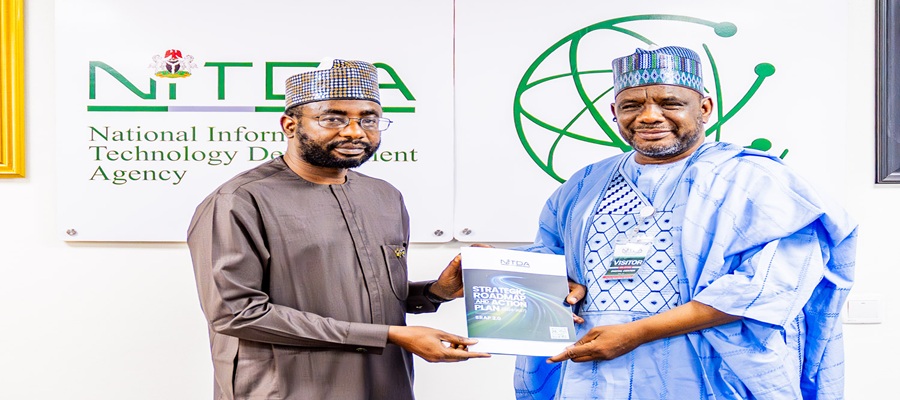
Kashifu Inuwa, National Information Technology Development Agency (NITDA), has emphasized the critical role of Nigeria’s human capital in driving national development and positioning the country for global competitiveness.

The DG of NITDA, Kashifu Inuwa Abdullahi, alongside the Executive Secretary of the Almajiri Commission, Dr. Muhammad Sani Idris, with management team of both organisations in a group photograph at the end of the visit held at NITDA’s headquarters in Abuja
Speaking while receiving a delegation from the National Commission for Almajiri and Out-of-School Children’s Education at the agency’s headquarters in Abuja, Inuwa noted that Nigeria’s youthful and rapidly expanding population presents a unique opportunity at a time when many countries are facing ageing populations and declining workforces.
He explained that the global demand for technical talent is projected to significantly outstrip supply by 2030, creating a window for Nigeria to emerge as a major contributor to the global workforce.
According to him, “with the right investments in education and digital skills, Nigeria can transform its demographic advantage into a powerful engine for economic growth and global relevance.”
The NITDA boss stressed that the country has the potential to become a global talent hub and a net exporter of skilled professionals.
Reframing migration narratives, he described Nigerians in the diaspora as valuable national assets who contribute through remittances and knowledge transfer, noting that diaspora inflows remain one of Nigeria’s most stable sources of foreign exchange.
Drawing comparisons with India, Inuwa highlighted how sustained investments in human capital have enabled the Asian nation to produce top executives in leading global technology firms. He attributed this success to a deliberate system of talent development and global placement.
Addressing Nigeria’s out-of-school population, he said equipping millions of underserved individuals with digital skills could unlock vast economic opportunities and help bridge the global talent gap.
Central to this ambition, he said, is NITDA’s National Digital Literacy Framework, which targets achieving 95 per cent digital literacy nationwide by 2030.
The framework focuses on six key areas: device and software operation, information and data literacy, digital content creation, digital marketing, online safety, and problem-solving.
Inuwa further explained that digital skills could transform critical sectors such as agriculture and commerce.
Farmers, he said, can leverage digital tools and smartphones to improve productivity through data-driven decisions, while small-scale traders can expand their reach and boost income using online platforms.
On implementation, he unveiled the “Digital Literacy for All” initiative, which targets students, workers, and participants in the informal sector.
He also disclosed ongoing partnerships with global organisations aimed at training civil servants and strengthening institutional capacity.
The NITDA DG reaffirmed the agency’s commitment to collaborating with the Almajiri Commission to establish digital learning centres, develop training programmes in indigenous languages, and deploy instructors to Almajiri schools across the country.
Earlier, the Executive Secretary of the commission, Muhammad Sani Idris, commended NITDA’s efforts in promoting digital literacy, describing them as crucial to bridging Nigeria’s education gap.
He expressed concern over the growing number of out-of-school children, noting that the traditional Almajiri system—originally designed for Qur’anic education—has been weakened by years of neglect and socio-economic pressures.
According to him, many children are sent far from home without adequate care, exposing them to exploitation and insecurity.
Idris called for coordinated action among government, communities, and development partners to address the crisis, highlighting the trans-border nature of the Almajiri system and the need for strategic collaboration.
He also expressed optimism about deepening partnerships with NITDA to leverage digital innovation in expanding access to education and creating better opportunities for millions of Nigerian children.

FCCPC Denies Banning Airtime Borrowing, Blames Cartel for Misinformation

Court Suspends Enforcement of FCCPC’s Reform on Loan Apps

FG Rules Out Borrowing from IMF’s $50Bn Support Fund

CBN Introduces Overnight Financing Rate to Compete with US, EU

AfriStakes Unveils Platform to Connect SMEs with Investors

NBC Boss Urges Content Ceators to Participate in DSO

NITDA Takes Over National Digital Architecture System

DLM SPV PLC Lists ₦9.00bn AAA-Rated Medium-Term Notes on FMDQ Exchange, Sets Benchmark in Corporate Bond Market

FG Shifting Focus to “Meaningful Connectivity” to Drive Inclusion – Minister

Jury Finds Meta, Google Liable for Woman’s Social Media Addiction



 Telecom3 days ago
MTN Suspends Data, Airtime Borrowing Service over New FCCPC Lending Rules

 General News3 days ago
NiRA Unveils DNSSEC to Tackle Rising Cyber Threats, Strengthen Digital Trust

 E-Business3 days ago
NDPC Issues Critical Advisory as Hackers Target Nigeria’s Key Digital Systems

 General News3 days ago
NiRA Charges Media to Drive Nationwide Adoption of .ng Domain

 News3 days ago
Nigeria Customs Deploys AI to Cover Revenue Leaks

 General News3 days ago
Top 7 Reliable Virtual Cards for Running Ads in Nigeria

 Telecom3 days ago
Nokia, Orange Partner on AI-native 6G Networks

 E-Business3 days ago
Africa’s Forex Market in 2026: Key Trends Every Trader Should Watch