

General News
Africa’s Growth Depends on e-Payment Integration- Ashaye


Ade Ashaye is the country manager for Visa Card, spanning from Nigeria, Ghana, Sierra Leone, Gambia to Liberia.
He joined the Visa Sub-Saharan Africa office in September 2005. Prior to that, he was the Strategic Processing and Interchange manager for the Visa CEMEA region, based in the London office.
Ashaye is a holder of a Bachelor of Engineering degree (Business Management specialty) from University of Guildford in Surrey, UK.
He also holds a Certificate in Bank Card Management. In this interview with peter ugwu, Ashaye spoke on the global payments technology company’s interest to connect consumers; businesses,; financial institutions; and governments in Nigeria and Africa in general.
Visa’s Mission in Nigeria
Our mission in Nigeria is the same as anywhere else in the world and that is to be the best and quality e-payment platform.
Historically, Visa card is such people carry while on holiday, business trips, within and outside their geographical locations and they can conveniently pay.
And with the corporation of the Central Bank of Nigeria (CBN) and our partner banks that story is also been replicated in Nigeria.
We first thought of how we can help, bringing our best global technologies, experiences and skills to change the story.
Because the challenges were not just about how to spend or use one’s Card while on a trip abroad, the challenges revolved round payments within the country. So our target has been to provide the best way to pay and be paid
Visa’s Market Share in Nigeria
The market share can be measured in a number of ways: are you looking at the number of Cards, are you assessing the total spending, because there is no officially published figures.
So it is usually difficult to ascertain, however, most people tend to suggest that there are about 30million plastics in circulation in Nigeria.
Meanwhile, we are pulling about 20% of the total figure.
What we are sure of is that people are picking up Visa (credit) cards; they are getting them because they want to use them when they want spend.
So, it’s possible to see a Visa Card holder spend higher than an average pay card holder does; as we enable transactions that are seamless.
Visa’s Quest to Penetrate Nigeria’s e-Payment Space
There are a couple of ways we are looking at that. In Nigeria, we have been focused on how do you keep you piece of the pie, but the story is how do you make your pie bigger? How do we help more people get into the e-payment system?
There are a lot of works we are doing through collaborations. First, we have been helping with educational messaging; once you understand how something works for you, you will want to use it. Sometimes it is difficult for people to appreciate the message; some would think it is just about a plastic card; after all you paid yesterday without it, why would you use it today.
However, we are helping and encouraging banks in packaging of information meant to educate the people on the benefits of the system.
Meanwhile, Visa is more than a card company; it is a payment company, so there is a number of news in the market about mobile technology where we are looking at how they can be used to get potential users into the market.
And we are working in the provision of technical infrastructure for some of the large players locally to extend their reach to the people. One of the benefits of Visa is that it is a brand; anywhere you are, it is readily available. It offers convenient to users. Thus, with the educational messages, people understand that it is not just the plastic card or an ATM card rather a means of empowerment; I can pay from any part of the country or while on trip abroad.
Mobile Payment Market in Nigeria
It is still in the very early days. Visa through the sister company-FundaMo as a pioneer for mobile payment globally; our learning has been that market starts in several ways.
There are a lot of corporation and learning that need to take place and applied to move it forward. Once you get those are dusted, there will be exponential increase in usage. If it is difficult to apply, the usage will not be minimal.
But when is it is useful and easy people will naturally adopt it. So in Nigeria, such mode of payment is still evolving; while speaking with my local partners I discovered that they are working very hard to make this happen.
The challenge revolves around the aging network. I believe the regulator is trying very hard to get things right; just that there is need for certain conversations to take place.
Nevertheless, I am optimistic; we have a lot of people and corporations investing their time and resources to make sure things work out fine.
Lessons from Other Markets Like Kenya
I think we have to be very careful on comparisons; if you are compare apples with oranges, then you will cause yourself some challenges.
We are quick to compare our environment with others like Kenya, but we should not forget that Kenya’s mobile payment started in a different way.
And the primary difference was that it started with a solution with functionality that network operators provided to their customers as opposed to network managed and controlled by the Central bank in Kenya.
They have their challenges too. Certainly, there are learning especially when there is room for disburse agency network where everybody can use their systems of phones.
Remember in Kenya you had one player with a large market share and it was easy for that one player to extend its posts, but in Nigeria we have to trade more on interoperability with a number of players. And that has been successful in a number of places across the globe.
That is one of the things we offer-interoperability; now how do we handle that to our advantage, so that the desire and quest in Nigerians to move in the same direction is achieved. I believe interoperability will help us get there.
Customers Share Sensitive Personal Information On Social Media
The key message was the one that says-in the social media network people share more information than they do face-to-face.
What does that mean to us? From risks perspective we have different risks to tackle. For instance, how do we make sure that the technology we are bringing to support payments protects even that customer that share a lot of information; who is the same that makes payment, probably via the internet space. How do we cater for him hence the risks have become different from what they used to be?
However, we have to invest more time and efforts to ensure that the risks do not beat us, especially as they change. For example, recently we released a solution called VCAS. Risks scoring, for instance looks at what the customer is doing, how much are they spending, et cetera, which can be used in future to determine if such customer will venture into risks transactions.
In VCAS we have taken a step forward so when a customer who uses card often on a phone to make payment and turns to use another phone, thereby generating a different risk can actually be protected. It is our way of keeping pace with the evolutional changes in types of risks.
The Peculiarities of VisaNet
VisaNet is our proprietary technical network. It links our stakeholders. It is the backbone of our transaction switching system.
It is huge investment and one of the reasons why companies with millions of transactions are involved in just-a-second switching transaction.
Although in Nigeria we are just starting e-payment, but the players have intermediate access to, via VisaNet, to the world biggest e-payment systems.
It gets them connected to all inquires about Visa card. So it enables enquirers, issuance and usage of Visa card in a seamless and secured manner.
Rejection of Selected Cards by some ATMs
There are a number of reasons why a card holder’s transaction may be declined. There is absolutely a difference between a transaction that is declined and the other that failed.
For instance, if I don’t have money in my account and I want to use the ATM that transaction should be declined and it is not a failed one.
The way Visa works, because we are connected to our partners and they have their network infrastructure, sometimes they have issues that can create challenges in that network.
There are cases in some markets systems where the systems within the bank that ran the card business flopped. It parked-in some elements and that slowed the system.
Visa would switch a transaction within a second and we will be waiting for the bank to respond. That scenario led to a number of transactions been declined.
We have also seen situations during the peak periods a number of computing will be going on and it slows down the network in response to the system.
You can also have a problem at that particular ATM. What we do, especially when banks receive reports or alerts about ATMs or transactions, we help them with a number of reports that look at what proportions of transactions Visa sent to them that they responded to or those declined and why they were declined.
If you can monitor the transaction it could be deduced why and where the challenges occur. I recalled when I started work in Nigeria sometimes you need to move from one ATM to another to withdraw, however, it is not a Nigeria issues rather a global thing.
Banks Issuance of Visa Card Only
No! That will be anti-competitive for Visa to encourage that. We believe competition makes the market better.
Certainly, I will prefer that banks issue my card and how to certainly make that happen is to offer a robust network, so that the banks will have seamless operations and will continue to issue my cards.
How Visa Bridges E-payment Gaps In Nigeria
Looking at the ecosystem you cannot just do one thing and believe you have solved all the challenges. So we are doing a lot of things.
Recently we collaborated with the Co-creation Hub on financial literacy. It was about how to encourage local software developers who had better understanding of the challenges to identify and create a solution to it.
So whatever the challenge is, for instance, with the market traders who ought to use the electronic payment better but they lack understanding about it, how do we create an application to educate them?
How about the challenges with children, how to create the essence of savings and how to manage their money?
So we threw out it out to the developers to figure out the challenges and thinker on the way forward.
We made them to understand that developing such solution can equally add some money in their accounts; a number of them did very well and we will help them push forward.
That is one of the stories of our continuous education drive. And it works best if you can take into account the local norms; interface with where the story is, where the norm is and think of how to utilize them to pass the message you have across to the people.
Our target has been to reach the people we are supposed to reach in a manner they will appreciate, adopt and adapt to the new system.
Visa’s Relationship with Financial Infrastructure Providers
The way Visa is set up is that we have the financial institution clients and who, quit often; work with the technical suppliers and vendors to run the technology.
In Nigeria, most financial institution clients we contract with people like the Unified Payment, the Interswitch, EMP, etc to provide the technology to offer their card programs.
In some places like the South Africa, most banks will offer that themselves.
They run their own card programs that give them the ability to differentiate themselves in the market. I think when you have a market that started from literary nowhere to where it is now, in such a short period, it is very difficult to do that without a concentration of skills.
The companies like Unified Payment, Interswitch, EMP, they provide the technical skills and push forward to what the banks look forward to do.
Optimisms about e-Payment in Africa
What I am interested to see overtime is the impact of all of the countries in the continent adopting global standards in their e-payment systems.
And how does that impact on them integrating towards the move of people, information, goods and payments.
You can move to South Africa for a course and with your card there will be no fear of payment hitches.
That integration of e-payment drives growth; it drives the gross domestic product. And that is one of the reasons every one of them works towards adopting global best practices. It points to easier movement and the bigger impact will be on the local economies.
Visa’s Investments in Nigeria
Referring to the last three years, it was difficult to get people around for meetings, because we are not basically around in Nigeria.
Although, every now and then we bring in some specialists from around the world to speak to the banks especially, however, people can now visit our office in Nigeria, I live here now and we have employed people as well.
We still bring in specialists to interact with the stakeholders even as we engage in marketing and branding.
In as much as any company can spend money, however we are focused on raising people who can sustain the enormous of investments and policies that relate to e-payments in Nigeria. To do that, we are making sure that skills are been made available. That is a real investment, as knowledge are shared with our clients.
Skills for e-Payment and e-Commerce Advancement in Nigeria
I think will always be better than yesterday and in Nigeria there is no exception to that. Nigerians generally are always looking for things to learn.
So, even if we have enough skills now to drive e-payment and e-commerce, tomorrow there will be need for more. There is, apparently, a scope for revolution.
Nigeria Overtaking South Africa in e-Commerce
I used to say to my South African colleagues, ‘give me 3 to 4 years; I will be bigger than you’. We are a nation of formal people.
We have a different history to South Africa. There are more of our people outside coming back and they are bringing in different habits and experiences.
All of that help to move things forward. So, I will not be surprised if Nigeria overtime became one of the biggest players, not just in Africa.
Cyber Crimes and e-Commerce
Internet fraud is a bad thing, but e-commerce is something we have to do and we will continue to be part of it.
However, the internet fraud is something that if you neglect it you can lose your shed or shield. If we understand what is happening around the world, e-commerce is the next thing. And there are different dimensions to the fraud.
Sometimes you have a little (genius) boy seating down in his bedroom causing a lot of problems. At the other time, you have syndicates carrying out organized cyber crimes. There are global networks of criminals that work together.
These things migrate around looking for the weakest links. So, if you can’t protect your end you are exposing yourself to huge headaches.
Certainly we will work to ensure you have valuable security in your system. Earlier, we talked about VCAS; we have other virtualization systems that give you everything for transaction risk ratings.
That risk rating is what you put in your authorization system in such that when one uses his card there will be not breaches.
Innovations in the Offing
Depending on what happens so soon, we will continue to work with the regulators as well to ensure the ecosystem is such one can buy and spend without delays or hiccups.
There is not point having 50 million cards without them been used. In Nigeria we still have a situation where cards are not used as much as in other African countries, so how do we help figure out the barriers and break it?
That is one of the areas we shall be focusing on in the nearest future. Therefore, we shall continue working closely with our clients using the best strategy and in line with the global standards.
Barriers to e-Payment in Nigeria
Few years ago technology was a huge barrier. Reliability of the systems is a barrier, but not a huge as before.
There are issues around how do different stakeholders earn a living from the system. There is a global module which show which have worked and which does not work.
So, how do we share that information, experience and knowledge in such that the module we have in Nigeria is such that shows everybody can earn a living why pushing or helping them to use their cards.Certainly, when stakeholders understand the value of using the card they will use it. In a lot of markets we have banks do a lot of promotions, talking to the customers, that costs a lot of money.
When they can’t see where to earn the money they will definitely stop pushing for the cards. If someone is in an environment where you have to move around with some rolls of cash for over 50 hears, that is a habit and a barrier that takes time to overcome.
The ability to change is there because people have moved to use the ATMs. Most people would say that Nigeria is different, that may be true, but we have seen similar “battles” in other places.
There must be markets in the West were power is not such a problem, but getting some implements like the ATMs to the rural areas still pose some challenges to operators.
Expansion Plans in Nigeria
In terms of our plans for the people, we will continually assist. If we discover there is a particular skill that is lacking we will not shy away from assisting people willing to acquire such skills.
In terms of infrastructure, working with clients-banks in other to help people willing get the cards have them, we will not relent. I want to reemphasis that is usually bad to have a billion people accept the cards without using them.
So, you may be better of focusing on the places that have the desire and spread the message from there. For instance, putting a Point of sale (PoS) in place where it cannot be used for a year does not make sense. That is not investment.
How do we measure growth in the industry? In issuance of cards, PoS, there are a lot of improvements, but operators will tell you that there a lot of PoS, cards that are not been used. So we have to get them right.



Okpi Bernard Adaafu, a legal practitioner, has dragged the federal government of Nigeria before the Federal High Court in Abuja, challenging the legality of a controversial health data sharing agreement between Nigeria and the United States of America.

The suit names the President of Nigeria, the Attorney-General of the Federation and Minister of Justice, the Federal Ministry of Health and Social Welfare, the Senate President of Nigeria, and the Speaker of the Nigerian House of Representatives as defendants.
In the originating summons filed before the court, Adaafu is asking the court to determine whether the bilateral health cooperation Memorandum of Understanding signed between Nigeria and the United States violates the constitutional rights of Nigerian citizens, particularly their rights to privacy and protection of personal data.
According to court documents, the agreement, signed on December 19, 2025, permits the collection and transfer of sensitive health information of Nigerians to the United States.
The data reportedly includes medical records, blood samples, pathogen testing information, and DNA or genetic sequencing data.
The plaintiff argued that while only a summarized version of the agreement has been made public, a related Specimen Sharing Agreement allegedly obliges Nigeria to provide biological samples and related data to the United States within five days of request and could remain in force for up to 25 years.
He contended that such an arrangement, if implemented, would violate the National Health Act 2014, which guarantees the confidentiality of patients’ medical records, as well as the Nigeria Data Protection Act 2023, regulating the processing and cross-border transfer of personal data.
The suit further argued that the agreement breaches Section 37 of the Constitution of the Federal Republic of Nigeria 1999, which guarantees the privacy of citizens.
Adaafu also raised concerns about statements suggesting that the programme would provide substantial support to Christian faith-based healthcare institutions.
According to him, the inclusion or perceived emphasis on religious affiliation within a national healthcare framework is unnecessary, constitutionally questionable, and capable of triggering avoidable social tension in a multi-faith society such as Nigeria.
He argued that healthcare interventions funded through international cooperation must remain neutral, inclusive, and accessible to all Nigerians regardless of religion, ethnicity, or social background.
Another issue raised in the suit is the alleged exclusion of the National Assembly of Nigeria from the process.
The plaintiff maintained that international agreements with significant national implications must undergo legislative scrutiny and approval before implementation.
Among the reliefs sought, Adaafu asked the court to issue an order prohibiting discriminatory agreements based on religion, ethnicity, or other protected characteristics.
He also requested a declaration that the agreement violates both the National Health Act 2014 and the Nigeria Data Protection Act 2023.
In addition, the plaintiff is seeking an order suspending the implementation of the agreement, which is scheduled to commence on April 1, 2026.
Explaining the reason for filing the suit, Adaafu said he decided to approach the court because of the potential implications of the agreement on the privacy, sovereignty, and constitutional rights of more than 200 million Nigerians.
He noted that the issues raised in the suit deserve public awareness and national discourse, stressing that transparency and accountability are necessary in matters involving citizens’ sensitive medical and genetic information.

Nigeria’s leading instant noodle brand, Indomie, is backing a cross-country cycling journey by 15-year-old autism advocate Kanyeyachukwu Tagbo, who is embarking on a Guinness World Record-bound ride from Enugu to Lagos to raise awarenessabout autism and promote inclusion.

Tagged “Journey of Possibility, #RideWithKanye,” the expedition will see the young cyclist travel across several Nigerian cities as he advocates for greater understanding and support for individuals living with Autism Spectrum Disorder and their families.
The initiative represents an official attempt to set a milestone with Guinness World Records as the youngest autistic individual to complete a cross-country cycling journey.
The ride is scheduled to conclude in Lagos on World Autism Awareness Day, reinforcing the global call for empathy, acceptance, and opportunity for people on the autism spectrum.
Speaking on the brand’s involvement, Temitope Ashiwaju, Group Corporate Communications and Events Manager, said the initiative reflects Indomie’s enduring commitment to celebrating courageous Nigerian children and amplifying stories that inspire hope.
“At Indomie, we believe every child deserves the opportunity to dream boldly and achieve extraordinary things,” he said. “Kanyeyachukwu’s journey is a powerful reminder that determination and talent can transcend limitations. We are proud to support his mission to inspire understanding, acceptance, and hope for individuals living with autism.”
Kanyeyachukwu first captured national attention when he was recognised at the Indomie Heroes Awards, an initiative by Indomie that celebrates courageous Nigerian children who have demonstrated exceptional bravery, resilience, and impact in their communities.
Since receiving the recognition, he has continued to use advocacy, creativity, and public engagement to reshape perceptions about autism and inspire conversations around inclusion.
Through the “Journey of Possibility,” Kanyeyachukwu hopes to demonstrate that individuals on the autism spectrum possess extraordinary potential when given the opportunity and support to thrive.
As a key supporter of the initiative, Indomie will provide branded cycling kits and support materials for cyclists accompanying him throughout the route, alongside financial support and brand activations at designated stops along the journey.
These engagements will include community interactions aimed at educating the public, encouraging dialogue, and fostering broader participation in autism advocacy.
To ensure the young cyclist’s safety and well-being throughout the expedition, a dedicated safety, medical, and logistics team will accompany the ride.
Host communities along the route are also expected to organise welcome receptions and awareness activities as the team passes through their cities.
The journey will culminate in a celebratory reception in Lagos, bringing together supporters, advocates, community leaders, and partners to mark the completion of the ride and reinforce the call for greater awareness and inclusion for people on the autism spectrum.
Through initiatives like the Indomie Heroes Awards and its support for the “Journey of Possibility, #RideWithKanye,” Indomie continues to champion young Nigerians whose courage, determination, and achievements demonstrate the limitless possibilities that emerge when children are empowered to pursue their dreams.
General News
Interswitch Advocates Trust-Driven Infrastructure as Cornerstones of Africa’s Cross-Border Capital Future

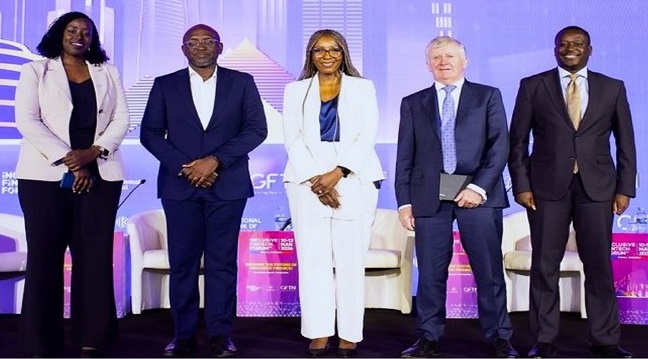
Interswitch Group, one of Africa’s leading integrated payments and digital commerce companies, has reaffirmed its commitment to advancing a seamless and inclusive financial ecosystem across the continent at the recently concluded Inclusive Fintech Forum 2026, which held at the Kigali Convention Centre, in Rwanda from 10 -12 March 2026.

Speaking during a high-level session themed “Financial Centres & the Future of Cross-Border Capital” Akeem Lawal, Managing Director, Payments Processing & Switching (Interswitch Purepay), highlighted the critical factors shaping the next phase of financial integration across Africa.
He noted that while rapid advancements in digital technology have made it possible for capital to move across borders at unprecedented speed, the ultimate destination and impact of such capital flows are determined by trust, robust infrastructure, and strategic collaboration.
According to Lawal, as Africa’s economies continue to digitize and integrate, stakeholders must prioritize building resilient payment systems and fostering partnerships that enhance transparency, interoperability, and shared prosperity.
He emphasized that sustainable growth in cross-border financial flows will depend not only on technological innovation but also on the collective ability of institutions to inspire confidence and enable seamless transactions at scale.
Throughout the forum’s engagements, Interswitch, as one of Africa’s leading and pioneering digital technology enablers reiterated its long-standing vision of fostering a prosperous and interconnected Africa. The company continues to champion the development of a secure, technologically advanced digital payments ecosystem designed to connect and empower individuals, businesses, governments, and communities across the continent.
Participation at the Inclusive Fintech Forum underscores Interswitch’s strategic focus on driving thought leadership, strengthening regional collaboration, and supporting initiatives that accelerate financial inclusion and economic resilience.
As Africa navigates the evolving landscape of digital finance and cross-border commerce, Interswitch remains committed to delivering innovative solutions and partnerships that unlock opportunities for growth and shared value creation.

Crypto Transactions Hit $96Bn in Nigeria -SEC

PwC Warns Nigeria Telcos of AI Fraud Risks

Lawyer Drags FG Court over Controversial Health Data Sharing Agreement with US

Elumelu Tags Elon Musk, Disowns AI-Generated Scam Video

FG Determined to Protect Rights, Privacy Online- NITDA

Kaspersky Discovers New Phishing Campaign Exploiting Google Tasks Notifications to Steal Corporate Credentials

esentry 2025 Report Shows Healthcare, Financial Services and Telecoms as Staging Grounds for Increased Cyberattacks in Africa

AfDB, UNDP Launch $10Bn AI Initiative for Africa

Mutual Benefits Assurance Settles ₦5.9bn Claims in January 2026

MultiChoice Suspends Yearly DStv Price Hike as Canal+ Pushes Growth




 Telecom2 days ago
VDT Communications Achieves Two Prestigious Certifications ISO /IEC 27001:2022, ISO/IEC 27032:2023 Reinforcing its Leadership in Broadband Service Provision

 E-Financial1 day ago
CBN Rolls Out New Rules for Safer Instant Payments, More Customer Control

 Telecom1 day ago
MTN Nigeria Races Ahead in Fibre Broadband Market

 News1 day ago
NIMMME Inaugurates Engr. Michael Orekyeh as 13th National Chairman in Abuja

 E-Financial1 day ago
CBN Tightens BVN Rules to Curb Fraudulent Banking Transactions

 E-Financial1 day ago
Nova Bank Appoints Jude Anele as Managing Director/CEO

 E-Business1 day ago
Tech Expert Unveils BAT-BOT AI App to Curb Fake News ahead of 2027 Elections
- Broadcasting2 hours ago
Spotify’s Loud & Clear Report Reveals Over ₦60Bn Revenue for Nigerian Artists in 2025