

General News
ICTs Set to Transform Smallholder Farming

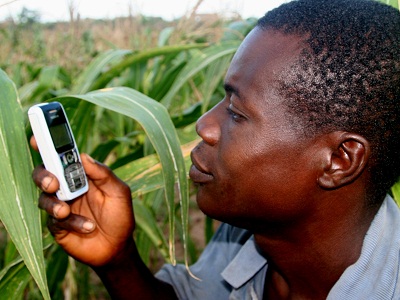
Smallholder farming, which is the backbone of many African economies, is set to be transformed by a combination of investment and increasing access to information and communication technologies (ICTs), particularly mobile phones.
The claim was made Tuesday by Michael Hailu, director of the Technical Centre for Agricultural and Rural Cooperation (CTA) at ICT4Ag, a major conference on ICTs in agriculture.
“On this continent, 65 per cent of the workforce is employed in agriculture and the sector generates 32 per cent of GDP. Smallholder farmers, mostly women, produce 80 per cent of Africa’s food. African countries spend up to $50 billion a year on food imports. With abundant land, water and cheap labour, there is no good reason why Africa should import so much food.
“Yet there’s good reason to be optimistic. After years of neglect, governments and the private sector are increasing investments in agriculture. Nevertheless, to achieve its full potential, smallholder agriculture must be transformed from a subsistence activity to a profitable, sustainable business. ICTs play a vital role in this transformation. They provide timely advice and information. They help farmers increase productivity. They make markets more efficient. And they increase incomes along the value chain”.
The CTA Director said, “the phenomenal growth in the number of mobile phone subscribers in Africa in recent years shows that change was on the way. In 2000, there were just 16.5 million mobile subscriptions in Africa. Now, there are over 650 million. Indeed, the number of people on the continent with access to mobile phones exceeds the number with access to clean water, electricity or a bank account”.
Mr Hailu was speaking at ´ICT4Ag: The Digital Springboard for Inclusive Agriculture´ Conference, which is being organised by CTA, the Rwandan Ministry of Agriculture and Animal Resources (MINAGRI) and the Ministry of Youth and ICTs (MYICT).
The conference is taking place in Rwanda, a country where 80 per cent of the working population are employed in agriculture but where the government of President Paul Kagame has also invested heavily in agriculture and ICTs as part of its ‘Vision 2020’ agenda to turn Rwanda into a middle-income country.
Last week, the Rwandan Government announced that a new network will provide high-speed broadband access to 95 per cent of the country’s population within three years.
Rwandan ministers attending the conference shared the upbeat mood. Dr. Agnes Matilda Kalibata, Rwanda’s Minister of Agriculture and Animal Resources, reminded the audience of the significance of agriculture in poverty reduction: “Agriculture is a low hanging fruit for poverty reduction. With 40 – 65% employment in this sector in ACP Countries, any investment will have a huge impact on the economy”.
She also emphasized the importance of ICT in transforming agriculture.
“Rwanda has committed to transforming the country through ICT. Information and communication technologies (ICTs), social media, Web 2.0 and mobile applications are changing the face of agriculture and rural development in many countries. The use of mobile devices is transforming the communication landscape through dissemination and sharing, and is changing the way we do business. This conference presents an opportunity for participants, Rwandans in particular, to harness the use of ICTs in agriculture and is very much in line with the national vision of making Rwanda an ICT hub in the near future”.
Participants at the ICT4Ag conference – including agricultural experts, farmers, young innovators, ICT companies and government officials – are focussing their attention on improvements to agriculture that can be brought about by technological innovation, capacity building and creating enabling policies and infrastructure.
Key issues for discussion are the role of youth and the encouragement of entrepreneurship; the inclusion of farmers in decision-making, information and crowdsourcing; and connectivity.
The Hon Jean Philbert Nsengimana, minister of Youth and ICT of Rwanda, said: “This day is a culmination of more than 10 years of consistent investments in ICT4D policy and strategy formulation, infrastructure development, mobile penetration, education and value added services development in parallel with agriculture modernisation efforts”.
Ambassador Valentine Rugwabiza, CEO of the Rwanda Development Board, also a Cabinet member, highlighted the synergies between ICT and investment and also emphasised that indeed ICT is only a tool whose importance will be derived from how well it is used.
Michael Hailu stressed, however, that a major part of the key to securing the potential benefits of ICTs and investment in African agriculture was likely to be the extent to which countries are successful in harnessing the creative input of two key sectors: young entrepreneurs and women.
“Access to ICTs is not uniform”, he said, “and there is a digital divide. There is a significant gender imbalance, with men having better access to ICTs than women. And rural areas are significantly underserved compared to cities”.
He described the importance of young people as “pivotal”.
“Young people have the greatest aptitude for using ICTs, whether it’s to communicate or develop new apps to improve agricultural productivity or access faraway markets. Africa’s youth must therefore play a pivotal role in the transformation of smallholder agriculture.
“ICTs – in particular mobile devices – have opened up unprecedented opportunities for agricultural and rural development. This development can offer a bright future for millions of women and men who derive their livelihood from farming and other forms of rural employment. Farmers, even in the remotest locations, can easily and readily access vital information on weather, market prices, pests and diseases as well as input prices.
“It is not just about linking farmers to markets or creating employment opportunities for young people. Social media also provide a platform for rural communities to contribute to policy-making”.
More than 500 participants from 63 countries, including from Caribbean and Pacific islands, are attending the conference.


General News
PalmPay Strengthens Data Protection Culture with Employee Privacy Workshop and Privacy Champions Programme


PalmPay has reinforced its commitment to responsible data governance and customer information protection through a specialised two-day data protection workshop for employees and the launch of its internal Privacy Champions Programme, an initiative designed to strengthen awareness, accountability, and responsible data handling across the organisation.

The initiative comes at a time when data protection is increasingly critical following recent reports of recorded 281,500 compromised user accounts in the first quarter of 2026, ranking 34th among the world’s most breached countries, according to a new quarterly data breach analysis by cybersecurity firm, Surfshark.
Facilitated by the Nigeria Data Protection Commission (NDPC) and leading Data Protection Compliance Organisation (DPCO) TechHive Advisory, the two-day workshop equipped employees with practical knowledge on privacy governance and data protection obligations, incident awareness, and the role each employee plays in protecting personal data.
The initiative forms part of PalmPay’s ongoing efforts to advance compliance with the Nigeria Data Protection Act (NDPA) 2023. It also reflects the company’s continued investment in safeguarding customer information and fostering a culture where privacy remains everyone’s responsibility.
The Privacy Champions Programme establishes a network of employee representatives across business functions who will support awareness, promote best practices and help strengthen the organisation’s privacy culture. By integrating privacy considerations into day-to–day activities the initiative aims to further enhance accountability and reinforces customer trust.
Speaking on the initiative, Managing Director of PalmPay, Chika Nwosu, stated: “At PalmPay, protecting customer information is fundamental to maintaining the trust our customers place in us everyday, and remains central to our operations. Statistically, 10 out of 100 Nigerians have been affected by data breaches.
Hence, we have a greater responsibility to ensure that personal information is collected, processed, stored, and protected responsibly. This specialised training reflects our continued investment in strengthening internal awareness and ensuring our teams remain equipped to uphold the highest standards of data privacy and protection.”
As a digital financial services platform serving millions of users, PalmPay reaffirmed that privacy and data protection remain embedded in its operational culture, with continuous investments in data governance practices.
PalmPay also encourages customers to remain vigilant and adopt safe digital practices, including protecting account credentials, exercising caution when sharing personal information online, and reporting suspicious activities promptly. The company maintains that building a secure digital ecosystem requires a shared commitment from organisations, regulators, and users alike.


President Bola Tinubu has appointed Dr Obi Adigwe as the National Coordinator of the newly established National Health Technology and Data Analytics Office (NHTDAO).

President Bola Tinubu
The appointment was announced in a statement issued on Friday.
The office, which will be domiciled in the Office of the Coordinating Minister of Health and Social Welfare, is expected to serve as the national coordination platform for Nigeria’s digital health system.
According to the statement, the NHTDAO will complement the work of existing health institutions by promoting coordination and interoperability across public and private healthcare systems, rather than replacing existing agencies.
It said the office would also drive the implementation of the National Digital Health Architecture approved by the National Council on Health in November 2025.
The statement said the initiative formed part of the Federal Government’s efforts to strengthen a secure, technology-driven and data-enabled healthcare system capable of improving service delivery nationwide.
Adigwe, who currently serves as the Director-General of the National Institute for Pharmaceutical Research and Development (NIPRD), has led several initiatives in science, pharmaceutical research, technology transfer and artificial intelligence.
He also coordinated major research funding initiatives, including a ¥300 million nanotechnology grant and an €18 million European Union research grant, while supporting the establishment of Africa’s first Active Pharmaceutical Ingredient (API) training facility through support from Afreximbank.
The statement said the new office would be guided by a steering committee co-chaired by the Coordinating Minister of Health and Social Welfare, Prof. Muhammad Ali Pate, and the Chairman of the Nigerian Economic Summit Group, Mr Olaniyi Yusuf.
Other members of the committee include the Minister of State for Health, Dr Iziaq Adekunle Salako; senior officials of the Federal Ministry of Health and Social Welfare; representatives of the National Information Technology Development Agency (NITDA); and heads of key health agencies, including the National Primary Health Care Development Agency (NPHCDA) and the National Health Insurance Authority (NHIA).
The committee will also include representatives of state commissioners for health from the six geopolitical zones, as well as industry and community stakeholders.
The Federal Government expressed optimism that the office would strengthen coordination across the health sector, accelerate digital transformation and improve healthcare delivery in line with the Renewed Hope Agenda.

The Gathering on 100 made its latest stop in Enugu over the weekend, bringing together hundreds of young Nigerians for a day of networking, fun, entertainment, and business opportunities.

The event, previously held in Lagos and Aba, arrived in Enugu as the city gains recognition as one of Nigeria’s emerging innovation and startup hubs. Recent ecosystem reports rank Enugu among the country’s leading startup cities. The South-East region now accounts for more than half of identified startups across the South-East and South-South, highlighting the region’s growing role in Nigeria’s entrepreneurial landscape.
A major highlight of the Enugu edition was the Pitch-a-thon competition, where three entrepreneurs received a combined ₦5 million in grants to support their business growth. More than 100 entrepreneurs applied for the competition, with 10 finalists selected to pitch before a panel of judges. At the end of the contest, Velas Global Nutrition Limited emerged as the overall winner, securing ₦2.5 million. Werxio, founded by Donatus Prince, received ₦1.5 million, while Whipcare Company was awarded ₦1 million.
These grants address a persistent funding challenge. According to the Small and Medium Enterprises Development Agency of Nigeria (SMEDAN), the country is home to over 39 million MSMEs, contributing nearly half of Nigeria’s Gross Domestic Product and accounting for about 84 per cent of employment nationwide. Despite this, access to finance remains a significant obstacle to business growth.
For Chizoba Osuji, founder of Velas Global Nutrition Limited, the funding facilitates the expansion of a business built on years of research. Her company processes indigenous crops into shelf-stable blends, supporting nutrition and local women smallholder farmers. “This is motivation to keep making Nigerians healthier through better food,” she remarked, noting the grant will fund semi-automated equipment to increase production capacity to 20 tonnes monthly.
She added that the ₦2.5 million grant would be used to acquire semi-automated equipment capable of increasing production capacity to about 20 tonnes monthly. Beyond increasing output, the expansion is expected to create additional opportunities for women smallholder farmers across the South-East who supply many of the raw materials used by the company.
Speaking on the initiative, MTN’s Regional General Manager (Sales), Callima Inino, represented by Peter Kajovo, said The Gathering on 100 was designed to provide young Nigerians with platforms to connect, learn, showcase their talents and access opportunities that can help them grow.“We want to encourage youths to live their best lives and have fuller expressions of themselves,” he said.
As the Enugu edition concludes, the energy of the South-East’s startup scene remains evident. The Gathering on 100 continues its nationwide tour, connecting more young founders with the visibility and support they need. Stay tuned to discover where the tour will land next as it moves to its next exciting location.

FCMB Turns Normal Banking into Rewards with New Mobile App Upgrade

Despite Warnings, FG Draws Down $1.5Bn as First Tranche of FAB $5Bn Loan Deal

PalmPay Strengthens Data Protection Culture with Employee Privacy Workshop and Privacy Champions Programme

Paystack Unveils AI-powered Payments Tools

NRS, CITN Deepen Partnership to Strengthen Tax Awareness

CBN Extends PoS Geo-Fencing Enforcement Deadline to August 2026

London Strengthens Global Investment Ties with Africa @ First Ever London-Africa Business Summit

FG Targets Alleged N3tn Capital Flight, Opens Airtime Credit Market to Nigerian Fintechs

Mobile Internet Gender Gap Widest in Africa – GSMA

Japan, UNESCO Boost Digital Learning in 15 CoEs with Donation of ICT Equipment




 Telecom3 days ago
6 Easy Ways to Enjoy the 2026 World Cup with Google and Gemini

 News3 days ago
MTN ASAP Enugu Stakeholders’ Conference Rallies More Action Against Youth Drug Abuse, Unveils N33Bn ASAP Impact
 E-Financial3 days ago
EFCC, CAC Raise Concerns over Unregistered PoS Operators

 General News2 days ago
Tinubu appoints Adigwe to head National Health Technology, Data Analytics Office
 E-Financial2 days ago
NRS, CITN Deepen Partnership to Strengthen Tax Awareness

 E-Financial3 days ago
FG Proposes Africa-Wide Payment Card without Conversion through US Dollar
 E-Financial2 days ago
Paystack Unveils AI-powered Payments Tools

 E-Financial3 days ago
Providus, Unity Bank Begin Integration Phase after Supreme Court Nod