

News
FG Mulls National Gaming Act to Replace National Lottery Act

The Federal Government says all machinery has been put in motion to repeal the National Lottery Act (NLA), 2005. It said that after the repeal of the Act, it would be replaced by the National Gaming Act (NGA), 2021.

The Minister of Special Duties and Inter-Governmental Affairs, Senator George Akume, disclosed this in Gombe Wednesday, during the virtual inauguration and handing over of vital medical equipment to the state’s Specialist Hospital and Federal Teaching Hospital.
Items donated include ultrasound scan machine, digital x-ray machine, oxygen concentrators, theatre beds, and Personal Protective Equipment.
Akume noted that the National Gaming Act would accommodate the growing dynamism of lottery business in the country.
He charged all persons and organisations licensed to operate gaming business to be ready to meet up with their statutory obligations to avoid being sanctioned.

He added said, “Government is committed in ensuring that returns obtainable from other non-oil sources of revenues are maximised. Lottery is one of such alternative revenue sources, and this government is determined to make it more productive and sustainable
“As the sector becomes firmly established, it is our expectation that lottery will be included in the strategic plans of the nation.”
Also speaking, Executive Secretary/CEO, National Lottery Trust Fund, Dr. Bello Maigari said the decision of the Federal Government to establish the National Lottery Trust Fund is “indicative of a government that recognises the importance of lottery as a vehicle in enhancing the social well-being of its citizenry through investment in its various lottery good cause intervention projects that are creative, relevant, timely and economically sustainable.”
Maigari who was represented at the occasion by head of operation, NLTF, Abubakar Nakwada noted that the essence of the intervention is to provide “vital medical equipment to under-served communities in the hope that government will make all the difference in saving lives and reversing the deteriorating health conditions leveraging the use of Hi-Tech diagnostic equipment to provide high standards of care to vulnerable segment of society with sizeable percentage of state across the six geo-political zones covered so far in the phase of the intervention.”
Speaking,Dr. Yusuf Abdullahi, Chief Medical Director of Federal Teaching Hospital, said the donation has improved how they managed patients
He said over 100,000 patients have benefitted from various vital equipment donated.
The Chief Medical Director appealed to the Federal Government for alternative power, saying that the hospital spent over 113 million naira on monthly basis for power supply.
“I will like to sincerely appreciate Minister of Special Duties and Inter Government Affairs, and National Lottery Trust Fund. It has improved the way and manner we have been managing our patients,” Abdullahi said.



Economic and Financial Crimes Commission (EFCC) has uncovered an alleged multi-billion-naira visa overstay racketeering network within the Nigerian Immigration Service (NIS), with at least five serving officers, including a deputy comptroller, grilled by investigators.

The investigation, which cuts across the administrations of several former comptrollers-general of Immigration, has reportedly uncovered about N700 million in the bank accounts of one of the suspects and several multi-billion-naira estates allegedly acquired by another suspect through proxies.
The alleged racket centres on the extortion of foreigners who overstayed their visas, with investigators probing how immigration officials allegedly diverted or illegally collected huge sums from affected foreigners.
The development comes against the backdrop of the Nigeria Visa Policy 2025, which introduced a penalty regime requiring foreigners who overstay their visas to pay $15 for every day spent in the country after the expiration of their visas.
A visa overstay occurs when you remain in a country past the authorized departure date stamped on your passport or travel document.
The EFCC investigation is reportedly focused on officers operating at the Murtala Muhammed International Airport, Lagos; Nnamdi Azikiwe International Airport, Abuja; and the NIS headquarters in Abuja.
Among those said to have been questioned are Assistant Superintendent of Immigration, Bashar Suleiman, serving at the Lagos airport; deputy superintendent of Immigration, Musa Abubakar, of the Abuja airport; principal staff officer to the comptroller-general of Immigration, chief Superintendent of Immigration Dotun Aridegbe; and two personal assistants to the comptroller-general, assistant comptroller of Immigration Emmanuel Imaekhai and assistant superintendent of Immigration O. Babatunde.
The investigation was reportedly triggered by information supplied by a female immigration officer who allegedly blew the whistle on the scheme.
A source familiar with the probe said the whistleblower’s allegations led investigators to examine the financial activities of several NIS officers and their associates.
“We opened an investigation into the visa overstay racket after a female immigration officer blew the lid on the racketeering,” the source said.
The source alleged that investigators had found links between the alleged racket and several aides of Kemi Nandap, current comptroller-general of Immigration.
“Several of her aides have indicted her directly and indirectly. Investigators are looking into whether she was a beneficiary of the multi-billion-naira extortion racket,” the source said.
The allegations against the Comptroller-General remain subject to investigation, and no formal charge has been announced against her.
The source said the investigation had revealed that the alleged extortion network may have operated for years, possibly under successive Comptrollers-General of Immigration.
“It is an interesting but damaging case because we found out that the extortion of overstayers has been going on for several years under past CGs, some of whom appeared to have benefitted from the scheme,” the source said.
Investigators have reportedly identified a Deputy Superintendent of Immigration who has served at the Nnamdi Azikiwe International Airport for more than 10 years, a posting described by investigators as unusual.
A search of the officer’s apartment allegedly uncovered immigration stamps associated with various international airports across Nigeria.
The officer is also said to have maintained close relationships with successive Comptrollers-General, a development now being examined as investigators attempt to unravel the alleged structure and longevity of the racket.
“He is known to relate directly with all serving CGs. His admissions have been illuminating as he is the linchpin of the operation,” the source said.
The EFCC is also investigating the alleged use of proxies to conceal the proceeds of the racket.
Some individuals whose names were allegedly used to operate multiple bank accounts and acquire landed properties have reportedly told investigators that they acted as fronts for the suspects.
The commission is expected to scrutinise the assets, bank accounts and financial transactions linked to the suspects as it traces the alleged proceeds of the racket.
The investigation may also be widened to include some former Comptrollers-General of Immigration, who could be invited to clarify findings and authenticate admissions allegedly contained in written statements obtained from the suspects.
The EFCC has yet to publicly announce charges against the officers, while the investigation is ongoing.
However, CSI O. Babatunde, one of the NIS officers, said to be linked to the alleged visa overstay racket has denied any involvement in the scheme.
The officer, in a brief response to the allegations, said he had no connection with visa fraud or any related racketeering.
“I am not involved in a scam and do not have any visa scam issue, please. I was never invited for visa scam,” the officer said.
Others who were asked of their involvement, Dotun Aridegbe, Emmanuel Imaekhai, Bashar Suleiman did not respond to messages sent to their mobile line.
The denial by Babatunde, comes as the EFCC continues its investigation into the alleged visa overstay extortion network.
The commission has not publicly disclosed the identities of all the officers being investigated, nor has it announced any charges in connection with the matter.
All allegations remain subject to investigation, and the suspects are presumed innocent unless proven guilty by a court of law.

Nigerian Copyright Commission (NCC) and National Drug Law Enforcement Agency (NDLEA) have signed a Memorandum of Understanding (MoU) to fight against piracy and drug trafficking in the country.

NCC Director General, Dr. John Asein (left) and NDLEA Chairman/CEO, Brig Gen Mohamed Buba Marwa (Rtd)
This was disclosed on Friday in a press statement released by Femi Babafemi, director of Media and Advocacy, NDLEA.
Speaking at the ceremony to sign the MoU at the NDLEA headquarters, Brig Gen Mohamed Buba Marwa (Rtd), chairman/chief executive officer of the Agency, said the partnership may appear, on the surface, to bring together two unrelated mandates, but which, on closer examination, reflects a shared reality in the fight against organized crime in Nigeria.
According to Marwa, “Our experience at the frontlines of drug law enforcement has shown us time and again that criminal networks rarely confine themselves to a single illicit enterprise. The same syndicates that traffic in narcotics are often found dabbling in other forms of economic crime, including the piracy of intellectual works that rightfully belong to Nigeria’s creatives: our musicians, filmmakers, writers, and software developers. Proceeds from one illegal trade frequently find their way into financing the other. This is the criminal value chain we must disrupt together.
“Today’s MoU gives structure to that shared fight. Through it, our two agencies commit to exchanging intelligence, coordinating joint operations, building the capacity of our respective officers, and supporting one another with the technical resources needed to do this work well. A Joint Working Committee will be established to drive this collaboration forward, meeting regularly to ensure that what we sign today translates into real results on the ground.
“Let me be clear: this partnership is not just about law enforcement. It is about protecting the health and social wellbeing of our people, and about safeguarding the immense creative talent of this nation: a talent that deserves to thrive without the theft that piracy represents, and a society that deserves protection from the scourge of illicit drugs.”
He commended the NCC for recognizing the intersection between drug trafficking and piracy. “This is how effective government works; agencies finding the common threads in their missions and pulling together rather than in isolation”, Marwa added.
In his remarks, Dr. John Asein, director general of NCC, noted that the alliance between NDLEA and the commission marks a significant milestone in the growing culture of inter-agency collaboration within the Nigerian public service, adding that the effort will enhance the common responsibility of protecting the Nigerian society from criminal enterprises that undermine national security, economic development and the rule of law.
“Copyright piracy is sometimes wrongly perceived as a minor commercial offence or a victimless activity. In reality, large-scale piracy is often a highly organised and profitable criminal enterprise. It deprives creators and investors of legitimate income, destroys jobs, discourages investment, reduces government revenue and weakens the foundations of Nigeria’s creative economy,”Asein said.
“International experience has demonstrated that organised copyright piracy is rarely an isolated criminal activity. Across several jurisdictions, the same criminal syndicates, logistics channels, financial networks and distribution systems used to traffic pirated goods have also been linked to other forms of transnational organised crime, including narcotics trafficking, money laundering, smuggling and cyber-enabled offences. This reality underscores the imperative for closer collaboration between agencies such as the National Drug Law Enforcement Agency and the Nigerian Copyright Commission.
“The same clandestine supply chains, transportation routes, storage facilities, financial channels and distribution networks used for trafficking in illicit drugs and other prohibited goods may also be deployed for the movement and sale of pirated books, films, music, software and other copyright products. Proceeds from piracy may equally be laundered or channelled into other criminal activities.
“This connection makes collaboration between the Nigerian Copyright Commission and the National Drug Law Enforcement Agency both necessary and timely. By combining our respective mandates, expertise and intelligence capabilities, we can more effectively identify criminal networks, trace illicit financial flows, disrupt illegal supply chains and dismantle the structures that sustain organised criminal enterprises.
“For the Nigerian Copyright Commission, this partnership offers an invaluable opportunity to leverage the National Drug Law Enforcement Agency’s world-class expertise in intelligence-led law enforcement. Over the years, the NDLEA has earned a well-deserved reputation, both nationally and internationally, for its professionalism, operational excellence and innovation in combating organised crime. Under the able leadership of the Chairman/Chief Executive, the Agency has demonstrated remarkable success in intelligence-driven operations, strategic investigations, forensic capabilities, surveillance, financial intelligence, international cooperation and effective inter-agency coordination.”
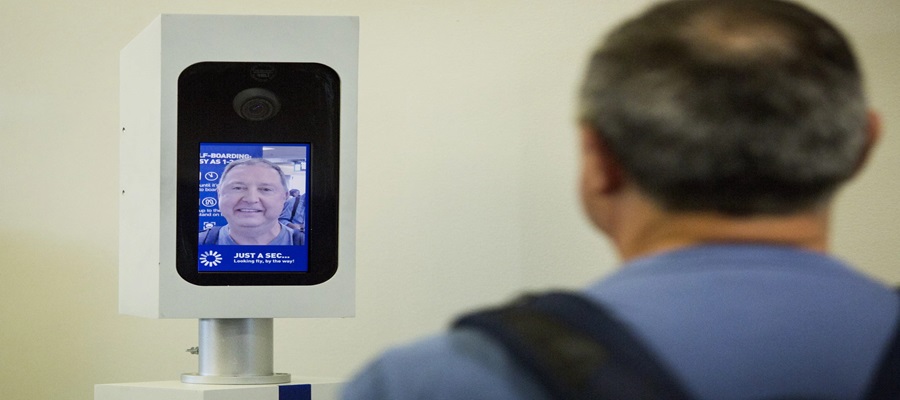
Federal Airports Authority of Nigeria (FAAN) has announced plans to introduce a biometric identity verification system, known as V-Pass, to speed up passenger processing and enhance security at domestic airports nationwide.

This initiative is aimed at strengthening aviation security, reducing passenger processing time and eliminating dependence on physical identity documents.
A statement issued yesterday by Henry Agbebire, director of Public Affairs and Consumer Protection, FAAN, said the new facial recognition platform, developed in partnership with Verxid Technologies Limited, would enable passengers to verify their identities through biometric authentication, allowing them seamless access through airport security checkpoints and boarding gates.
According to him, the initiative formed the focus of a strategic meeting between FAAN and Verxid Technologies Limited, where both organisations reviewed deployment plans, security safeguards and measures to improve passenger experience.
The statement hinted that the authority centred on ensuring the successful rollout of the digital platform while maintaining high security standards.
The statement quoted, Adebola Agunbiade, director of Commercial and Business Development, FAAN, as describing the V-Pass as another milestone in the authority’s ongoing digital transformation programme.
According to her, the platform indicated FAAN’s commitment to deploying innovative technology that enhances passenger facilitation while reinforcing aviation security across domestic airports.
She assured that the system would provide every traveller with a secure digital identity through a one-time enrolment process.
Under the arrangement, Nigerian passengers would register using their National Identification Number (NIN) alongside facial biometric capture, while foreign travellers would enroll with their passports through Optical Character Recognition (OCR) supported by biometric authentication, the statement added.
FAAN said the system would verify passenger identities before they gain access to restricted airport areas and once again before boarding their flights.
The agency noted that the dual-verification process was designed to prevent identity fraud, impersonation and unauthorised access to airport facilities, while giving security agencies greater confidence in passenger authentication.
Passengers would be able to complete the verification process either through self-service kiosks or with assistance from trained FAAN personnel.
The deployment would also include electronic gates to automate access into controlled areas, reduce queues and improve passenger movement across airport terminals.
According to the developers, first-time registration is expected to take about one minute, while subsequent biometric verification would take less than 30 seconds.
Apart from passenger processing, the V-Pass platform would also provide airlines with secure digital access to flight schedules, passenger manifests and boarding statistics.
FAAN assured travellers that data protection remained a critical component of the project, stressing that the platform fully complies with the Nigeria Data Protection Regulation (NDPR).

Dangote Refinery’s Private Placement Reportedly Hits $2.5Bn

FG, UNODC Plan National Strategy against Organized Crime

EFCC Busts NIS Visa Overstay Racket, Uncovers N700m in an Account

CBN to Monitor Every Dollar with FXBT, Forex Tracker

NCC, NDLEA Partner to Fight Piracy and Drug Trafficking

NRC, Ponzi Scheme Collapses Resulting Loss of Billions of Naira

NASENI Moves to Digitize CCB’s 5m Assets Declaration and Operations

Lebara Nigeria Launches Lebara Play, Africa’s First Telecom-Owned Micro-Drama Platform

CANAL+ Partners Samsung to Pre-Load DStv Stream on New Samsung TVs In Nigeria, Other African Countries

Tokenization, Blockchain Technology will Transform Financial Institutions – IMF



 News1 day ago
EFCC Busts NIS Visa Overstay Racket, Uncovers N700m in an Account

 General News2 days ago
Nigeria Facing Rising Cybercrime Losses – Report

 Telecom2 days ago
ntel Plays Down Calls and Data Services, Moves to BET Agenda

 Telecom2 days ago
Airtel Delivers Free Employability Training to Young Nigerians @ World Youth Skills Day

 News2 days ago
FAAN to Replace Physical ID Check with V-Pass Biometric Verification

 General News2 days ago
TotalEnergies Inaugurates Africa’s Largest Hybrid Renewable Project

 News2 days ago
CAC Begins Removing 100,000 Companies from Register Over Regulatory Non-Compliance

 News2 days ago
CBN Introduces Digital Tracker to Monitor BDC Forex Transactions