

E-Business
Global Reboot: 75% Complete


Tim Akano
Do you understand what is really happening and what lies on the road ahead?
The world tilted slightly on 9/11/2001 when inferno descended on the World Trade Centre, killing 2,977 people. Today, the world is moving at full tilt.

America fell into a big ditch in Iraq and a moat in Afghanistan while chasing the masterminds of the 9/11 terror attacks.
Invading Iraq and Afghanistan was perhaps the greatest strategic military gamble in America’s history, just as the 1956 invasion of Suez Canal in Egypt became Britain’s Achilles’ heel that ultimately condemned it to a ‘’second tier ex-King’’ status.

Punishing the whole for the sin of a few is expensive, unwise and counterproductive. To avenge the 9/11 terror act, America could have targeted the ‘Centre of Gravity’ (the fingers that sinned) in both Iraq and Afghanistan and clinically cut them off. Why kill a fly with a sledgehammer?
The invasion led to the de-legitimisation of the American Empire arising from haemorrhaging military expenditure, humongous debt profile and radical de-industrialization. Thus, the evolution of America as a sole Super Power froze.
Today, America is undeniably weaker, looking like a self-disrobed King in a decaying empire. As the twin-goals of enthroning democracy and peace remained elusive and Afghanistan increasingly became human meat-grinder, America’s mystic vanished.
Consequently, the Taliban became more emboldened when they discovered that the red comb on the head and neck of America’s chicken was not, after all, the burning, hot fire it was assumed to be, but fleshy red meat.
Every Empire is 50% transcendental. The fear-factor is part of the myth, and thisAmerica has lost.
According to Watson Institute of International Public Affairs at Brown University, the war on terrorism has cost a whopping $6.4 Trillion of America’s tax payers money, total death of 801,000 people out of which 335,000 were civilians and 21 million displaced due to violence.
Twenty years after, the P&L balance sheet of the war venture shows America made a big loss. Just like the Afghan people. The world, too, lost. Then who gained? Terrorism has gone global. It used to be as scarce as hen’s teeth, but has since become flesh dwelling among us, growing by leaps and bounds, and defying the law of gravity.
We are at a very dangerous moment in history. The ship of ‘a world- in-change’ faces a wicked wave in the middle of a deep ocean, making navigation a nerve-racking ordeal. Everywhere, there are blinking red lights.
How will the emerging geopolitical superstructure stack up after the reboot? And where is the Africa action- plan in the redrawn world?
The triumph of the totalitarian Taliban in Afghanistan after decades of back-to-back wars with two super powers; the circular crises in the Middle East; North Korea’s new nuclear threat; Nigeria’s rapidly collapsing House; growing numbers of failed, failing and fragile states; China’s unhealthy monopoly of the global supply chain; a jejune Europe; a jittery Japan; a rascally Russia; a bullish China; NATO’s on-going tango over the Black Sea; Taiwan-Hong Kong impending forceful occupation at a time when the world’s sole Super Power’s influence is going south. These are some of the blinking red lights, signalling frightening impending danger.
Nature, too, is angry. Her eyes are hot red. The biggest red light is Climate imbalance. The UN Secretary General, Antonio Guterres, in the report titled ‘’a code red for humanity, noted ‘the 1.5-degree threshold is perilously close, as the world’s presently 1.1 degrees Celsius is higher than pre-industrial levels. The average surface temperature of the Earth has increased by about 1.0F degree. While specific humidity is on the increase, the relative humidity is decreasing. Some places are witnessing unprecedented rainfall, a preliminary warning to another biblical ‘’Noah- flood’, while others are getting hotter and drier, accelerating desert encroachment, yet some are getting abnormally cold.
You can’t cheat nature and get away with it!
Overpopulation is yet another blinking red light. Population experts have warned with a tone of finality that the world has reached its maximum capacity of almost 8 billion people. The 81 million people annual top up amounts to excess luggage which comes with interest and default charges from Nature’s Bank.
True, 100 years ago, the world’s population stood at 1.9 billion, today it is 7.9 Billion, whereas the world’s land (149 million sq.km) and water (361 million sq.km.) areas are fixed.
As Americans will say ‘’something’s gotta give”. However, the Globalists’ proposal, ‘’eliminate a few to save the rest’’ is stomach-churning. Author Dan Brown, in ‘’Inferno’’, speaks on their behalf: Population growth is an exponential progression occurring within a system of finite resources.
“The end will arrive very abruptly. Our experience will not be that of slowly running out of gas. It will be more like driving off a cliff Now I understand why Da Vinci said 500 years ago that, the infinite works of Nature are woven together in a unity filled with marvellous but sometimes dangerous patterns”.
President Bill Clinton has warned of possible aliens invasion of the world, which is another blinking red light that regular people don’t pay attention to. Our scientists’ persistent communication with aliens, who are reported to be more technologically advanced than we are, can backfire.
What if the aliens also decide to visit our world to have dinner in our living rooms or worship in our churches and mosques or take a nap on our family bed someday?
According to the serial entrepreneur, Elon Musk, something in the universe is killing everything’’.
Professor Robin Hanson earlier came up with the Great Filter theory, somewhere along the trajectory of life’s development, there are massive and common challenges that end life before it becomes widespread in the universe.’’ Elon Musk adds, Hopefully, there will never be a WW3, but the probability of creating a self-sustaining city on Mars after World War 3 is low’’. Musk concludes that, in future there are filters that should concern us. Maybe we will be hit by an asteroid, an earthquake, a pandemic, or maybe robots could rise and destroy us or maybe it is just impossible to make a star ship’.
The world is severely pressed for time in turning red to green! Worse still, America that used to serve as the World’s Inspector General of Police (WIGP) is presently nursing a severe psychological trauma following the recent ‘August Embarrassment’ of ‘’two own-goals’’ scored in Afghanistan.
Departing hurriedly on 31st of August 2021 without achieving its goals did incalculable psychological damage to America’s image, and losing 13 solders to suicide bombers on the eve of her departure amounts to ego-crushing! Of what use then is the 20 years experience when America did not foresee that the 300,000 Afghan Horses she backed cannot withstand 48 hours of challenge from the 75,000 Taliban Horses? It speaks volume about the size of decay in the US that despite the fundamentally flawed evacuation project in Kabul, no heads rolled.
String of military losses sustained against external enemies is one of the signs of a collapsing empire. Rome went through this phase. Ditto UK. America has had Vietnam, Somalia, Iraq, Syria, Libya, and now Afghanistan!
There is an irreversible seismic shift occurring – the geopolitical traditional powerhouses are ghastly losing their edge to new players. For instance, Europe, faced with an atrophying population, innovation, vision and cohesion, is up against some indomitable state actors: economically from China, militarily from Russia, politically from America and religiously from the Islamic world of Arabia. All these while, America, as a result of self-inflicted ’imperial overstretch’, is gasping for air.
The global balance of power is falling apart as the balance of terror holds sway!
On the 31st of August, the Taliban declared themselves winners and on 1st of September, 2021, held a parade with dozens of abandoned American armoured vehicles in Kabul.
The biggest dilemma facing the world today is how best to tackle the Kabul chaos: leave Taliban to its fate or engage them? Meanwhile, some of the Afghans and Taliban fighters possess unique skill-set in explosive belt and vest production.
Add these to the abandoned American and Russian military and civil infrastructure, estimated to be in excess of $100billion at their disposal. Clearly, the world needs to think perpendicularly whilst dealing with Taliban 2.0, so that the CIA-M16-KGB trained Taliban do not metamorphose into a 21st century Frankenstein Monster.
The saying whatever happens in Las Vegas stays in Las Vegas’’ is not going to hold true of Afghanistan. Whatever happens in Kabul in the months ahead will not stay in Kabul but have a ricocheting effect worldwide
It will probably require the services of a “Tesseographer”, those versed in the art of identifying symbols and messages found in the shape and configurations of tea leaves, in decoding where the world is headed.
In computing, especially after system or power failure, rebooting is the process by which a running computer is reconfigured either intentionally or unintentionally.
This could happen when the software applications powering the operating system are outdated and the computer begins to work sluggishly. Sometimes crashes can happen leading to an irretrievable loss of personal files and photos that are not backed up.
In the same vein, the World’s Computer Operating System (WOS) is obsolete and the made-in-America ’software applications’ like Capitalism, Democracy, Globalisation, etc. running on it are failing and causing global friction.
Unfortunately, unlike computers, the world has no BACKUP, no duplicate!
The three musketeers of space travel – Richard Branson, ElonMusk and Jeff Bezos – told us that only one million people can possibly be accommodated in space by 2050. The cost is $55million per ticket! Here is the major concern: for every weapon man has made, man has always used it
The World has to pray that no nation with nuclear capability will be tempted or provoked to nuke another as a way of unilaterally resolving the complicated geopolitical logjam since the second-strike-nuclear-capabilities in the hands of the Big7 nuke nations are capable of destroying the entire world seven times over.
The world is moving as it should? Or is it?
Tim Akano is the President, One Africa Initiatives .



At the recent Cyber Security Weekend – META event, Kaspersky’s Global Research and Analysis Team (GReAT) experts presented the latest findings on the cyberespionage threat landscape across the Middle East, Turkiye, and Africa (META) region.

While most cyberthreat categories declined over the past year, cyberespionage continued to intensify in the region. Thus, throughout the past year, spyware attacks increased by 40% in Africa, while password stealer attacks grew by 31% in Africa.
The cyberespionage landscape across the META region continues to be driven by geopolitical tensions, regional conflicts and ideological motivations. As intelligence gathering becomes increasingly important for both Advanced Persistent Threat (APT) actors and cybercriminals, organisations and individuals alike are facing a growing number of attacks designed to steal sensitive information and establish long-term access to compromised systems.
If we specifically look at cyberthreats aimed at businesses, organisations in Africa experienced a sharp increase in espionage-related threats over the past year. Spyware detections rose by 16% in Africa, password stealer attacks by 51%, and backdoor detections by 23%.
These types of malware are commonly used to infiltrate corporate environments, steal confidential information, establish persistent access, and facilitate subsequent stages of targeted attacks.
As geopolitics remains a key driver for APT attacks, such actors remain among the most significant cyber risks in the region for businesses and governmental entities.
To maximise persistence and evade detection, they continuously refine their toolsets, deploying increasingly sophisticated malware capable of maintaining long-term access to compromised systems while collecting valuable intelligence.
In 2026, Kaspersky GReAT is tracking more than 20 APT groups actively targeting organisations across the META region.
Recent research by Kaspersky GReAT found the MuddyWater APT group targeting organisations across the Middle East during the Gulf conflict using previously unseen malware chains.
The campaign employed custom loaders, injectors, previously unknown remote access trojans (RATs), credential stealers, and a modular data exfiltration framework, highlighting the group’s rapid development of new tools to steal sensitive information and evade detection.
The increase in espionage activity is not limited to organisations. Individuals are also increasingly targeted. Over the past year, attacks involving password stealers increased by 32% in Africa. The stolen information can subsequently be used to hijack accounts, conduct follow-on attacks, extort victims, or sold to third parties on underground marketplaces.
Another rapidly growing trend is mobile cyberespionage. As smartphones increasingly store personal communications, corporate information, authentication credentials, and financial data, they have become high-value targets for attackers.
“Smartphones have become one of the most valuable sources of intelligence for cyberespionage actors. While Android devices continue to be widely targeted by mobile spyware, we are also observing an increasing number of reports of sophisticated campaigns targeting iOS, as demonstrated by Operation Triangulation and, more recently, Coruna attacks.
“These findings show that advanced mobile threats continue to evolve across both major platforms, making mobile security an essential part of cyber resilience for both organisations and individuals,” said Dmitry Galov, Head of Global Research and Analysis Team, Russia and CIS, at Kaspersky.
As cyberespionage threats continue to evolve, Kaspersky recommends that organisations adopt a layered cybersecurity approach, combining continuous vulnerability management, timely patching, employee awareness training, threat intelligence, and advanced security solutions such as Kaspersky Next, which help detect sophisticated targeted attacks and protect organisations from long-term compromise.
E-Business
82% of Organizations Concerned about AI Risks Even as Adoption Accelerates – Survey Reveals

At its recent Cyber Security Weekend for the Middle East, Turkiye and Africa (META) region Kaspersky shared the results of a global study conducted by its internal research center which surveyed 1,800 IT and cybersecurity decision-makers and specialists from organisations across 18 countries and multiple industries.

The report shows that the pace of AI integration across organisations is rapid, despite associated risks. The company’s experts stressed that while AI adoption delivers clear efficiency gains, it must be accompanied by robust cybersecurity solutions, well-defined internal procedures, and comprehensive employee education programmes.
The report highlights a clear organisational preference for AI-enhanced technology: 68% of respondents said they would recommend a solution with AI features built in, while a mere 5% indicated they would prefer to avoid AI-enabled tools. This overwhelming endorsement underscores how deeply AI has embedded itself as a value driver across the modern enterprise.
AI has become a mainstream productivity tool spanning many business functions. The global survey findings confirm that employees across departments are already relying on AI tools for a wide range of everyday tasks, including: data analysis & visualisation (54%), project management (49%), search for information (47%), department-specific tasks (46%), text generation and editing (41%).
While organisations recognise the tangible benefits AI tools bring – including improved process efficiency and enhanced quality of deliverables – they also see the associated dangers. 82% of respondents voiced concerns about the risks AI poses to their organisation. These concerns are grounded in real-world experience.
Among the 87% of organisations worldwide that faced a cyber incident in the past year, 13% reported that they had experienced threats stemming specifically from AI-related vulnerabilities.
Notably, 74% of respondents believe that these risks can be effectively mitigated through employees’ responsible behaviour — pointing to the critical importance of security awareness and training in the AI era.
“The speed at which organisations are embracing AI is remarkable, but it must be matched with an equally strong commitment to security. We are already seeing a growing range of threats directly tied to AI adoption – whether it’s malware camouflaged as popular AI tools, vulnerabilities introduced through unsecure vibecoding, or leaked access credentials to corporate AI platforms and malicious skills by AI agents.
Managing these risks requires a holistic approach: the right technology, well-defined procedures, and a security-aware workforce,” comments Brandon Muller, senior security consultant for the META region at Kaspersky.
E-Business
How Temu Helped a Madagascan Vanilla Family Business Sell Direct to Consumers Across Europe

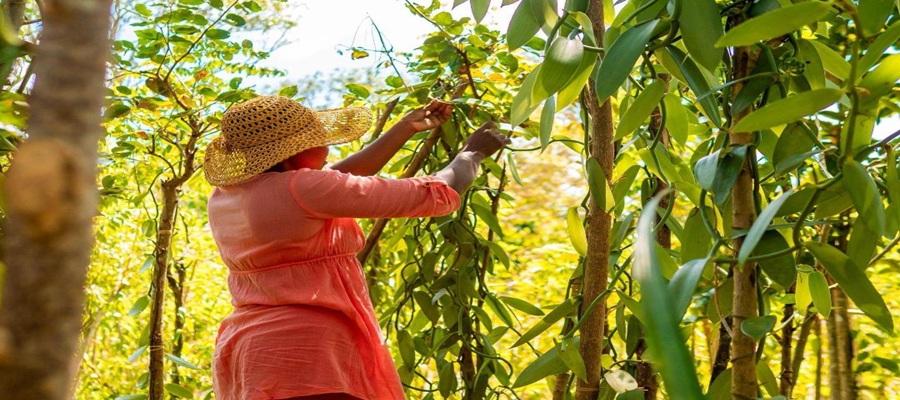
Malagasy Vanilla has transformed its decades-old wholesale business by embracing direct-to-consumer sales through Temu, enabling the family-run company to reach customers in 14 European markets while significantly reducing logistics costs.

For years, premium Madagascan vanilla supplier Malagasy Vanilla sold exclusively to restaurants, bakeries and wholesalers because the cost of shipping a single pack to individual customers often equalled the value of the product itself. That changed after the company joined Temu’s Local Seller Program in November 2025.
The Belgian-based business, which sources high-quality vanilla from Madagascar, has leveraged Temu’s logistics network to cut domestic shipping costs by nearly half through a partnership with Belgian postal operator Bnode. The move has enabled the company to enter the retail market for the first time and quadruple its sales within four months.
According to Belinda Rabenandrasana, co-Chief Executive Officer of Malagasy Vanilla, Temu has opened up an entirely new customer segment for the company.
“Temu opened a new avenue for us,” she said. “We were finally able to explore selling to individuals.”
The platform now contributes between five and 10 per cent of the company’s overall revenue.
Expansion into 14 European Markets
Malagasy Vanilla is among businesses participating in Temu’s Local Seller Program, launched in Europe in 2024 to help local merchants expand beyond their domestic markets.
Through partnerships with more than 150 logistics providers across Europe—including Bnode in Belgium, La Poste in France and DHL Group in Germany—Temu offers sellers access to affordable shipping and delivery infrastructure without requiring major investment in logistics.
After successfully establishing direct-to-consumer sales in Belgium, Malagasy Vanilla expanded into 14 European countries, including Germany, France, Spain and Poland.
Rabenandrasana said the logistics support, competitive shipping rates and seller assistance provided by Temu made the expansion possible.
“Without Temu and its partnership with Bnode, it would have been very difficult for a small business like ours to start selling directly to consumers,” she said.
She added that Temu also assists sellers in managing regulatory requirements such as the European Union’s Extended Producer Responsibility (EPR) compliance, making cross-border operations easier for small businesses.
Three Generations of Vanilla Expertise
Malagasy Vanilla traces its roots to three generations of the Rabenandrasana family in Madagascar’s vanilla industry.
Belinda’s grandfather began trading vanilla locally, while her father expanded operations across Madagascar. She launched the company’s international business in 2017, supplying premium Madagascan vanilla to European restaurants, pastry shops and food wholesalers before establishing operations in Belgium in 2023.
The company partners with growers and producer associations in Madagascar, where between 20 and 40 workers oversee the six- to 10-month curing process that transforms green vanilla pods into premium black vanilla.
Operations in Belgium focus on packaging, quality assurance and distribution.
Customer Reviews Drive Growth
Under its Lavani brand, Malagasy Vanilla sells gourmet-grade whole vanilla pods targeted at both professional chefs and home baking enthusiasts.
Rather than relying heavily on paid advertising, the company has benefited from Temu’s product discovery tools and customer reviews, helping the niche brand gain visibility organically.
According to Rabenandrasana, strong customer feedback has played a significant role in increasing traffic and boosting sales.
The brand currently maintains a customer review rating exceeding 99 per cent on the platform.
Future Plans
Looking ahead, Malagasy Vanilla plans to expand its European footprint further by establishing a warehouse in France and increasing sales across the continent.
The company is also developing new products, including vanilla extract and vanilla sugar, while planning to open a physical retail and production facility in Belgium later this year.
In addition, it intends to launch a social-impact initiative aimed at supporting vanilla-growing communities in Madagascar.
Reflecting on the company’s evolution, Rabenandrasana said the business continues to build on her family’s legacy.
“My grandfather worked locally, my father expanded nationally, and now we are building internationally,” she said.

NBC Files Fresh Appeal against Judgment Barring it from Imposing Fines on Broadcast Stations

Nigerians Lost N25.85Bn to Digital Payment Fraud in 2025 –CBN

NRS Announces 30 Percent Tax on Corporate Crypto Income

Kaspersky Identifies Cyberespionage as a Growing Threat Across Africa, Others

PalmPay’s Transaction Guard Gives Users More Control, As Fraud Tactics Evolve

NRC, Ponzi Scheme Collapses Resulting Loss of Billions of Naira

From Scarcity to Scale: What Africa Can Learn from India’s Agricultural Transformation

EFCC Busts NIS Visa Overstay Racket, Uncovers N700m in an Account

BON Establishes Six Ad Hoc Committees to Modernize Broadcasting

Tokenization, Blockchain Technology will Transform Financial Institutions – IMF




 News2 days ago
Atte, Nigerian Develops AI Algorithm for Hair Transplants

 E-Financial2 days ago
CBN Exposes over 13,000 BVNs Tied to Fraud as Banks Tighten Security

 E-Financial2 days ago
FCT Court Awards Ex-Customers N15m against Stanbic IBTC over Data Privacy Breach

 News2 days ago
FG to Abolish Subsidies in Power Sector in 2027 – Minister

 General News2 days ago
Dare Tackles Onaiyekan over Criticism of Tinubu, Says Economic is Working

 General News2 days ago
SERAP Asks Tinubu to Probe Alleged N6.79Bn Missing Police Funds, Firearms

 General News2 days ago
Lenacapavir, HIV Injectable Drug Offers Pregnant, Lactating Mothers 100 Percent Protection – Study

 Telecom2 days ago
Starbase Technologies Introduces Yolly, a Reward-Based Social Entertainment Platform