

E-Business
Access Bank Reaffirms Support for An Innovative, Smart Lagos State

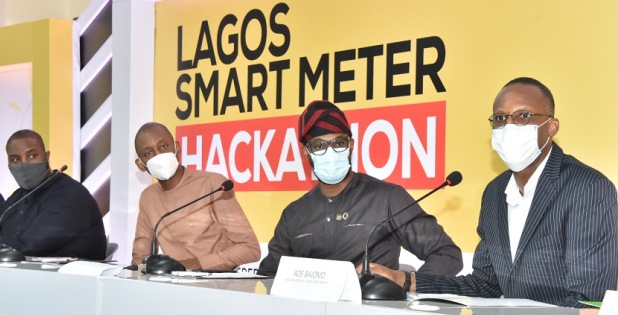
Mr. Herbert Wigwe, managing director and chief executive officer of Access Bank Plc, has said that Access Bank Plc will not relent in supporting innovative programmes aimed at transforming Lagos into a 21st century State driven by technology innovations.

Wigwe spoke yesterday during the finals of the Lagos State Smart Meter Hackathon design held at the Bank’s Corporate Headquarters in Lagos.
An initiative of the Lagos State Ministry of Energy and Mineral Resources, the Hackathon is aimed at providing affordable electricity meters to the populace by facilitating the design and production of meters that will accelerate efforts towards achieving improvement in energy distribution, monitoring and prevention of revenue leakage.
Wigwe who was represented by Mr Ade Bajomo, executive director, IT & Operations at Access Bank, said that supporting the Hackathon once more reinforces the Bank’s commitment to leveraging technology for the betterment of the society.
“Having Hackathon and innovative programmes like this, has always been part and parcel of our DNA in Access Bank. We are forever looking for new things to do to solve real problems in Africa and beyond; new things that would move the life of our people forward.
“We are always looking forward to doing things that would make more people financially independent, driving and enhancing the well-being of the entire society,” he said.
He noted that now the world is witnessing the Fourth Industrial Revolution, and there are Africans working with the rest of the world and using technology to solve the problems of the people.
Wigwe stressed that Access Bank does not exclude the rest of the world when it comes to using technology innovations to address the problems of the people.
“That is why this Hackathon is very important because it’s our people solving our problems and leveraging global solutions to finding our answers to our own problems.
“And that is why at the Africa Fintech Foundry (AFF), which Access Bank is promoting, we want to have more innovators and innovations that will help in transforming our society for the better,” he said.
The Access Bank boss stated that to see this Hackathon come to light shows the commitment of the Lagos State Government to not only the project, but to the actualization of a smart Lagos, where electricity is accessible and affordable.
He pledged Access Bank’s continued support to the Lagos State Government’s efforts at building a smart state.
Mr. Olalere Odusote, convener of the Lagos Smart Meter Hackathon and the State’s Commissioner for Energy and Mineral Resources, said that there were very many talented people who applied for the Hackathon, noting that there were 65 submissions in all, out of which its panel of experts reduced the number to the five finalists that participated at the finals of the Hackathon.
“We had the hardware yesterday and we were very impressed with what we saw. We are expecting no less from the software side. We are going to get engaged, look at what they have to offer and then integrate it into our future.
“We are trying to solve our own problems by ourselves. This is just the start; it is not a one-off project. At the end of the event, we will take the product to our prototype mode; we will take the product to a commercial development process,” he said.
The Commissioner said they were not just doing the Hackathon for the sake of it but are looking for solutions that will contribute to making Lagos a 21st Century economy.
He thanked Access Bank for its generosity, support and partnership with the State government. He also thanked other partners for joining in the journey of making Lagos a great state.
Five contenders each emerged from both categories of the competition, and the two winners are expected to share the prize money of seven million naira.
Finalists were shortlisted after a transparent, rigorous and competitive process.
The Hackathon attracted 274 registrations or entries, 127 of which bid in hardware category, while 147 competed in software group.
The five software finalists for the Hackathon on Thursday were Magnitronics, Vectorians, Zeena Platform, Chosen Soft Tech and Gideon.
It would be recall that during the launch of the programme on July 30th, 2020, the Lagos State Governor, Babajide Olusola Sanwo-Olu noted that the Smart Metre Hackathon Initiative marked a significant milestone in the implementation of the State Government’s plan towards improving access to electricity.
He said it aligned with the Sustainable Development Goal 7 of the United Nations, targeted at achieving universal access to affordable, reliable, sustainable, and modern energy for all by 2030.
The Lagos Smart Meter Hackathon 2020 was convened by the Lagos State Ministry of Energy & Mineral Resources, curated by Eko Innovation Centre, and sponsored by Access Bank Plc, Egbin Power, and Ikeja Electric Distribution Company.
Other sponsors include Mojec International, Eko Electric Distribution Company, MOMAS Electricity Meters Manufacturing Company, ElSewedy Electric, Royal Power & Energy, Venture Garden Group, InfraCredit, and Axxela Limited.
They were supported by the Lagos State Office of Innovation and Technology, Lagos State Employment Trust Fund (LSETF), the Nigerian Electricity Management Services Agency (NEMSA), Africa Fintech Foundry (AFF), Oracle, IBM, General Electric, Business Day and Accelerate TV.
The Grand Finale of the Hackathon holds on Friday, September 18, 2020 at Eko Innovation Centre, Ikoyi, Lagos.


Africa’s workforce is embracing artificial intelligence (AI) at a faster pace than global peers, but pressure is mounting for organisations to ramp up digital skills development as generative AI (GenAI) begins reshaping roles across industries.

This is according to PwC’s Global Workforce Hopes and Fears Survey 2025, which shows a continent ready for AI-enabled transformation, but facing a narrowing window to prepare, through skills development initiatives.
The survey, covering nearly 50 000 workers worldwide and 1 753 across South Africa, Algeria, Kenya, Morocco and Nigeria, finds that African employees are already integrating AI into daily operations.
Sixty-four percent of respondents in Africa used AI tools in the past year, compared to 54% globally, and the sentiment is overwhelmingly positive. While only 17% report using GenAI every day, confidence in its benefits is high: 76% believe GenAI improves work quality, and 72% expect AI-driven productivity gains within three years.
In SA, executives are even more bullish, as 91% say AI has already lifted both productivity and work quality — a signal that leadership is pushing harder toward AI-enabled ways of working, notes the survey.
However, this optimism is coupled with rising concern about future readiness. Only 35% of African workers believe their skills will still be relevant three years from now. With GenAI expected to affect nearly half of all job roles, PwC warns that the continent’s workforce risks falling behind unless organisations accelerate large-scale reskilling.
Despite the pressures, employees are not standing still. PwC notes that African workers outperform their global peers in proactive learning, recording 15% higher participation in skills-building and receiving 6% more support from managers. This indicates that both workers and immediate supervisors recognise the pace of AI adoption and are pushing to adapt.
PwC Africa people and organisation leader, Dr Dayalan Govender, says the moment calls for decisive leadership. Organisations, he argues, must integrate AI into workforce strategies, accelerate digital adoption, and expand upskilling programmes at scale.
“Africa’s workforce is optimistic and ready for change, but leaders must accelerate digital adoption and invest in future-ready skills to convert this optimism into sustainable growth,” he says.
Beyond the technology shift, the survey captures a workforce hungry for growth but constrained by financial pressure. Many employees are preparing to make career moves: 45% plan to request a raise, and another 45% aim for a promotion in the next year. Yet household financial stability remains strained, with only a third of respondents reporting any money left over for savings.
Still, Africa’s workplaces continue to show strong foundations of trust and purpose — elements PwC believes will be critical in navigating GenAI disruption. More than 55% of workers trust management, and two-thirds say their work feels meaningful, both above global averages.
With AI adoption rising and employees motivated to reinvent their careers, PwC warns that the coming years will determine whether Africa’s early optimism translates into long-term competitiveness as GenAI transforms the world of work.
The report calls for embedding AI into workforce strategies to bridge the gap between optimism and practical adoption, scaling upskilling initiatives to prepare for GenAI disruption, and fostering trust and psychological safety to retain talent and drive innovation.
“For employers, these findings are a stark reminder that they can and should do more to help workers understand, adopt, and embrace AI’s transformative power.
“Employers may need to pay special attention to entry-level workers, nearly a third of whom say they’re worried to a large or very large extent about AI’s impact on their future, even as they’re also curious (47%) and optimistic (38%) about its long-term societal effects,” notes the report.


Nigerian organisations are facing the highest volume of weekly cyberattacks in Africa, according to the newly released African Perspectives on Cyber Security Report 2025 by Check Point Software Technologies Ltd., a global leader in cybersecurity solutions.

The report revealed that Nigerian firms experience an average of 4,200 attacks per week, significantly higher than the continental average of 3,153 and 60 per cent above the global average of 1,963 attacks per organisation.
The findings highlight a sharp rise in attacks across Africa, driven largely by artificial intelligence-enabled threats.
Kingsley Oseghale, country manager for West Africa at Check Point, said attackers are increasingly using AI to automate phishing, impersonation, and cloud exploitation.
“AI has become part of the attack surface,” Oseghale said. “Attackers are using it to automate phishing and identity theft at scale. The only effective response is prevention-first security that combines visibility, governance, and AI protection.”
The report noted that cybercriminals are exploiting exposed identities and misconfigured systems to target critical sectors, including finance, energy, telecoms, and government.
Identity-led intrusions, AI-generated phishing campaigns, and multi-vector ransomware are on the rise.
Across the continent, Check Point identified key trends in different markets. Nigeria is experiencing business email compromise and cloud exploitation; South Africa faces rising ransomware, smishing, and botnet infections such as Vo1d and XorDDoS; Kenya has seen ransomware targeting critical energy infrastructure; and Morocco has experienced coordinated government and education-sector disruptions via DDoS and website defacement attacks.
The report highlights five major shifts shaping Africa’s cyber risk in 2025.
Traditional ransomware has evolved into data-leak extortion, AI-generated deception is widespread, and identity has emerged as the new security perimeter.
Weak cybersecurity, the report warned, can now affect international market access under regulations such as the EU’s NIS2 Directive, making digital resilience an economic necessity.
The study urged African businesses and governments to adopt prevention-first security strategies, including continuous risk assessment, regulatory readiness, and public-private collaboration.
Oseghale emphasised that, as AI reshapes operations, cybersecurity must shift from reaction to prediction.
“The real challenge is not adopting new technology but securing the trust that underpins it,” he said.

As Black Friday 2025 unfolds across Nigeria, new insights from Jumia’s Q3 2025 financial results reveal that more Nigerians are relying on digital retail to navigate inflation and rising living costs.

The data points to a more deliberate, value-driven shopper, one using online platforms to stretch budgets, compare options quickly, and extract more value from each purchase.
Jumia reported a 30 percent year-on-year increase in physical goods orders, while Gross Merchandise Value for physical goods rose by 43 percent.
This stronger GMV growth highlights a clear behavioural shift: consumers are assembling higher-value baskets by combining essentials with premium or long-term household items. Online retail is serving as a tool for strategic planning, not just convenience.
According to Temidayo Ojo, Chief Executive Officer of Jumia Nigeria, Black Friday now plays a more critical economic role. “Households are using digital retail to defend purchasing power. They plan their lists, compare prices instantly, and rely on the reliability and convenience that e-commerce offers,” he said.
This year’s Black Friday trends show growing demand in categories that directly support daily living. Household essentials and FMCG products are seeing significant uptake as families stock up during price drops. Home and kitchen equipment is also experiencing stronger demand as shoppers prioritise practical, durable tools. Affordable fashion and beauty products are gaining momentum as discounts make them more accessible.
Consumer behaviour in the lead-up to the sales period further reinforces this shift. Jumia recorded a notable increase in “Add to Wishlist” and “Add to Cart” activity, signalling more planning and fewer impulse purchases. The gap between GMV and order growth indicates that customers are optimising baskets using bundles, vouchers, and promo combinations, behaviours uniquely suited to digital platforms.
With inflation intensifying the need for smarter buying, trust markers on Jumia, such as verified sellers, official brand stores, ratings, and clear return policies, are becoming more central to decision-making. Authenticity and durability now outweigh the appeal of the lowest price.
Jumia’s logistics footprint is making these benefits available nationwide. Its 30,000 sqm Isolo fulfilment centre, 480 pickup stations, and 62 logistics partners ensure that customers in secondary and peri-urban cities enjoy the same deals as those in major hubs, reducing travel burdens and adding financial value.
Overall, Jumia’s Q3 data and Black Friday trends show that Nigerians are turning to digital retail as a practical, strategic response to inflation, using e-commerce to manage budgets, preserve purchasing power, and make more informed buying decisions.

PAPSS Cowry to Benefit Manufacturers, SMEs

Access Bank’s Digital Innovation Earns Top Financial Inclusion Award

NIPR Postpones Maiden PRICE Awards to January 25, 2026

CBN’s New Cash Policy: A Welcome Liberalisation or a Risky Retreat?

Africa Must Build Its Own Cybersecurity Intelligence, Says Tizel CEO At AfriTech 5.0





 E-Business2 days ago
Jumia’s Data Shows Nigerians Turning to Digital Retail to Navigate Inflation Pressures

 E-Business2 days ago
Nigeria Records Highest Weekly Cyberattacks in Africa — Report

 News2 days ago
SEC to Enhance Investor Engagement with USSD Code, ISS Audio

 Telecom2 days ago
Airtel Nigeria Wins Best in Technology for Development @ 2025 SERAS Awards

 Telecom2 days ago
Nigeria-South Africa Chamber Celebrates Silver Jubilee of Bilateral Trade Ties

 News2 days ago
Firm Detected Half a Million Malicious Files Daily in 2025

 News2 days ago
NEC Endorses N100Bn Overhaul of Police and Security Training Facilities

 Broadcasting1 day ago
It is Official, DStv Confirms Termination of 16 Major Channels