

General News
ADVERTORIAL: GOVERNMENT INSTITUTIONS’ UNHEALTHY FIXATION WITH PRICE FIXING

The Centre for Social and Economic Rights (CSER), a civil society organisation, is becoming increasingly worried about attempts by institutions of state in Nigeria to fix prices of goods and services in a free enterprise system. These have come in the shape of government organs/agencies issuing directives to private businesses on what prices they should charge for their goods/services.
Ordinarily, these would have been dismissed, but for the fact that they are being championed by the Federal House of Representatives and very shockingly, the National Broadcasting Commission (NBC).
On 1 September 2020, Daily Independent quoted acting NBC Director-General (D-G), Professor Armstrong Idachaba, as ordering the Management of MultiChoice Nigeria to revert to old prices and stating that the company cannot downsize despite the severity of the economic climate. Idachaba spoke to the newspaper after a meeting with the MultiChoice Management to discuss the recent price adjustments announced by the pay television company. MultiChoice had explained that it adjusted prices on some of its DStv and GOtv packages after considering the impact on the consumer, rate of inflation at 12.82%, the highest in 27 months, content costs and efficiencies within the company.
“They said they are committed to keeping their business in Nigeria but are affected by currency devaluation and inflation rate. They said their fears are that they may lay off Nigerians in their employment if they have to remain in business bearing in mind the present unfavorable circumstances of doing business. They gave examples of other companies that are closing shop because of economic challenges,” he told Daily Independent.
A similar directive was issued a few weeks earlier, when he directed the company to suspend the said tariff adjustment and asked to know why MultiChoice did not inform the NBC before announcing the price adjustments. He also promised to invite StarTimes, MultiChoice’s rivals, to give reasons for the 30% price adjustments made on its packages.
Interestingly, Idachaba admitted that the NBC lack the power to fix prices, saying: “With regards to broadcasting, there is nowhere in the Act of the commission, which gives us the power to fix prices.”
CSER applauds Idachaba’s honesty, but is concerned by NBC’s latent desire to legislate on prices and private businesses’ response to harsh economic/operational conditions.
“I am told, but I have not confirmed that the Telecommunications Act gives the NCC the power to determine prices… We have no provision to regulate the prices that those who offer broadcast services fix, but if, in the course of fixing prices, we find out that it is very exploitative and injurious to the consumers, we have the power to call them to order, which we have done severally,” Idachaba said.
On 18 August 2020, the House of Representatives directed StarTimes, to revert to its old tariffs. Hon. Uyime Idem, Chairman of the House Ad-hoc Committee investigating the non-adoption of Pay-As-You-Go billing system by Pay TV firms, said the increment is ill-timed in view of the harsh economic realities occasioned by COVID-19.
“We are in a limbo at the matrix used to arrive at the current price regime. The timing for the increment was wrong, unfortunate and insensitive considering the harsh economic realities occasioned by the COVID-19 pandemic. We will like StarTimes to as a matter of urgency revert to the old subscription tariff in the interest of Nigerians,” Idem said.
Star Times, according to reports, attributed the adjustments to the new VAT regime, exchange rate volatility and high cost of providing alternative source of power.
We recall that the 8th session of the House and Senate illegally attempted to foist a billing model on MultiChoice Nigeria, an indication that this interference is not new.
CSER is disappointed that the House is playing to the gallery just to be seen as concerned about the people when facts decline to support such. We are equally worried that the NBC, a practice regulator, is trying to assume price-regulatory powers. Idachaba admitted that the Commission had previously directed pay TV operators to suspend price increase.
We wonder where the Commission derived the powers to order private businesses on how to respond to threatening economic situations. We know how life-disrupting job losses are, but they are unavoidable in the basket case Nigeria has become.
These institutions appear to ignore the fact that Nigeria operates a liberal economic system, which thrives on the balance of the interests of businesses and the consumers. It is not out of place for government to intercede-not interfere-but such intercession should not hurt private businesses and, importantly, the consumer it seeks to protect.
Issuing stop orders to private enterprises through the media could serve to incite consumers against businesses. It is self-serving and injurious to national economy.
NBC and the House of Representatives need to realise that they are in grave error on this score. First, NBC has no power over prices. Same for the House, which needs to understand that its resolution is no law. Nigeria operates a free enterprise system, not the discredited command economy.
The interference of the House and NBC in a matter between a private business organisation and its clients is needless. We can understand intercession when such involves abridgement of rights, but that is not the case in this instance.
The House cannot act Moses the Lawgiver in pricing, which is the result of interplay between supply and demand and not drunken populist posturing.
NBC and the House are not unaware that prices of goods and services have been affected by the increase in the rate of VAT, which is collected on behalf of government and remitted to same.
Since the outbreak of the COVID-19 pandemic, from which the House and NBC are keen to reap emotional dividends, providers of other goods and services, including government agencies and departments, have raised prices to reflect the current economic situation.
The National Electricity Regulatory Commission has approved increase in energy tariffs, effective 1 September, 2020. Petrol pump price has been raised to N151.56.
The Federal Airports Authority of Nigeria (FAAN) hiked the pre-paid toll payable at Lagos’ Murtala Muhammed International Airport (MMIA) toll gate users from N10,000 to N40,000. FAAN, within the same period, raised its Passenger Service Charge (PSC) from N1,000 to N2, 000. The Nigerian Railway Corporation (NRC) has adjusted train fares on the Abuja-Kaduna route by 100%. The new fares are N6,000 for First Class, N5,000 for Business Class and N3,000 for Economy. VAT rate has risen from 5% to 7.5%.
A major contributor to the soaring costs is the volatility of the Naira, which trades officially at N387 to $1 and N480 to $1 on the parallel market.
With the highest rate of inflation in 27 months, prices of goods and services have risen steeply. Without commensurate price adjustments, providers of goods and services, including government agencies, will not offer the same quality or go out of business.
Price regulation, understandably, is hugely appealing. Its appeal has been strong from the earliest times because it promises protection to groups that are most hard-pressed to meet price increases. The Old Testament prohibited interest on loans to fellow Israelites, while medieval governments fixed the maximum price of bread.
But Nigeria, it has to be stated again, operates a free enterprise system that ensures that resources are allocated based on supply and demand. It promotes consumer liberty to choose, encourages market competitiveness, ensures consumer voices are heard and determines what products or services are in demand.
Supply and demand create competition, which helps ensure that the best goods or services are provided and makes the market attractive to investors. Nigeria needs investors, especially from abroad. But NBC and the House fail to realise that behaving like Soviet-era price control agency discourages investments.
Without investments, jobs are harder to find, tax revenue shrinks, consumer choices in goods/services are fewer and the society is worse.
The “sympathetic” House members should be capable of better conduct than cheap showboating. In other climes, the government is focused on initiatives designed to help citizens afford essential commodities, not luxury goods/services. NBC, we believe, urgently needs to focus on its regulatory duties, which do not include price regulation and impotent directives.
Nelson Ekujumi
Executive Director



Meta Description: Tired of ad payment failures? Discover the most reliable virtual cards in Nigeria for running Facebook, Google, and TikTok ads without interruptions.
One of the biggest challenges digital marketers face in Nigeria today is finding a payment method that actually works for ad platforms.
Issues like frequent transaction failures, unexpected restrictions, and constantly changing bank policies can interrupt your campaigns at the worst possible time, making it hard to stay consistent.
That’s why many marketers are now turning to virtual cards, which offer a more stable, globally accepted way to handle online payments without the usual stress.
If you’re currently dealing with failed payments or need a more reliable way to run ads, this article will walk you through the most reliable virtual card options in Nigeria and help you choose what works best.
7 Best Virtual Cards You Can Use in Nigeria for Running Ads
Choosing the right virtual card for running ads in Nigeria isn’t just about availability; it’s about transaction success rate, global acceptance, funding speed, fees, and overall reliability.
To make things easier, the table below highlights how Cardtonic, Wallets Africa, CashBuddy, Snappypay, Pouchers, Bitmama, and Flip by Fluidcoins compare across key features that matter for running ads effectively.
| Platform | Best For | Price range | Supported Countries | Notable Features |
| Cardtonic | Reliable ad payments | $1.5-$5 (card creation) | Nigeria, Ghana (2+) | Easy card creation, quick funding, widely accepted |
| Wallets Africa | Basic virtual card use | $2-$5 (est.) | 10+ African countries | wallet + virtual card system |
| CashBuddy | Simple payments | $2.50 | Nigeria (primary) | straightforward card access, bill pay |
| Snappypay | Quick transactions | N/A | Nigeria & select regions | Fast setup, easy online spending |
| Pouchers | Flexible funding | $2 | Nigeria & limited global | Direct wallet to ads support |
| Bitmama | Crypto-based payments | Free issuance | Multiple countries (10+) | crypto funding + global spending |
| Flip by Fluidcoins | Fast crypto payments | $1.30 | Multiple Countries (10+) | Crypto payment focus |
1. Cardtonic:
Cardtonic is often regarded as one of the best virtual cards in Nigeria for running ads because it combines convenience, reliability, and ease of use in a way that suits both individuals and businesses.
When you’re paying for ads on platforms like Facebook, Instagram, Google, or TikTok, one of the biggest concerns is whether your payment method will work smoothly without constant declines or interruptions. That is where Cardtonic comes in, as it gives users access to a virtual dollar card designed for international payments, making it a practical choice for ad spending.

What makes the platform even more appealing is that it also offers contactless cards, which let you make payments quickly and securely without swiping or inserting the card. This feature adds an extra layer of convenience for users who want fast transactions, whether online or at supported payment terminals.
What truly makes Cardtonic stand out is how it brings together accessibility, smooth funding, and reliable international payment support in one place.
So, if you are looking for a reliable platform for ad payments, Cardtonic is one option that clearly deserves a spot on the list.
2. Wallet Africa:
Wallets Africa is meant for users who want more than just a card to pay for ads. It works better as an all-in-one financial platform, which makes it useful for business owners, freelancers, and marketers who like managing payments from one place.

Beyond offering virtual cards, the platform is built around sending money, spending online, and handling digital transactions across Africa, so it feels broader than a tool meant for one single purpose.
That broader structure is really where Wallets Africa plays its role. For someone running ads regularly, it can be convenient to have a platform that supports both wallet functions and card payments instead of jumping between different apps.
It is less about being flashy and more about giving users a practical setup for online spending, especially when you want your ad payments to sit within a wider money management system.
3. Cashbuddy:
CashBuddy feels more like a platform for users who value simplicity and speed. Its offering goes beyond virtual cards into other digital payment services, but the virtual card side is positioned around secure dollar and naira card access for global payments.
That makes it useful for advertisers who want something straightforward for campaign payments without dealing with too much complexity.

Where CashBuddy plays its role best is in accessibility. It fits users who may not need an advanced financial ecosystem but just want a platform that helps them get a working card and handle international payments with less stress.
So while some platforms lean into broader wallet features or multicurrency tools, CashBuddy feels more like the practical option for getting started and keeping things easy to manage.
4. Snappypay:
Snappypay has a slightly different appeal because it presents itself strongly around smooth online payments and virtual dollar cards that can be used across many platforms.

That makes it a natural fit for people who run ads often and do not want a card that feels limited to only one or two use cases. The platform also combines its virtual cards with other digital payment services, which adds to the convenience for users already handling several online expenses at once.
What makes Snappypay useful in this list is that it feels built for everyday digital spending. If Wallets Africa comes across as more ecosystem-driven and CashBuddy feels more basic and direct, Snappypay sits in the middle as the platform for users who want a smoother, more flexible payment experience for ads, subscriptions, and other online transactions without overcomplicating the process.
5. Pouchers:
Pouchers is one of the more ad-friendly options here because it explicitly positions its virtual dollar card for payments on platforms like Meta and for running ads.
That makes its role in this list much clearer. Instead of leaving users to guess whether the card may work for ad spend, the platform directly presents that use case as one of its strengths, which gives it more relevance for marketers and business owners.
Another thing that makes Pouchers different is its multicurrency and stablecoin angle, which gives it a more modern, borderless feel compared with platforms that are built mainly around local wallet operations.
So, for users whose work already involves international payments, online tools, and ad platforms, Pouchers plays its role as the flexible option that is shaped more around digital commerce than traditional payment habits.
6. Bitmama:
Bitmama plays a more specialized role because it is better known for combining crypto and borderless payments. That already sets it apart from the more conventional platforms on this list.
For advertisers or freelancers who are already comfortable moving money through digital assets, Bitmama can feel like a more flexible option, especially when international transactions are part of their normal workflow.
This makes it less of an everyday beginner platform and more of a fit for users who like operating in a more global, digital-first payment environment.
So while a platform like CashBuddy may appeal to someone looking for a simple starting point, Bitmama feels more suited to users who want ad payments to sit within a wider international or crypto-enabled setup. That difference gives it a distinct place on the list.
7. Flip By Fluidcoins:
Flip by Fluidcoins leans into the crypto-powered side of digital payments, positioning itself as a faster, more lightweight option for users who want flexibility with cross-border transactions.
Its strength is not in trying to cover everything, but in serving a more niche group of users who already understand digital finance and need a smoother way to handle international payments, especially for ad spending.
What sets it apart is its modern, alternative approach. It focuses less on traditional banking features and more on giving users fewer restrictions when moving funds globally.
For advertisers in that space, it works best as a flexible, niche solution rather than a full all-in-one financial platform.
Frequently Asked Questions About Virtual Cards For Running Ads in Nigeria
- Which Virtual Card is Best For Running Ads in Nigeria?
The best dollar virtual card in Nigeria for running ads is Cardtonic. It’s widely trusted for its reliability, smooth international payments, and ease of use, making it a practical choice for managing ad spend without interruptions.
- Can I Use a Virtual Card to Pay for Google Ads, Facebook Ads, or TikTok Ads?
Yes, you can. Most virtual cards issued by platforms in Nigeria, like Cardtonic, Pouchers, or CashBuddy, are accepted on major advertising platforms, including Google, Facebook, and TikTok.
- How Do I Fund a Virtual Card for Advertising Campaigns in Nigeria?
Funding a virtual card is usually straightforward. Most platforms allow you to load funds from your local bank account, Naira wallet, or even crypto wallets in some cases. Simply log into your virtual card account, choose the funding method, enter the amount, and confirm. Once the funds reflect, you can start running ads immediately.
- Are Virtual Cards Secure For Paying International Ad Platforms?
Yes, virtual cards are designed to be secure. They often include features such as temporary card numbers, spend limits, and the ability to block or freeze the card instantly if needed.
- How Fast Can I Get a Virtual Card and Start Running Ads Online?
You can usually get a virtual card almost instantly after signing up and completing the KYC verification process. Platforms like Cardtonic or Snappypay issue cards immediately, so you can fund the card and start running ads within minutes.
Conclusion
Running ads on platforms like TikTok, Facebook, or Google from Nigeria can be challenging without a reliable payment method. That’s why virtual cards offer a convenient and secure solution, allowing you to fund your campaigns quickly and manage payments without interruptions.
Whether you’re looking to pay for TikTok ads, Google Ads, or other online campaigns, platforms like Wallets Africa, CashBuddy, Snappypay, Pouchers, Bitmama, and Flip by Fluidcoins all offer options to suit different needs.
For those who want a combination of reliability, ease of use, and smooth international payments, Cardtonic is highly recommended for managing your ad spending efficiently.

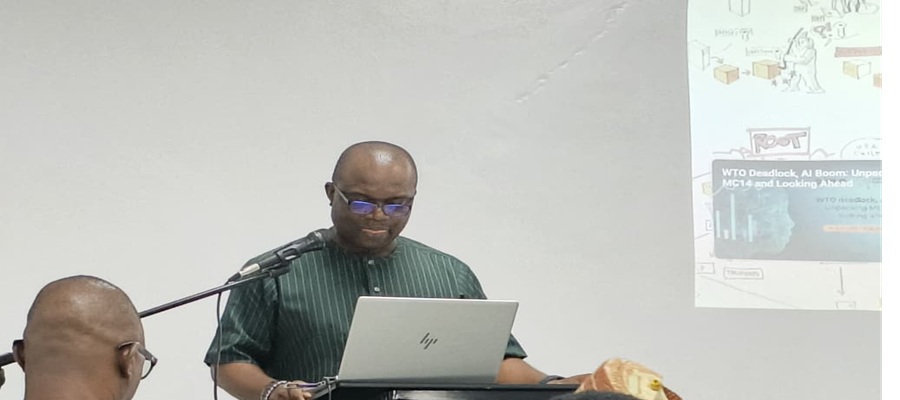
Adesola Akinsanya, President of the Nigeria Internet Registration Association, has called on the media to lead a nationwide campaign for the urgent adoption of the .ng domain to strengthen Nigeria’s digital identity.

Adesola Akinsanya, President of the Nigeria Internet Registration Association (NiRA)
Akinsanya made the call during the .ng Media Advocacy and Capacity Building Initiative held on Thursday at the association’s secretariat in Lagos.
He said the media had a strategic role to play, not only in reporting developments but also in shaping national priorities and influencing public understanding of digital infrastructure.
“The media does not just report events; it sets the agenda. We need you to lead the campaign for the urgent adoption of .ng and help Nigerians understand why it matters,” he said.
Akinsanya emphasised that Nigeria’s digital identity must be deliberately constructed and protected, noting that domain names remain a critical component of national presence in the global digital ecosystem.
According to him, many Nigerian businesses and institutions continue to operate on foreign domains such as .com and .org, thereby placing their digital assets outside the country’s jurisdiction.
“Thousands of Nigerian organisations are effectively operating on rented digital land, where control, security, and governance are subject to foreign regulations,” he said.
He explained that the .ng domain, managed by NiRA under the global coordination of the Internet Corporation for Assigned Names and Numbers, represents an important layer of Nigeria’s digital infrastructure.
He described domain names as digital real estate that determine visibility, credibility, and economic value creation within the digital economy.
The NiRA president warned that reliance on foreign domains contributes to a trust deficit, economic leakage, and increased security vulnerabilities.
“In an era where users are increasingly concerned about authenticity, locally identifiable domains provide stronger assurance and alignment with national systems,” he said.
Akinsanya added that while technological improvements such as DNS Security Extensions are strengthening the .ng ecosystem, widespread adoption remains essential.
He noted that the initiative was designed to bridge the gap between technical complexity and public understanding, particularly in areas such as internet governance, cybersecurity, and domain infrastructure.
According to him, Nigeria’s competitiveness in the global digital economy will depend on the alignment of infrastructure, adoption, and narrative.
He reaffirmed NiRA’s commitment to strengthening digital infrastructure and promoting the use of the .ng domain, while calling for sustained collaboration with the media.
“The story of Nigeria’s internet is still being written. Whether it reflects dependence or sovereignty will depend on the narratives we promote,” he said.
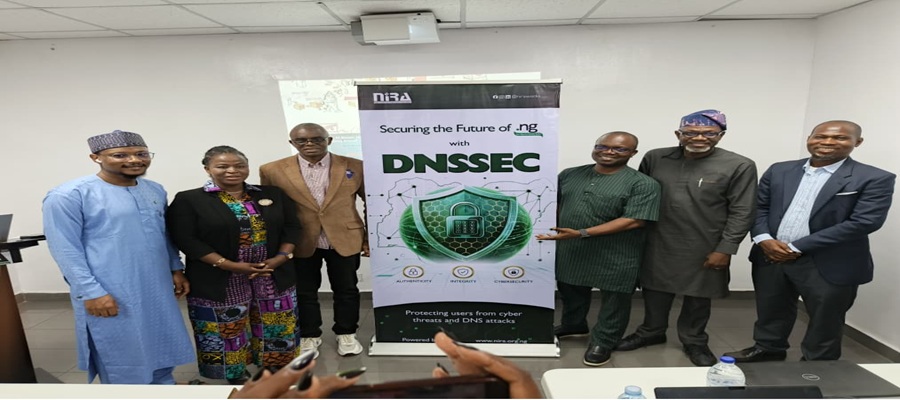
Nigeria has unveiled Domain Name System Security Extensions (DNSSEC) on its .ng domain, marking a major step toward strengthening national cybersecurity and enhancing trust in the country’s digital ecosystem.

NiRA
The deployment was carried out by the Nigeria Internet Registration Association, the body responsible for managing Nigeria’s country code top-level domain.
The development places Nigeria among countries adopting advanced technologies to secure their internet infrastructure and support a resilient digital economy.
DNSSEC is an internet security protocol designed to protect users from cyber threats such as redirection to fraudulent websites, by adding cryptographic verification to the domain name system.
Speaking at the unveiling, the President of NiRA, Adesola Akinsanya, described the deployment as a defining moment for Nigeria’s internet ecosystem.
“The successful deployment of DNSSEC on the .ng domain represents a major milestone. As more services move online, it is critical to ensure a secure and trusted digital environment for citizens, businesses, and government,” he said.
Akinsanya added that the initiative aligns with global best practices and underscores Nigeria’s commitment to building a secure and competitive digital economy.
He noted that strengthening trust in the .ng domain would create an enabling environment for innovation, investment, and growth in digital services.
According to him, a secure domain name system is fundamental to the development of the digital economy.
The NiRA president also urged organisations, particularly those operating critical services, to adopt DNSSEC as part of their cybersecurity frameworks.
The initiative is expected to benefit sectors such as financial services, telecommunications, e-commerce, and government platforms by offering enhanced protection against cyber threats including phishing and data interception.
Institutions regulated by bodies such as the Central Bank of Nigeria and the Nigerian Communications Commission are among those expected to gain from the improved security framework.
The deployment also aligns with Nigeria’s broader digital transformation agenda supported by agencies such as the National Information Technology Development Agency and the Office of the National Security Adviser.
The Chief Operating Officer of NiRA said the .ng domain had been fully signed and was currently in a monitoring phase to ensure stability and optimal performance.
He added that a phased rollout would allow accredited registrars and domain owners to adopt DNSSEC protection for their individual domains.
“This deployment is the result of extensive planning and collaboration. Our focus now is to ensure seamless adoption across the ecosystem,” he said.
NiRA called on businesses and organisations to leverage the new capability and embrace the .ng domain as a secure and trusted digital identity.
The association said it would continue to work with stakeholders to drive awareness, build capacity, and accelerate adoption nationwide.

MTN Suspends Data, Airtime Borrowing Service over New FCCPC Lending Rules

Nigeria Customs Deploys AI to Cover Revenue Leaks

Top 7 Reliable Virtual Cards for Running Ads in Nigeria

Nokia, Orange Partner on AI-native 6G Networks

NDPC Issues Critical Advisory as Hackers Target Nigeria’s Key Digital Systems

Kuda MFB Increases Kuda for Her Business Grants to ₦10 Million

Canal+ to Cut Jobs as Part Sweeping Restructuring

Nigeria tops global rankings for USDT, USDC ownership

NBC Boss Urges Content Ceators to Participate in DSO

NITDA Takes Over National Digital Architecture System




 General News2 days ago
Guinness Nigeria Surpasses ₦1Trillion Market Capitalisation, Signalling Strong Investor Confidence and Sustained Value Creation

 News2 days ago
CISA Asks NDPC, Police to Act on Alleged Data Breach by NIPSS

 E-Financial2 days ago
FG Investigates ‘Sharp Sharp’ Loan Operators over Alleged Privacy Violations

 Telecom2 days ago
Amazon Satellite to Challenge Starlink in Africa with Globalstar Acquisition

 E-Financial2 days ago
Ecobank Delivers Strong Results, Posts $801m in Pre-Tax Profit for 2025

 News2 days ago
Tinubu Tasks NRS to Restore Public Trust Amid Fiscal Changes

 Broadcasting2 days ago
Fela Makes History as First African to be Inducted into Rock and Roll Hall of Fame

 News2 days ago
Kaspersky Reports Online Scam Exposure Remains Widespread Despite High Levels of Self-assurance