

E-Financial
AFC Hosts Summit to Address Infrastructure, Investment Deficit

Africa Finance Corporation (AFC), an African-led multilateral development financial institution whose mission is to improve African economies by proactively developing and financing infrastructure assets announces details of its inaugural Summit.
The Summit, titled: ‘AFC Live: Bridging the Infrastructure Divide’ responds to the need to open a dialogue to address the scale of Africa’s infrastructure requirements and its investment deficit, which is conservatively estimated at over$40 billion per annum over the next ten years.
The Summit takes place on March 25, at the Eko Hotel & Suites, Lagos, Nigeria.
The Summit will bring together African politicians, business leaders and academics for a series of lively panel discussions. Confirmed speakers include: Jim O’Neill, the economist and former Chairman of Goldman Sachs Asset Management, best known for coining the ‘BRIC’ and ‘MINT’ acronyms, as well as:
Dr. Ngozi Okonjo-Iweala, coordinating minister of Finance and Economy, Nigeria; Prof. Chinedu Nebo, minister of Power, Nigeria; Patrick Achi, minister of Economic Infrastructure, Côte d’Ivoire; Cristina Duarte, minister of Finance, Cape Verde; and Mr Jim Yong Cai, executive vice president and CEO, International Finance Corporation.
Others are: Tony Elumelu, Chairman Heirs Holdings; Ms. Diana Layfield, CEO Africa, Standard Chartered Bank; Dr. Nkosana Moyo, Mandela Institute for Development Studies; and Ms. Funke Opeke, CEO Main One
The Summit is the must attend event for audiences interested in Africa’s infrastructure challenges. It will discuss issues such as Africa’s need to take the lead in bridging the investment divide whilst also accessing international capital as part of a joined up and holistic approach.
Commenting on the upcoming Summit, Bayo Ogunlesi, chairman of AFC, said: “The summit is a key opportunity to for a broad range of stakeholders, from national governments to the indigenous and international private sector and donor partners, to contribute to the development of constructive solutions to the deficit in infrastructure investment in Africa which continues to hold back economic growth on the continent.”
“The Africa Finance Corporation is committed to serving as a catalyst for growth in infrastructure development in Africa, by focusing on investments in the sectors that are critical to economic growth on the continent and attracting new investment partners and country members.”
Commenting on the Summit, economist Jim O’Neill, said: “I am delighted to be participating in the AFC’s inaugural summit which promises to address an important agenda. If Africa is to reach its potential as the home to some of the fastest-growing economies in the world, then infrastructure will play a vital role in making that happen. This conference provides an excellent opportunity to gather some of the most important figures in the region in order to discuss how this can be achieved. The AFC plays not just a vital role in brokering these discussions but also in financing and advising some of most transformative infrastructure projects on the continent.”
Key sessions at the summit will include: ‘Building the New Africa – action plan for the next decade; Panel 1: power sector; Panel 2: transport sector; and Panel 3: natural resources.



Nigeria Deposit Insurance Corporation (NDIC) has said more than 281 million depositors across the country’s banking system are protected against bank failure, following reforms that significantly expanded deposit insurance coverage and accelerated reimbursement of customers of failed banks.

Thompson Sunday, managing director and chief executive officer, NDIC, disclosed this on Monday during the second quarter 2026 Citizens and Stakeholders’ Engagement Session organised by the Federal Ministry of Finance in Abuja.
According to Sunday, the corporation currently provides deposit insurance coverage across 914 licensed financial institutions, while over 98 per cent of depositors are fully insured for their entire balances following the upward review of deposit insurance limits in May 2024.
A copy of his presentation document read, “914 licenced banks covered, every Deposit Money Banks, Non-Interest Banks, microfinance bank, Primary Mortgage Banks and Mobile Money Operators in Nigeria; more than 281 million bank depositors across all insured institutions are protected by the corporation.”
The NDIC boss said the improved coverage followed the first review of the Maximum Deposit Insurance Coverage since 2016.
Under the revised framework, insurance coverage for depositors in Deposit Money Banks increased from N500,000 to N5m, while customers of Microfinance Banks, Primary Mortgage Banks and Payment Service Banks now enjoy insurance cover of up to N2m. Mobile money subscribers are also covered up to N5m.
He said the reform resulted in 98.98 per cent of Deposit Money Bank customers being fully insured, compared with 89.2 per cent before the review, while full coverage for customers of Microfinance Banks, Primary Mortgage Banks and Payment Service Banks rose to 99.27 per cent, 99.34 per cent and 99.99 per cent respectively.
Sunday also highlighted improvements in the speed of reimbursing depositors after bank failures, saying technology had reduced payment timelines from years to days through the use of the Bank Verification Number.
He noted that the corporation has so far paid more than N54.93bn in insured deposits to Heritage Bank customers, reaching 698,040 depositors.
The NDIC boss also disclosed that in 2025 alone, the NDIC paid N4.06bn to 13,446 insured depositors and N33.59bn to uninsured depositors of failed banks.
Sunday said the reforms were reinforced by the NDIC Act 2023, which replaced the 2006 Act and strengthened the corporation’s powers to resolve failing banks, recover assets and protect depositors.
He said the law also gives depositors priority over creditors and shareholders during bank liquidation, strengthens the Deposit Insurance Fund and enhances the corporation’s asset recovery and enforcement powers.
The NDIC further disclosed that it carried out 287 on-site examinations of banks in 2025, resolved 1,196 out of 1,407 depositor complaints received during the year and continued off-site surveillance as an early warning mechanism in collaboration with the Central Bank of Nigeria.
It also noted that 32 banks met the March 31, 2026 recapitalisation deadline after raising more than N4.61tn in fresh capital, with the corporation supporting the CBN through capital verification, monitoring capital quality and identifying undercapitalised banks early.
Also speaking, Mr Raymond Omachi, permanent secretary of the Federal Ministry of Finance, said the engagement formed part of the ministry’s commitment to strengthening transparency, accountability and communication with citizens and key stakeholders.
According to Omachi, the platform enables the ministry to share its policies, programmes and achievements in implementing the Presidential Priorities and Ministerial Deliverables assigned to its agencies.
Omachi said, “This engagement is part of the Federal Ministry of Finance’s commitment to strengthening transparency, accountability, and communication with citizens and key stakeholders.
“As a critical component of the nation’s financial safety-net framework, the NDIC plays an important role in protecting depositors, promoting public confidence in the banking system, and contributing to the stability of the financial sector.”
Wema Bank Plc has suspended its operations on Telegram following a surge in scams involving fake accounts impersonating the bank and defrauding customers.

The bank disclosed this in an email to customers on Monday, urging them not to engage with any Telegram accounts impersonating Wema Bank.
This is coming amid Wema Bank’s effort to contain the increasing number of accounts impersonating the bank on social media in recent times.
On 7 June, Wema Bank temporarily blocked communication on its account X, citing the need to protect customers from fraudulent activities and account impersonation.
The lender urged customers to halt interactions with its ‘Wema’ and ‘Alat’ accounts on the platform until further notice.
On Monday, Wema Bank said its routine security checks revealed a spike in the rate of accounts impersonating the bank and trying to defraud its customers on Telegram.
The financial institution stated that its efforts to suspend its operations aim at protecting the interests of its customers, noting that its ALAT platform is not available on Telegram.
ALAT is the lender’s digital banking platform.
“Our routine checks and security sweeps have shown a spike in the rate of customers falling victim to scam accounts and fraudsters using fake Telegram accounts.
“As part of our ongoing efforts to proactively protect your interests, we want to remind you that Wema Bank and ALAT are NOT on Telegram,” the bank stated.
The move emphasises the growing cybersecurity threats facing Nigeria’s banking sector and other institutions in Nigeria.
Responding to the threat, the Central Bank of Nigeria (CBN) in March gave banks a three-week deadline to complete a mandatory cybersecurity self-assessment as part of efforts to strengthen the resilience of the country’s financial system.
CBN said the exercise is designed to improve risk-based supervision and strengthen regulatory oversight of cybersecurity risks across Nigeria’s financial ecosystem.
“We are not on Telegram. Please do not contact us on Telegram or engage with any Telegram account claiming to represent Wema Bank or ALAT. Please do not attempt to contact us on Telegram,” Wema Bank said, urging customers to contact the bank only through its verified Instagram account, official email address, and customer service phone lines.
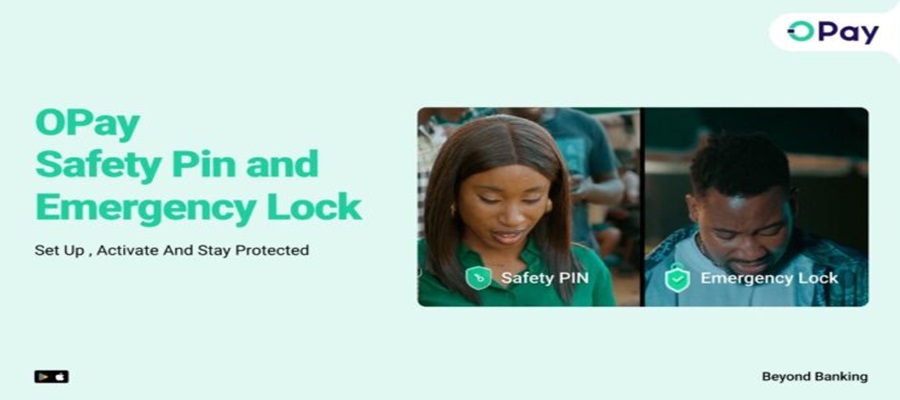
OPay, fintech firm, has introduced two new security features, Emergency Lock and Safety PIN, to help customers protect their funds during emergencies and threats to their accounts.

The company said in a statement that the features were designed to give customers greater control over their money during security risks such as phone theft, robbery, account compromise, or forced transfers.
According to a statement by the firm, Emergency Lock allows customers to instantly freeze their OPay account with a single tap whenever they suspect a threat to their funds.
Once activated, the feature freezes the account for 24 hours, blocking all outgoing transactions, including transfers, bill payments, and card transactions.
The statement noted that the freeze, once triggered, cannot be lifted by the customer or OPay’s customer service team until the 24-hour period elapses.
On the Safety PIN, OPay said the feature allows customers to set up a unique PIN which, when entered, discreetly triggers a 24-hour account freeze without alerting anyone nearby, a tool particularly useful in situations where a customer is being coerced into making a transfer.
The company explained that while most financial security solutions focus on recovery after a fraud incident, the new features are designed to help customers prevent losses at the point a threat occurs.
Speaking on the development, Dotun Adekunle, chief operating officer and chief technology officer, OPay, said every innovation at the company starts with the goal of better protecting and serving customers.
Adekunle said the “features were developed to address real-life security challenges many Nigerians face daily,” adding that they were “designed to give customers immediate control over their finances during moments of uncertainty.”
He said OPay believes financial services should provide not just convenience, but also confidence, security, and peace of mind.
The statement added that customers can activate Emergency Lock and set up their Safety PIN through the Security Centre on the OPay app.
Established in 2018, OPay is licensed by the Central Bank of Nigeria (CBN) and insured by the Nigeria Deposit Insurance Corporation (NDIC).

NDIC Says 281m Depositors Protected against Bank Failure

Wema Bank Suspends Telegram Operations over Scams

Akara Business Can Pay More than Bank Jobs – Governor Aide

OPay Unveils Emergency Lock, Safety PIN to Boost Customer Protection

FG Captures 32m Students DNEMIS ahead July 1 Rollout

London Strengthens Global Investment Ties with Africa @ First Ever London-Africa Business Summit

Mobile Internet Gender Gap Widest in Africa – GSMA

FG Targets Alleged N3tn Capital Flight, Opens Airtime Credit Market to Nigerian Fintechs

Japan, UNESCO Boost Digital Learning in 15 CoEs with Donation of ICT Equipment

Good News for DStv Users: Watch over 160 Channels Without Paying Extra




 E-Business1 day ago
LG Showcases AI-Powered Smart Living Innovations @ Africa Technology Expo 2026

 E-Financial1 day ago
UBA mobilises employees across Africa for environmental clean-up, wellness campaign

 Telecom1 day ago
OADC Reaffirms Abundant Capacity in Data Centres in Nigeria to Host Financial Data

 General News1 day ago
LASTMA Launches 3367 Toll-Free Hotline for Emergency Response, Traffic Management

 E-Financial1 day ago
PalmPay Calls for Trust, Infrastructure and Responsible AI to Drive Payment Ecosystem Innovation

 E-Financial1 day ago
ngCERT Raises Alarm over Surge in Banks’ ATM Cyberattacks

 Telecom1 day ago
ALTON Backs NCC’s Local Smartphone Manufacturing Drive to Widen Digital Access

 E-Business1 day ago
Want a Business Loan Without Interest? SMEDAN Launches N500m Fund