

General News
Africa Contributes as Global Air Cargo Ends 2014 on Positive Note

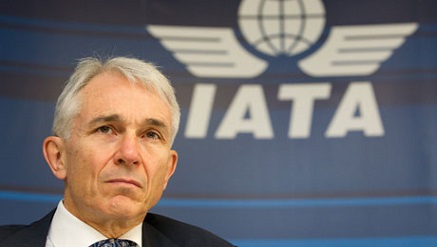
The International Air Transport Association (IATA) released full-year air cargo data for 2014 showing 4.5% demand growth compared to 2013 measured by freight tonne kilometers (FTKs).
That is a significant acceleration from the 1.4% recorded in 2013 over 2012.
Air cargo market expansion gathered momentum as 2014 progressed. The year finished on a positive note, with growth in December accelerating to 4.9%, compared to December 2013.
The vast majority of the growth in 2014, however, was in the Asia-Pacific and Middle East regions, which respectively contributed 46% and 29% of the expansion in FTKs.
Growth was recorded in all other regions, but was particularly weak in Latin America.
“After several years of stagnation, the air cargo business is growing again. This is largely being driven by the uptick in world trade over the second half of 2014. Recent concerns over the health of the global economy and a corresponding fall in business confidence have not yet impacted air cargo. But it is a downside risk that will need to be watched carefully as we move through 2015,” said Tony Tyler, IATA’s director general and CEO.
Performance varied widely by region with the most significant growth being recorded by airlines in Asia-Pacific and the Middle East.
All regions, with the exception of Latin America, reported a strengthening of demand in December.
Asia-Pacific carriers grew 5.9% in December compared to December 2013, and 5.4% for 2014 as a whole.
Volumes have benefitted from increasing import demand in addition to continuing manufacturing strength. Japanese and Chinese markets were particularly important contributors.
Overall in 2014, capacity expanded 5.7% leading to a slight fall in load factor to 55.4%, although this remains the strongest load factor of any region.
North American airlines reported demand growth of 2.8% in December and 2.4% for 2014 as a whole. After a slow, weather-affected start to the year, growth accelerated, driven by import and export demand. Carriers in the region cut back capacity in 2014 by 0.5%, helping to underpin the load factor (35.3%).
European airlines saw FTKs expand 2.3% in December, and by 2.0% in 2014 overall. The Eurozone remains weak and close to recession, with the effects of Russian sanctions also having an impact. Load factors also fell in 2014 as capacity expanded 3.0%.
Middle Eastern carriers enjoyed the strongest growth of any region, expanding 11.3% in December and 11.0% for the year as a whole.
Airlines in the region have extended their networks and grown capacity by 11.1% to make the Middle East a hub for freight traffic. In fact they have been responsible for over 37% of the total increase in global freight capacity in 2014.
Latin American airlines reported FTKs falling 4.5% in December. This was the only region to report a decline. The picture for 2014 as a whole was growth of 0.1%.
Latin American volumes have been affected by economic slowdown across the region, particularly in Brazil and Argentina. Capacity grew by 0.3% in 2014.
African carriers expanded FTKs by 12.2% in December and 6.7% for the year as a whole. Although major economies Nigeria and South Africa underperformed during parts of 2014, regional trade activity held-up, supporting demand for air transport of goods. Capacity rose just 0.9% for the year as a whole, helping to strengthen the load factor.
Cargo innovation in Shanghai
“Despite the improving growth trend, big challenges remain. Yields declined for the third straight year in 2014, with no immediate prospect of improvement. Cargo revenues remained basically unchanged at $62 billion, some $5 billion below their 2011 peak. To move forward, the industry is focusing on providing a stronger value proposition to meet evolving customer needs. That’s what is driving efforts such as cutting shipping times, ensuring high-quality handling of temperature-sensitive goods, or benchmarking quality to improve customer transparency. It’s all about delivering value as a supply chain with a strong vision of the future,” said Tyler.
This focus on value is delivering change. For example, in 2014 electronic air waybill penetration reached 22% and airlines are targeting 45% penetration by the end of 2015.
An initiative to encourage further industry innovations will take center stage at the World Cargo Symposium in Shanghai on March 10-12 with the launch of the Air Cargo Innovation Awards.
“If you have a stake in air cargo, the World Cargo Symposium is the place to be in March as we lay the foundations to energize the sector, recapture market share and grow revenues,” Tyler added.



T2 has reaffirmed its commitment to youth development and excellence through sport as the NCBC basketball team, adopted by the brand, emerged champions of the Bosun Tijani Foundation Youth Basketball Tournament held at the Alake Sports Complex, Ijeja, Abeokuta.

The tournament, organised by the Bosun Tijani Foundation in collaboration with the Ogun State Government and supported by several partners including T2, brought together 12 competitive teams from across Nigeria, positioning basketball as a powerful platform for youth engagement, discipline, and opportunity.
NCBC’s championship run reflected the values T2 seeks to champion, work ethic, intelligence, teamwork, and resilience. The team recorded commanding victories over Team Vision, Warlords, and Elevate before defeating the Ilupjeu Raiders 66–52 in a gripping final.
Commenting on the adoption of the team, Seni Ogunkola, Vice President, Brands and Communication, T2 stated “NCBC embodies the qualities we believe in, exceptional work rate, intelligence on the ball, discipline, and a hunger to excel. By supporting them, T2 is investing in potential, purpose, and the next generation of leaders on and off the court.”
The climax of the event saw His Royal Highness, Oba Adedotun Gbadebo, the Alake of Egbaland, alongside Nigeria’s Minister of Communications and Digital Economy, Bosun Tijani, present the trophy to the victorious team, drawing rapturous applause from spectators. The event was also attended by the Chief of Staff to Ogun State Governor Dapo Abiodun, Mr. Lere Olayinka, and the Ogun State Commissioner for Sports, Honourable Wasiu Isiaka, underscoring strong institutional support for youth-focused initiatives.
Through its participation in the tournament, T2 continues to position itself as a brand that goes beyond sponsorship, championing platforms that unlock talent, inspire ambition, and create lasting social impact for Nigerian youth.
General News
Ecobank Guarantees Seamless Digital Banking Services Throughout the Christmas and Year-End Period


Ecobank Nigeria, a member of Africa’s leading pan-African banking group, has assured customers of uninterrupted access to banking services throughout the year-end holiday period via its secure and robust digital platforms. The Bank also urged customers to remain vigilant against fraud and scams during the festive season.

Ecobank Bank
Speaking on the development, Victor Yalokwu, Head, Products & Analytics, Consumer & Commercial Banking, Ecobank Nigeria, said the Bank’s digital channels – including the Ecobank Mobile App, Ecobank Business App, USSD *326#, Ecobank Online, OmniPlus, Omnilite, EcobankPay, RapidTransfer, Ecobank Cards, ATMs, PoS terminals, and over 35,000 Ecobank Xpress Point (Agent Banking) locations nationwide – will remain fully available to support customers throughout the yuletide and year-end holiday period.
He noted that customers will continue to enjoy a wide range of services during the period, including local and international funds transfers, bill payments and airtime top-ups, merchant payments, balance inquiries and account statements, as well as cardless cash withdrawals via ATMs.
According to Yalokwu, “Ecobank encourages customers to leverage these digital solutions for safe, fast, and efficient banking, especially during the festive season when convenience and reliability are essential.
“While physical branch operations may be subject to adjusted working hours in line with public holidays, customers can be assured that Ecobank’s digital platforms are designed to deliver uninterrupted service and enhanced security at all times.
“Ecobank remains committed to providing innovative financial solutions and exceptional customer service, and we wish all our customers a joyful festive season and a prosperous New Year.”
Yalokwu also cautioned customers to remain vigilant against fraudsters and scammers during the period. “Before you wrap up the year, tighten your security. December brings online sales, travel, and year-end distractions—this is exactly when scammers are most active. From fake festive deals to cloned merchant sites and suspicious messages, staying vigilant helps keep your money safe.”
He advised customers to shop only on trusted websites, never share their PINs, passwords, or one-time passwords (OTPs), avoid banking on public Wi-Fi networks, be cautious of urgent or emotionally charged messages, and regularly review their account activity.

Dr. Evans Woherem, an award-winning African technology researcher, analyst, and writer, has proposed a comprehensive and implementable strategy to end terrorism, banditry, and criminal violence in Nigeria, warning that the country’s prolonged insecurity has reached a critical point that demands urgent, coordinated action.

Titled “A Comprehensive Strategy for Ending Terrorism, Banditry, and Criminal Violence in Nigeria: A Pragmatic, Multi-Layered, and Implementable Framework,” the paper presents a holistic roadmap designed to reverse more than a decade of escalating violence that has claimed thousands of lives, displaced communities, weakened local economies, and eroded public trust in governance.
According to him, insecurity has become deeply entrenched in everyday life across the country. “Terrorism, banditry, and criminal violence have become so commonplace that they now dominate daily conversations among Nigerians,” Dr. Woherem noted, adding that while the crisis is most acute in the North-East, North-West, and North-Central regions, “its effects are now being felt even in the southern parts of the country.”
Citing the 2025 Global Terrorism Index, which ranks Nigeria sixth globally in terms of terrorism impact, Dr. Woherem described the ranking as “a sobering statistical confirmation that terrorism still weighs heavily on the Nigerian state.”
The paper traces the roots of the crisis to the emergence of Boko Haram in 2009 and the subsequent rise of splinter groups such as ISWAP. It recalls high-profile incidents including the 2014 abduction of schoolgirls in Chibok, the Dapchi and Kankara kidnappings, and a series of mass abductions and attacks on schools and places of worship recorded in 2025.
Dr. Woherem observed that banditry, largely driven by ransom payments, “has spread across the entire nation, creating fear, weakening productivity, and pushing millions of households deeper into poverty.”
While acknowledging the role of military action, the author cautioned against relying on force alone. “Nigeria cannot defeat insurgency and violent crime through arms and ammunition alone,” he said. “Any sustainable solution must confront the internal conditions that allow insecurity to thrive.”
Among the key drivers identified in the paper by Dr. Woherem, are porous borders, arms proliferation, youth unemployment, economic stagnation, and persistent conflicts over land and resources, challenges Dr. Woherem stressed can be addressed through “a deliberate, intelligence-led, and whole-of-society approach.”
At the heart of the proposed framework, Woherem noted, is a call for intelligence-driven security operations, including the establishment of a National Counter-Insurgency and Intelligence Fusion Centre. “Security operations must be guided by accurate, actionable intelligence rather than fear-led mass actions that often harm civilians and undermine public trust,” he stated.
The paper also advocates comprehensive policing reforms, including the creation of constitutionally backed state police systems supported by a more specialized federal police structure. “Nigeria’s over-centralised policing model is structurally incapable of effectively addressing widespread criminality across such a vast and diverse country.”
Recognising the realities at the grassroots, Woherem calls for the formal regulation of community-based security groups, and noted that “ignoring vigilante groups is dangerous, and banning them outright is unrealistic,” but stressed that their roles must be clearly defined, regulated, and subject to strict oversight.
On border security, particularly in the Lake Chad Basin, the author warned that instability in neighbouring countries continues to fuel Nigeria’s insecurity. “No permanent solution is possible without deep regional cooperation,” he said, advocating an Integrated Border Management system supported by joint operations with neighbouring states.
The paper places strong emphasis on prevention through economic inclusion, youth employment, and skills development. “Jobs and income remain the most powerful tools for preventing recruitment into violent groups,” Dr. Woherem asserted, adding that immediate livelihood opportunities significantly weaken the appeal of extremist narratives.
He also called for structured deradicalisation and reintegration programmes, noting that “a humane, community-accepted process is essential for breaking cycles of violence and preventing relapse into extremism.”
Dr. Woherem further emphasised the need for governance reforms and accountability in the security sector. “Without transparency, oversight, and institutional integrity, even the best security strategies will fail,” he warned.
The white paper outlines a phased implementation plan from 2025 to 2030, beginning with intelligence fusion, pilot state police initiatives, community security registration, drone surveillance, and financial crackdowns on terror networks, before expanding into nationwide reforms and long-term consolidation.
Concluding, Dr. Woherem expressed cautious optimism about Nigeria’s future. “Nigeria can overcome this prolonged phase of insecurity,” he said, “but only through political will, coordinated institutions, and the active participation of society.”
He added that the proposed framework offers “a realistic pathway to restoring security, rebuilding public trust, and unlocking Nigeria’s vast human and economic potential.”

Nigeria’s N58.18trn Budget and Rising Cost of Deficit Governance

Nnaemeka Ani – The Architect of ‘Code and Courage’

MTN Nigeria Appreciates Partners, Customers at Lagos Prestige Experience

InsomniaQ Spotlights African Creativity in Lagos

T2 Backs Youth Excellence as NCBC Wins Bosun Tijani Foundation Basketball Tournament

Nigeria Records Highest Weekly Cyberattacks in Africa — Report

Cyber Tsunami Hits Nigeria as Breaches Surge 1,047%, esentry Q3 Report Reveals

Financial Sector Faced AI, Blockchain and Organised Crime Threats in 2025 – Report

Minister Claims Bandits Exploit Poor Network, Bounce Calls Off Multiple Towers

Report Reveals Half of 2025’s Compromised Passwords were Already Leaked




 Telecom2 days ago
Google Finally Allows Users to Change Gmail Address, Keeps Data and Services Intact
 General News2 days ago
T2 Backs Youth Excellence as NCBC Wins Bosun Tijani Foundation Basketball Tournament
 News2 days ago
InsomniaQ Spotlights African Creativity in Lagos
 E-Financial19 hours ago
Nigeria’s N58.18trn Budget and Rising Cost of Deficit Governance
 Telecom19 hours ago
Nnaemeka Ani – The Architect of ‘Code and Courage’
 Telecom19 hours ago
MTN Nigeria Appreciates Partners, Customers at Lagos Prestige Experience