

Telecom
Airtel Africa Tips Youth Development Key to Unlock Continent’s Growth Potential


Bharti Airtel, a leading global telecommunications company with operations in 20 countries across Asia and Africa, on Monday reiterated its commitment to further support human capital in African economies across the region through the investment of ICT development and other initiatives.
Ali Bongo Ondimba, president, opened the first New York Forum AFRICA, by calling on the international economic community and all African stakeholders to increase participation in Africa’s current growth and to discover the potential of a continent that has a wealth of talent and opportunity.
He was supported in this regard by President Paul Kagame of Rwanda, in the presence of hundreds of Africa’s policy makers.
Speaking during this year’s New York Forum Africa, Mr. Christian de Faria, CEO, Airtel Africa said, “Africa is a continent with a young population, and this population is a powerful tool for development. Yet, the youth can only actively participate in positively transforming the continent if it is well prepared. That is why relevant training for the youth and an enabling ICT infrastructure is vital for the emergence of Africa as a dynamic economic centre.”

de Faria took an active part in the third edition of the New York Forum Africa held in Libreville, centered on the theme of transforming the African continent through local processing of its vast natural resources.
The Forum had a special focus on African youth, as a catalyst for the development of Africa.
“Airtel recognizes the significant potential of the youth to drive the economies where we operate. That is why we are investing in rolling out ICT training programmes in countries such as Chad where over 6,000 will benefit. We are also in the process of training another 5,000 young adults in Gabon – and we will continue doing this across Africa,” said Mr. de Faria.
A research survey of Africa’s Generation Y was also unveiled by The New York Forum Institute.
As well as being presented to heads of state and participants at the forum, the survey findings will be distributed by The New York Forum Institute to the top 10 companies and universities across Africa.
In addition, the findings will also be presented to the first U.S.-Africa Leaders Summit in Washington, DC on August 5 and 6, 2014.
de Faria said the challenge now remains for players in telecoms, including governments, to find a sustainable, unified vision to support learning by creating platforms such as tech hubs, centres of excellence and driving connectivity through technologies such as 3G / 4G, wireless broadband to boost innovation.
“Advancing telecommunications has a significant role in developing knowledge economies in Africa and education is the foundation of economic growth. We realize that knowledge is inseparable from the development of human capital and by investing in high-speed and smart infrastructure networks, we are bringing our young adults closer to economic independence,” said Mr. de Faria.
Airtel also took the opportunity to showcase 4G technology for participants at the forum venue.


MTN Nigeria has warned its customers to disregard fraudulent online posts claiming the telecommunications company is offering “One Month Free Data for Old Subscribers.”

MTN
The company described the promotion as fake, stressing that it has no affiliation with the individuals or websites circulating the offer.
In a disclaimer issued to customers, MTN advised subscribers not to click on suspicious links or disclose their phone numbers, personal information or other sensitive details on third-party websites.
The company emphasised that it would never require customers to submit personal information on external platforms to claim data bonuses, rewards or promotional offers.
“Beware of fraudulent posts claiming that MTN Nigeria is offering ‘1 Month Free Data for Old Subscribers.’ This promotion is not from MTN and has no affiliation with us,” the company stated.

Screenshot
MTN urged customers to verify all promotional offers through its official communication channels before participating.
According to the company, all authentic promotions, products and services are announced only through its official website, verified social media platforms and the *180# shortcode.
The telecommunications operator advised customers to remain vigilant against online scams and avoid sharing confidential information with unauthorised persons or websites.
It reiterated its commitment to protecting customers from fraud while encouraging subscribers to rely solely on official MTN communication channels for accurate information.
Telecom
ALTON Highlights Telecom Operators’ Role in Bridging Nigeria’s Digital Divide @NITRA Conference

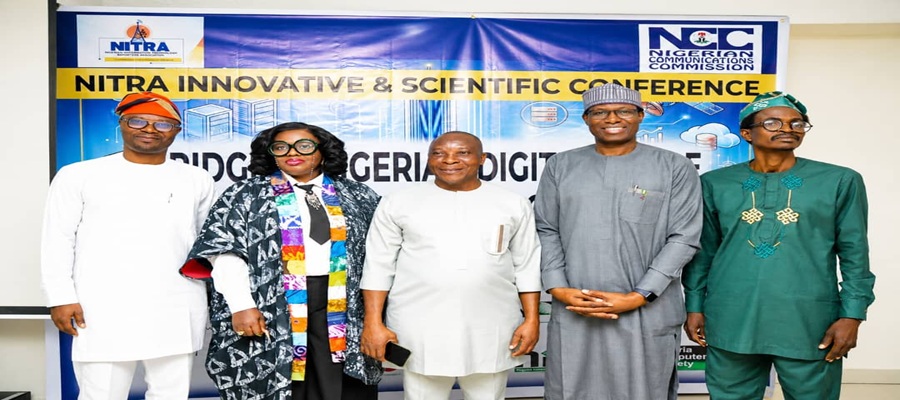
Association of Licensed Telecommunications Operators of Nigeria (ALTON) has called for stronger collaboration among government, regulators, operators and other stakeholders to accelerate efforts at bridging Nigeria’s digital divide and strengthening the country’s digital economy.

NITRA Conference
Engr. Gbenga Adebayo, Chairman of ALTON, made the call while presenting a keynote paper at the Nigeria Information Technology Reporters Association (NITRA) Innovative and Scientific Conference 2026 in Lagos.
The conference had the theme: “Bridging Nigeria’s Digital Divide with Scientific Innovation.”
Adebayo described Nigeria’s telecommunications industry as one of Africa’s greatest success stories in economic liberalisation and digital transformation, noting that the sector had evolved from fewer than 500,000 connected telephone lines before GSM liberalisation in 2001 to more than 200 million active subscriptions today.
According to him, telecommunications has become the backbone of Nigeria’s digital economy, supporting banking, education, healthcare, agriculture, commerce, governance, security and entertainment.
He said sustained private sector investment over the last 25 years had expanded broadband infrastructure, improved service delivery and accelerated financial inclusion and digital innovation across the country.
“Telecommunications is no longer simply an industry; it is the foundation upon which Nigeria’s digital future is being built.
“Every investment in resilient telecommunications infrastructure is an investment in economic growth, innovation, national security and inclusive development,” he said.
Adebayo said operators had invested billions of dollars in mobile networks, fibre optic infrastructure, international connectivity, cloud platforms, data centres, renewable energy systems and emerging technologies such as Fifth Generation (5G), Artificial Intelligence (AI), Internet of Things (IoT) and Fibre-to-the-Home (FTTH).
He noted that the industry had passed through several phases, beginning with nationwide GSM rollout that democratised voice communications, followed by mobile internet through GPRS, EDGE and 3G technologies, before progressing to 4G, fibre broadband and 5G deployment.
According to him, continuous investment in network expansion has significantly improved connectivity in rural and underserved communities, thereby expanding access to education, healthcare, digital financial services and economic opportunities.
The ALTON chairman, however, said significant challenges continued to threaten future investments in telecommunications infrastructure.
He identified multiple taxation, inconsistent Right-of-Way policies across states, infrastructure vandalism, rising energy costs, foreign exchange volatility, insecurity and affordability constraints as major obstacles confronting operators.
Adebayo said damage to fibre optic infrastructure and telecommunications base stations had far-reaching consequences beyond communications, disrupting banking operations, healthcare delivery, education services, security systems and electronic commerce.
He commended President Bola Tinubu’s administration for recognising digital infrastructure as a strategic national asset and implementing policies aimed at strengthening investor confidence in the sector.
He also praised the Nigerian Communications Commission (NCC), under the leadership of its Executive Vice Chairman, Dr. Aminu Maida, for adopting what he described as a transparent, consultative and evidence-based regulatory approach.
According to him, recent regulatory interventions, including the review of retail tariff frameworks after years of rising operational costs and the resolution of the long-standing Unstructured Supplementary Service Data (USSD) debt dispute between banks and telecom operators, had helped improve industry stability.
Adebayo equally welcomed the implementation of the Critical National Information Infrastructure (CNII) framework, saying the initiative recognised telecommunications infrastructure as strategic national assets deserving stronger protection.
“The success of the CNII framework will depend on effective collaboration among security agencies, governments at all levels, operators and host communities,” he said.
He stressed that improving Quality of Service (QoS) required more than regulatory sanctions, noting that network performance was influenced by external factors such as unreliable electricity supply, fibre cuts arising from road construction, vandalism, Right-of-Way delays, insecurity and multiple taxation.
He urged operators to ensure their facilities complied with minimum security standards prescribed by the NCC while calling on citizens to protect telecommunications infrastructure.
“If you see anyone tampering with telecommunications infrastructure, report it. If you see something, say something,” he said.
Adebayo also dismissed reports suggesting that the NCC’s ongoing Mobile Termination Rate (MTR) cost study was aimed at increasing retail telecommunications tariffs.
He explained that the exercise was intended to establish fair and cost-reflective wholesale interconnection charges between operators and had no connection with consumer retail tariffs.
“There is currently no industry proposal before the NCC seeking a review of retail tariffs arising from this exercise.
“Our focus remains on improving customer experience, expanding coverage, strengthening network resilience and delivering greater value to subscribers,” he said.
Earlier, the Chairman of NITRA, Mr. Chike Onwuegbuchi, said Nigeria’s digital divide extended beyond infrastructure to issues of affordability, digital literacy and equal access to digital opportunities.
He said bridging the divide would require affordable internet access, digital devices, digital literacy and equal opportunities for citizens to benefit from online education, healthcare, financial services, employment and government services.
According to him, studies by the Nigerian Economic Summit Group estimate that full digital inclusion could add about 88 billion dollars to Nigeria’s Gross Domestic Product by 2030.
Onwuegbuchi said the conference was organised to provide a platform for regulators, operators, technology companies, financial technology firms, cybersecurity experts and infrastructure providers to examine practical strategies for strengthening scientific innovation and expanding digital inclusion across Nigeria.
Not too long ago, the success of a youth event in Nigeria was often measured by the calibre of artistes on its lineup. A headline performance, a few celebrity appearances and a packed audience were enough to define the experience.

That formula is changing. Young Nigerians are increasingly gravitating towards events that offer more than entertainment. They want spaces where they can participate rather than spectate, create rather than consume, and leave with memories that extend beyond a stage performance.
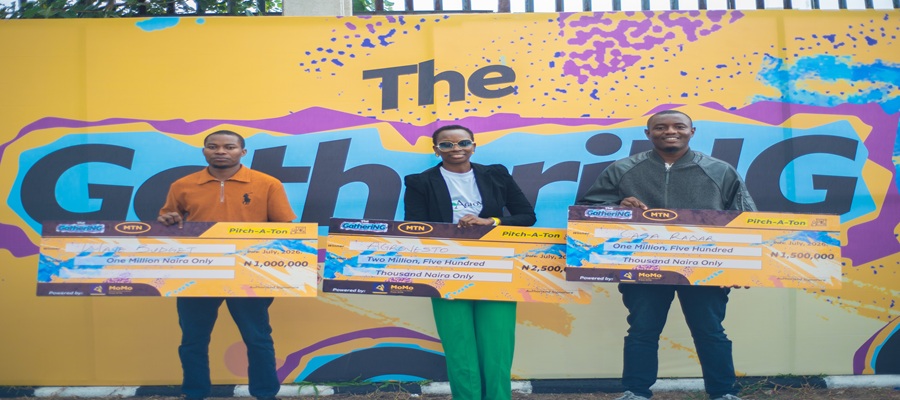
Like all the other editions of The Gathering on 100, Abuja’s edition reflected this shift. Held at This Day Dome, Central Business District, the event brought together thousands of young people for an experience that blended entrepreneurship, music, creativity, gaming, networking and entertainment. Rather than building the programme around a single headline act, The Gathering created multiple touchpoints that allowed attendees to shape their own experience.
At one end of the venue, aspiring founders pitched business ideas before judges for a chance to secure funding through the Pitchathon. Nearby, creators recorded dance videos and comedy skits as crowds gathered around them. Across the exhibition area, young entrepreneurs introduced attendees to products ranging from fashion and fragrances to technology solutions and food businesses.
Then came one of the day’s most unexpected moments, as a convoy of bikers rode through the arena. The display lasted only a few minutes, but it quickly became one of the event’s defining moments, generating a wave of content across social media. It also illustrated a broader reality about the changing nature of youth entertainment. For today’s audience, memorable moments are often as valuable as scheduled performances. An unexpected spectacle, a chance encounter with a favourite creator or the opportunity to participate in an activity can leave a stronger impression than watching a performance from the crowd.
That shift is also reshaping the creator economy. Throughout the day, influencers and content creators documented the event from different perspectives. While attendees became storytellers themselves, documenting their experiences in real time for audiences beyond the venue.
This growing preference for participation reflects a wider shift in youth culture. Young Nigerians increasingly value experiences that allow them to learn, connect, collaborate and express themselves, often within the same event.
That was evident throughout The Gathering on 100. While some attendees arrived for the Pitchathon, others came to network with like-minded young people. Many explored the sip and paint, gaming, and podcast stations, discovered emerging brands at the market 100, and joined creative activities at the craft to cash stations. By the end of the day, everyone had participated in an experience that extended beyond entertainment.
For brands targeting young audiences, the implications are becoming clearer. The question is no longer who can attract the biggest performer. Increasingly, it is who can create the most engaging experience. The success of events such as The Gathering on 100 suggests that, for a generation raised on interaction and digital storytelling, experiences are no longer supporting entertainment. They have become entertainment itself.

MTN Nigeria Warns Customers Against Fake ‘One Month Free Data’ Promotion

NITRA Conference: Stakeholders Seek Policy Reforms, Grassroots Innovation to Bridge Nigeria’s Digital

ALTON Highlights Telecom Operators’ Role in Bridging Nigeria’s Digital Divide @NITRA Conference

Why Nigerian Youth Events Are Evolving Beyond Entertainment Into Innovation and Opportunity

Senate Moves to Compel Social Media Companies to Open Offices in Nigeria

NRC, Ponzi Scheme Collapses Resulting Loss of Billions of Naira

NASENI Moves to Digitize CCB’s 5m Assets Declaration and Operations

Tokenization, Blockchain Technology will Transform Financial Institutions – IMF

EFCC Busts NIS Visa Overstay Racket, Uncovers N700m in an Account

From Scarcity to Scale: What Africa Can Learn from India’s Agricultural Transformation




 General News3 days ago
FG Launches C.L.I.C.K.D., Consumer Credit Scheme for Tech Devices

 Telecom3 days ago
Airtel Nigeria Expands Retail Footprint to Strengthen Customer Access Nationwide

 News3 days ago
NPC Opens Nationwide Digital Birth, Death Registration Platform

 Telecom3 days ago
Kaspersky Survey Highlights the Need for Smartphone Security

 E-Business3 days ago
Ovaloop Technologies Unveils Digital Tools to Formalize SMEs Operations Across Africa

 Telecom2 days ago
Court Dismisses Pan African Towers’ Bid to Halt Ex-CEO’s Suit, Awards ₦500,000 Costs

 E-Financial2 days ago
FG Says Rumours, Fear, Can Crash Banks

 E-Financial3 days ago
Senate Passes Landmark Insurance Reform Bill, Replaces 1997 NAICOM Act