

Telecom
Airtel Africa Unveils Nxtra by Airtel to Accelerate Africa’s Digital Transition

Airtel Africa has launched Nxtra by Airtel (“Nxtra”), a new data centre business founded on a commitment to meet the continent’s growing needs for trusted, and sustainable data centre capacity and to serve the fast-growing African digital economy.

Nxtra aims to build one of the largest network of data centres in Africa with high-capacity data centres in major cities located strategically across Airtel Africa’s footprint, complementing its existing edge sites.
Nxtra’s ambition will allow it to serve the growing need of African enterprises and its data centre infrastructure will be designed to host the next generation of computing, while providing multi-MW capacity in a phased manner.
These facilities will meet stringent global security requirements and meet ‘five nines’1 availability. Coupled with Airtel Africa’s extensive fibre footprint, Nxtra offers secure and scalable integrated solutions to global hyper-scalers, large African enterprises, startups, SMEs and governments.
Through locally available data centre capacity, speed to access digital services will improve and the cost of managing data will be reduced, thus helping power increased innovation, while supporting a new generation of African tech talent.
Furthermore, Nxtra is enabling customers meet data sovereignty requirements while at the same time enabling more local cloud services to be offered in the countries where Airtel Africa operates.
The first major Nxtra facility in Lagos, Nigeria, will deliver 34 MW of total power. It is designed to host high density racks and integrate the latest best practice construction to achieve 1.3 power usage effectiveness (PUE).
It is expected to be live in mid-2025.
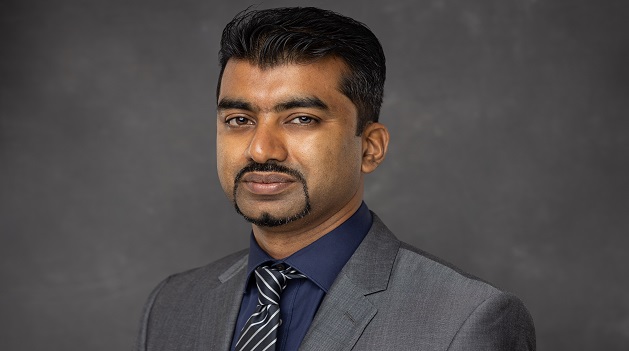
To deliver on Nxtra’s vision, Airtel Africa has appointed Yashnath Issur, the former head of Global Data Centre Portfolio Management at Amazon Web Services, as CEO of Nxtra by Airtel. Yashnath has 16 years of experience in the industry and has, over the past year, built a team of experts to execute on the strategy.
Airtel Africa’s Group CEO, Segun Ogunsanya said: “A rapid increase in data centre capacity is needed to support the growth potential of Africa’s digital economy.
“We’re proud to drive the future of Africa’s digital infrastructure, unlocking opportunities for businesses to grow and fuelling economic prosperity.
“Airtel Africa’s team has consistently shown our ability to deliver on infrastructure projects across Africa, and we are confident that our next generation data centres will support our ambition to become the partner of choice for global customers and Africa’s newest tech unicorns alike.”


Lebara Nigeria has launched the Agent Registration Portal (ARP), a new digital onboarding platform designed to accelerate the expansion of its retail and point-of-sale (POS) network nationwide.

Through the Agent Registration Portal, Lebara aims to create awareness, build trust and credibility within the retail channel, create opportunities for Nigerians to register and become Lebara partners, and position the brand as a modern, digitally driven, and opportunity – focused telecom operator.
With the introduction of the Agent Registration Portal, alongside its earlier customer-focused digital tools, Lebara Nigeria is designed to empower SMEs, independent distributors, SIM sellers, and retailers nationwide by removing traditional barriers to entry and enabling compliant, digital-first onboarding at scale.
Also, positioning itself as a digitally driven telecom entrant, focused on speed, compliance, and nationwide reach as it prepares for full-scale operations across the country.
The rollout comes as part of a national onboarding campaign running from January to March, 2026, targeting both low-scale retail agents and high-scale distributors.
Through the portal, Lebara aims to rapidly grow its digital and physical presence across Nigeria while ensuring all partners meet required compliance and verification standards
The Agent Registration Portal is accessible via the Lebara Nigeria website and allows prospective agents and distributors to complete the entire onboarding process online.
Once approved, partner locations are activated as Lebara POS outlets, trained and authorized to sell Lebara starter packs, data bundles, vouchers and other Lebara Nigeria products and services.
The launch builds on Lebara Nigeria’s earlier digital initiatives ahead of its full market entry.
Prior to the Agent Registration Portal rollout, the company introduced a Number Registration Portal, enabling prospective customers to select and reserve preferred phone numbers before the network goes live.
The service allows users to secure personalised numbers such as memorable dates, culturally significant digits, or easy-to-recall patterns through a simple online process, giving customers early control over their mobile identity.
The Agent Registration Portal onboarding process follows a structured flow from account creation and document upload to compliance checks, verification, approval, and activation. Applicants are required to submit details such as National Identification Number (NIN), valid government-issued ID, Tax Identification Number (TIN), and address information. Where all documentation is complete, onboarding can be completed within 30 minutes, after which applicants receive email confirmation and next steps.
Commenting on the launch, Mary O. Akin-Adesokan, Chief Operating Officer of Lebara Nigeria, said the portal is central to the company’s operational and growth strategy in the country.
“The Agent Registration Portal is a key part of our strategy to scale Lebara’s retail presence nationwide. It allows us to onboard partners faster, ensure full compliance, and provide both small retailers and large distributors with a transparent and reliable way to do business with Lebara.
“Together with our earlier Number Reservation Portal, it demonstrates our commitment to using digital innovation to simplify access, empower partners, and enhance the overall telecom experience,” she said.


MTN Nigeria CEO Karl Toriola has declared that the era of outsiders telling Africa’s story is over, positioning the continent as a global powerhouse of authors, architects, and innovators.

MTN Nigeria
Toriola made the remarks while accepting the ‘CEO of the Year’ award at the 2025 Most Influential People of African Descent (MIPAD) Recognition Ceremony in Lagos.
“For decades, stories about Africa were told about us, but rarely by us,” he said, rejecting outdated narratives of conflict and need. “We are no longer the subjects of the story; we are the authors. Africa’s time is now.”
He spotlighted African talent now leading global organisations, alongside Afrobeats and art reshaping world culture, drawing the Diaspora home with investments, not just emotions.
Toriola anchored his vision in MTN Nigeria’s journey, recalling a time when Nigeria’s 120 million people shared fewer than 500,000 telephone lines. “When MTN entered in 2001, analysts said Nigerians were too poor for mobile phones. They were wrong. They underestimated the Nigerian spirit,” he said.
From that first call in May 2001, MTN has connected over 84 million subscribers, building Nigeria’s “digital nervous system.”
He described Nigeria as uniquely investable due to its resilience and scalability, dedicating the award to MTN’s “real heroes”—engineers scaling masts and frontline customer service staff.
As MTN marks 25 years in 2026, Toriola pledged: “We are going nowhere. We are rooted in the soil of Nigeria and Africa.” He urged global elites to become the continent’s “Most Impactful Builders.”
Modern messengers, such as WhatsApp, Telegram, Signal and others, are often used for illicit purposes. Kaspersky Digital Footprint Intelligence has conducted an in-depth monitoring of over 800 blocked cybercriminal Telegram channels between 2021 and 2024.

While a range of illegal activities continues to be hosted on the platform, its environment has become noticeably more challenging for sustained underground operations.
Telegram’s bot framework and other built-in features make for a low-effort ecosystem for the underworld.
A single bot can simultaneously manage queries, process cryptocurrency payments, and instantly deliver stolen bank cards, info-stealer logs, phishing kits, or DDoS attacks to hundreds of buyers per day, often without operator involvement.
Unlimited, non-expiring file storage eliminates the need for external hosting when distributing multi-gigabyte database dumps or stolen corporate documents. This frictionless automation naturally favours high-volume, low-price, low-skill offerings, such as leaked bank cards or other data, hosting malware, etc.
High-value, trust-dependent deals (for instance, zero-day vulnerability information) still remain on reputation-gated dark-web forums.
Kaspersky researchers found two clear trends related to illegal activities on Telegram. The average lifespan of shadow channels has increased, with the proportion of channels surviving over nine months more than tripling in 2023-2024 compared to 2021–2022. At the same time, Telegram’s blocking activity has risen significantly.
Monthly takedown figures recorded since October 2024 – even at their lowest – are comparable to the peak levels seen throughout 2023, and the overall pace continued to accelerate in 2025. This impedes malicious activities.
Other disadvantages of Telegram for cybercriminals include the lack of default end-to-end (E2E) encryption for chats, the inability to use their own servers for communication (due to the messenger’s centralised infrastructure), and closed server-side code, which makes it impossible to verify its functionality.
As a result, several established underground communities, including the nearly 9,000-member BFRepo group and the Angel Drainer malware-as-a-service operation, have already begun shifting primary activity to other platforms or proprietary messengers, citing repeated disruptions of their activities on Telegram.
“Fraudsters find Telegram a convenient tool for many malicious activities, but the risk-reward balance is clearly shifting. Channels are managing to stay online longer than a couple of years ago, yet the dramatically higher volume of blocks means operators can no longer count on long-term stability.
“When a storefront or service disappears overnight – and sometimes reappears only to be removed again weeks later – building a reliable business becomes much harder. We’re starting to see the early stages of migration as a direct consequence,” comments Vladislav Belousov, Digital Footprint Analyst at Kaspersky.

How Crypto Criminals Stole $700m from People – often Using Age-Old Tricks

Lebara Launches Agent Registration Portal

Nigeria Processed $92.1Bn Crypto Transactions in 12 Months — PwC

Tax Ombudsman will Save Nigerians Money, Time – CEO

Elon Musk Seeks $134Bn from OpenAI, Microsoft for ‘Wrongful Gains’

Banks quietly move to enforce new ₦50 transfer levy from Jan. 1

FIRS says NIN, CAC Numbers to Serve as Tax IDs from 2026

FIRS Declares NIN, CAC Numbers as Tax IDs from 2026

US Begins Partial Visa Ban on Nigerians January 1

Galaxy Backbone Tops FG’s Website Performance Ranking




 E-Financial2 days ago
SEC Hikes Minimum Capital Requirements for Market Operators After a Decade

 Telecom2 days ago
Study Shows Blocks in Telegram are Pushing the Underground Out

 News2 days ago
Nigeria Off EU High-Risk Money Laundering List in Major Financial Win

 News2 days ago
NGX Unveils Net-Zero Plan for Greener Capital Market

 Telecom2 days ago
Galaxy Backbone Marks Two Decades of Powering Nigeria’s Digital Evolution

 Telecom2 days ago
Vodacom Crowned Africa’s Top Employer 3rd Year Running on Innovation, Ethical AI

 Telecom2 days ago
Galaxy Backbone Marks 20 Years, Tops FG Website Scorecard

 E-Financial12 hours ago
Here Are Nigerian Banks That Have Secured Their Licences