

Broadcasting
Ariya Repete to hit ancient city of Ibadan as contestants head to semifinal


The competition is heating up as we inch closer to the grand finale of Ariya Repete 2019. Residents in Akure got the chance to witness the quarter-final of the exciting showpiece when it returned to the Sunshine City.

Akure had previously hosted one of the regional auditions and produced 3 awesome talents in Mayowa Alayo, Ibrahim Afolabi and Seun Ayegbayo in the Afro-pop, Juju and Fuji Category respectively.
The trio upon returning to their home city, came brimming with confidence as they slugged it out with their fellow contestants for the much-coveted semi-final spot.
The night was filled with star-studded performances as Odunlade Adekola, Kola Taiwo, Adewale Ayuba and Mayorkun all graced the stage and gave fans in Akure and unforgettable night of amazing musical performances.

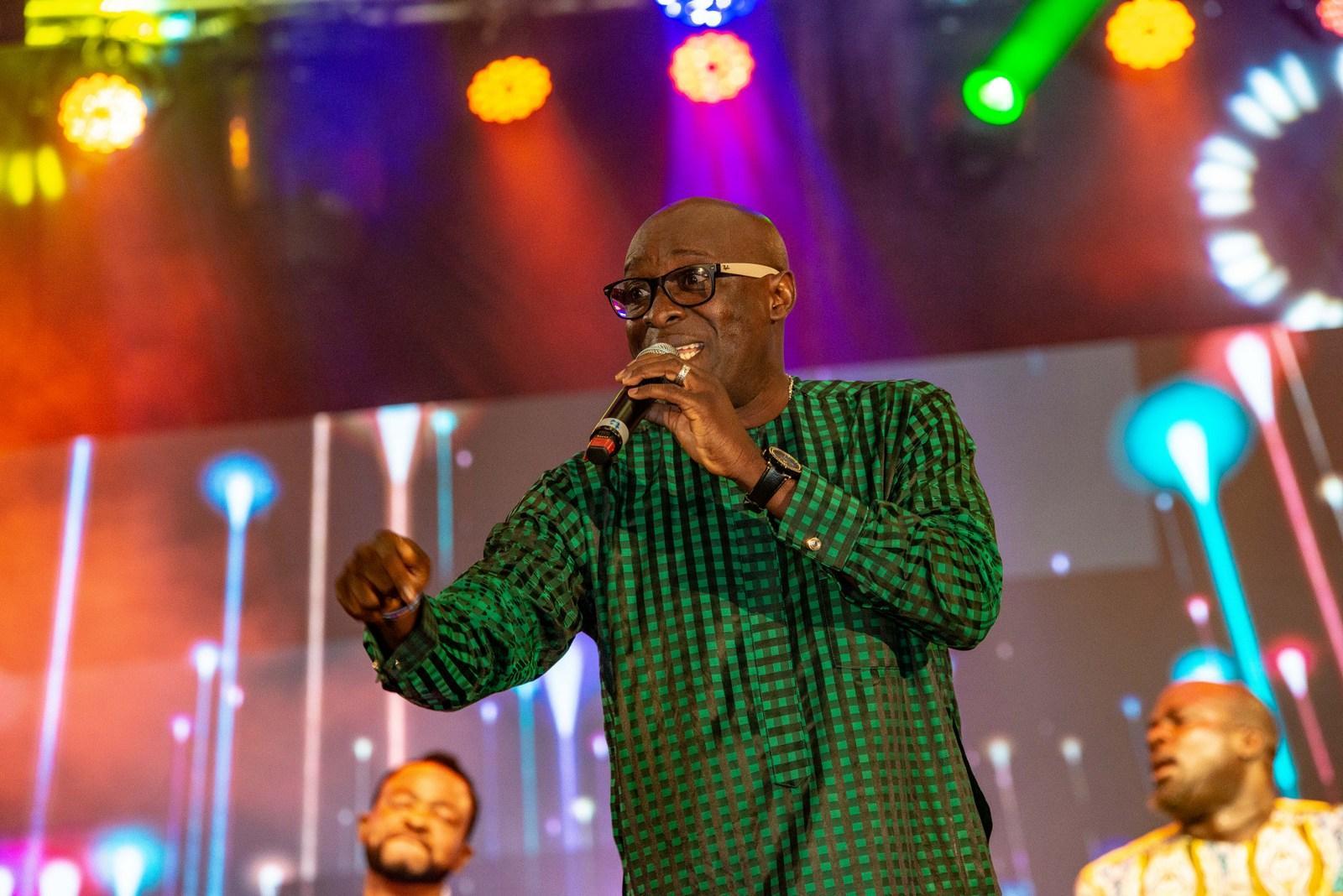
Mayorkun who is a fan favorite in the city of Akure delivered a performance truly worthy of the night, as he performed a number of his chart-topping singles. Nigerian actor and meme King, Odunlade Adekola was also in attendance and he engaged the crowd with his signature wit and comedic remarks.


At the end of the spectacular showpiece, 15 contestants made it to the semi-finals stage which is slated for the 2nd of August in Ibadan.
The eliminated contestants included Olayemi Kehinde, Abiodun Oloto and Afolabi Ibrahim in the Fuji category. Abraham Effiong, Idowu Adeolu, and Olusola Boluwatife were from the Yoruba Hip Hop category, while Micheal Ogunbiade, Adeniyi Temitope, and Adeleye Temitope were eliminated in the Juju category.
The eliminated contestants were, however, rewarded with consolation prizes and were encouraged by the judges who urged them to “continue to believe in their talents”
The remaining contestants will now have a week to prepare for the penultimate showdown in Ibadan on the 2nd of August. The semi-final in Ibadan will also see the likes of Sir Shina Peters and Zlatan Ibile grace the occasion and delight the fans in Ibadan.
Ariya Repete is proudly sponsored by Goldberg Lager. Over the years, Goldberg has consistently pushed the bar in excellence, continually providing fans and consumers with remarkable experiences which dial up the culture and traditions of the people, whilst also appreciating modern social conventions. This perfect blend of both worlds has enabled Goldberg to remain one of the most authentic brands in the beer industry.



Canal+ is to cut jobs at MultiChoice as part of a sweeping restructuring plan aimed at stabilising the African pay-TV operator, following years of operational and financial pressure.

The move comes alongside a planned $115 million capital injection, underscoring the urgency of efforts to revive the business after the French media group took control.
The planned layoffs are expected to form a core element of a broader cost-cutting and efficiency drive, as Canal+ seeks to streamline MultiChoice’s operations and improve profitability.
The restructuring signals a shift toward leaner operations, with a focus on eliminating redundancies and optimising the company’s cost base.
MultiChoice has struggled in recent years with declining subscriber numbers across key African markets, weighed down by macroeconomic pressures, currency volatility, and changing consumer behaviour.
The rise of global streaming platforms has intensified competition, chipping away at the company’s traditional pay-TV dominance.
Canal+’s intervention marks a pivotal moment for MultiChoice, reflecting a more aggressive approach to repositioning the business.
By combining fresh capital with structural reforms, the new owners are aiming to both stabilise short-term performance and lay the groundwork for longer-term growth.
The $115 million injection is expected to provide immediate financial relief, supporting operations and potential strategic initiatives.
However, the accompanying job cuts highlight the depth of the challenges facing the company and the scale of transformation required to restore competitiveness.

Nigeria has ranked first globally in the ownership of the two largest stablecoins, Tether (USDT) and USD Coin (USDC), reflecting the country’s growing reliance on dollar-linked digital assets.

USDT, USDC
Stablecoins such as USDT and USDC are designed to maintain a fixed value against the U.S. dollar, allowing users to store money digitally while avoiding the price volatility associated with cryptocurrencies like Bitcoin.
According to the 2026 Stablecoin Utility Report released by BVNK, about 59 percent of Nigerian crypto users hold USDT, while 48 percent own USDC, giving the country the highest combined ownership rate among all nations surveyed.
The report placed Nigeria ahead of several major economies, including Australia and India, highlighting the country’s strong adoption of dollar-denominated digital assets. Australia ranked second with 34 percent USDT ownership and 29 percent USDC, while India placed third with 30 percent USDT and 27 percent USDC holdings.
The study also examined adoption levels across other regions. Countries such as Colombia and Singapore showed strong usage of both stablecoins, while adoption levels were also notable in South Africa and the United States.
Other markets included in the analysis were Philippines, Thailand and Argentina, where stablecoin ownership has also increased significantly. Among European economies, the report said France and Germany showed moderate levels of adoption, while Latin American markets such as Mexico and Brazil recorded smaller but growing usage rates.
The United Kingdom also appeared in the ranking with modest levels of stablecoin ownership. The report noted that USDT ownership exceeds USDC in many countries, including Nigeria, Australia, India, Singapore, the Philippines, Thailand, Argentina and France.
However, USDC is often viewed as a more compliance-focused stablecoin because of its stronger transparency and regulatory alignment. In some markets, including South Africa, Colombia, Germany and Brazil, the report found that USDC adoption slightly exceeds USDT.
More broadly, the data suggests that stablecoin adoption is being driven largely by emerging economies rather than advanced financial markets. According to the report, countries such as Nigeria, Argentina and the Philippines are among the biggest users of stablecoins, where people increasingly rely on dollar-pegged digital assets to protect savings from currency volatility and facilitate cross-border payments.

Spotify has unveiled Nigeria-specific data from its annual Loud & Clear report, highlighting how Nigerian artists generated more than ₦60 billion in revenue from the platform alone last year, amid explosive growth in streams, local consumption, and global discovery.

The report, which analyzes millions of data points to illuminate music streaming economics, shows Nigerian artists’ revenue surged over 140% in the past two years.
This boom stems from rising global appeal and stronger domestic engagement, with 30.3 billion streams and 1.6 billion listening hours on Spotify in 2025. First-time discoveries of Nigerian music hit 1.3 billion, up 26% from 2024.
Locally, Nigerian tracks dominated Spotify Nigeria’s Daily Top 50, accounting for over 80% of features, while consumption of homegrown artists jumped 170% year-on-year.
“Nigeria’s music scene thrives on creativity, innovation, and global influence,” said Jocelyne Muhutu-Remy, Spotify’s Managing Director for Africa. “Loud & Clear spotlights how artists are forging sustainable careers and deepening local ties.”
Key highlights include:
55% year-on-year growth in local streams for Nigerian female artists.
75% surge in streams for independent Nigerian artists.
Independents and indie labels earning 58% of all royalties from Nigerian artists on Spotify.
Spotify’s editorial playlists featured nearly 2,000 Nigerian artists in 2025, boosting visibility. Nigerian music appeared in 320 million global user playlists and over 12 million in Nigeria, totaling more than 60 million playlists worldwide.
The report also notes evolving tastes, with top-growing genres in Nigeria over five years including pop urbaine, alternative pop, anime, emo, and drill.
For full details, visit spotify.com/loudandclear.

CBN Introduces Stricter BVN Rules to Curb Fraudulent Transactions

Binance is Missing from Ghana’s Crypto Sandbox

Canal+ to Cut Jobs as Part Sweeping Restructuring

Activist Warns against Rising Junk Food Culture in Nigeria

World Bank Debars 3 PwC Subsidiaries for 21 Months over Alleged Project Fraud

Kaspersky Discovers New Phishing Campaign Exploiting Google Tasks Notifications to Steal Corporate Credentials

esentry 2025 Report Shows Healthcare, Financial Services and Telecoms as Staging Grounds for Increased Cyberattacks in Africa

AfDB, UNDP Launch $10Bn AI Initiative for Africa

Mutual Benefits Assurance Settles ₦5.9bn Claims in January 2026

MultiChoice Suspends Yearly DStv Price Hike as Canal+ Pushes Growth




 E-Financial1 day ago
Kuda MFB Increases Kuda for Her Business Grants to ₦10 Million

 General News2 days ago
Banks, Offices to Close for Thursday and Friday for Eid-el-Fitr

 News2 days ago
Kaspersky Discovers Infostealers Mimicking Claude Code, OpenClaw and Other AI Developer Tools

 Telecom2 days ago
Nigeria, Ghana Trigger Stunning 45 Percent Surge in MTN Dividends

 E-Financial2 days ago
SEC Shuts Over 400 Fraudulent Investment Schemes, Arrests Operators

 Telecom2 days ago
ATCIS Urges FG to Ensure Safety of Consumers Data

 News2 days ago
Breaking…….Nigerian Firms Pledge Millions, Create UK Jobs

 Telecom1 day ago
Vitel Wireless Lures Subscribers with “Data that Never Expires” Campaign