

Broadcasting
Ashcraft Announces Date for South – South Zonal Stakeholders Summit

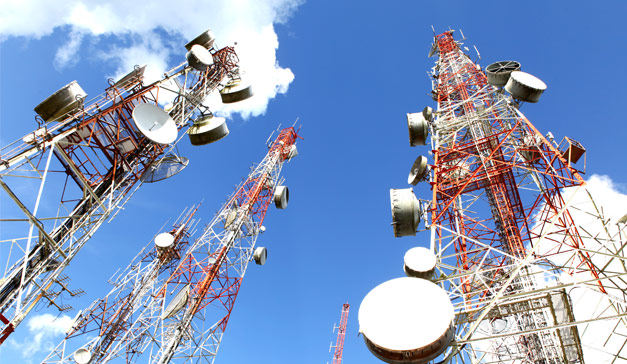
The Ashcraft Centre for Social Science Research, organisers of South – South Zonal Stakeholders Summit has announced 25th and 26th July, 2022 as date for this year’s summit.

Chiakor Alfred, Chief of Strategic Planning and Innovations, Ashcraft Centre for Social Science Research, Head of Secretariat, made the announcement during a press conference held recently at Aldgate Congress Resort, Plot 308 Abacha Road, GRA Phase 3, Port Harcourt.
The conference is themed: ‘Domesticating Stakeholders Statutory Responsibilities In Protecting Nigeria’s Critical Infrastructures And Assets’.
According to the Chiakor, “The essence of domesticating the proceedings at the Zonal levels and Host Communities was as a follow up to the successful convention held at the Congress Hall, Transcorp Hilton Hotel, Abuja on Monday 28 February and Tuesday, 1 March, 2022. The imperative to domesticate the proceedings at the Zonal levels and Host Communities forms the basis of this Summit,” stated Dr. Chiakor.
Chiakor further noted that “The last two decades have demonstrated clearly that the nature of threats to Nigeria’s security have changed significantly. Structural challenges, such as the systematic vandalisation, degradation and destruction of Nigeria’s critical national infrastructures, monuments and business assets; terrorism, insurgency, cyber-crimes, banditry, kidnapping, piracy, oil bunkering, drug trafficking and other forms of organised crime, have created an entirely new security environment.
Nigeria now faces more security threats that have different characteristics from classic military conflict between states. The gross expansion of the contours that define security boundaries makes it imperative to recognize the eco-systemic dimensions of the threats that stare at us daily and in every form.
“The rampancy and intensity of the vandalisation and destruction of Nigeria’s infrastructures and assets prompted the call to arms by His Excellency Muhammadu Buhari, – President of the Federal Republic of Nigeria to the Armed Forces, Intelligence and Security Establishment and all Nigerians to see it as a patriotic duty to ensure maximum vigilance and shared responsibility in the protection and security of these Assets and platforms at all points in their life-cycle….”
“These projections of the Summit are therefore, consistent with the provisions of the National Protection Policy and Strategy 2022 (CNAINPPS 2022); Petroleum Industry Act, 2021; the National Security Strategy Framework; and the Critical National Infrastructure Bill, 2021 currently under consideration at the National Assembly.
“The South – South Zonal Stakeholders Summit aims to intensify advocacy for Stakeholders Statutory Responsibilities. It shall also engender the re-engineering of appropriate legislations; and the strategic roadmap for harnessing expert knowledge and country wide technical support for deterrence, codified response strategy and recovery architecture to Nigeria’s critical assets. Equally important is the desire to seek renewed commitment to the challenges impacting the integrity of critical infrastructures and assets in the Region, especially the vandalisation and destruction of its complex ecosystem of separate yet interconnected infrastructures in the Oil and Gas; Telecommunications, Transportation and Power Sectors.
“To achieve the projected outcome and also sustain confidence building, diverse Stakeholders are mobilized to discuss the challenges impacting the integrity, operations and security of these critical infrastructures and Assets and also seek possible solutions and suggestions. The Stakeholders being mobilized to the Summit include but are not limited to: Nigeria’s National and State Legislatures; the Armed Forces, Security and Intelligence Agencies; Statutory Regulators in the diverse Sectors of Nigeria’s productive economy; Investors/ Business Owners; Operators of the Infrastructures and Assets; Professional and Civil Society Organizations; the Traditional Institution, Socio Cultural and Pressure Groups, etc.
“By building inter/multi sectoral synergy, the Summit shall engender Stakeholders and citizens with shared responsibilities towards achieving the institutionalization of the road map and priorities of the policy frameworks crafted to provide deterrence, security and resilience of Nigeria’s assets. It is also the expectation of the Conveners that the derivatives from the Summit shall enhance knowledge leadership & management, regenerate confidence in securing Foreign Direct Investment into Nigeria’s productive Sectors; and also boost capital growth and turnkey business startups and development.”
“Ladies and Gentlemen, the security of lives, infrastructures, monuments and assets is the collective responsibility of every citizen, whether private or public. Issues of security, destruction of lives and property know neither religion nor ethnicity. We are calling on the partnership and support of all Stakeholders, both in the Public and Private Sectors, with diverse political, religious and professional orientations to put aside all prejudices to help forge a common front to confront the monster that is threatening the integrity of our corporate existence as a people and as a nation. It is time also to live the slogan that says “if you see something, say something. If you hear something, do something”
It is incumbent on us all therefore to engage robustly on how to deter and mitigate these challenges in a systematic and coordinated manner. This way, we can be sure of preserving our collective heritage and sanctity of our God endowed resources, both human, technical and material.”


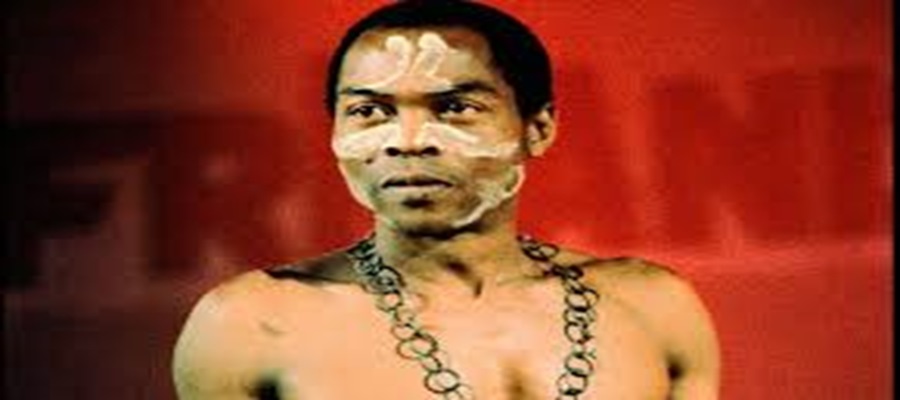
Fela Anikulapo-Kuti, simply known as Fela, legendary Nigerian musician, has made history as the first African artist to be inducted into the Rock & Roll Hall of Fame.

Fela
This is coming after he was posthumously honored with the 2026 Grammy Lifetime Achievement Award, becoming the first African artist to receive this prestigious special merit recognition.
Fela will be honoured in the early influence category this year, along with Queen Latifah, rapper MC Lyte, country rocker Gram Parsons, and Cuban singer Celia Cruz at this year’s Rock and Roll Hall of Fame event.
The honorees were revealed on Monday night in the US, during an airing of American Idol.
Sade Adu, Nigerian-born British singer, will be honoured in the performance category.
However, Shakira, Mariah Carey, Lauryn Hill, New Edition, and Pink, missed out on the final cut despite being nominated.
Over 1,200 artists, historians and music industry professionals voted to decide the honorees.
The induction ceremony will be held on 14 November at the Peacock Theatre in Los Angeles.

National Broadcasting Commission (NBC) is set to launch so-called FreeTV, with over 100 channels for news, sports, education, entertainment and children’s programming in multiple Nigerian languages.

The launch is scheduled for May 15.
Charles Ebuebu, director-general, NBC, who disclosed this, said the new platform will offer free-to-air access with no carriage fees, leveraging hybrid satellite and internet delivery via NigComSat-1R.
The new plan is not an upgrade, the NBC stressed. This is a rebuild, according to Ebuebu .
FreeTV will be true free-to-air – no encryption, no set-top box barrier.
Any DVB-T2/S2 television will work. A mobile app will extend reach to phones and tablets.
The platform will launch with over 100 national, regional and state channels across sports, news, children’s programming, education, entertainment and cultural content in Hausa, Yoruba, Igbo, Tiv, Ijaw, Edo, Fulfulde, Ibibio, Efik and Nupe – all in HD.
Crucially, the NBC has partnered with a Bulgarian firm, GARB (operating since 2006 and recognised by the European Broadcast Union), to deliver a 94 per cent-accurate audience measurement system using return-path data, app analytics, demographic panels, and Artificial Intelligence (AI).
To qualify broadcasters, must commit their channels, produce a minimum of 60 per cent local content, and promote FreeTV until January 2029.
After that, a regulated tiered rate card takes effect.
According to NBC, the strategic rationale is simple: build viewers first, monetise later.
The document further revealed that six regional production hubs in Lagos, Abuja, Port Harcourt, Enugu, Kano and Benin would function as local content factories, expected to generate 500 to 1,000 jobs per zone within two years.
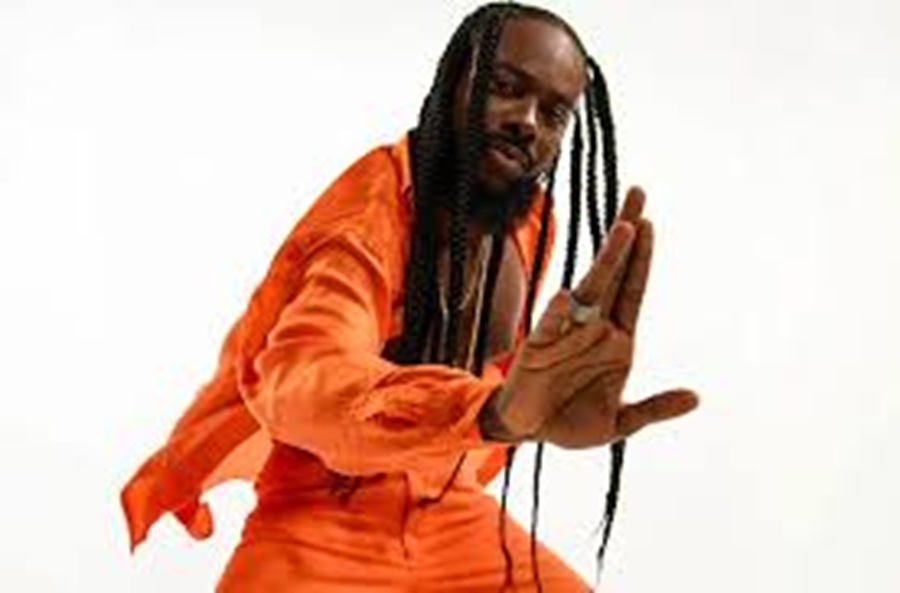
Popular Nigerian artist Adekunle Gold has lent his support to the growing youth-driven movement behind The Gathering on 100, further amplifying conversations around what is fast becoming one of the most talked-about upcoming experiences among young Nigerians.

Adekunle Gold
Known for his music and his strong connection with youth culture and evolving creative expression, Adekunle Gold’s involvement signals a deeper alignment between the event and the kind of audience it is attracting, a generation that is bold, expressive, and constantly redefining what community looks like.
While details of his involvement remain understated, his visible support adds a new layer of support and cultural relevance to the movement. In a landscape where attention is currency, endorsements from artists of his stature often act as a signal, drawing more eyes, more curiosity, and ultimately, more participation, but beyond visibility, the significance lies in what it represents.
The new father has, over the years, built a reputation for embracing creativity in its many forms, from music to visual storytelling, fashion, and digital engagement. His brand has consistently resonated with young Nigerians navigating similar spaces of self-expression and identity.
From interactive experiences like live music sessions and open performance moments to fashion runways and content creation spaces, the event is designed to blur the lines between audience and participant. It invites attendees to move beyond observation and become part of the moment.
This is a concept that closely mirrors the kind of cultural shift Adekunle Gold has been part of, one where boundaries between creator and consumer continue to dissolve.
His support also reflects a broader trend within Nigeria’s entertainment industry, where artists are increasingly engaging with youth-led initiatives that go beyond traditional performances. Rather than simply appearing on stage, they are aligning with movements that foster community, creativity, and shared experience.
For fans and attendees, this adds another dimension to what The Gathering on 100 represents.
As registrations increase and conversations expand across social platforms, the movement is gradually taking shape through the collective interest of those drawn to it.
Head to gathering.com to register.

MTN Suspends Data, Airtime Borrowing Service over New FCCPC Lending Rules

Nigeria Customs Deploys AI to Cover Revenue Leaks

Top 7 Reliable Virtual Cards for Running Ads in Nigeria

Nokia, Orange Partner on AI-native 6G Networks

NDPC Issues Critical Advisory as Hackers Target Nigeria’s Key Digital Systems

Kuda MFB Increases Kuda for Her Business Grants to ₦10 Million

Canal+ to Cut Jobs as Part Sweeping Restructuring

Nigeria tops global rankings for USDT, USDC ownership

NBC Boss Urges Content Ceators to Participate in DSO

NITDA Takes Over National Digital Architecture System




 General News2 days ago
Guinness Nigeria Surpasses ₦1Trillion Market Capitalisation, Signalling Strong Investor Confidence and Sustained Value Creation

 News2 days ago
CISA Asks NDPC, Police to Act on Alleged Data Breach by NIPSS

 E-Financial2 days ago
FG Investigates ‘Sharp Sharp’ Loan Operators over Alleged Privacy Violations

 Telecom2 days ago
Amazon Satellite to Challenge Starlink in Africa with Globalstar Acquisition

 E-Financial2 days ago
Ecobank Delivers Strong Results, Posts $801m in Pre-Tax Profit for 2025

 News2 days ago
Tinubu Tasks NRS to Restore Public Trust Amid Fiscal Changes

 Broadcasting2 days ago
Fela Makes History as First African to be Inducted into Rock and Roll Hall of Fame

 News2 days ago
Kaspersky Reports Online Scam Exposure Remains Widespread Despite High Levels of Self-assurance