

E-Financial
Banks Agree on N105Bn Sinking Fund to Clean Up Banking Mess

Deposit Money Banks (DMBs) in the country have agreed to set aside some N105 billion for a sinking fund to cover the cost of cleaning up the system after the 2008-2009 banking sector crisis and further consolidate on the system’s post-crisis stability gains achieved in the industry over the last three years.
They consequently have signed the Resolution Cost Trust Fund Deed which requires them to contribute 0.5 per cent of their total assets and 33 per cent of their off-balance sheet items to the Asset Management Corporation of Nigeria’s (AMCON’s) sinking fund.
The Central Bank of Nigeria (CBN) and banks had in 2011 signed a memorandum of understanding (MoU) on the establishment of the sinking fund, having realised that funds under AMCON’s management and eligible bank assets might not be enough to meet the resolution cost of restoring financial stability.
Going by the DMBs’ total assets which stand at N21 trillion, the sum to be set aside would amount to about N105 billion from the banks to help cover the cost of the banking crisis of two or three years ago.
Mrs. Agnes Tokunbo Martins, CBN director, banking supervision, addressing journalists after the Bankers’ Committee meeting in Abuja yesterday, explained that what had hitherto existed to mitigate the devastating effects of the crisis in the sector was a memorandum of understanding between the CBN and the DMBs on how to clean up toxic loans from their balance sheets, adding that with the signing of the deed, they have now formally agreed on the percentage and other ratios to be used in contributing to the sinking fund.
She said: “One major event that took place today was the signing of the Resolution Cost Trust Fund Deed. This deed is between the banks and, basically, the intention is to cover the cost of the banking crisis that we had about two or three years ago.
“Initially what we had in place was a memorandum of understanding where the banks on their own agreed to contribute 0.3 per cent of their total assets to clean up the banking system at that time.
“But today the deed has been signed and what is in the deed is that the banks have agreed on their own to contribute 0.5 per cent of total assets and 0.5 per cent of 33 per cent of their off-balance sheet assets to the sinking fund.
“The whole intention that is to ensure that going forward the banking system is safe and there is no incidence whereby we have to fall back on tax payers’ money.”
Godwin Emefiele, group managing director, Zenith Bank Plc, Mr. said the committee would monitor the policy and step up efforts to ameliorate the impact on the economy.
He said the committee was not unaware of the fact that the increase on the CRR would hike both lending and deposit rates but assured customers that the trend would be reversed through renewed deposit mobilisation by banks.
Emefiele said the financial institutions were left with no other option, than to mop up deposits from the private sector, particularly the yet-unbanked segment.
He argued the 50 percent hike on CRR on public funds became necessary to ensure stability in the foreign exchange market as well as avoid the depreciation of the naira.
Also speaking on the cashless policy, Mr. Philip Oduoza, group managing director/chief executive, United Bank for Africa (UBA), said the initiative was on course, adding the banks had continued to reduce the cost of doing business in the banking halls.
He said following the introduction of the cashless policy, electronic transactions had improved significantly to N13.6 billion as at July from about N8.3 billion when the policy commenced.


Access Holdings Plc has received the approval of its shareholders to raise additional capital of up to N40 billion or such other amount or their equivalent in foreign currencies, via private placement.

The shareholders gave the approval as part of the special resolutions at Access Holdings Plc Extraordinary General Meeting (EGM) held on Thursday December 18.
In a notice to the Nigerian Exchange Limited (NGX), Access Holdings said the new ordinary shares created in connection with the private placement, will be allotted at a price of N20.25 to one or more investors in such tranches and on such terms and conditions as shall be determined by the Board.
Access Holdings Plc Board of Directors is authorised to consider, negotiate, approve, and finalise the list of potential private placement investors; determine the structure, valuation, modalities, and timeline for the private placement.
The Board was also authorised to consider, negotiate, approve and finalise the list of potential private placement investors; determine the structure, valuation, modalities and timeline for the private placement.
The shareholders also approved for the issued share capital of Access Holdings Plc to be increased from N26 658 billion to N27.646 billion by the creation and addition of 1,975,308,641 ordinary shares of 50 kobo each ranking pari-passu with the existing ordinary shares of the Company.

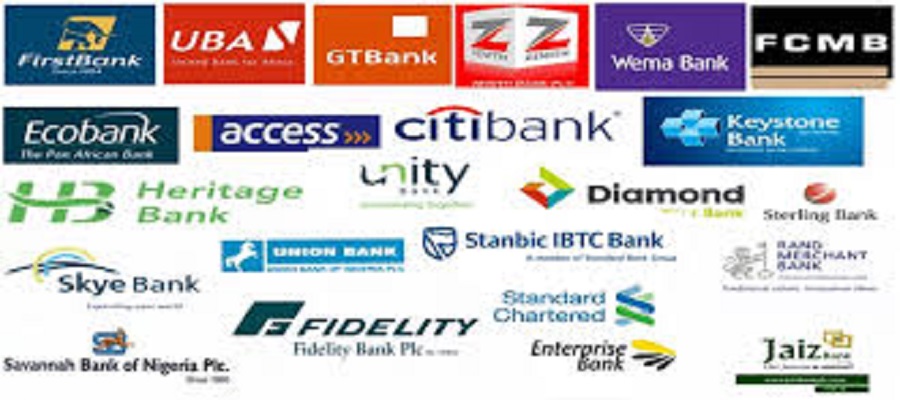
Nigeria Customs Service (NCS) has imposed a three per cent surcharge on Deposit Money Banks (DMBs) over delays in the remittance of Customs revenue by designated banks.

The development was disclosed by Abdullahi Maiwada, national public relations officer of the Service, in a statement titled “Nigeria Customs Service Commences Enforcement of Penalties Against Designated Banks for Delayed Remittance of Customs Revenue.”
The agency stated that delays in remitting collected Customs revenue constitute a breach of remittance obligations and negatively impact the efficiency, transparency and integrity of government revenue administration.
Maiwada explained that any Designated Bank that fails to remit collected Customs revenue within the prescribed period will be liable to penalty interest, adding that affected banks will receive formal notifications detailing the delayed amount, applicable penalty and the timeline for settlement.
“The NCS has noted instances of delayed remittance of Customs revenue by some Designated Banks following reconciliation of collections processed through the B’Odogwu platform. Such delays constitute a breach of remittance obligations and negatively impact the efficiency, transparency and integrity of government revenue administration.
“In line with the provisions of the Service Level Agreement (SLA) executed between the Nigeria Customs Service and Designated Banks, the Service hereby notifies stakeholders of the commencement of enforcement actions against banks found to be in default of agreed remittance timelines.
“Accordingly, any Designated Bank that fails to remit collected Customs revenue within the prescribed period shall be liable to penalty interest calculated at three per cent above the prevailing Nigerian Interbank Offered Rate for the duration of the delay. Affected banks will receive formal notifications indicating the delayed amount, applicable penalty and the timeline for settlement.”
Maiwada further advised Designated Banks to strengthen their internal controls, ensure strict adherence to remittance timelines and comply fully with the provisions of the SLA.
He reiterated that the Service remains committed to enforcing accountability, safeguarding government revenue and promoting a transparent and predictable financial system in support of national economic development.
“The Service further notes that persistent or repeated non-compliance with the terms of the SLA may attract additional sanctions, including regulatory and administrative measures, as provided under the Agreement and relevant laws guiding Customs revenue collection.
“The NCS reiterates that prompt, accurate and complete remittance of Customs revenue is a fundamental obligation of Designated Banks. Any payment of collected revenue into unauthorised accounts, whether deliberate or erroneous, will be treated as a serious violation and addressed in accordance with the SLA and applicable legal frameworks.
“Designated Banks are therefore advised to strengthen internal controls, ensure strict adherence to remittance timelines and comply fully with the provisions of the SLA. The Service remains committed to enforcing accountability, safeguarding government revenue and promoting a transparent and predictable financial system in support of national economic development,” he added.

The World Bank is set to approve a $500m loan to Nigeria on Friday (today) as part of efforts to expand access to finance for micro, small and medium enterprises across the country, according to Punch.

The proposed facility, titled the Fostering Inclusive Finance for MSMEs in Nigeria (FINCLUDE) Project, aims to mobilise private capital and promote innovative financial products for small businesses, according to information obtained from the World Bank.
Negotiations on the loan are ongoing, and approval by the World Bank Group’s board is expected on Friday.
The approval, expected on December 19, 2025, will see the World Bank commit $500m to the project out of an estimated total cost of $2.39bn.
Of the World Bank financing, $400m will be provided by the International Bank for Reconstruction and Development, while $100m will come from the International Development Association.
The Federal Government will be the borrower under the arrangement, with the Development Bank of Nigeria serving as the implementing agency with overall responsibility for managing the funds.
The remaining $1.89bn required for the project is expected to be provided by commercial lenders as unguaranteed financing.
According to the World Bank, the FINCLUDE project will leverage the platforms of the Development Bank of Nigeria and its subsidiary, Impact Credit Guarantee Limited, to deepen credit access for MSMEs.
“The proposed FINCLUDE Project leverages the platforms of the Development Bank of Nigeria and its subsidiary, the Impact Credit Guarantee Limited, to drive inclusive MSME finance,” a document from the World Bank read.
“Through these catalytic institutions, the project will deploy a package of complementary, inclusive, and innovative instruments tailored to the diverse needs of MSMEs in Nigeria.”
The World Bank described DBN as “a partner well known to the World Bank with high implementation capacity and a proven track record in designing and executing complex, innovative projects,” noting that its role would be central to the success of the intervention.
The project is structured around three main components. These include the provision of inclusive and innovative MSME finance products, the de-risking and mobilisation of private capital through partial credit guarantees, and technical assistance aimed at modernising and digitising Nigeria’s MSME finance ecosystem.
Under the first component, the World Bank said the project would provide Tier 2 subordinated capital to eligible financial institutions and support the establishment of an MSME investment fund to deliver equity and long-term debt financing to small businesses.
The bank said this approach would help “crowd-in private capital, test market innovations and promote financial sustainability” within the MSME segment.
Also, the project will offer targeted technical assistance to strengthen the capacity of financial institutions, improve regulatory oversight and modernise the MSME finance value chain linking DBN, lenders and entrepreneurs.
In its appraisal report, the World Bank highlighted Nigeria’s ongoing economic reforms, describing the country as being “in a critical transition.”
It noted that the removal of fuel and foreign exchange subsidies, alongside the unification of exchange rates, had begun to stabilise the economy and restore investor confidence.
“These reforms have improved fiscal space, enhanced FX liquidity, and eased inflation to 18 per cent as of September 2025,” the report stated, adding that growth prospects were strengthening, with the International Monetary Fund projecting 3.9 per cent real GDP growth in 2025.
Despite these improvements, the World Bank warned that access to finance remained uneven, particularly for MSMEs, women and the agriculture sector.
It noted that agriculture accounted for just over five per cent of total bank credit in 2024, while high interest rates and shallow credit penetration continued to constrain lending to smaller enterprises.

Access Holdings Shareholders Approved to Raise N40bn Capital Through Private Placement

Jumia Kicks Off December Holiday Sale, Bringing Festive Deals to Shoppers Nationwide

Dangote, Monopoly Power, and Political Economy of Failure

OAU, Baptist Day School Oluponna honour Akano with Distinguished Alumnus Awards

NIMC rolls out Pre-Enrolment Portal for seamless NIN registration

Nigeria Records Highest Weekly Cyberattacks in Africa — Report

Cyber Tsunami Hits Nigeria as Breaches Surge 1,047%, esentry Q3 Report Reveals

Jumia’s Data Shows Nigerians Turning to Digital Retail to Navigate Inflation Pressures

GenAI Adoption Among African workers Outpace Global Peers

How Insecurity is Bleeding Nigeria about $15bn Annually and Destroying Its Economic Future




 E-Business2 days ago
Nigeria Police Arrest Okitipi, Nigerian Allegedly Linked to Microsoft 365 Hack

 E-Financial2 days ago
World Bank to Approve $500m Loan for Nigeria Today

 News2 days ago
NITDA Partners OGP to Drive Presidential Digital Goals

 E-Financial2 days ago
Customs Slam 3 Percent Surcharge on Banks over Delayed Revenue Remittance

 Telecom2 days ago
Why Econet Wireless is Switching to VFEX

 E-Financial2 days ago
Fidelity Bank Boosts Maternal, Child Healthcare @ESUTH
 General News1 day ago
Jumia Kicks Off December Holiday Sale, Bringing Festive Deals to Shoppers Nationwide

 General News2 days ago
MTN Graduates 20 Fellows, Expands Media Innovation Programme