

E-Financial
Banks, New Naira Notes and ‘Owambe’ Parties


The habit has been with Nigerians for decades. It is not about to change soon. However, in 2007, financialtechnology magazine in its maiden edition published a two-page story on the illegal activities of some bank executives who profit from selling new naira notes to bank customers.
Titled ‘Owambe ATM: Naira hawkers besiege ATMs for crispy naira notes”, the story chronicled how some naira hawkers relied on the automated teller machines [ATMs] for their ration of new naira notes.
Since the ATM did not satisfy their desire, the hawkers shifted their search to the banking halls.
“The currency hawkers would visit the banks with bagful of dirty naira notes in exchange for new ones. The bank officials operating unofficially would collect an agreed service charge from the hawkers”.
The story explained that these bank officials usually charge about N200 on N1000.
Meanwhile, on its front page with the headline, “Banks in brisk business with new naira notes, reject old bills,” the Guardian newspaper of April 14, 2016 exposed the activities of some of these dubious bank executives. The story reads, inter alia:
“By management directive or individual discretion, banks in the country have gradually become an outlet for new notes to currency hawkers, who in turn make brisk business.
The sale of the clean bills for older ones currently goes for as high as 20 per cent of the value being exchanged, that is, N1000 old notes go for N800 new ones”.
However, the CBN Act 2007, Section 21, sub-section 3 and 4, said forbids such. “For the avoidance of doubt, spraying of, dancing or marching on the Naira or any note issued by the Bank (CBN) during social occasions or otherwise howsoever, shall constitute an abuse and defacing of the Naira or such note and shall be punishable under Sub-section (1) of this section”.
About a decade after financialtechnology’s story, the law enforcement agents have not apprehended or punished any Nigerian for “spraying, dancing, or marching on the naira or any note issued by the Central Bank of Nigeria [CBN] during social occasions”. The reason is obvious.
At a typical owambe party where serving politicians, monarchs, business moguls and media magnate are present with uniform traditional attire. The party is in full swing. Food and choice wines are part of the menu. The celebrant is a cousin to one of the past leaders of this country. On the bandstand is a prominent praise singer and his back up boys.
The celebrant and his wife step out to dance. The chairman of the occasion, a senior monarch from the south west, dips a hand into his flowing robe and brings out a wad of new naira notes, and goes ahead to plastered the couple and the musician with the notes.
Other notable personalities join in the show-off game. In addition, new naira notes running into several thousands are flying in the air. The couple, friends, and families would dance around and march the notes. Some of the women armed with polythene bags stoop low and fill the bags with the notes.
That is our way of showing off, and it is not about to change soon. This penchant to show-off at parties like this has been with us for decades.
However, the habit has given birth to the need to search for new naira notes at all cost. The bankers and personalities painted above are in the business together. Who would arrest the monarch and his friends for spraying new naira notes at different owambe parties?
Well, there is an answer in the question. However, there is no other way the new naira notes get to the currency hawkers except through the banks.
The CBN does not deal with individuals. The arrangement from the banks could be “management decision or individual interest”. That explains how and why Nigerians get new naira notes in commercial quantity to hawk in the street and to spray at owambe parties, even a decade after financialtechnology first published this story.


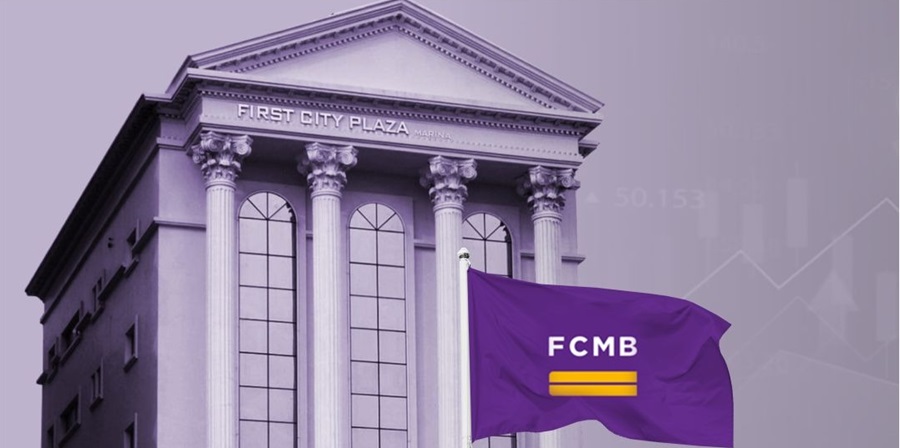
First City Monument Bank (FCMB) has introduced a set of new features on its mobile app, led by a reward points system that turns everyday transactions into tangible benefits for customers.

With this update, FCMB shifts the focus from routine banking to value creation, giving customers a stronger reason to engage, transact, and stay within its digital ecosystem.
At the centre of the upgrade is the Reward Points feature, which allows customers to earn and redeem points on transactions made in the app. The more customers use the platform, the more value they unlock, creating a direct link between daily banking activity and real-life rewards.
Beyond the rewards, the enhanced app introduces a Regal Premium Lifestyle Subscription that offers users access to curated lifestyle benefits across travel, dining, and entertainment, plus a three-month free transfer for new-to-bank customers.
Customers can now access mutual fund investments directly within the app, helping them grow wealth without multiple platforms. This feature reinforces FCMB’s commitment to empowering customers with accessible financial tools.
To improve customer experience, the app now includes “Chat with Temi”, an intelligent in-app support feature that delivers instant assistance and quicker issue resolution.
Speaking on the update, Oladipo Alabede, divisional head, Payments and Solutions, said: “At FCMB, we are constantly innovating to meet the evolving needs of our customers. These features are designed to provide convenience, reward loyalty, and empower our customers to do more with their finances, right from their mobile devices.”
In line with its financial inclusion drive, FCMB has simplified account upgrades from Tier 1 to Tier 2, allowing customers to access enhanced banking services without visiting a branch.
Additionally, the introduction of instant virtual card request and activation ensures customers can immediately create and use secure digital cards for online transactions.
Adetunji Lamidi, divisional head, Personal Banking, emphasised the Bank’s digital transformation journey: “These upgrades reflect our technology-driven strategy to build a smarter, more intuitive banking platform. By integrating intelligent support systems like Temi and enabling instant services such as virtual card activation, we are redefining convenience and accessibility in banking.”
This comprehensive upgrade reflects FCMB’s ongoing commitment to innovation, customer focus, and digital excellence, positioning the mobile app as a one-stop platform for seamless, rewarding, and future-ready banking.
Customers are encouraged to update or download the FCMB Mobile App today from their app store to use these new features and take full control of their financial journey.
Nigeria has accessed the first tranche of its $5 billion derivatives financing arrangement with First Abu Dhabi Bank (FAB), drawing about $1.5 billion under the deal approved by the national assembly in March.

This is despite caution by the International Monetary Fund (IMF) against proceeding with the proposed $5 billion structured Total Return Swap (TRS) financing program with First Abu Dhabi Bank.
IMF said that the complex derivative-based financing agreements are often opaque and carry hidden financial risks.
According to Bloomberg on Friday however, the federal government received the funds in the past two weeks through a structured total return swap (TRS) transaction with the United Arab Emirates’ largest lender, citing people familiar with the matter.
On March 31, the national assembly approved President Bola Tinubu’s request to secure up to $6 billion in external borrowing.
The borrowing plan comprised two facilities from the United Arab Emirates (UAE) and the United Kingdom, including a structured TRS financing programme of up to $5 billion from First Abu Dhabi Bank.
Advertisement
Tinubu had said the proposed borrowing would increase Nigeria’s public debt stock, which stood at $110.3 billion (about N159.2 trillion) as of December 31, 2025.
The drawdown comes despite concerns raised by Fitch Ratings over the financing arrangement.
Fitch warned that while such transactions can provide liquidity, diversify funding sources and lower borrowing costs, they often fall outside conventional debt-reporting frameworks and could weaken transparency and legislative oversight.
The rating agency also said the structure could expose Nigeria to additional foreign exchange risks if domestic bond yields rise or the naira depreciates.
Also, the International Monetary Fund has cautioned that the derivative-based financing arrangements are often opaque and complex, making it difficult to assess the full extent of governments’ debt obligations.

Paystack has launched Paystack Index, an experimental AI-powered payments tool, enabling users in Nigeria to complete everyday transactions through AI assistants such as ChatGPT and Claude.

The product allows users to buy airtime, send money via Zap by Paystack and order food from Chowdeck using simple text prompts. Instead of switching between multiple apps, users can instruct an AI assistant to execute transactions directly.
Paystack Index acts as a bridge between AI agents, merchants and Paystack’s payments infrastructure, while ensuring users retain control of authorised transactions.
The company said it does not store sensitive financial information such as card details, PINs or bank account credentials.
Developed with support from TSG Labs, Paystack’s innovation arm, the product builds on Paystack Checkout and Zap and forms part of the company’s broader work on AI-enabled commerce.
It is initially available to selected Zap users in Nigeria through an early-access beta programme and currently supports airtime and data purchases, wallet funding, money transfers and food orders.
Paystack said the launch reflects its belief that AI agents are emerging as a new interface for commerce, enabling users to move from prompts to real-world transactions.
Announced by co-founder and chief executive officer Shola Akinlade, the product positions AI assistants as execution layers for payments and commerce, rather than just tools for information and recommendations.
The launch comes amid rising AI adoption in Nigeria. According to a Google-Ipsos survey, 88% of Nigerians surveyed said they had used generative AI in the past year, while 62% said they used it for everyday tasks such as planning trips, meals or workouts.
The launch also follows Paystack’s recent restructuring under The Stack Group (TSG), which created dedicated business units for merchant payments, consumer transactions, banking services and emerging technologies.
Paystack plans to expand Paystack Index to more merchants, services and African markets, including Ghana, Kenya and South Africa, as it evaluates user behaviour and AI-powered checkout experiences.

FCMB Turns Normal Banking into Rewards with New Mobile App Upgrade

Despite Warnings, FG Draws Down $1.5Bn as First Tranche of FAB $5Bn Loan Deal

PalmPay Strengthens Data Protection Culture with Employee Privacy Workshop and Privacy Champions Programme

Paystack Unveils AI-powered Payments Tools

NRS, CITN Deepen Partnership to Strengthen Tax Awareness

CBN Extends PoS Geo-Fencing Enforcement Deadline to August 2026

London Strengthens Global Investment Ties with Africa @ First Ever London-Africa Business Summit

FG Targets Alleged N3tn Capital Flight, Opens Airtime Credit Market to Nigerian Fintechs

Mobile Internet Gender Gap Widest in Africa – GSMA

Japan, UNESCO Boost Digital Learning in 15 CoEs with Donation of ICT Equipment




 Broadcasting3 days ago
Lebara Nigeria Launches Lebara Play, Africa’s First Telecom-Owned Micro-Drama Platform

 E-Business2 days ago
Privacy Crisis May Undermine Local Hosting of Data by Banks, Fintechs

 Telecom2 days ago
NITDA Unveils Bold Vision to Make Nigeria an AI Powerhouse

 E-Financial3 days ago
SEC Bars Dangote Refinery IPO Adverts

 Telecom2 days ago
GSMA Launches Global Satellite Regulatory Playbook to Help Policymakers Build Future-Ready Connectivity Frameworks

 Telecom1 day ago
6 Easy Ways to Enjoy the 2026 World Cup with Google and Gemini

 E-Business2 days ago
How to Build a Safer Cyberworld for People, Business, and Society

 General News2 days ago
Nestlé Commits to Boosting West Africa Solar Rollout Through Partnership