

Broadcasting
BBA Five: Two Camps Emerge

Two distinct groups emerged last wednesday in the Big Brother All Stars house – the Midnight Crew and the Gossipers, as the housemates came clean about the emergence of the two camps even if they were reluctant to pin their colours to a particular mast.
Meryl told Big Brother that she spent most of her time with the Midnight Crew because she had more in common with them – but also spent time with the other crew. She said that the Midnight Crew had ‘no barriers’ to their conversation, which she enjoyed.
Paloma also told Big Brother that she had noticed the two camps that had formed, even though her housemates were not willing to admit it.
During her Diary Session, Tatiana told Big Brother that tensions were rising. She believes that some housemates took the earlier Rubber Chicken Fight personally and went out to purposefully hurt others. Tatiana and Lerato had seemed intent on knocking each other out – no doubt a legacy from their fractious relationship on Big Brother Africa 2.
The housemates have come up with ideas for the Stand Up for Poverty Campaign, to which they must contribute after Big Brother docked 10% of their prize money for their food protest in week 1. The top ideas which came up include auctioning their clothes to fans, Spoken Word and All Stars Music Composition.
Mwisho started the conversation and it was suggested that perhaps the housemates should give up food for a day and instead, donate it to poverty-stricken children. Sheila suggested that they have a Spoken Word Poetry Evening on a day that they would all agree on, while Tatiana proposed the auction in which the housemates could give up some of their prized possessions. Paloma suggested that Big Brother sell their clothes at a flea market, but the others shot her down, saying that using the Big Brother website and text messages would work far better.
Meryl wanted the housemates to agree that the winner of Big Brother All Stars would donate US$20 000 to the cause, which garnered various reactions from “That’s too much” to “I’m not doing that”. Code volunteered to compose a song, where each housemate could contribute a verse in their own language.
Sheila and Lerato took it upon themselves to scare the living daylights out of their housemates when Big Brother turned out the lights on Tuesday night. When everyone turned in for the night, they got out of bed and sneaked up on their housemates, guerrilla-style. Jen got such a fright that she burst out laughing, but when they tried to scare Yacob, he was ready for them and got his own back. They even managed to scare each other, bumping into each other in the dark.
Before breakfast, the All Stars woke up and had a special 30-minute “Eggxercise” session in the garden with The Big Rooster, before kicking off with their first task, making a giant 40-egg omelette – while carrying their own eggs safely. Chief Chicken, Tatiana, Paloma, Kaone, Meryl, Lerato, Jen and Yacob took the lead while the rest of the All Stars sat around in anticipation. Their other tasks for the day included a Rubber Chicken Fight and having to sing their eggs to sleep at night.
Kaone and Sheila had a special punishment to serve after breaking their eggs during the course of the day. To make the other eggs feel better, they had to knit or crochet a scarf for each egg and then present a speech of apology to each egg before handing over the scarf!
Uti and Kaone exchanged heated words in the afternoon when Uti accused Kaone of whispering something about him. Uti lashed out and called Kaone a coward for not saying it to his face.
Uti was later given a secret task during his Diary Session, in which he had to mimic everything Kaone does for three hours during the evening. He had to be less than 10 metres away from Kaone at all times, and his mission was that nobody should catch him out. Big Brother told him that he would receive a special reward if he managed to succeed, undetected. Uti told Big Brother that that he was excited about his secret mission because he knew that it would really annoy Kaone – especially in light of their earlier fight.
As soon as the last task was finished, Uti started his secret task, trailing Kaone like a shadow. He assumed the same seating position and used matchsticks to mimic Kaone’s knitting. He repeated each word Kaone said, under his breath and was doing really well until Lerato asked him if he was mad! Uti wasn’t impressed to be found out. He would not say, though, why he was displeased with Lerato.
Meanwhile in The Barn…Hannington got a big surprise on Wednesday when his mom, Ruth, arrived in The Barn! Sammi’s ex-girlfriend Juliet, had arrived on Tuesday and Hannington must have been wondering if he was due for a treat as well – though he didn’t expect it to be his mom! The Barnmates welcomed Ruth and told her to make herself at home. With Hannington engaged in making his mom comfortable, Sammi and Juliet had some quiet time and shared a passionate kiss! Clearly, Sammi is making the most of having his guest around while he can.



In a landmark educational innovation, New Horizons Nigeria has become the first institution to integrate the Chinese (Mandarin) language into its ICT curricular as an elective, thereby positioning Nigerian students for relevance in the rapidly changing world order.

Mr. Tim Akano, Managing Director and CEO of New Horizons Systems Solutions Limited
New Horizons Nigeria is a leading ICT training and solutions provider committed to provide individuals and institutions with future-ready skills. Through innovative program, global partnerships, and strategic foresight, the organization continues to redefine education, workforce development, and global competitiveness.
With over 80% of global consumer products manufactured in China and China’s growing dominance in global supply chains and labour markets, New Horizons Nigeria recognizes the urgent need for the current generation to understand, speak, and engage with the Chinese language and culture. As global economic power dynamics evolve, the labour market is increasingly tilting towards China, making Mandarin proficiency a critical competitive advantage.
According to Mr. Tim Akano, Managing Director and CEO of New Horizons Systems Solutions Limited, Nigeria, the program represents far more than a language course.
He asserted that very soon, the global labour market is likely to increasingly reflect China’s influence rather than the predominantly western orientation it currently exhibits. Language will be a major differentiator and the first Chinese-speaking technology experts in Nigeria will have a significant advantage, especially in integration into Chinese companies operating locally and globally.
Therefore, New Horizons Nigeria has officially launched a Mandarin Scholarship Program with China Advancement Opportunity, selecting 100 outstanding students from five prominent Nigerian secondary schools. This initiative marks a major milestone in Nigeria–China educational cooperation and reflects a forward-thinking response to shifting global economic realities.
Furthermore, the scholarship program has commenced with an intensive three-month online Mandarin training and at the end of the program, the top-performing students will be selected strictly on merit. 20 outstanding students will receive an additional scholarship valued at $2,500 per students to participate in a one-year pre-degree Mandarin and cultural immersion program in China. From this group, the best candidates will progress to fully funded admission scholarships into top universities in China. This initiative is designed not only to build language proficiency but also to enhance global competence, international exposure, and cultural intelligence among Nigerian students.
Also, to maintain international academic standards, participating schools are required to comply with strict guidelines. They will be obligated to join the online classes ten minutes earlier, they must have a minimum of 85% attendance throughout the program, and must ensure they have a stable internet connectivity, reliable power supply and a conducive learning environment.
Therefore, School owners and administrators have been formally congratulated and strongly encouraged to nominate their most disciplined, and committed students, as advancement to the China program will be strictly merit-based.
However, apart from students, internation business men are equally encouraged to attend New Horizon’s Mandarin executive lessons which will equip them with basic Chinese language to enhance their business communications.
Additionally, while the pilot phase begins with selected secondary schools which includes Startrite School, Lightway School, British Nigerian Academy School, Honeyland Schools and Great Heights School, the Mandarin program will be available as an elective ICT course at all New Horizons retail centers.
This is done to extend access to students and learners beyond its partner schools and within one year, committed learners will be able to communicate effectively in Mandarin, which will open doors to global employment, trade, and cultural exchange.
In conclusion, a Mandarin Cultural Fiesta will be hosted, bringing together educators, students, institutional partners, and distinguished guests from China and Nigeria. The event will celebrate outstanding performance, cross-cultural exchange, and the strengthening of bilateral educational ties.
For enquiries and participation details, interested individuals are encouraged to contact New Horizons Nigeria via 08125541750

By Moliehi Molekoa, Managing Director of Magna Carta Reputation Management Consultants and PRISA Board Member
The start of a new year often brings optimism, new strategies, and renewed ambition. However, for the public relations and reputation management industry, the past year ended not only with optimism but also with hard-earned clarity.

Moliehi Molekoa
2025 was more than a challenging year. It was a reckoning and a stress test for operating models, procurement practices, and, most importantly, the foundation of client–agency partnerships. For the C-suite, this is not solely an agency issue.
The year revealed a more fundamental challenge: a partnership problem that, if left unaddressed, can easily erode the very reputations, trust, and resilience agencies are hired to protect. What has emerged is not disillusionment, but the need for a clearer understanding of where established ways of working no longer reflect the reality they are meant to support.
The uncomfortable truth we keep avoiding
Public relations agencies are businesses, not cost centres or expandable resources. They are not informal extensions of internal teams, lacking the protection, stability, or benefits those teams receive. They are businesses.
Yet, across markets, agencies are often expected to operate under conditions that would raise immediate concerns in any boardroom:
Unclear and constantly shifting scope
Short-term contracts paired with long-term expectations
Sixty-, ninety-, even 120-day payment terms
Procurement-led pricing pressure divorced from delivery realities
Pitch processes that consume months of senior talent time, often with no feedback, timelines, or accountability
If these conditions would concern you within your own organisation, they should also concern you regarding the partner responsible for your reputation.
Growth on paper, pressure in practice
On the surface, the industry appears healthy. Global market valuations continue to rise. Demand for reputation management, stakeholder engagement, crisis preparedness, and strategic counsel has never been higher.
However, beneath this top-line growth lies the uncomfortable reality: fewer than half of agencies expect meaningful profit growth, even as workloads increase and expectations rise.
This disconnect is significant. It indicates an industry being asked to deliver more across additional platforms, at greater speed, with deeper insight, and with higher risk exposure, all while absorbing increased commercial uncertainty.
For African agencies in particular, this pressure is intensified by factors such as volatile currencies, rising talent costs, fragile data infrastructure, and procurement models adopted from economies with fundamentally different conditions. This is not a complaint. It is reality.
This pressure is not one-sided. Many clients face constraints ranging from procurement mandates and short-term cost controls to internal capacity gaps, which increasingly shift responsibility outward. But pressure transfer is not the same as partnership, and left unmanaged, it creates long-term risk for both parties.
The pitching problem no one wants to own
Agencies are not anti-competition. Pitches sharpen thinking and drive excellence. What agencies increasingly challenge is how pitching is done.
Across markets, agencies participate in dozens of pitches each year, with success rates well below 20%. Senior leaders frequently invest unpaid hours, often with limited information, tight timelines, and evaluation criteria that prioritise cost over value.
And then, too often, dead silence, no feedback, no communication about delays, and a lack of decency in providing detailed feedback on the decision drivers.
In any other supplier relationship, this would not meet basic governance standards. In a profession built on intellectual capital, it suggests that expertise is undervalued.
This is also where independent pitch consultants become increasingly important and valuable if clients choose this route to help facilitate their pitch process. Their role in the process is not to advocate for agencies but to act as neutral custodians of fairness, realism, and governance. When used well, they help clients align ambition with timelines, scope, and budget, and ensure transparency and feedback that ultimately lead to better decision-making.
“More for less” is not a strategy
A particularly damaging expectation is the belief that agencies can sustainably deliver enterprise-level outcomes on limited budgets, often while dedicating nearly full-time senior resources. This is not efficiency. It is misalignment.
No executive would expect a business unit to thrive while under-resourced, overexposed, and cash-constrained. Yet agencies are often required to operate under these conditions while remaining accountable for outcomes that affect market confidence, stakeholder trust, and brand equity.
Here is a friendly reminder: reputation management is not a commodity. It is risk management.
It is value creation. It also requires investment that matches its significance.
A necessary reset
As leadership teams plan for growth, resilience, and relevance, there is both an opportunity and a responsibility to reset how agency partnerships are structured.
That reset looks like:
Contracts that balance flexibility and sustainability
Payment terms that reflect mutual dependency
Pitch processes that respect time, talent, and transparency for all parties
Scopes that align ambition with available budgets
Relationships based on professional parity rather than power imbalance
This reset also requires discipline on the agency side – clearer articulation of value, sharper scoping, and greater transparency about how senior expertise is deployed. Partnership is not protectionism; it is mutual accountability.
The Leadership Question That Matters
The question for the C-suite is quite simple:
If your agency mirrored your internal standards of governance, fairness, and accountability, would you still be comfortable with how the relationship is structured?
If the answer is no, then change is not only necessary but also strategic. Because strong brands are built on strong partnerships. Strong partnerships endure only when both sides are recognised, respected, and resourced as businesses in their own right.
The agencies that succeed and the brands that truly thrive will be those that recognise this early and act deliberately.

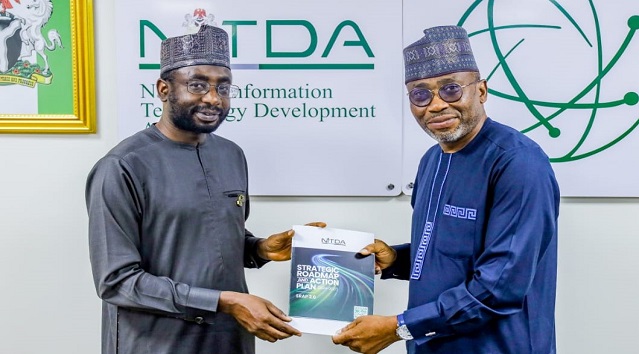
The Director General of the National Information Technology Development Agency (NITDA), Kashifu Inuwa CCIE, has reaffirmed the agency’s commitment to deepening inter-agency collaboration as he received the Director General of the National Broadcasting Commission (NBC), Mr Charles Ebuebu, on a courtesy visit aimed at exploring strategic partnerships in digital transformation and regulatory frameworks across Nigeria’s media and technology sectors.

Speaking during the meeting, Inuwa stated that digital transformation and regulation are inseparable in Nigeria’s rapidly evolving digital ecosystem. He also emphasised that digital transformation is not a one-off project but a continuous journey that requires constant improvement, periodic target-setting, and organisational adaptability to emerging realities.
According to the NITDA boss, the agency deliberately embarked on a transformational journey to reposition itself from a traditional civil service structure to a high-velocity, smart public sector organisation. He noted that when the agency began its transformation drive, a significant percentage of its workforce came from the mainstream civil service, bringing with it entrenched bureaucratic mindsets and rigid operational practices. This, he said, necessitated a conscious decision to change the narrative.
“More than 70 or 80% of our staff came from the mainstream public service, and we know the mindset of public servants, so we started changing that narrative by focusing on people, resetting mindsets, building capacity, and fostering a culture that supports innovation and accountability,” he noted.
Inuwa explained that NITDA’s approach to digital transformation was anchored on three core pillars: people, processes, and technology. He stressed that no matter how advanced technology may be, it cannot deliver value without the right people and efficient processes in place.
He further disclosed that the agency undertook a comprehensive cultural reorientation programme, supported by cultural audits and initiatives aimed at creating psychological safety within the organisation.
“This was critical to enabling staff at all levels to freely contribute ideas, challenge existing processes constructively, and engage in horizontal and vertical collaboration without fear of reprisal,” he stated.
He noted that culture remains the foundation upon which any successful strategy must stand, adding that “no matter how good a strategy is, without the right culture, execution will fail.”
Providing further insight into the transformation journey, he explained that NITDA adopted an integrated framework encompassing people, process, culture, content, and technology. Through this framework, the agency identified and addressed deeply rooted bureaucratic tendencies such as command-and-control structures, risk aversion, and excessive dependence on directives from senior leadership.
According to the DG, “these reforms paved the way for trust-based delegation, inter-departmental collaboration, and process optimisation”.
He further revealed that NITDA documented over 396 internal processes and subsequently streamlined them to eliminate inefficiencies and repetitive executive approvals. He cited examples where routine operational tasks that previously required multiple approvals at the Director General’s level were redesigned to empower departments as gatekeepers, allowing leadership to focus on strategic priorities.
This process optimisation, he said, also created the foundation for automation and the integration of digital tools.
On capacity building, the DG disclosed that all NITDA staff underwent mandatory artificial intelligence (AI) training, reinforcing the agency’s position that AI is a tool for enhancing productivity rather than replacing human capital.
He noted that staff across departments are now leveraging AI to improve workflows, generate ideas, and transition from manual administrative roles to AI-enabled system administration.
Inuwa added that technology deployment at NITDA is deliberately driven by business value rather than trend adoption, stressing that technology must support clearly defined processes and organisational objectives.
He announced that the agency has developed a comprehensive digital transformation playbook, capturing lessons learned from its journey, which it is willing to share with NBC and other government institutions.
To advance collaboration with NBC, Inuwa proposed concrete areas of partnership, including sharing the agency’s digital transformation playbook, delivering tailored training and capacity-building programmes, enrolling NBC staff in digital literacy initiatives developed with global technology partners such as Cisco, and providing technical support for modernising regulatory frameworks to align with the evolving digital and media ecosystem.
Earlier in this remark, Mr Ebuebu called for deeper collaboration between the NBC and NITDA, describing the partnership as long overdue in the face of rapid media and technology convergence.
He noted that although he has had several insightful interactions with the DG NITDA in the past, it was important to institutionalise cooperation between both agencies to address emerging developments in media, technology, data governance, and Nigeria’s digital future.
While calling for closer ties between the two agencies, he emphasised that a strategic partnership between NBC and NITDA is critical to effectively regulate the evolving media ecosystem, harness technology for content creation and distribution, promote the growth of local media, facilitate knowledge transfer, and protect Nigeria’s cultural and national interests.

FG Partners World Bank, AfDB on Climate Action

Kaspersky Highlights Cyber Threats at a Major Event Such as the Winter Olympics Games

Leadway Assurance Commences Use of Fintech in Insurance Product Distribution

MoMo PSB, SMEDAN Forge Pact to Digitise Nigeria’s SMEs

MTN Ignites Teacher Revolution: 5,000 Digitally Armed for Phase Two

19 Nigerian Banks Meet CBN Recapitalization Targets Ahead of March Deadline

Youth Talent Takes Center Stage as T2 Ignites High-Octane Rap Battles @ Carnival Calabar

Aig-Imoukhuede Foundation Wrapped Up 2025 with Real Change in Governance, Health, Media Across Africa

Showmax Unlocks Easier Payments for Nigerian Subscribers via Baxi

Nigerian Terra Industries Secures $11.8m for Expansion




 E-Financial2 days ago
Accidental Billionaire Opts for Jail Instead of Returning Money Credited Him by Mistake

 News2 days ago
US Set to Deport 79 Nigerians on Criminal List

 News2 days ago
Ungoverned AI is Quietly Scaling Risk in Nigeria – Dr. Naiho

 E-Financial2 days ago
SEC Warns of Potential Ponzi-style Risks in AURUM BOT, ModMount

 Telecom2 days ago
Airtel Nigeria Commits to Boosting Nigeria’s Digital Infrastructure

 Telecom2 days ago
Google, African Partners Launch WAXAL to Empower 100m Africans in AI Era

 News2 days ago
First Lady Commissions Dream Centre @ OAU

 Telecom2 days ago
NCC Hails $1Bn Telecom Surge as Networks Hit New Highs