

Telecom
Beware! Hackers Can Unlock, Steal Your Vehicles – NCC Warns Nigerians

The Nigerian Communications Commission (NCC) wishes to alert telecom consumers and members of the public on an ongoing cyber-vulnerability that allows a nearby hacker to unlock vehicles, start their engines wirelessly and make away with the cars.

The fact that car remotes are categorized short range devices that make use of radio frequency (RF) to lock and unlock cars informed the need for the Commission to alert the general public on this emergent danger, where hackers take advantage to unlock and start a compromised car.
According to the latest advisory released by the Computer Security Incident Response Team (CSIRT), the Cybersecurity Centre for the telecom sector established by the NCC, the vulnerability is a Man-in-the-Middle (MitM) attack or, more specifically, a replay attack in which an attacker intercepts the RF signals normally sent from a remote key fob to the car, manipulates these signals, and re-sends them later to unlock the car at will.
With this latest type of cyber-attack, it is also possible to manipulate the captured commands and re-transmit them to achieve a different outcome altogether. “Multiple researchers disclosed a vulnerability, which is said to be used by a nearby attacker to unlock some Honda and Acura car models and start their engines wirelessly. The attack consists of a threat actor capturing the radio frequency (RF) signals sent from your key fob to the car and resending these signals to take control of your car’s remote keyless entry system,” the advisory stated emphatically.
However, the NCC-CSIRT, in the advisory, has offer some precautionary measures or solutions that can be adopted by car owners to prevent falling victim to the attack.
According to the cyber-alert unit of the Commission, “When affected, the only mitigation is to reset your key fob at the dealership. Besides, the affected car manufacturer may provide a security mechanism that generate fresh codes for each authentication request, this makes it difficult for an attacker to ‘replay’ the codes thereafter. Additionally, vulnerable car users should store their key fobs in signal-blocking ’Faraday pouches’ when not in use.”
Importantly, car owners in the stated categories are advised to choose Passive Keyless Entry (PKE) as opposed to Remote Keyless Entry (RKE), which would make it harder for an attacker to read the signal due to the fact that criminals would need to be at close proximity to carry out their nefarious acts.
The PKE is an automotive security system that operates automatically when the user is in proximity to the vehicle, unlocking the door on approach or when the door handle is pulled, and also locking it when the user walks away or touches the car on exit. The RKE system, on the other hand, represents the standard solution for conveniently locking and unlocking a vehicle’s doors and luggage compartment by remote control.
Additionally, in a related advisory, the NCC, based on another detection by CSIRT, wishes to inform the general public about the resurgence of Joker Trojan-Infected Android Apps on Google Play Store. This arose due to the activities of criminals who intentionally download legitimate apps from the Play Store, modify them by embedding the Trojan malware and then uploading the app back to the Play Store with a new name.
The malicious payload is only activated once the apps goes live on the Play Store, which enables the apps to scale through Google’s strict evaluation process. Once installed, these apps request for permissions that once granted, enable the apps to have access to critical functions such as text messages and notifications.
As a consequence, a compromised device will subscribe unwitting users to premium services, billing them for services that do not exist. A device like this can also be used to commit Short Messaging Service (SMS) fraud while the owner is unaware.
It can click on online ads automatically and even use SMS One Time password (OTPs) to secretly approve payments. Without checking bank statements, the user will be unaware that he or she has subscribed to an online service. Other actions, such as stealing text messages, contacts, and other device data, are also possible.
To avoid falling victim to the manipulation of hackers deploying Joker Trojan-Infected Android Apps, Android users have been advised to avoid downloading unnecessary apps or installing apps from unofficial sources. The NCC also wishes to advise telecom consumers to ensure that apps installed from the Google Play Store are heavily scrutinized by reading reviews, assessing the developers, perusing the terms of use and only granting the necessary permissions.
Conclusively, the NCC recommends that unauthorised transactions be checked against any installed app. Indeed, any apps not in use should be deleted while users are also advised to ensure that a device is always patched and updated to the latest software.



Nigeria’s leading composite e-commerce platform, Konga, has announced the launch of its highly anticipated Berekete Sales, a nationwide promotional campaign designed to deliver exceptional value to customers across key product categories.

Konga Berekete
The initiative reinforces Konga’s commitment to affordability, accessibility, and innovation while strengthening its position as a trusted retail partner for millions of Nigerians.
The Berekete Sales campaign features discounts of up to 50% on high-demand categories including Home and Kitchen, Computing, Electronics, Beauty, and Personal Care.
Carefully curated to meet both everyday and aspirational needs, the campaign comes at a strategic period that coincides with Ramadan, Lent, and the approaching Eid al-Fitr celebrations, seasons traditionally associated with reflection, generosity, and family-oriented spending.
Speaking on the campaign, Victor Olaleye, Konga Group Head of Marketing, emphasised that the Berekete Sales initiative reflects the company’s understanding of the economic climate and the importance of value-driven retail experiences. “Berekete Sales is about delivering abundance in savings to our customers,” he stated.
“We recognise that this period is significant for many households observing Ramadan and Lent, and we want to ensure they can access premium products at competitive prices.
“Our goal remains to make quality products accessible while maintaining the seamless shopping experience Konga is known for.”
Among the standout offers is a special deal on the Starlink Gen 3 kit, now available at ₦550,000, reduced from its regular price of ₦590,000.
As the authorised distributor, Konga continues to provide customers with reliable access to the high-speed satellite internet solution, further strengthening connectivity options in Nigeria.
Activation services are available in select cities, ensuring a smooth transition to enhanced internet performance.
In addition, technology enthusiasts can take advantage of an exclusive offer on the Huawei Watch 3, with a special promotion that allows customers to receive two units for the price of one at ₦200,000.
This offer underscores Konga’s strategy of delivering premium lifestyle products with unmatched value.
The Berekete Sales campaign also extends to computing solutions, with attractive deals on ASUS laptops, catering to professionals, students, and businesses seeking performance-driven devices at competitive prices.
Furthermore, customers can pre-order the new Samsung Galaxy S26 Ultra on Konga and receive gift items worth over ₦500,000 from Samsung, a compelling incentive for early adopters and technology enthusiasts.
By aligning its promotional calendar with key religious seasons, Konga demonstrates cultural awareness while providing practical solutions for customers during Ramadan, Lenten observances, and Eid celebrations.
The campaign ensures that households can upgrade their living spaces, enhance productivity, and invest in quality lifestyle products without straining their budgets.
Beyond the discounts, Konga’s integrated ecosystem, spanning secure payment solutions, nationwide logistics, and reliable customer support, ensures a seamless shopping journey from browsing to delivery.
This operational strength continues to differentiate the brand within Nigeria’s competitive e-commerce landscape.
As consumer expectations evolve, Konga remains focused on delivering not just products but complete retail experiences anchored on trust, transparency, and value. The Berekete Sales campaign is positioned to drive significant traffic, boost sales volumes, and deepen brand loyalty across its growing customer base.
With substantial savings, premium product offerings, and time-sensitive deals, the Berekete Sales As the campaign gains momentum, customers are encouraged to visit Konga.com or any Konga retail store nationwide to take advantage of these limited-time offers.
With its blend of spiritual season sensitivity and high-tech accessibility, Konga continues to set the pace for the future of commerce in Africa.
Telecom
Sunil Bharti Mittal Conferred GSMA Lifetime Achievement Award for Transforming Global Telecommunications

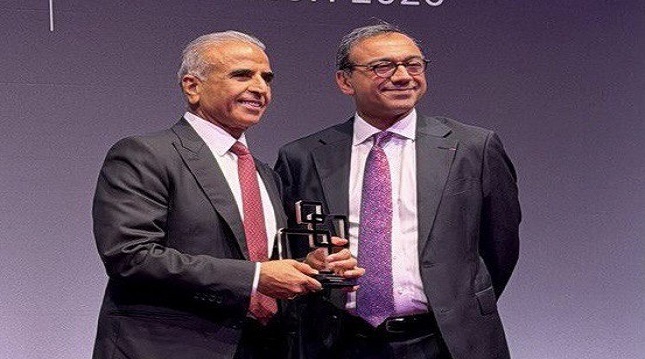
The GSMA has conferred a rare Lifetime Achievement Award on Sunil Bharti Mittal, Founder and Chairman of Bharti Enterprises, recognising his role in reshaping the global telecommunications landscape and expanding connectivity across operators, governments, businesses and billions of consumers worldwide.

Bestowed on only a handful of industry leaders in the GSMA’s history, the honour recognises contributions that have left an enduring and defining mark on the global communications ecosystem.
The award was presented at Mobile World Congress in Barcelona in the distinguished presence of His Majesty Felipe VI, the Prime Minister of Spain, Pedro Sanchez, the President of Catalonia, Salvador Illa, and global industry leaders.
A visionary in the telecom sector, Sunil Bharti Mittal has built Bharti Airtel into one of the world’s leading mobile operators, with operations across India and Africa, ranking among the top three globally and serving over half a billion customers.
He pioneered the expansion of mobile services across emerging markets and served as Chairman of the GSMA from 2017 to 2018, where he championed policies that encouraged investment and innovation while strengthening the industry’s commitment to connecting the unconnected and advancing digital inclusion.
He was previously honoured with the GSMA Chairman’s Award in 2008 and again in 2016 for his outstanding contribution to the growth and development of the global mobile industry and was felicitated at Mobile World Congress in February 2019 in recognition of his Chairmanship.
On receiving the award, Sunil Bharti Mittal said, “I am deeply honoured to receive this recognition and sincerely thank the GSMA for this award. I accept it not only as a personal milestone, but as a tribute to India’s telecom journey, the collective spirit of Bharti, and the rise of Indian telecom companies on the global stage.
Equally the award reflects the progress of an industry that has connected billions and belongs to the customers we serve, the teams who built our institutions, and the partners who believe in the transformative power of connectivity.
Telecommunication is a force that expands opportunity, places essential services in the palm of every individual and unlocks human potential. Helping shape its evolution into a powerful accelerator of modern progress has been a privileged responsibility. As innovation accelerates, we will continue to work with our partners & stakeholders to ensure that growth advances equity and creates lasting opportunity for generations to come.”
The Lifetime Achievement Award is a rare honour, bestowed only on select individuals whose leadership and innovation have left an enduring mark on the industry.

House of Representatives is pushing to regulate Nigeria’s fintech sector through a public hearing on “A Bill for an Act to Establish the Nigerian Fintech Regulatory Commission and for Related Matters (HB.2389).”

Speaker Tajudeen Abbas opened the hearing, stressing the need for stakeholder inputs to craft enforceable, constitutional laws addressing regulatory overlaps in digital banking, science, technology, and communications.
Abbas highlighted fintech’s role in Nigeria’s growth via digital payments, blockchain, crowdfunding, and financial inclusion for the unbanked, creating jobs and supporting SMEs under President Tinubu’s Renewed Hope Agenda.
He warned that lagging regulations cause fragmentation, compliance issues, and investor uncertainty, necessitating a coordinating commission for licensing, supervision, standards, and a level playing field without duplicating bodies like the Central Bank of Nigeria (CBN), SEC, NITDA, or NDIC.
The commission would protect consumers, monitor cybersecurity, ensure data privacy, and promote education while complementing existing regulators.
Committee Chairman Emmanuel Ukpong-Udo, overseeing digital banking, banking regulations, science, technology, communications, capital markets, and institutions, called the bill vital for harmonizing oversight amid Nigeria’s rise as Africa’s fintech hub with 430+ firms valued at billions.
Ukpong-Udo emphasized balancing innovation, stability, and coordination to avoid burdens on startups.
Bill sponsor Fuad Kayode Laguda argued the commission would streamline operations currently split among CBN, SEC, NITDA, NOTAP, and FIRS, boosting profitability, user security, and ease of business. He cited 2024-2026 stats: 250-430 firms, $230 billion market projection, $10.6 billion valuation for top nine, and $1.6 billion in mobile transactions.
Fintech stakeholders offered mixed views, with some backing unified regulation and others fearing overlaps with current mandates.

SEC Revokes Registration of Kensington Agro Trading Limited

NCDC Raises Alarm over Lassa Fever Ravaging 18 States in Nigeria

Lagos Deploys Drones, AI to Boost Traffic Response

Purple Woman 3.0 Is Back, to Empower Women in Tech this IWD 2026

NRS Targets N40trillion in Tax, Royalty Revenue in 2026

Accidental Billionaire Opts for Jail Instead of Returning Money Credited Him by Mistake

Kaspersky Brings more Transparency to Threat Detection with New Hunt Hub

Dr. Cairo Ojougboh Foundation Bolsters Nigeria’s Education Drive with ₦2.7m Student Support

NDPC Commits to Balancing Data Privacy, Protection Information

OADC Lagos Reinforces Commitment to Local Data Hosting and Digital Transformation @ NDPC’s National Privacy Week Summit




 E-Financial3 days ago
Iran-Israel-US Conflict and CBN’s FX Gains: A Stress Test for Nigeria’s Monetary Stability

 E-Financial3 days ago
Mutual Benefits Assurance Reaffirms Full Regulatory Compliance, Enhanced Governance

 General News3 days ago
JAMB Uncovers AI-Driven Fraud Targeting UTME Candidates, Warns Parents

 General News3 days ago
SERAP Asks FCCPC to Investigate Google, Meta, Others over Alleged Rights Abuses

 Telecom2 days ago
Sunil Bharti Mittal Conferred GSMA Lifetime Achievement Award for Transforming Global Telecommunications

 News3 days ago
TeamApt, Awabah Partner to Boost Pension Drive for Nigerians

 News3 days ago
FlashChange CEO, Bidemi Oke, Urges Startups to Build Strong Governance Structures Early

 Telecom2 days ago
Why Digital Trust Matters: Secure, Responsible AI for African SMEs?