

General News
Billionaire Pastors Running Nigeria’s Megachurches

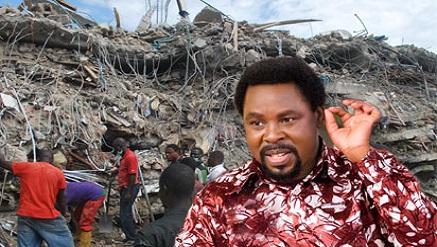
When a guesthouse belonging to one of Nigeria’s leading Christian pastors collapsed last month, killing 115 mostly South African pilgrims, attention focussed on the multimillion-dollar “megachurches” that form a huge, untaxed sector of Africa’s top economy, according to Reuters
Hundreds of millions of dollars change hands each year in these popular Pentecostal houses of worship, which are modelled on their counterparts in the United States.
Some of the churches can hold more than 200,000 worshippers and, with their attendant business empires, they constitute a significant section of the economy, employing tens of thousands of people and raking in tourist dollars, as well as exporting Christianity globally.
But exactly how much of Nigeria’s $510 billion GDP they make up is difficult to assess, since the churches are, like the oil sector in Africa’s top energy producer, largely opaque entities.
“They don’t submit accounts to anybody,” said Bismarck Rewane, economist and CEO of Lagos consultancy Financial Derivatives. “At least six church leaders have private jets, so they have money. How much? No one really knows.”
When Nigeria recalculated its GDP in March, its economy became Africa’s biggest, as previously poorly captured sectors such as mobile phones, e-commerce and its prolific “Nollywood” entertainment industry were specifically included in estimates.
There was no such separate listing for the “megachurches”, whose main source of income is “tithe”, the 10 percent or so of their income that followers are asked to contribute.
As the churches have charity status, they have no obligation to open their books, and certainly don’t have to fill in tax returns — an exemption that is increasingly controversial in Nigeria, where poverty remains pervasive despite the oil riches.
The pastors argue their charity work should exempt them.
“We use the income of the church to build schools, we use the income of the church to serve the needs of the poor,” David Oyedepo, bishop of the popular Winners Chapel, told Reuters in an interview. “These are non-profit organisations.”
PASTORS ON FORBES LIST
Nonetheless, the surging popularity of the megachurches among the Christians who make up half of Nigeria’s 170 million population has propelled their preachers into the ranks of the richest people in Africa.
In 2011, Forbes magazine estimated the fortunes of Nigeria’s five richest pastors. Oyedepo topped the list, with an estimated net worth of $150 million.
He was followed by “Pastor Chris” Oyakhilome of Believers’ LoveWorld Incorporated, also known as the Christ Embassy and popular with executives and politicians, on $30 million to $50 million.
TB Joshua, pastor of the Synagogue Church of All Nations, at the centre of the recent diplomatic storm over the deaths in its guesthouse, was thought to have $10 million to $15 million.
The National Bureau of Statistics (NBS) declined to comment on how churches fit into their GDP figures, but a source there said they were included as “non-profit”, which falls under “other services” in the latest figures. In 2013, the category contributed 2.5 percent of GDP, the same as the financial sector.
A former banker at Nigeria’s United Bank for Africa, who declined to be named, recalled being approached five years ago by a church that was bringing in $5 million a week from contributions at home or abroad.
“They wanted to make some pretty big investments: real estate, shares,” he said. “They wanted to issue a bond to borrow, and then use the weekly flows to pay the coupon.”
In the end, he said, the bank turned down the proposal on ethical grounds.
Yet Nigerian churches do often invest large amounts of their congregations’ money in shares and property, at home and abroad, he and another banking source said.
One pastor bought 3 billion naira ($18 million) worth of shares in the defunct Finbank, which later merged with FCMB, after it was rescued in a bail-out in 2009, a fund manager who handled the deal told Reuters. The pastor used a nominee trust account to keep his name off the books.
In 2011, Oyakhilome was investigated by the Economic and Financial Crimes Commission (EFCC) and charged with laundering $35 million of contributions to his church in foreign bank accounts. He denied all wrongdoing and the case was dismissed for lack of evidence.
Oyakhilome was not available for comment and Joshua’s media team declined a request for an interview with him.
MIDAS TOUCH
Oyedepo’s headquarters, “Canaanland”, is a 10,500-acre (4250-hectare) campus in Ota, outside the commercial capital Lagos. It comprises a university, two halls of accommodation, restaurants and a church seating 50,000 people, with a total overflow capacity of five times that.
“You can see that everything this man touches turns to gold,” Nigerian Agriculture Minister Akinwumi Adesina said in a speech at a reception for Oyedepo’s 60th birthday at Canaanland last month.
“May the grace of God abide with you,” he added, to a rapturous “Amen!” from the guests in a marquee.
Other dignitaries present included twice-president Olusegun Obasanjo and former military ruler Yakubu Gowon. A choir sang gospel songs as the guests cut an elaborate six-tiered cake and popped fizzy grape juice out of champagne bottles in golden wrapping — alcohol is banned in Canaanland.
The next day, he delivered four Sunday services in a row to tens of thousands of cheering followers, his white-suited figure projected onto large flat-screen televisions all around.
“From today, no evil spirit, no demon will survive the Almighty!” he shouted, and the crowd roared “Amen!”.
A spokesman said the church has 5,000 branches across Nigeria, and 1,000 more in 63 other countries across five continents. But Oyedepo’s empire also includes two fee-paying universities that he built from scratch, a publishing house for Christian self-help books, and an elite high school.
Other pastors have similarly diversified ways of getting the Gospel of Christian salvation out.
Oyakhilome owns magazines, newspapers and 24-hour TV station, and Joshua draws miracle-seekers from all over the world with claims that the holy water he has blessed cures otherwise incurable ailments such as HIV/AIDS.
Before Joshua built his 10,000-seat headquarters at Ikotun-Egbe in outer Lagos, the area was part swamp, part abandoned industrial estate.
Now, it is a boom town with shops, hotels, eateries and bars catering largely to the travellers who come not only from West Africa but also from all corners of the globe to hear his sermons. Joshua also runs a TV station.
“BLESSED BY THE LORD”
Guests entering Oyedepo’s birthday marquee in Canaanland would have seen a picture of the poor household in southwest Nigeria where he grew up, testament to a rags-to-riches story that many Nigerians would love to emulate.
Like U.S. televangelists, Winners Chapel preaches the “prosperity gospel” that faith in Jesus Christ lifts people out of poverty, and that message partly explains the explosion of the Pentecostal movement in sub-Saharan Africa, where misfortune and poverty are often seen as having supernatural causes.
“We see giving as the only way to be blessed. Blessing other people is a way of keeping the blessings flowing,” said Oyedepo, whose blessings include a Gulfstream V jet and several BMWs.
Giving to support the church and its work is something the faithful are encouraged to do, a Christian tradition that was a pillar of the Roman Catholic church in medieval Europe, just as it has been a major money-spinner for U.S. televangelists.
Aneke Chika, a business analyst in an oil services company, told Reuters on the steps of Oyedepo’s church that she set aside 20,000 naira of her 200,000 naira ($1,218) salary every month.
Asked about Forbes’ estimate of his fortune, Oyedepo told Reuters: “For me, to have fortune means someone who has what he needs at any point in time. I don’t see myself as having $150 million stacked up somewhere. Whatever way they found their figures, I am only able to say I am blessed by the Lord.”
He said he could not estimate the church’s total revenues or expenditure on items such as salaries because the various departments, including education, were too diverse.
The enterprises on the Canaanland campus, from the shops selling cold sodas and bread, to a woman boiling instant noodles and eggs for breakfast in a lodge, to pop-up book stalls hawking Oyedepo’s prolific literary output, are owned by the church’s estate, which employs their staff on its payroll, workers at all the outlets told Reuters.
Winners Chapel’s Corporate Affairs department said the church employed more than 18,000 people in Nigeria alone.
Oyedepo says the wealth the church gathers is invested in expanding it, and that if he did not use a private jet, he would be unable to oversee its many foreign operations and still return to Ota every week in time for Sunday’s worship.
Britain’s Charity Commission says it is reviewing potential conflicts of interest in his finances, and last month the Home Office (interior ministry) barred him from Britain, though it declined to say why.
Oyedepo said he knew nothing of the commission’s review, nor had the Home Office explained to him why he was barred.
A national conference to debate Nigeria’s constitution this year proposed that the megachurches should be taxed.
But with an election coming up in February, it is debatable whether President Goodluck Jonathan, who is close to several megapastors, would risk upsetting these influential men and their hefty congregations with a fat tax bill.
“There is no single government input on this premises,” Oyedepo told Reuters in the interview. “We supply our water, we make our roads, then you … say: ‘Let’s tax them’. For what?”



African Development Bank Group (AfDB) has approved a €6.5 million investment in the Saviu II venture capital fund to boost technology start-ups across Francophone West and Central Africa.

The Bank Group will contribute €4.5 million as equity investment and an additional €2 million as a first-loss hedging tranche on behalf of the European Commission under the Boost Africa Programme.
The investment is expected to strengthen early-stage financing for innovative businesses with strong technological and digital components, particularly in French-speaking countries.
Saviu II, the second investment vehicle managed by Saviu Partners, plans to invest between €500,000 and €3 million in about 20 seed-stage or early institutional fundraising start-ups. The fund will primarily target B2B technology-oriented companies with scalable models.
At least 60 per cent of the fund’s commitments will focus on French-speaking countries in West and Central Africa, including Côte d’Ivoire, Cameroon, Benin, Senegal, Togo, Burkina Faso and Mali.
The fund may also co-invest in promising East African technology firms seeking expansion into Francophone markets.
In addition, Saviu II will dedicate a special funding envelope for pre-seed investments, mainly through minority equity stakes, often in collaboration with incubators, venture studios and other ecosystem partners.
Industry observers say the AfDB’s backing is expected to de-risk early-stage investment and crowd in more private capital into Africa’s growing digital economy.
Saviu Partners previously launched Saviu I in 2018 with a capitalization of €10 million.
The first fund invested in 12 start-ups, mainly based in French-speaking West Africa, offering not just funding but hands-on support in business development, recruitment, international expansion and fundraising.

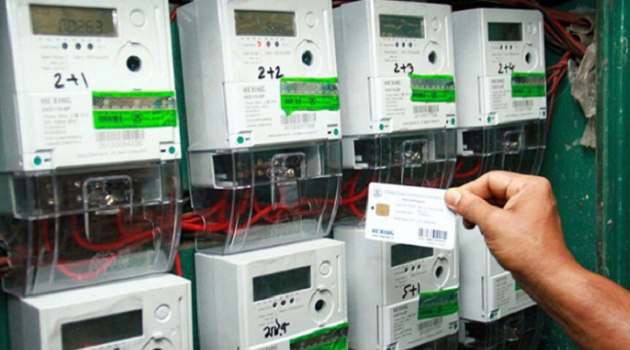
Nigerian Electricity Regulatory Commission (NERC) has ruled in favor of electricity consumers, directing distribution companies (DisCos) to refund ₦20.33 billion in outstanding costs for meters bought under the Meter Asset Provider (MAP) framework.

NERC
Signed on February 27, 2026, by Musiliu Oseni, chairman,NERC and Dafe Akpeneye, commissioner Order No. NERC/2026/025 amends a 2023 directive.
It requires DisCos to disburse the funds via energy credits over 12 months starting March 1, 2026, addressing years of slow refunds.
As of December 31, 2025, DisCos owed this amount due to delays in reimbursing prepaid customers who funded their own meters.
DisCos must automate credits for the full MAP meter cost upon activation, disbursed monthly over 120 months based on the customer’s tariff—credits cannot offset legacy debts.
Prepaid customers will receive a monthly token by the 4th day equivalent to the reimbursement value; for arrears, they’ll get two tokens per month.
Postpaid customers will see a distinct credit line on bills subtracted from totals, with two line items monthly for arrears.
NERC mandates monthly reports on reimbursement values using an approved template, plus dedicated email channels for complaints with resolution status included.
The order aims to end delays, improve notifications, and boost sector trust. DisCos must accelerate arrears recovery over 12 months without further excuses.
This follows NERC’s February 2026 compliance review, amid ongoing power sector challenges highlighted by Power Minister Adebayo Adelabu.
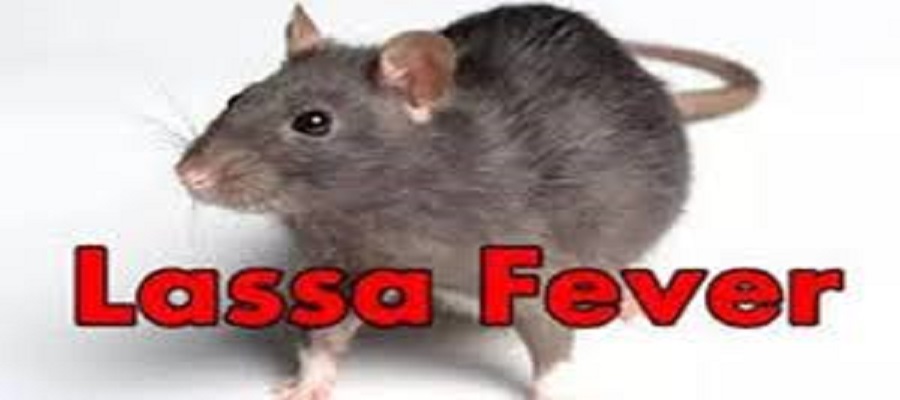
Nigeria Centre for Disease Control and Prevention (NCDC) has raised alarm over ravage of Lassa fever cases across 18 states and 67 Local Government Areas (LGAs) of the country.

Dr Jide Idris, director-general of NCDC, in statement yesterday, said that Bauchi, Ondo, Taraba, Edo and Benue accounted for more than 80 per cent of confirmed cases recorded during the 2026 peak transmission season.
Idris, described as particularly worrisome the growing infections among healthcare workers, with 28 confirmed cases and three deaths reported so far this season.
NCDC attributed the sustained transmission and rising fatalities to operational gaps at the state level, urging urgent action to strengthen outbreak response and control measures.
According to Idris, field investigations showed most transmissions were occurring in known endemic areas, but weak implementation of established response frameworks had contributed to the continued spread and higher case fatality rate.
He said that gaps identified include infections in general outpatient and maternity settings, poor adherence to Infection Prevention and Control (IPC) protocols, and inadequate pre-positioning of Personal Protective Equipment (PPE).
He added that delayed patient presentation due to financial barriers, inconsistent activation of State Incident Management Systems, weak contact tracing, persistent stigma and poor isolation centre standards were also driving transmission.
Idris emphasised that outbreak response implementation and health service delivery fell primarily under state governments within Nigeria’s federal structure, urging them to strengthen accountability and resource allocation.
He called on affected and high-risk states to urgently activate and closely monitor their Incident Management Systems, ensuring timely coordination and efficient outbreak response at all levels of healthcare delivery.
He also urged the immediate release of response funds, strict enforcement of Infection Prevention and Control (IPC) compliance in public and private health facilities, and continuous availability of PPE and other critical supplies.
The NCDC boss also advocated accelerated financial protection mechanisms to reduce late presentation and high fatality rates, alongside institutionalised rodent control and environmental sanitation measures under a One Health approach.
He advised healthcare workers to maintain a high index of suspicion and adhere strictly to IPC guidelines.
He also urged the public to keep environments clean, prevent rodent entry into homes, store food safely and seek early medical care when symptoms appeared.
Idris noted that Lassa fever was treatable, with improved outcomes when detected early, adding that Nigeria was also responding to other epidemic-prone diseases including Cerebrospinal Meningitis, Diphtheria, Mpox and Cholera.
He reiterated NCDC’s toll-free emergency line, 6232, for reporting suspected cases and obtaining further information

NAICOM Signs MoU with BPP to Deepen Insurance Compliance in Public Procurement

FG Approves GIS-enabled Digital Postcode to Tackle Logistics Gaps, Boost E-commerce

Firm Enhances its Security Awareness Platform with SCORM and PDF Support

AfDB Approves €6.5m for Tech Startups

GSMA, African Operators, Others to Launch Low-cost 4G Devices

Dr. Cairo Ojougboh Foundation Bolsters Nigeria’s Education Drive with ₦2.7m Student Support
Kaspersky Brings more Transparency to Threat Detection with New Hunt Hub

NDPC Commits to Balancing Data Privacy, Protection Information

OADC Lagos Reinforces Commitment to Local Data Hosting and Digital Transformation @ NDPC’s National Privacy Week Summit

PwC Reveals AI Scaling Gap Slows Africa’s Digital Transformation




 Telecom3 days ago
Sunil Bharti Mittal Conferred GSMA Lifetime Achievement Award for Transforming Global Telecommunications

 Telecom3 days ago
Why Digital Trust Matters: Secure, Responsible AI for African SMEs?

 General News3 days ago
Krishnan Exits Africa Data Centre to Embark on Professional Chapter

 E-Business3 days ago
Jumia Tech Week 2026 Begins with Tech Deals on Smartphones, Electronics, and Everyday Technology

 E-Financial2 days ago
NRS Targets N40trillion in Tax, Royalty Revenue in 2026

 Telecom3 days ago
House Probes Fintech Regulation via Public Hearing on New Commission Bill

 Broadcasting3 days ago
NCAA Orders Overland Airways to Refund VAT Charged on 2025 Tickets
 News3 days ago
AfDB Supports Francophone Africa Start-ups with €6.5M