

Telecom
BlackBerry Releases Images of Android Powered “PRIV by BlackBerry”


Since confirming and previewing its coming privacy-enabled Android smartphone last Friday, BlackBerry said it has been overwhelmed by the outpouring of interest – and humbled by the early praise.
Ars Technica called PRIV by BlackBerry “one of the more exciting devices to come along in some time,” while Android Authority declared it “eye-catching and unique.”
451 Research analyst Chris Hazelton told CNET that BlackBerry “has the best technology to differentiate on Android,” while Android and Me enthused: “If you’ve been longing for a new Android phone with a physical keyboard, BlackBerry’s got what you need.”
There has also been no shortage of positive comments from readers and social media commentators.
Why the interest? May believe it has something to do with what Chen wrote last Friday: privacy IS a fast-disappearing privilege in the modern world.
The same goes for productivity. Somewhere along the way, most smartphones evolved from tools into toys, with vendors prioritizing fun over work. With PRIV’s software enhancements, physical keyboard and oversized screen, all enabled by the slider form factor, we’re bringing privacy, productivity, and, oh yes, some sexy, back.
Powered by Android, PRIV will also deliver the largest choice in apps and the most secure experience possible to the widest audience. PRIV users will enjoy choice, innovation, security, privacy AND productivity. In other words, no compromises.
To satisfy the curiosity out there, here are the first official images of PRIV. Keep watching this blog and our social channels for more images, videos and details about PRIV’s specs.
We’ll also soon post how you can register to receive the latest information about PRIV, including when and how to buy it.


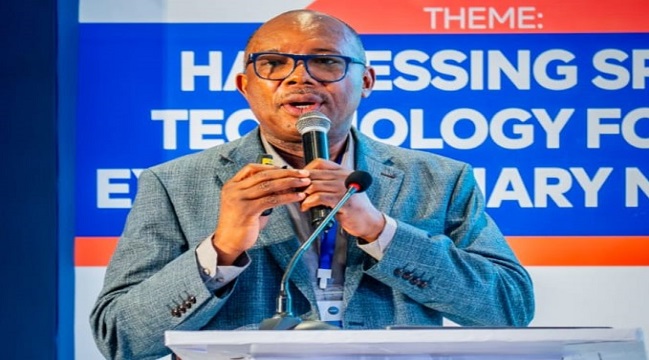
Kashifu Inuwa, the Director General of the National Information Technology Development Agency (NITDA), has underscored the importance of collaboration between government institutions and emerging startups as a catalyst for Nigeria’s digital transformation and national development.

Speaking at the Nigerian Satellite Week 2026 in Abuja, themed “Harnessing Space Technology for an Extraordinary Nigeria,” Inuwa urged stakeholders to embrace partnerships as a pathway to innovation and impact.
“Take a good step, and you can make a difference,” he said, emphasizing the need to translate ideas into tangible outcomes through collective effort.
The NITDA boss, represented by the Director of Stakeholder Management and Partnerships, Aristotle Onumo, during his presentation on “Enhancing collaboration between government agencies and emerging start-ups”, outlined four guiding principles for driving transformation: enabling the ecosystem rather than controlling it; prioritising networks over institutions; developing talent while supporting innovation and adopting practical solutions; and focusing on platforms rather than isolated projects.
To illustrate the power of digital innovation, Inuwa shared the story of a rural farmer whose productivity challenges ranging from unstable rents to failed loans were overcome through access to digital tools and networks. He explained that such incremental interventions can scale into broader economic gains, ultimately contributing to national infrastructure like satellite systems.
“This is the power of space technology, and it shows why events like this are so important,” he noted.
Highlighting the evolving role of space technology, Inuwa observed that startups are increasingly driving innovation across telecommunications, navigation, security, and cloud services. Once dominated by global superpowers, the sector is now emerging as a key economic driver, with Nigeria’s “Sunrise Packet” projected to contribute over $1.5 billion to the economy by 2030.
“Innovation without adoption is wasted,” he added, stressing the critical role of government in enabling start-ups to scale through supportive policies, infrastructure, and incentives.
According to him, developmental regulation should focus on creating markets, orchestrating ecosystems, and delivering public value rather than stifling innovation. He pointed to several initiatives supporting the growth of Nigeria’s innovation ecosystem, including the Digital Start-Up Act, Idea Hatch, and the National Digital Leadership Programme, all designed to empower young innovators and connect them to global opportunities.
He further highlighted platforms such as GITEX Africa, GITEX Nigeria, and Digital Nigeria, which provide visibility for start-ups and attract investment, partnerships, and mentorship.
Inuwa concluded with a strong call for collaboration among government, start-ups, non-governmental organisations, and investors, describing Nigeria’s youth as the country’s greatest asset.
“If we are going to create a digital Nigeria, we must collaborate,” he said.
Also speaking at the event, the Minister of Communications, Innovation and Digital Economy, Tijani, described Nigeria’s satellite infrastructure as central to the nation’s digital future.
“Nigeria is the only West African country with its own satellite. NigComSat provides critical connectivity and resilience, benefiting not just Nigeria but the entire region,” he said.
Tijani disclosed that President Bola Ahmed Tinubu has approved the acquisition of NigComSat-2A and NigComSat-2B, a move expected to significantly enhance the country’s space capabilities.
He stressed, however, that infrastructure alone is not sufficient.
“What truly matters is how we leverage this technology to improve agriculture, education, security, and business operations,” he said.
The Minister also highlighted key government investments, including a ₦12 billion digital economy research cluster fund under Project Bridge, which will support academics and researchers nationwide. He added that Nigeria is expanding its digital backbone through 90,000 kilometres of fibre optic cables, nearly 4,000 telecom towers in underserved communities, and new satellite deployments to strengthen regional connectivity across countries such as Cameroon, Niger, Chad, Burkina Faso, and the Republic of Benin.
“The talent, ideas, and energy are all here in Nigeria. It is up to us to turn them into real outcomes for our people and the economy,” Tijani added.
The Nigerian Satellite Week continues to provide a strategic platform for collaboration among government, start-ups, academia, and the private sector, fostering innovation and reinforcing Nigeria’s leadership in Africa’s digital and space economy.
Welcoming participants, the Managing Director of Nigerian Communications Satellite Limited (NIGCOMSAT), Jane Nkechi Egerton-Ideyen, said Nigeria’s space programme is entering a new phase marked by deliberate and focused growth.
She pointed to strengthened institutional capacity, expanding partnerships, and clear economic gains, noting that the agency’s revenue grew from less than $650 million in 2023 to over $2 billion in 2025. She attributed this surge to key reforms, new commercial deals, and increasing demand for satellite broadband services across the African continent.
Egerton-Ideyen also disclosed that Nigeria has launched seven space assets in just over two decades, adding that the country is shifting its focus from prestige-driven initiatives to practical outcomes—enhancing connectivity, improving livelihoods, and promoting inclusive development.
She further revealed that more than 500 young Nigerians received training in satellite technology within the past year, while over 50 startups have benefited from NIGCOMSAT’s accelerator programme.



Oracle Corporation

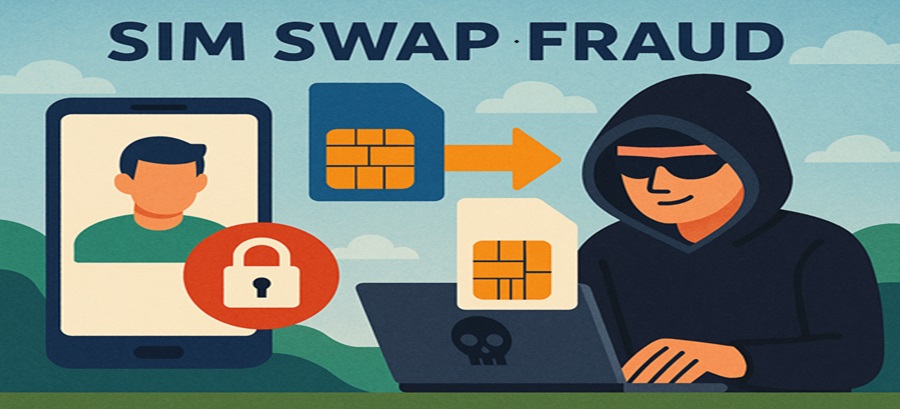
Titilayo Ibrahim, Nigerian businesswoman, has shared a harrowing experience of how she narrowly escaped imprisonment after a SIM card she purchased was linked to a N50 million kidnapping and murder case.

In an interview with BBC Yoruba shared on Facebook, Ibrahim narrated how a routine business transaction quickly turned into a terrifying ordeal.
According to her, the nightmare began on October 16, 2025, when a purported customer contacted her business line to purchase nightwear.
The caller, a woman, claimed her own phone was faulty and that she was using her husband’s device.
After selecting two pieces, the woman asked for directions for pickup. Ibrahim shared the location of her estate junction, but upon arrival, she was met by two men who identified themselves as police officers and immediately arrested her.
The officers accused Ibrahim of being connected to a major kidnapping operation.
They alleged that the phone number she was using had been involved in a January 2024 incident where a N50 million ransom was collected before the victim was brutally murdered.
Ibrahim desperately tried to explain that the number was innocent, stating that she had only purchased the SIM card in April 2025—months after the crime took place—and used it strictly for her MiFi device.
The officers, reportedly led by Inspector Dauda Adamu of the Force Intelligence Department (FID) in Abuja, claimed that one of the phone numbers linked to her National Identification Number (NIN) was tied to the crime.
They took her to the State Criminal Investigation and Intelligence Department, and she faced intense harassment and the threat of being detained in Akure and transferred to Abuja.
In a bid to clear her name, Ibrahim and the officers visited an Airtel office.
On October 17, 2025, the telecommunications company officially confirmed from their records that the disputed SIM was indeed purchased and activated in April 2025.
“Even after confirming it at the network office, they still didn’t believe me. They harassed me and almost sent me to prison for what I know nothing about,” Ibrahim recounted.
Despite the undeniable evidence from the network provider clearing her of any involvement, the police still confiscated her phones, took them to Abuja, and instructed her to report there.
Her revelation has sparked widespread outrage and concern online.
Many Nigerians expressed shock at the incident, pointing out the growing dangers and security risks associated with telecommunication companies recycling inactive phone numbers or the hazards of inadvertently purchasing pre-registered SIM cards.
The incident highlights the terrifying reality of how easily innocent citizens can become entangled in complex criminal investigations.

NITDA Urges Joint Action to Drive Nigeria’s Digital Innovation

Myitura Launches Women-Focused Healthcare Financing Solutions to Bridge Access Gap

Cybersecurity Firm Uncovers CrystalX RAT which Steals Data and Mocks its Victims

Oracle Corporation Axes 30,000 Workers in Brutal AI Shake-Up

DBI Unveils Nigeria Digital Economy Outlook 2026: Q1 Report Highlights Strategic Trends, Risks

Spotify’s Loud & Clear Report Reveals Over ₦60Bn Revenue for Nigerian Artists in 2025

Madonna University Taps Tech Guru Adote for Strategic Board Role

China Threatens to Shut Nigeria’s Satellite Over $11.44m Unpaid Debt

Jumia Tech Week 2026 Begins with Tech Deals on Smartphones, Electronics, and Everyday Technology

FCCPC Bans Lagos ‘No Refund’ Policy, Vows Fines and Shutdowns for Traders




 General News3 days ago
ARN Rejects Medical Bill over Attempt to ‘Scrap’ Profession

 Telecom3 days ago
NIGCOMSAT Supports Startups Growth with the Launch of Accelerator 3.0

 News3 days ago
Meningitis Kills a Quarter Million People a Year -Study

 News3 days ago
Stakeholder says AI is Crucial to Nigerian Data Centres Amid Persistent Grid Collapse

 E-Financial2 days ago
NGX REGCO Fines 5 Firms N291m for Market Manipulation

 News2 days ago
Dangote Refinery Debunks Speculations on IPO

 E-Financial2 days ago
FG Launches Cross-Border Digital Payments Report

 News2 days ago
Descasio Launches “Give to Gain” Leadership Insights Report, Hosts Executive Brunch for Women in Leadership