

/home/kenneth/web/nigeriacommunicationsweek.com.ng/public_html/wp-content/themes/zox-news/parts/post-single.php on line 153
">
Warning: Undefined array key 0 in /home/kenneth/web/nigeriacommunicationsweek.com.ng/public_html/wp-content/themes/zox-news/parts/post-single.php on line 153
Warning: Attempt to read property "cat_name" on null in /home/kenneth/web/nigeriacommunicationsweek.com.ng/public_html/wp-content/themes/zox-news/parts/post-single.php on line 153
BPE, Postal Unions Perfect Postal Laws

Mr. Benjamin Dikki, director, Information and Communications of the Bureau of Public Enterprises (BPE) has said that the postal policy and new postal legislation are near completion.
Already both documents were subjected to extensive stakeholder sensitisation and according to Dikki, the final postal bill would be sent to the Ministry of Information and Communications which would forward it to the Federal Executive Council (FEC).
Dikki spoke at an interactive meeting between the Bureau and organised labour on the postal sector reform and the restructuring of NIPOST.
The objectives of the postal reform include: to grant the postal sector sufficient autonomy to run its own affairs; guarantee all segments of the population access to universal service; and provision of quality services which support the Universal Service Obligation (USO).
Other are separate between operators, regulator and policy makers; ensure an open, liberalised market with equal opportunity for all competitors; guarantee economic viability of the public postal operator and ensure that the population has access to services according to the technological evolution of the postal service; and as well as achieve quality standards similar to best international practice.
Alhaji Ibrahim Mori Baba, post master general in his remarks pointed out that his organisation welcomes the envisaged reforms as it is hoped they would strengthen service delivery in the postal sector.
Dr. (Mrs) Ngozika Okeisaibo, representative of the Minister of Information and Communications, explained that the ministry is committed to a smooth restructuring of the postal sector.
Mr. Adetunji Adesukanmi, the national president of the Senior Staff Association of Transport Administration and Communications (SSACTAC), commended the effort of the BPE in organising the interactive session.


Warning: Undefined array key 0 in /home/kenneth/web/nigeriacommunicationsweek.com.ng/public_html/wp-content/themes/zox-news/parts/post-single.php on line 493
Warning: Attempt to read property "cat_ID" on null in /home/kenneth/web/nigeriacommunicationsweek.com.ng/public_html/wp-content/themes/zox-news/parts/post-single.php on line 493


First Asset Management investment management rating just got an upgrade to ‘AA’ from ‘AA-’ by DataPro and affirmation of A+(IM) by Agusto & Co. This reflects how we are continuously improving to serve our investors better. Our funds levelled up too as Agusto & Co upgraded our First Asset Money Market Fund rating to A+ (f) (up from Aa‑(f)).

What its means for customers
It means you are investing with a firm that is getting stronger, smarter, and more disciplined. Our upgraded rating recognizes our solid performance track record, the strength of our parent financial group, and the systems we have put in place to manage investments responsibly.
We have also improved our governance and decision-making structure, with experienced professionals leading well-defined investment and risk committees. Behind the scenes, our team of seasoned investment experts constantly monitor markets, manage risks, and position portfolios to navigate volatility and capture opportunities.
At the same time, we have strengthened our risk management and compliance framework to ensure that everything we do meets global best practices. In simple terms, it means your money is being managed with discipline, transparency, and strong oversight.
Independent rating agencies — Agusto & Co and DataPro Limited recognize these improvements. Their ratings highlight our commitment to responsible asset management, strong governance, and operational systems designed to support stable long-term performance.
But beyond the ratings, what really matters is helping you build wealth over time.
That is why we offer a range of investment plans designed for different goals — whether you are just starting your investment journey, looking to grow your portfolio, or aiming to build long-term financial security.
If you are part of the next generation of investors, this is your moment to start early and stay ahead. The earlier you begin investing, the more time your money has to grow.
Jump on the First Asset investment journey. Explore our investment plans and start building your future with a firm that is getting stronger.
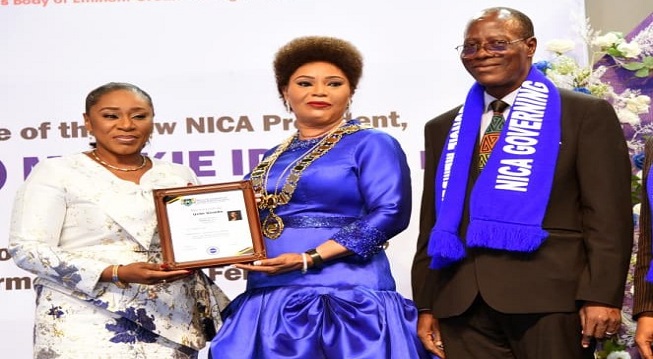
The National Institute of Credit Administration (NICA) has conferred its Professional Fellowship on Mrs. Uche Uzoebo, Managing Director of Shared Agent Network Expansion Facilities (SANEF).

The recognition was announced in Lagos during the investiture of Dr. (Mrs.) Markie Idowu as the Institute’s new President.
In his welcome address, Prof. Chris Onalo, Registrar/CEO of NICA, noted that the National Institute of Credit Administration distinguishes itself from other professional bodies through its unwavering commitment to advancing credit management, promoting professionalism, and empowering Nigerians with credit literacy.
“Unlike many other institutes, NICA recognizes that credit management is a lifeline of commerce, influencing every aspect of business, social, and economic life. Through this commitment, the Institute continues to shape Nigeria’s economic future towards sustainable growth,” he stated.
The Fellowship represents the Institute’s highest professional distinction and is conferred on individuals whose leadership has significantly strengthened Nigeria’s credit environment, institutional governance frameworks, and the integrity of the financial system.
This recognition also comes at a significant moment globally as the world commemorates International Women’s Day, underscoring the growing recognition of women’s leadership and contributions across industries, particularly in finance, governance, and economic development.
The ceremony brought together senior financial sector executives, policymakers, regulators, and distinguished guests to celebrate excellence in credit administration and professional practice.
The Institute described Mrs. Uche Uzoebo as a seasoned business executive and financial services leader with over two decades of professional experience spanning banking, digital payments, and financial services.
A proven change agent, she brings deep expertise across digital payments, financial inclusion, agency banking, product and business development, merchant acquiring, as well as corporate, commercial, and retail banking.
Her leadership has been instrumental in advancing secure and inclusive digital financial services, strengthening payment systems, and expanding last-mile access to financial services across underserved communities in Nigeria.
Through SANEF and related initiatives, she has supported economic empowerment and financial inclusion by expanding agent networks, promoting financial literacy, and championing innovative technology-enabled solutions.
Passionate about gender inclusion and women’s economic empowerment, Uzoebo is also a gender specialist and advocate with a strong focus on supporting women entrepreneurs and breaking structural economic barriers.
As a certified trainer, she designs and delivers high-impact capacity-building programmes for individuals, youth, women, and organizations, enabling sustainable growth and improved performance.


Technology strategist Rock Adote has been appointed to the Board of Trustees of Madonna University Nigeria, a move expected to strengthen the institution’s push toward digital governance and modern technological systems in higher education.

Madonna University
Adote, who has built a reputation in cybersecurity, enterprise identity management and digital transformation, brings over a decade of experience in designing secure digital infrastructure and managing identity systems for organizations.
Stakeholders believe his expertise will support the university’s efforts to strengthen data security and modernize its academic and administrative digital frameworks.
The appointment reflects the university’s growing commitment to technology-driven leadership as institutions increasingly rely on digital systems for academic operations, data management and research collaboration.
Universities today manage large volumes of sensitive digital information, including student records, research data and staff credentials, making strong cybersecurity and identity management frameworks essential.
As a member of the Board of Trustees, Adote will participate in providing institutional oversight and guiding strategic policy direction for the university.
The board is responsible for safeguarding academic standards while steering long-term development initiatives and ensuring the institution remains responsive to evolving global trends in education and technology.
Industry observers say Adote’s background in enterprise digital systems positions him to contribute significantly to the university’s digital transformation agenda, particularly in strengthening technological resilience and governance frameworks across its operations.
Other newly appointed members of the board include Sir Nwagwu Aloysius Emeka, Chief Arthur Obi Okafor (SAN), Professor Anagboso Martin Osita, Mrs. Ike Angela Unaoaku, Barrister Augustine Nenwa Obo and Rev. Fr. Stephen Ifeanyichukwu Nwatah.
Speaking on the appointment, Adote expressed appreciation for the opportunity to serve, emphasizing the importance of aligning higher education institutions with emerging technological realities.
According to him,
“Digital transformation will play a crucial role in shaping the future of academic administration, research and learning environments”.
Analysts note that the inclusion of technology leaders in university governance structures signals a growing recognition that digital transformation is becoming central to the competitiveness and sustainability of modern higher education institutions.
With Adote’s appointment, Madonna University is expected to further strengthen its technology strategy and position itself as a forward-looking institution within Nigeria’s higher education landscape.

First Asset Management Secures Ratings Upgrade

NICA Confers Professional Fellowship on Uche Uzoebo

Madonna University Taps Tech Guru Adote for Strategic Board Role

Nigeria Week Ahead: Equities sink, Oil surpasses $100, CPI in focus

Healthcare Under Attack: Why Cybersecurity is Now Critical Care

Dr. Cairo Ojougboh Foundation Bolsters Nigeria’s Education Drive with ₦2.7m Student Support

Kaspersky Brings more Transparency to Threat Detection with New Hunt Hub

Kaspersky Discovers New Phishing Campaign Exploiting Google Tasks Notifications to Steal Corporate Credentials

esentry 2025 Report Shows Healthcare, Financial Services and Telecoms as Staging Grounds for Increased Cyberattacks in Africa

AfDB, UNDP Launch $10Bn AI Initiative for Africa




 Telecom1 day ago
Dimension Data Nigeria Seals N20bn Bond Deal to Bridge Digital Infrastructure Gap

 Telecom1 day ago
First Batch of Nigerian Undergraduates Emerged in Airtel Africa Foundation Scholarships Programme

 E-Business1 day ago
CBN Affirms Alpha Morgan Bank’s Capitalisation

 E-Financial1 day ago
Polaris Bank Marks IWD2026 with Renewed Pledge to Women’s Empowerment

 General News1 day ago
Experts Weigh Blockchain Option for Nigeria’s Elections Process

 General News1 day ago
Mojisola Sayo-Kazeem Reflects on Leadership, Opportunity, Women in Tech @ IWD

 News1 day ago
EFCC Seals Anti-Corruption Alliance with Anambra Security Chiefs, Traditional Rulers

 General News3 hours ago
Zedvance Hits ₦96bn Lending Milestone, Eyes ₦250bn Target in 2026