

General News
Brent crude passes $63 as risk-on sentiment soars


Oil prices kicked off the week on a strong footing, hitting a new 13-month high in early Asian trade. The robust recovery in oil prices and industrial metals over the past couple of months is driving the idea of a new commodities supercycle in which prices remain above-trend for many years to come.
At the time of writing, Brent Crude is trading at $63.70, a level last seen on January 22. Rising tensions in the Middle East is one of the justifications for the spike in prices as a Saudi-led coalition said it had intercepted an explosive-laden drone fired by Yemen’s Houthi rebels. However, these kinds of incidents normally have a short-lived impact on prices as risk premiums evaporate quickly.
The main factors contributing to the rally are an abating pandemic with vaccine rollouts allowing countries to gradually ease lockdowns, improving outlook for business activity, prospects of the $1.9 trillion US stimulus package and the disciplined supply curbs from OPEC+ members led by Saudi Arabia. US shale companies are very satisfied with current prices and may ramp up their production significantly in near future, but in the next few days freezing weather conditions will make it hard to do this, which means supply will be tight.
Unlike most other commodities, the supply side of the equation is pushing oil prices higher and from a technical perspective, crude is sitting at its most overbought price in more than two decades with the 14-day RSI near 84.
The tighter oil market conditions have led the Brent April future contract to trade at $4.30 premium to those of December delivery. This suggests global oil inventories will be depleted at a faster pace than anticipated by OPEC or the IEA. OPEC has proved many times in the past that it can put a floor on prices and once again it has succeeded with its new allies. Now the question is whether OPEC+ respond to the shifting dynamics by increasing output or continue to hold supply a little further before acting. The risks are that the oil market becomes even tighter and prices surge further, allowing US shale and non-OPEC producers to ramp up production and capture more of the market share.
Despite prices being in extremely overbought territory, we may see further strong gains if OPEC+ do not take action to raise output in the next few weeks. However, the higher prices go from here the steeper the correction could be. The last time the RSI traded near 80 was back in October 2018, in which prices fell from a high of $86.70 to $50, or a peak to trough move of over 41%.


General News
Ministry of Finance Leads FG-Backed Deal to Deliver Quality Homes and Boost Agriculture in Niger State

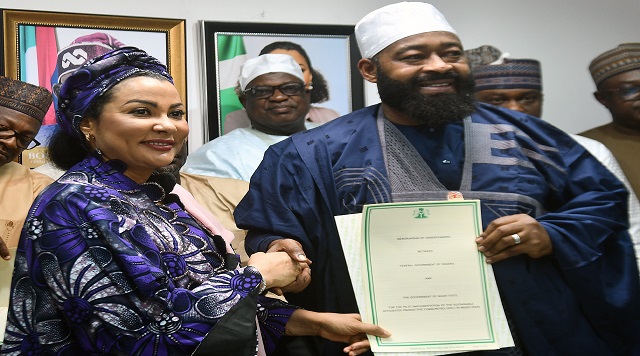
The Federal Ministry of Finance has anchored the signing of a Memorandum of Understanding (MoU) between the Niger State Government and the Ministry of Finance Incorporated (MOFI) for the implementation of a Mass Housing and Agricultural Settlement Project in Niger State.

Speaking at the MoU signing ceremony, Dr. Doris Nkiruka Uzoka-Anite, the Honourable Minister of State for Finance, described the agreement as a landmark initiative that underscores the Federal Government’s commitment to cooperative federalism, inclusive economic growth, and strategic alignment in line with President Bola Ahmed Tinubu’s Renewed Hope Agenda.
With the Federal Ministry of Finance serving as the anchor institution, the project benefits from strong policy coordination, financial credibility, and institutional oversight. The initiative is designed to integrate housing delivery with agricultural productivity, rural stability, and economic empowerment.
“Housing is a fundamental pillar of development. In Niger State, housing also intersects directly with agriculture, food security, and rural livelihoods. This project is therefore structured not merely as a housing intervention, but as a settlement framework for farmers aimed at strengthening agricultural value chains,” the Minister stated.
Niger State, one of Nigeria’s most agriculturally endowed states, continues to face challenges, including insecure settlements, rural-urban migration, and limited rural infrastructure. The project seeks to address these constraints by providing secure, well-planned housing settlements for farmers, strategically located to support agricultural production, storage, processing, and access to markets.
The Honourable Minister emphasized that anchoring farmers in stable communities with access to basic infrastructure will improve productivity, reduce post-harvest losses, enhance security, and encourage youth participation in agriculture, making farming more efficient, attractive, and profitable.
Sustainability and affordability are core pillars of the initiative, with integrated renewable energy solutions—including solar-powered homes and community facilities, designed to ensure reliable power, reduce energy costs, and support agro-processing and storage activities. The project also prioritises efficient land use, access roads, water infrastructure, and environmentally responsible building practices.
Reacting to the sustainability focus of the project, the Governor of Niger State, His Excellency Mohammed Umaru Bago, expressed strong optimism about its transformative impact on the state.
“When you say sustainability, affordability is very important. When I heard that a mini-grid has been deployed in Jos, it’s because it’s affordable. Diesel is not sustainable because it’s not affordable. For considering the factor of affordability in this project, we’re grateful,” the Governor said.
He further announced the state’s commitment to the project, adding, “So, Honourable Minister, Niger State is bringing forward 100,000 hectares of land for this project. I want to assure you that with this initiative, you have solved 80 percent of our problems.”
Drawing a direct link to the Federal Government’s development agenda, Governor Bago noted, “We’ve gone across the world and seen how people transit from poverty to prosperity. And I think the goal of the President, my father, is for us to transition our people out of poverty in the next four years, by the grace of God.”
The Managing Director and Chief Executive Officer of the Ministry of Finance Incorporated (MOFI), Dr. Armstrong Ume Takang (Ph.D.), who attended the ceremony alongside other critical stakeholders, including the building contractor, reaffirmed MOFI’s commitment to quality delivery and agricultural productivity.
Dr. Takang assured the Niger State Government of the contractor’s proven competence and credibility in delivering mass housing projects, stressing that affordability would not come at the expense of quality.
“We want affordable and decent houses. The fact that they are located in rural communities does not mean the quality should be compromised,” he said.
Beyond housing, Dr. Takang highlighted MOFI’s broader role in strengthening the agricultural component of the settlements through strategic partnerships.
“We have partners who will supply affordable fertilisers imported in large quantities. We will also work with other partners to ensure access to key agricultural inputs, not only fertilisers, but also pesticides, high-quality seeds, and elements of mechanisation,” he added.
The project adopts an innovative financing model that blends public assets with private investment, ensuring sustainability, transparency, and shared risk. Through this approach, the government focuses on policy direction and oversight while leveraging private sector efficiency and capital.
Beyond improving food security, the Mass Housing and Agricultural Settlement Project will stimulate broad-based economic activity and generate employment across construction, agriculture, Agro-processing, renewable energy, logistics, and community services. The initiative will support local industries such as cement, steel, transportation, and agro-allied enterprises, while strengthening rural economies and increasing Niger State’s internally generated revenue.
Affordability and inclusiveness remain central to the project’s design. The settlements are tailored to the income realities of farmers and low- to middle-income earners, supported by transparent allocation mechanisms and strong governance structures to ensure benefits reach the intended beneficiaries.
The MoU sends a clear signal to the investment community that Niger State, working in alignment with the Federal Ministry of Finance and MOFI, is open to credible, well-structured, and impact-driven investment. Developers, financial institutions, pension funds, real estate investors, and agribusiness operators are invited to view the project as a scalable and replicable model.
Reaffirming the Federal Ministry of Finance’s commitment, the Honourable Minister assured stakeholders of continued coordination, fiscal discipline, and policy support to ensure the project moves swiftly from signing to execution and delivery.
Commending the leadership of MOFI and the Executive Governor of Niger State, the Minister concluded that the initiative reflects a shared vision for integrated development.
“Through this partnership, we are not just building houses; we are creating stable farming communities, strengthening food security, and laying the foundation for sustained prosperity in Niger State,” she said.

Central Bank of Nigeria (CBN) has projected that the pump price of petrol would hover around N950 per litre in the year 2026.

The CBN stated this in its 2026 Macroeconomic Outlook for Nigeria.
In its outlook for the domestic economy, the bank made what it called baseline projections predicated on assumptions like crude oil price at an average of $60 per barrel in the fourth quarter of 2025 and $55 per barrel in 2026 and the Nigerian Foreign Exchange Market exchange rate at an average of N1,451.63/$ in Q4 2025 and N1,400/$ in 2026 (supported by a more efficient foreign exchange market, higher capital inflows, a current account surplus, and a broad-based improvement in economic activity).
The CBN stated that domestic crude oil production is assumed to be at about 1.5 million barrels per day throughout the forecast period, as premium motor spirit is expected to sell around N950, an amount higher than the current pump prices.
“The baseline projections are predicated on the following assumptions: crude oil price at an average of $60/barrel in Q4 2025 and $55/barrel in 2026 (consistent with the US EIA’s outlook that rising global crude oil inventories and supply glut would moderate prices); NFEM exchange rate at an average of N1,451.63/$ in Q4 2025 and N1,400/$ in 2026 (supported by a more efficient FX market, higher capital inflows, a current account surplus, and a broad-based improvement in economic activity).
“Furthermore, domestic crude oil production is assumed at about 1.5 mbpd (excluding condensates) throughout the forecast period. PMS price is expected to hover around N950 per litre in 2026. Government expenditure is projected to follow the 2025-2027 MTEF/FSP path, reflecting an expansionary fiscal stance aimed at supporting the $1tn economy initiative. MPR and CRR are assumed at 27.00 and 45.00 per cent, respectively. The baseline projections were generally supported by the assumption of continued improvement in business optimism and stronger investor sentiment,” the CBN said.

The Federal Government has reaffirmed its commitment to grassroots artisans to upgrade local skills to meet both national and international benchmarks and compete in the global markets.

Speaking recently during the Skill-Up Artisans (SUPA) zonal rally, Dr Afiz Ogun, director-general of the Industrial Training Fund (ITF), stated that the initiative is designed to professionalise the sector.
The rally was designed to raise awareness of the programme throughout the North-West region.
The rally saw a diverse turnout of professionals, including those in construction and engineering such as welders, fabricators, plumbers, and carpenters.
Those in the technical service comprised of electrical installers and automobile mechanics, while those in the creative and digital space were fashion designers and ICT technicians.
Represented by Muhammad Aminu, the former zonal director of the ITF, Ogun explained that the SUPA scheme seeks to convert traditional craftsmanship into sustainable livelihoods.
He emphasised that the goal is to transform artisans from job seekers into employers of labour.
“We are calling on artisans across the North-West to embrace the SUPA programme,” Ogun remarked. “This is an opportunity to enhance productivity, increase earnings, and ensure our workforce can compete on a global stage”.
According to the DG, the initiative aligns with President Bola Tinubu’s Renewed Hope Agenda, focusing on restoring dignity to manual and technical work.
He noted that a competent artisan class forms the essential foundation of a productive economy.
He further called upon traditional rulers, community leaders, and trade associations to assist the ITF in disseminating information about the programme to ensure high participation rates.
“We are here to engage the technicians, the tradespeople, and the young talents who serve as the backbone of our economy,” he added.
Nancy Ekong, director of the Technical Vocational Skills Training Department, highlighted the programme’s recent successes. She revealed that over 30,000 artisans were trained and upgraded during the initial SUPA cycle in 2025.
The ITF remains optimistic that the continued expansion of SUPA will bridge the existing skills gap in Nigeria’s industrial sector.

Ministry of Finance Leads FG-Backed Deal to Deliver Quality Homes and Boost Agriculture in Niger State

FG Plans to Invest $460m World Bank Loan in Fibre Infrastructure

AI Founders and Developers to Converge in Lagos for AI in Action 2026 conference

CBN Projects Petrol to Hover around N905/Litre this Year

Court Dismisses N1Bn Suit against MTN, Awards N3m Costs

Banks quietly move to enforce new ₦50 transfer levy from Jan. 1

FIRS says NIN, CAC Numbers to Serve as Tax IDs from 2026

PalmPay Launches N400 Million World Travel Carnival, Rewarding Users with Free Global Trips

Nigeria Takes the Lead in the Global WSIS+20 Digital Agenda

Check Point Reveals Nigeria as Second Most Targeted African Country for Cyberattacks in November




 E-Financial2 days ago
19 Nigerian Banks Meet CBN Recapitalization Targets Ahead of March Deadline

 E-Financial2 days ago
KPMG Identifies ‘Flaws, Inconsistencies, and Omission’ in New Tax Law

 General News2 days ago
Bill Gates Pays Ex-Wife $8Bn Charity Payout in Divorce Settlement

 Telecom2 days ago
Nigeria, Egypt to Lead Africa’s Data Center Boom

 General News2 days ago
FG to Empower Artisans for Global Value

 General News2 days ago
FG Introduces Reusable Textbooks, Uniform School Calendar to Cut Education Costs
 Telecom2 days ago
Court Dismisses N1Bn Suit against MTN, Awards N3m Costs
 General News2 days ago
CBN Projects Petrol to Hover around N905/Litre this Year