

News
BUA Crashes Cement Price to N3,500 Per Bag


BUA Group has announced a reduction of ex-factory cement price to N3,500 per bag effective today, October 2.

The current ex-factory price is N4,650, while it is being sold at N5,000 in the market.
In a statement on Sunday, the company announced that the new price will take effect from Monday, October 2, 2023.
The statement, titled ‘Reduce in Prices of BUA Cement’, reads: “We refer to our previous pronouncements regarding our intent to reduce cement prices upon the completion of our new lines at the end of the year, in order to spur development in the building materials and infrastructure sectors.
“As per the commitment made to reduce prices and following a periodic review of our operations for efficiency, the management of BUA Cement Plc wishes to announce and inform our esteemed customers, stakeholders, and the public that effective October 2, 2023, we have decided to bring the price reduction forward. As a result, BUA Cement would now be sold at an ex-factory* price of N3,500 per bag so that Nigerians can begin to enjoy the benefits of the price reduction before the completion of our plants.
“Upon completion of the ongoing construction of our new plants, which would increase our production volumes to 17million metric tons per annum, BUA Cement PLC intends to review these prices further in line with our earlier pronouncements by the first quarter of 2024.
“NOTE: all pending, undelivered orders which had been paid for at the old prices will be reviewed downwards to N3500/bag in line with the new pricing from October 2, 2023. Our licensed dealers are also enjoined to ensure that end-users benefit from this reduction in ex-factory prices as we will monitor field sales to ensure compliance.”
With the crash to N3,500, the market price is expected to be between N3,850 and N4,000, according to a cement dealer.
The dealer said the reduction is significant enough to be felt by the consumers as long as the manufacturer keeps to its promise and the dealers respect the new pricing regime.
Last month, when he visited President Bola Tinubu at Aso Rock, Abdul-Samad Rabiu,chairman of BUA Group, told State House Correspondents that his company was set to reduce the price of cement.
Rabiu added that to support the efforts of the government to crash the price of the product, the company would add two new plants at the end of the year or early next year.
According to him, the plants to be commissioned by Tinubu, would bring BUA Cement’s total capacity to 17 million metric tons.
He said: “Let me thank His Excellency Mr. President for graciously receiving me today. I came to intimate His Excellency on the affairs of our cement business. We have two new lines of 3 million tons each that we will be commissioned by the end of the year.
“So I came to intimate His Excellency and also to explain to him the efforts we’re making in trying to support again the efforts of the government in bringing down the price of cement.
“With this 6 million tons that are commissioning by the end of the year. And by the way, His Excellency has agreed to come and commission the plants, sometimes in December or early January next year.
“So I explained to him and we want to support the efforts of the government in bringing down the price of cement. By the time these lines are commissioned, BUA Cement will to be producing about 17 million tons per annum. And with that, we intend to bring down the price of cement from its current level of N5,000 or N5,500 per bag to maybe N3,000 to N3,500 per bag.
“And we can only do that because we’re producing cement locally. 80% of the raw materials that we’re using to produce cement are in Nigeria. We want to support the government efforts in ensuring that the price of these commodities are brought down.”


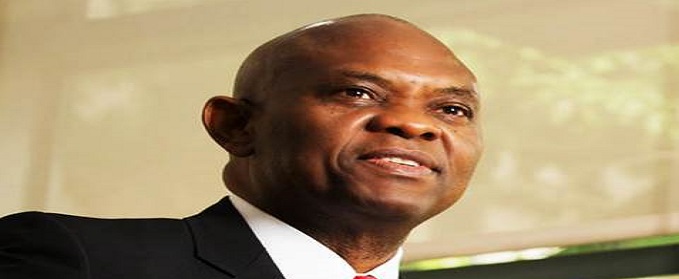
Tony Elumelu, Nigerian businessman and philanthropist, has warned about the growing dangers of artificial intelligence misuse after an AI-generated video falsely showed him promoting a forex and cryptocurrency trading platform.

Tony Elumelu,
The founder of Tony Elumelu Foundation revealed this in a post on his X account on Monday, explaining that the video appeared highly convincing but was entirely fabricated.
In the post, he also tagged Elon Musk, X owner, and Nigeria’s Federal Ministry of Communications, Innovation and Digital Economy while calling for stronger safeguards against the misuse of artificial intelligence.
“A few days ago, my team flagged an AI-generated video of me endorsing a forex and crypto platform.
“It looked and sounded remarkably real, but it was completely fake. This incident highlights a growing and serious threat to digital trust,” he wrote.
He stressed that he has no affiliation with any cryptocurrency or foreign exchange trading platforms.
“For the avoidance of doubt, I am not associated with any crypto or forex trading platforms.
“My commitment to inclusive prosperity has always been through long-term investments, building sustainable businesses, and empowering entrepreneurs,” he said.
While acknowledging the transformative potential of artificial intelligence, Elumelu urged African youths to embrace the technology responsibly and use it to develop scalable solutions.
“I strongly believe in the potential of AI. It is a defining technology of our time, and African youth must be at the forefront of adopting it to build scalable solutions. We cannot afford to be left behind in the global tech race,” he added.
The business leader, however, warned that rapid technological advancement also presents risks if not properly regulated.
“But the flip side of rapid innovation is the risk of abuse. The ease with which identities can now be cloned to deceive the public is alarming.
“Policymakers and regulators must act now to establish safeguards and hold those using it to scam innocent people accountable,” he said.
Elumelu also urged the public to remain vigilant and protect themselves from digital fraud.
“We must create a safe digital environment where true innovation can thrive without being overshadowed by fraud. Protect your hard-earned money, stay alert, and let us continue to build the Africa we deserve,” he said.

By Solomon Yaji
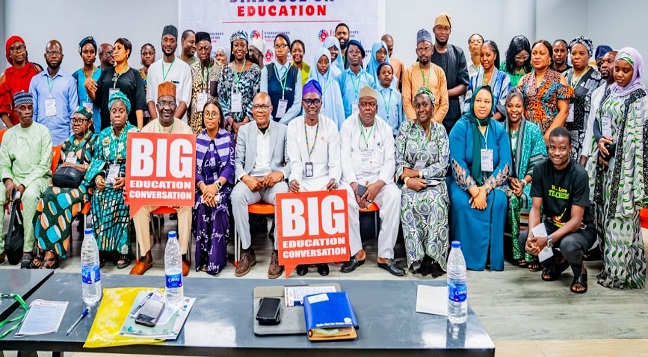
Kashifu Inuwa, the Director-General of the National Information Technology Development Agency (NITDA), has emphasised the critical role teachers play in driving Nigeria’s digital transformation, noting that classrooms will be central to shaping the country’s technology-driven future.

Inuwa made the remark during a stakeholders’ dialogue organised by the Development of Educational Action Network Initiative (DEAN) in Abuja.
Speaking on the theme “Nigeria’s Current Digital Landscape: Our Reality and Its Practical Connection to Education,” the NITDA DG, who was represented by the agency’s Director of Stakeholder Management and Partnerships, Dr. Aristotle Onumo, said the rapid expansion of the digital economy is reshaping the education sector and redefining the role of teachers in modern learning environments.
He explained that while digital technologies have created unprecedented access to information and opportunities for students, they also present challenges that require guidance and responsible use.
According to him, teachers must go beyond the traditional role of knowledge transmission to become mentors who help students navigate the digital world safely and responsibly.
“Teachers are no longer just instructors; they are now guides who help students identify credible information, avoid harmful online content, and develop responsible digital behaviour,” he said.
Inuwa added that educators must cultivate critical thinking among students while equipping them with the skills needed to thrive in an increasingly technology-driven society.
He reaffirmed NITDA’s commitment to advancing digital literacy nationwide through initiatives such as the Digital Literacy for All programme and partnerships with educational institutions aimed at strengthening teachers’ digital capacity.
The NITDA boss stressed that empowering teachers with digital skills is vital to preparing Nigerian students for the future workforce and ensuring the country remains competitive in the global digital economy.
Nigeria is currently pursuing an ambitious digital literacy agenda, targeting 70 per cent digital literacy by 2027 as part of broader efforts to build a knowledge-driven economy powered by innovation and technology.
Earlier in his remarks, the Executive Director of DEAN Initiative, Semiye Michael, said the workshop was designed to re-engineer teachers’ capacity in line with the realities of the digital economy.
“We need to strengthen teachers’ competence and provide them with access to the necessary digital infrastructure,” Michael said, adding that the engagement would help shape policies that support technology-driven learning in Nigerian schools.
He described the workshop as an “awesome experience,” noting that ideas generated during the session would be consolidated into a policy guide for the ministry and other relevant agencies.
Michael further noted that strengthening teachers’ digital capacity would be vital to enhancing Nigeria’s competitiveness in the global knowledge economy.
The event attracted key stakeholders from the Federal Ministry of Education, Nigerian Communications Satellite Limited (NIGCOMSAT), as well as private sector experts.

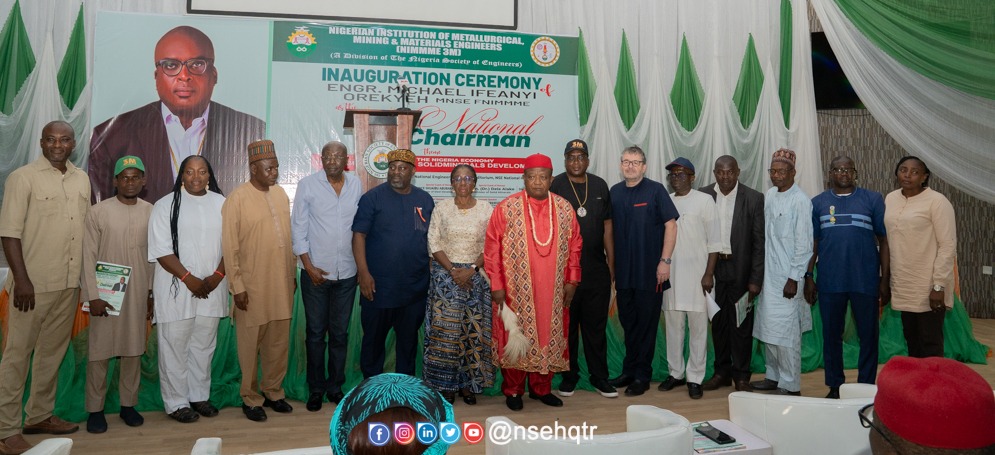
Nigerian Institution of Metallurgical, Mining and Materials Engineers (NIMMME or 3M), a vital division of the Nigerian Society of Engineers (NSE), has inaugurated Engr. Michael Ifeanyi Orekyeh, MNSE, as its 13th National Chairman in a colourful ceremony held on Wednesday, March 11, 2026, in Abuja.

Center …Igwe Aguleri Dr Michael Idigo (Ezeudo) Royal Father of the Day and Deputy President of NSE Engr Valerie Agberagba (Representing the President of NSE Engr Ali Rabiu MFR) to his left.
NSE President, Engr. Ali Alimasuya Rabiu, FNSE, MFR, who delivered the opening remarks through his Deputy, Engr. Valerie Ifeuko Agberagba, FNSE, described the event as a major milestone for engineers specialising in metals, mining and materials science – professionals whose expertise is crucial for constructing durable roads, factories, bridges and other infrastructure projects essential to Nigeria’s economic growth and industrialisation.
Engr. Rabiu warmly congratulated Engr. Orekyeh, a Senior Mechanical Engineer at the Federal Ministry of Works and Infrastructure, alongside his newly elected executive committee, for securing the confidence of their peers through a democratic election process.
He emphasised that the inauguration transcended a mere change of guard, positioning it as a renewed commitment to repositioning the 3M Institution for greater impact in addressing Nigeria’s developmental challenges.
These engineers are at the forefront of transforming raw natural resources extracted from the earth – such as iron ore, coal, limestone, gold and other solid minerals – into finished products like steel beams, construction aggregates and high-performance materials used in homes, industries and public infrastructure across the country.
The NSE President expressed profound gratitude to the outgoing National Chairman, Prof. Abdulrahman Asipita Salawu, FNSE, for his exemplary service during his tenure, while calling on all members to close ranks and provide unwavering support to the incoming leadership.

Engr Michael Orekyeh National Chairman 3M-NIMMME Delivering his speech after being sworn in
In a detailed charge to the new executives, Engr. Rabiu outlined key focus areas in straightforward terms: aggressive advocacy for policies that boost the metals, mining and materials sectors; development and enforcement of rigorous professional standards; expanded capacity-building programmes for members; upholding ethical leadership and integrity; fostering collaboration with other NSE technical divisions and branches; and proactive engagement with government agencies, private industries and the general public to drive tangible outcomes.
He underscored the urgency of these priorities amid Nigeria’s pressing national issues, including dilapidated road networks, high unemployment rates, inadequate industrial base and environmental degradation, urging engineers to forge stronger partnerships with policymakers, research institutions and the organised private sector.
“The challenges facing our country today demand stronger synergy between engineering professionals, policymakers and industry stakeholders,” Engr. Rabiu stated, reaffirming NSE’s overarching mission to promote engineering excellence that safeguards lives, property and the nation’s natural resources.
A standout feature of the event was the spotlight on a homegrown innovation in road construction tailored to Nigeria’s tropical climate characterised by year-round warmth and heavy torrential rains, in contrast to the frost-resistant designs prevalent in temperate Western countries.
Dubbed Cement-Stabilised Soil Pavement with Integrated Microsurfacing, the technology leverages abundant local soils like laterite as the base material, stabilised with cement and specialised additives in a central mixing plant to achieve uniform strength and superior water resistance.
This approach eliminates the inconsistencies of traditional in-situ mixing methods, delivering roads that are more durable, cost-effective and quicker to build while reducing dependency on imported asphalt.
The inauguration lecture, themed “Diversifying the Nigerian Economy through Metals and Solid Minerals Development,” resonated deeply with participants, highlighting Nigeria’s vast untapped reserves of over 40 commercially viable solid minerals spread across more than 500 locations nationwide. Engr. Rabiu reiterated NSE’s steadfast commitment to supporting federal and state governments with technical expertise, policy recommendations and innovative solutions to responsibly harness these resources for job creation, revenue generation and sustainable development without compromising ecological balance.
Delivering the keynote address, Mr. Vassily Oye Barberopoulos, Managing Director of Nigerian Foundries Group based in Ota, Ogun State, passionately advocated for replicating the successful Local Content policy from the oil and gas sector in the solid minerals industry.
He noted that mining operations demand a wide array of components – from castings and forgings produced in foundries to fabricated parts – yet foreign mining firms predominantly import these, stifling local manufacturing. Mr. Barberopoulos called for robust legislation championed by the National Assembly, Ministry of Solid Minerals Development, Manufacturers Association of Nigeria (MAN) and NIMMME to mandate local sourcing, mirroring the transformative impact of the Nigerian Content Development and Monitoring Board (NCDMB) in petroleum, which unlocked billions in opportunities for indigenous firms.
Guest Lecturer, Engr. Ebosie Ezeoke, Executive Chairman of Anambra State Materials Testing Laboratory (ASMTL), enlightened the audience on an eco-friendly, low-cost cold paving technology for road construction.

L-R Mr Obi Asika Director General National Council on Arts and Culture NCAC….Mr Vassily Oye Barberopoulos MD Nigerian Foundries Group
He described the method as revolutionary, being five times stronger and far more durable than conventional flexible asphalt pavements, while slashing costs and minimising environmental impact through reduced energy use and emissions during production and application – ideal for Nigeria’s constrained budgets and harsh weather conditions.
Engr. Michael Orekyeh, also linked to Anambra State’s ICT Agency initiatives, was formally sworn in by the immediate past Chairman, Prof. Abdulrahman Asipita Salawu, FNSE, represented by Prof. Aje Tokan, a former National Chairman of the institution.
In his acceptance speech, the new helmsman unveiled an ambitious strategic roadmap centred on maximising member participation in specialised committees and Strategic Sector Groups (SSG); deepening partnerships with government ministries, agencies and private sector players; rolling out comprehensive training schemes to upskill 3M professionals; and introducing a modernised certification framework to enhance credibility and employability in the global marketplace.
The well-attended ceremony drew an array of high-profile dignitaries, reflecting the event’s national significance and the broad support for advancing Nigeria’s engineering landscape.
Prominent among them were the Royal Father of the Day, Igwe Dr. Michael C. Idigo (Ezeudo), Igwe Aguleri; Special Guest of Honour, Mr. Obi Asika, Director-General of the National Council for Arts and Culture (NCAC), Abuja; Keynote Speaker Mr. Vassily Oye Barberopoulos; Guest Lecturer Engr. Ebosie Ezeoke; Director-General of the Mining Cadastral Office (MCO), Engr. Obadiah Nkom (represented by Engr. A. Habila); President of the Association of Professional Women Engineers of Nigeria (APWEN), Engr. Chinyere Nnenna Igwegbe; Chairman of the Nigerian Institution of Petroleum Engineers (NIPE), Dr. Yetunde Aladeitan; past 3M National Chairman, Prof. Aje Tokan; and Managing Director of Geocardinal Engineering, Engr. Jacob Adeyemo.

Crypto Transactions Hit $96Bn in Nigeria -SEC

PwC Warns Nigeria Telcos of AI Fraud Risks

Lawyer Drags FG Court over Controversial Health Data Sharing Agreement with US

Elumelu Tags Elon Musk, Disowns AI-Generated Scam Video

FG Determined to Protect Rights, Privacy Online- NITDA

Kaspersky Discovers New Phishing Campaign Exploiting Google Tasks Notifications to Steal Corporate Credentials

esentry 2025 Report Shows Healthcare, Financial Services and Telecoms as Staging Grounds for Increased Cyberattacks in Africa

AfDB, UNDP Launch $10Bn AI Initiative for Africa

Mutual Benefits Assurance Settles ₦5.9bn Claims in January 2026

MultiChoice Suspends Yearly DStv Price Hike as Canal+ Pushes Growth




 Telecom2 days ago
VDT Communications Achieves Two Prestigious Certifications ISO /IEC 27001:2022, ISO/IEC 27032:2023 Reinforcing its Leadership in Broadband Service Provision

 E-Financial1 day ago
CBN Rolls Out New Rules for Safer Instant Payments, More Customer Control

 Telecom1 day ago
MTN Nigeria Races Ahead in Fibre Broadband Market

 News1 day ago
NIMMME Inaugurates Engr. Michael Orekyeh as 13th National Chairman in Abuja

 E-Financial1 day ago
Nova Bank Appoints Jude Anele as Managing Director/CEO

 E-Financial1 day ago
CBN Tightens BVN Rules to Curb Fraudulent Banking Transactions

 E-Business1 day ago
Tech Expert Unveils BAT-BOT AI App to Curb Fake News ahead of 2027 Elections
- Broadcasting39 minutes ago
Spotify’s Loud & Clear Report Reveals Over ₦60Bn Revenue for Nigerian Artists in 2025