

News
Buhari’s Row with Wife Signals Frustration over FG Inertia

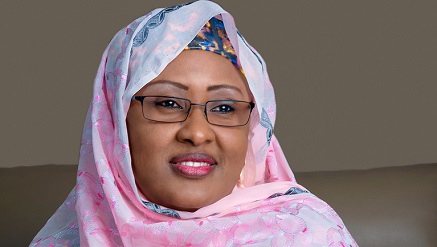
A row between the Nigerian President Muhammadu Buhari and his wife has brought cracks in the ruling party right into the open, as frustration grows over government inertia in trying to drag the country out of its first recession in 25 years.
Aisha Buhari publicly criticised her husband’s record in office, saying she might not support him if he seeks re-election in 2019 unless he shakes up his administration, which she said had been hijacked by a “few people”.
The president tried to laugh off the rebuke from his wife of 27 years, saying “she belongs in the kitchen” – but without addressing the substance of her remarks, made last week in an interview with the BBC.
Reuters reported that the 73-year-old won last year’s election promising a new era in the West African nation, where graft has enriched an elite while most of the 180 million Nigerians live in poverty despite the OPEC member’s oil wealth.
Buhari came to power backed by his All Progressives Congress (APC) party, a broad coalition of politicians who united to remove his predecessor, Goodluck Jonathan, without having a joint plan on how to run the country.
Now, 17 months into office, there are few signs of Buhari’s promised reforms to diversify the economy away from exporting crude, prices of which have halved since 2014.
Already the naira is down 35 percent this year, making it one of the worst performing currencies in the world, and the National Bureau of Statistics forecasts the economy will shrink by 1.3 percent in 2016.
But criticism of the government goes beyond an apparent lack of urgency in tackling the economic crisis. A belief is growing that power is concentrated among Buhari’s chief of staff and an inner circle at the presidential villa, making it difficult for ministers to get the attention of the president.
The first lady is not alone in her views. Senate President Bukola Saraki, the third most senior politician in Nigeria, took to Twitter to express his concerns.
“It has become clear that there is govt within govt of @MBuhari who’ve seized apparatus of Executive powers to pursue their nefarious agenda,” he tweeted in June.
Buhari’s spokesmen declined to comment while the president himself has defended his economic record in general terms.
“I believe that this recession will not last,” he said this month. “We have identified the country’s salient problems and we are working hard at lasting solutions.”
Annual inflation accelerated in September to 17.9 percent, a more than 11-year high, and last week about 100 young people demonstrated near the central bank over the naira’s fall.
But, generally, the discontent has yet to turn into mass protest. “Let me commend Nigerians for your patience, steadfastness and perseverance. You know that I am trying to do the right things for our country,” said Buhari.
Nevertheless, Buhari has not answered questions about how Nigeria is governed under his presidency.
“People feel that the country is being run by a small clique of people who have taken over and are acting in the name of the president,” said Clement Nwankwo, director of the Policy and Legal Advocacy Centre, a think-tank in Abuja.
Buhari has put Vice President Yemi Osinbajo, a commercial lawyer, in charge of economic politics. But Osinbajo, who favours a more flexible currency policy to attract badly-needed foreign investment, has struggled to get his ideas heard.
“There is great worry that the input of the vice president does not seem to be taken into account in implementing policies, especially on the economic front,” Nwankwo said.
Buhari has said that as an ex-general he is no expert in economics, and yet he long rejected a devaluation of the naira – just as he did as military ruler in the 1980s when Nigeria was also in recession.
When the central bank finally dropped the naira’s peg to the dollar in June, the currency slumped 30 percent and many equity and bond investors had in any case long since gone.
Even now, Nigeria is operating a “managed float” which is keeping the official naira rate at around 305 to the dollar, far stronger than Monday’s black market rate of 455.
As ever in Nigerian politics, the division of powers between the mainly Muslim north, where Buhari is from, and the Christian south is playing a role.
Diplomats say members of northern circles known to Buhari for decades have resisted some ministers such as Finance Minister Kemi Adeosun, a southerner in her 40s who was not his first choice.
A source close to the presidency described the accusations of inertia as grumbling by some in the APC who had hoped for jobs or contracts under a system of patronage which Buhari stopped under his anti-graft drive.
Buhari needed to pick a cabinet from the APC but this was complicated because he was constitutionally bound to pick a minister from each of Nigeria’s 36 states.
To insert his influence he then brought in people he has known for decades. Members of his “kitchen cabinet” include his chief of staff Abba Kyari, whom Buhari has also put on the board of state oil firm NNPC, his uncle Mamman Daura and Babachir Lawal, the secretary to the government of the federation.
“Buhari is deeply suspicious of politicians because of Nigeria’s history of graft,” said one Western diplomat. “There are few people he trusts or regularly talks to to seek their advice.”
The pre-eminence of the inner circle has, say political insiders, created a rift between the president and Bola Tinubu, a former Lagos state governor who rallied southern Christian elites to help win power.
Tinubu has issued statements attacking APC chairman John Oyegun and oil minister Emmanuel Ibe Kachikwu, deepening divisions in the party.
Buhari has won plaudits from ordinary Nigerians by saying he will target a hyper-rich elite accused of massive corruption.
He has also managed to retake most territory lost to the Islamist militants of Boko Haram and negotiated the release of 21 of more than 200 girls kidnapped in 2014, although suicide bombings remain part of life in northeastern Nigeria.
But much of his first year in office was beset by slow progress. A five-month wait for his cabinet to be formed was followed by wrangling with parliament over the 2016 budget, which was only signed off by Buhari in May.
Efforts to make Nigeria more business-friendly have stalled. Trade Minister Okechukwu Enelamah wants to ease visa rules, acknowledging complaints from foreign executives about obstructive embassy officials, but has given no timeframe.
Nigeria could have earned as much as $8 billion in travel receipts this year, instead of the $500 million booked in 2014, had it adopted visitor-friendly visa rules like Ghana, Renaissance Capital said in a report.
Some investors have expressed frustration over hard currency curbs. “You can’t even discuss a rational foreign exchange policy,” David Lapido, director at Amaya Capital invested in Nigeria’s power industry, told a panel debate.
Leading economists recently met Buhari, stressing it was high time for action as there were just 18 months left before the next election would paralyse politics.
“We were very frank,” said Bismarck Rewane, CEO of Financial Derivatives consultancy who attended the meeting. “The president is paying serious attention to the economy. I am now more optimistic.”



Nigerian Army has warned that terrorist and criminal groups were increasingly exploiting cyberspace to recruit members, raise funds, coordinate attacks and spread propaganda, describing the trend as a growing threat to Nigeria’s national security.

Lt.-Gen. Waidi Shaibu, chief of Army Staff (COAS), raised the alarm on Tuesday at the 2026 Nigerian Army Cyber Warfare School Seminar in Abuja.
Represented by Maj.-Gen. Jeremiah Manjang, deputy chief of Special Services and Programmes, the Army Chief said cyberspace has evolved into a strategic battlefield where both state and non-state actors operate with unprecedented speed, making security threats more complex and difficult to counter.
He noted that hostile actors no longer require physical presence to disrupt critical infrastructure, compromise sensitive information, manipulate public opinion or undermine national security through anonymous cyber attacks.
According to him, terrorism, insurgency, banditry, kidnapping, separatist agitations, organised crime, misinformation and disinformation are increasingly being enabled, coordinated and amplified through digital platforms and cyber networks.
“The reality is that terrorist and criminal groups now exploit cyberspace for recruitment, propaganda, fundraising, intelligence gathering, attack coordination and concealment of illicit financial transactions. This demands a proactive and coordinated national response,” he said.
Shaibu said the changing nature of security threats had compelled the Nigerian Army to strengthen its cyber capabilities to effectively address complex, asymmetric and technology-driven challenges.
He called for stronger cyber intelligence capabilities driven by artificial intelligence (AI), machine learning and advanced data analytics to improve early warning systems, threat detection and predictive security analysis.
The COAS also advocated deeper collaboration among government institutions, the military, law enforcement agencies, academia and the private sector, stressing that cybersecurity can no longer be handled by a single institution.
He emphasised the need for sustained investment in indigenous cyber capabilities, research, technological innovation and human capacity development to protect Nigeria’s digital sovereignty and enhance national resilience against emerging threats.
Shaibu further stated that integrating cyber capabilities into conventional military operations would strengthen surveillance, intelligence gathering, geospatial analysis, command-and-control systems, situational awareness and overall operational effectiveness.
Earlier, Brig.-Gen. Jacob Bawa, commandant of the Nigerian Army Cyber Warfare School, said the seminar was organised to deepen cybersecurity awareness, strengthen cyber resilience and promote collaboration among security stakeholders.
Bawa noted that Nigeria’s increasing reliance on digital technologies has exposed critical infrastructure, including telecommunications, power systems, financial institutions and government databases, to cybercriminals, terrorists and hostile state actors.
He said the Cyber Warfare School was established as a centre of excellence for cyber warfare training, education and research.
According to him, participants at the seminar would examine cyber resilience, threat intelligence, incident response, cyber warfare and emerging technologies with a view to developing practical recommendations for strengthening Nigeria’s cybersecurity architecture.
Also speaking, Abdulhakeem Ajijola, cybersecurity expert, warned that national security now depends significantly on the protection of digital systems, noting that artificial intelligence is transforming military operations, command structures and the protection of critical infrastructure.
Ajijola urged Nigeria to develop sovereign cyber capabilities, warning that excessive dependence on foreign-controlled software, platforms and artificial intelligence systems could undermine national resilience, operational continuity and independent decision-making during periods of crisis.
He stressed that while technology should be deployed to strengthen national sovereignty, responsibility for operational decisions must remain with human commanders.


Verve International, Africa’s payment cards and digital solutions brand, is strengthening its global acceptance footprint through strategic partnerships with leading digital platforms, reinforcing its role as a key enabler of digital payments and financial inclusion across the continent.

Verve has established a strong presence in more than 13 African countries, including Kenya, Uganda, The Gambia, Senegal, Sierra Leone, Benin Republic, the Democratic Republic of Congo, Rwanda, and several other markets across the continent.
This growing reach reflects Verve’s commitment to delivering secure, convenient and innovative payment solutions that empower consumers, businesses and financial institutions while advancing financial inclusion and economic participation across Africa.
As digital payments continue to transform economies across Africa, Verve remains focused on developing solutions that address local payment needs while supporting broader participation in the digital economy.
Through collaborations with banks, fintechs, merchants and payment service providers, Verve continues to drive financial inclusion and enable seamless payment experiences for millions of consumers across the continent.
Speaking on Verve’s growth trajectory and expanding reach, Vincent Ogbunude, Managing Director, Verve International, said: “Verve’s continued expansion across Africa reflects our commitment to building payment solutions that empower individuals, businesses and economies to thrive.
“Today, our presence across more than 13 African countries demonstrates the strength of our partnerships, innovation and ambition to be the preferred payment brand for Africans wherever they are.
“As digital commerce continues to evolve, we are expanding access to global opportunities through strategic partnerships with leading technology and digital platforms, while introducing innovations such as contactless payments and enhanced digital payment capabilities. Together, these efforts are enabling more seamless, secure and convenient payment experiences for consumers across Africa and beyond.”
Complementing its growing reach across Africa, Verve continues to expand its global acceptance footprint through partnerships with some of the world’s most recognised technology, e-commerce and digital service brands.
Today, Verve cardholders can conveniently make payments for products, services and subscriptions on platforms including Google, Spotify, Netflix, Facebook, YouTube Premium, Adobe, AliExpress, Temu and Flywire, among others.
These partnerships are helping bridge the gap between African consumers and the global digital marketplace by providing secure and convenient access to education, entertainment, travel, e-commerce, productivity tools and business solutions from virtually anywhere in the world.
Verve’s growth strategy is underpinned by continued investment in payment innovation. Through capabilities such as contactless payments, tokenisation and digital wallet integrations, Verve isenhancing convenience, security and user experience across physical and digital channels.
As Verve strengthens its position across existing markets and explores new growth opportunities, the company remains committed to driving financial inclusion, accelerating digital commerce and delivering innovative payment solutions that enable consumers and businesses to participate confidently in an increasingly connected world.
With an expanding presence across Africa, growing acceptance on global digital platforms and continued investment in innovation, Verve is helping connect millions of consumers to opportunities within and beyond the continent while shaping the future of Africa’s digital payments landscape.

Federal government has said that more than 32 million students have been captured on the Federal Government’s Digital National Education Information Management System (DNEMIS), ahead of the official launch of the platform on Wednesday, July 1.

The DNEMIS, is part of efforts to replace paper-based and fragmented education records with a single digital database.
Mr. Adebayo Onigbanjo, national project coordinator of the Special Programmes Operations and Implementation Unit in the Office of the Minister of Education, disclosed this on Monday in Abuja at a press conference.
Onibanjo said that the digital platform would transform education administration through technology and data-driven decision-making.
He said DNEMIS is the core platform of the Nigerian Education Data Infrastructure (NEDI), an initiative under the Nigeria Education Sector Renewal Initiative (NESRI), established to provide accurate, integrated and timely education data for planning, budgeting, policymaking and service delivery.
According to Onigbanjo, the platform replaces the fragmented data systems that have long constrained effective planning in the education sector.
“For many years, education planning relied on fragmented systems, inconsistent reporting structures and limited access to reliable data. DNEMIS changes that by ensuring that every learner, every school, every teacher and every investment in education is captured within a system that supports evidence-based decision-making,” he said.
He described education data as a strategic national asset, noting that the platform would strengthen transparency, accountability and governance across the sector.
Onigbanjo said the availability of reliable data would also support government efforts to tackle Nigeria’s out-of-school children challenge by enabling authorities to monitor enrolment, identify dropout patterns and target interventions where they are most needed.
“If you don’t measure, you can’t get a good sense of what the data is. Today, we already have 32 million students on the platform, and that gives us an indication of where learners are.
“We are also understanding their journey from when they start school and when they drop out. That gives us insight into their challenges and where investments need to go. Every school becomes visible, every student gets counted, every teacher is known, and every government expenditure in education becomes trackable. To a greater extent, this will stop wastage,” he said.
He added that the ultimate goal is to provide government with complete visibility into every learner’s educational journey, from enrolment through graduation, to improve learning outcomes and policy decisions.
Addressing concerns over data privacy, Onigbanjo said the platform was developed using globally recognised digital architecture with robust safeguards to protect personal information.
He explained that sensitive data would be masked while secure digital identity profiles would allow authorised users to access relevant information without exposing personal details.
Also speaking, Abubakar Isah, national coordinator, Nigerian Education Data Infrastructure (NEDI), said the system fully complies with Nigeria’s data protection regulations and international data security standards.
“We recognise the importance of data protection. We are complying with the country’s data protection rules and taking every necessary precaution to ensure that this data is secure,” he said.
Isah noted that while schools and state governments would have access to their respective data, communities, alumni associations and development partners would be able to access selected non-sensitive information to support school improvement and strengthen public accountability.
Earlier, Miss Mojoyin Adebajo, special adviser to the Minister of Education on Digital Communications and E-Learning, described DNEMIS as a major milestone in Nigeria’s digital education transformation.
She said the platform, developed on the globally recognised DHIS2 infrastructure, would digitise the Annual School Census and provide reliable information on schools, teachers, learners and education infrastructure across the country.
Adebajo added that Wednesday’s event would also witness the unveiling of the Public DNEMIS Portal, which will provide researchers, journalists, civil society organisations, development partners and members of the public with access to selected official education data through an interactive online platform.
She said the initiative underscores the Federal Ministry of Education’s commitment to promoting transparency, strengthening evidence-based planning and leveraging technology to improve educational outcomes nationwide.

UBA Surprises Thousands of Customers with Over ₦400 Million Cash Bonus

Lebara Nigeria Becomes Member of GSMA Network

FG to Abolish JSS-SSS Separation Policy after 20m Pupils Drop Out

Vitel Wireless Warns Public, Says it Not Running any Investment Scheme

Army Says Terrorists Now Recruiting, Raising Funds Online

Mobile Internet Gender Gap Widest in Africa – GSMA

London Strengthens Global Investment Ties with Africa @ First Ever London-Africa Business Summit

FG Targets Alleged N3tn Capital Flight, Opens Airtime Credit Market to Nigerian Fintechs

Japan, UNESCO Boost Digital Learning in 15 CoEs with Donation of ICT Equipment

Good News for DStv Users: Watch over 160 Channels Without Paying Extra




 E-Business3 days ago
LG Showcases AI-Powered Smart Living Innovations @ Africa Technology Expo 2026

 Telecom3 days ago
OADC Reaffirms Abundant Capacity in Data Centres in Nigeria to Host Financial Data

 E-Financial3 days ago
UBA mobilises employees across Africa for environmental clean-up, wellness campaign

 General News3 days ago
LASTMA Launches 3367 Toll-Free Hotline for Emergency Response, Traffic Management

 E-Financial3 days ago
PalmPay Calls for Trust, Infrastructure and Responsible AI to Drive Payment Ecosystem Innovation

 E-Financial2 days ago
Wema Bank Suspends Telegram Operations over Scams

 E-Business3 days ago
Want a Business Loan Without Interest? SMEDAN Launches N500m Fund

 Telecom3 days ago
ALTON Backs NCC’s Local Smartphone Manufacturing Drive to Widen Digital Access