

/home/kenneth/web/nigeriacommunicationsweek.com.ng/public_html/wp-content/themes/zox-news/parts/post-single.php on line 153
">
Warning: Undefined array key 0 in /home/kenneth/web/nigeriacommunicationsweek.com.ng/public_html/wp-content/themes/zox-news/parts/post-single.php on line 153
Warning: Attempt to read property "cat_name" on null in /home/kenneth/web/nigeriacommunicationsweek.com.ng/public_html/wp-content/themes/zox-news/parts/post-single.php on line 153
Cabotage Law: Which Way Forward

It is lamentable that in the almost seven years of the cabotage law in Nigeria, the nation and indigenous ship owners are still deprived of the needed revenue from haulage of petroleum products which ordinarily should help drive the country’s economy forward.
The cabotage Act was passed into law on April 30, 2003 with the release of guidelines for the implementation of the provisions on June 7, 2004. However, the inability of Federal Government to implement the Act gives foreigners the leeway to invade the country’s waterways to carry out all sorts of illegal shipping activities, which have in turn impoverished Nigerian ship owners.
Vessels owned by indigenous ship operators are considered substandard with poorly trained crew. This provides the ready-made excuse for the oil majors to ignore indigenous operators. In the past when the cargo allocation and reservation principle worked well, a lot of indigenous operators could charter vessels to carry petroleum cargo, but now, most of them simply serve as agents or representatives to foreign shipping companies in Nigeria.
The foreign shipping lines carry petroleum products while the indigenous shippers beg to be given the crumbs. Indigenous operators account for less than 10 percent of the total domestic crude cargo moved through the nation’s coastline of more than 2,000 km, dotted with eight ports.
The discrimination has placed the indigenous shippers at a massive disadvantage to every other flag in the world. Although the indigenous shippers are being over-taken by the better capitalized foreign shipping companies, the contention is that the cabotage laws reserve the haulage of crude oil within the nation’s territorial waterways to indigenous operators.
According to the Act, foreign vessels are not allowed to partake in any domestic coastal trade as obtainable in other developed countries of the world, while it will at the same time, promote the development of indigenous tonnage and establish a Cabotage Vessel Financing Fund (CVFF) and for related matters.
However the Temisan Omatseye led management, which assumed office in July 10,2009, after one year recorded a significant increase of the CVFF from less than seven million dollars in July 2009 to over 55 million dollars in June 2010, representing an increase of 685.7 per cent.
The Nigerian Maritime Administration and Safety Agency (Nimasa) management led by Omatseye as director general and chief executive officer, in one year recorded increase of 685.7 per cent increase in the CVFF.
The law stipulates that Nigerians should carry goods, passengers by vessel, or any other mode of transport, from one place to the other, either directly or via a place outside the country. It further stipulates that only vessels wholly owned, manned, built and registered by Nigerian citizens, shall be engaged in the domestic coastal carriage of cargo and passengers within the coastal territorial inland waters or any point within the waters of the exclusive economic zone of Nigeria; except a foreign vessel is given waiver by the Minister of Transport to carry out such job.
But seven years after the law was enacted, none of the provisions of the Law has been fully implemented by the supervising agency. Rather, waivers have been granted to foreign shipping companies to do jobs which Nigerians could do.
This has resulted in the influx of foreign vessels into the country, which needs to be stopped. In order to stop the influx of foreign vessels into the country, The Indigenous Ship Owners Association of Nigeria (ISAN) embarked on appeals and negotiation.
Since the prospect of achieving result through appeals and negotiations failed, the association resorted to using the power granted it under the Cabotage Laws to fight its cause. Consequently, the association and an indigenous company, Pokat Nigeria, not long ago sued a foreign tanker vessel MT Makhambe, from St Vincent and The Grenades, over illegal coastal trading within the Nigerian territorial waters.
The vessels with International Maritime Organisation (IMO) number 9334612, with 7224 registered gross tonnage was impounded while delivering 10,000 metric tons of petroleum products at Ibafon Jetty 1 in Apapa.
Meanwhile, the case was struck out by the Federal High Court sitting in Lagos in favour of the shipping company.
A lot of maritime experts however insisted that in order to rescue the indigenous shippers, there is the need for the Cabotage Enforcement Unit of Nimasa to wake up to their responsibilities because there is an influx of foreign vessels into the country and this should be stopped.
From available statistics, foreign vessels are scattered everywhere in the country doing illegal businesses because their activities are not effectively monitored and regulated. It is therefore advisable that thorough overhaul of the country’s flag administration should be carried out, and that the Cabotage Act should be revisited and simplified for proper interpretation by the court of law.
The Nimasa management is advised on the need to begin to also take critical look at shipping development to see how they could increase Nigerian fleet because without owning ships, the existence of the organization is meaningless.
Furthermore, the CVFF as provided by the law is the only support from the government that would give intending investors the needed leverage in the sector, otherwise Nigerians would continue to play the second fiddle as far as shipping business is concerned.
As a result of high cost of vessels, some banks find it difficult to sponsor shipping acquisition, a situation which is hampering the development of the expansion of fleets in the country.
According to ship owners, cabotage regime was already failing because interested Nigerians do not have the fund to acquire vessels.
For as long as foreign vessels are doing jobs meant for Nigerians ships, most Nigerians that have ships would certainly no longer be able to maintain them, implying that they would rather have to abandon them so that they would be sold as scraps instead of paying their crew members because they have become redundant, observed a maritime source.
He added that,it is lamentable that the Nigerian National Petroleum Corporation (NNPC) is paying huge amounts as demurrage to the foreign vessels everyday because most of the indigenous ships are not in good shape due to their inability to obtain loan or any support from the financial institutions and maritime regulatory body, regretting that the Very Large Crude Carriers which bring in petroleum products into the country do not allow Nigerian ships to come near their vessels.
The Very Large Crude Carriers according to information available to Nigeria CommunicationsWeek bring the refined products and also use their smaller vessels to distribute the petroleum products to the tanks and to the Nigerian National Petroleum Corporation facilities, which is supposed to be done by indigenous vessels operating under the Cabotage regime.
We regret that because Nigerians do not have good vessels, these foreign ships would stay for two to three months, while Nigeria pays as much as $30,000 to $40,000 daily until they finish discharging their contents.
This would have ended long ago if the Cabotage law was working. Most of the time, the regulatory agencies come up with so many excuses, such as; Nigerian vessels do not have Protection and Indemnity (P&I) insurance, observes another maritime inside source who stressed that it costs about $10 million to get such certificate, which most indigenous shipping companies in Nigeria could not afford.
However, Omatseye, has promised to do everything humanly possible to ensure vessel expansion in the country is given proper attention, by making the process of CVFF simpler to enable indigenous operators secure loans from the apex maritime body as well as increase local participation in coastal shipping.
According to him, the Agency would make Nigeria’s maritime industry the safest and most secure in Africa, further stressing that the management would equally make Cabotage a reality.
Even as operators and stakeholders continue to applaud the words of Omatseye, they however confess to being skeptical whether it will be another sweet talk as usual, like one of those often rehashed comments of newly appointed chief executives and political office holders as is the tradition in the country. They moreover call on the Federal Government to give the present chief executive officer of NIMASA the freedom to implement his good ideas, which should help move the maritime industry to another level.


Warning: Undefined array key 0 in /home/kenneth/web/nigeriacommunicationsweek.com.ng/public_html/wp-content/themes/zox-news/parts/post-single.php on line 493
Warning: Attempt to read property "cat_ID" on null in /home/kenneth/web/nigeriacommunicationsweek.com.ng/public_html/wp-content/themes/zox-news/parts/post-single.php on line 493

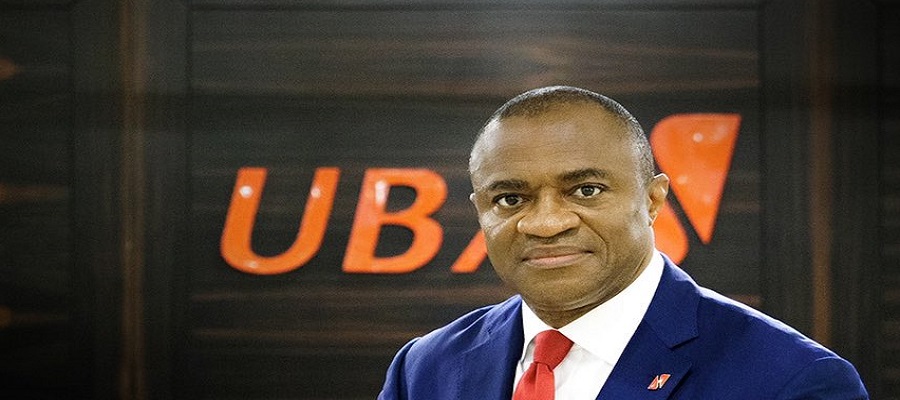
United Bank for Africa (UBA) Plc has launched a new Aggregator Sales Structure for its RedPay POS and Agency Banking Network, as part of efforts targeted towards the advancement of its mission to deepen relationship with its network and most importantly, expand financial inclusion across Nigeria.

Oliver Alawuba. Group Managing Director/CEO, UBA
The newly launched multi benefit structure which offers partners a comprehensive value proposition, was unveiled at the inaugural UBA Aggregator Engagement Session, held at the Bank’s Head Office in Lagos on Tuesday.
The session themed, “POS-itive Impact: Connecting Agents, Merchants, and Customers,” served as a collaborative platform to align strategies for scaling the UBAMONI Agency Banking ecosystem and bringing together key industry aggregators, Point-of-Sale (POS) partners, and network managers,
Emmanuel Lamptey, executive director Designate, Digital Banking, who spoke at the event, emphasised the critical role partnerships play in achieving national financial inclusion objectives.
“Today’s session marks a pivotal step in our collective journey to democratise financial access in Nigeria. By bringing together our valued aggregators and partners, we are strengthening the ecosystem that connects UBA directly to communities and ensuring that reliable financial services is within everyone’s reach,” he stated.
Emphasising the need for partnerships, Shamsideen Fashola, head, Digital Banking, UBA, who presented the keynote address, outlined the strategic imperative behind the new structure.
“Our aggregators are fundamental to realising our ambition of building Africa’s most impactful digital collections network. This structured framework is designed to be scalable, transparent, and mutually rewarding, empowering our partners with the technology and support needed to drive agent productivity as well as serve under-served communities effectively,” Fashola noted.
The platform delivers comprehensive value to agents and aggregators alike, featuring instant settlement, reliable transaction processing, real-time dashboard reporting, and a full suite of services including dispute and terminal management, analytics, card withdrawals, bill payments, and pay-with-transfer.
For aggregators specifically, the model provides a structured opportunity to on board and manage agents within UBA’s network…
access attractive incentives and commissions, as well as leverage a dedicated Aggregator Admin Portal for real-time visibility into agent performance and transactions
Adetunji Iyiola, head, Agency Banking, UBA, who noted the customer-centric focus of the initiative, emphasized that the structure fundamentally strengthens the collaboration between UBA, merchants, and agent
“This rollout is about creating superior value for every stakeholder, and enabling better service delivery to customers while ensuring our partners have the tools and incentives to thrive. It reinforces our promise to deliver essential banking services exactly where they are needed most”. he said.
With the introduction of the aggregator framework, UBA further cements its leadership in pioneering innovative digital financial solutions that bridge the inclusion gap and drive economic empowerment across the African continent.
United Bank for Africa is one of the largest employers in the financial sector on the African continent, with 25,000 employees group-wide and serving over 45 million customers globally.
Operating in twenty African countries, the United Kingdom, the United States of America, France and the United Arab Emirates, UBA provides retail, commercial and institutional banking services, leading financial inclusion and implementing cutting-edge technology.


The Federal Government yesterday called on private-sector players to partner with it to close Nigeria’s last-mile broadband gap, saying that massive public investment in digital infrastructure must now be matched by device affordability, service innovation, and targeted connectivity for critical institutions.

The Minister of Communications, Innovation and Digital Economy, Dr Bosun Tijani, made the call while speaking with journalists on the sidelines of the Flagship Nigeria: Electrification + Connectivity Convening held in Abuja.
Tijani said Nigeria was currently leading Africa in deep digital infrastructure investments, stressing that improved access to quality internet would become visible over the next year as projects begin to come on stream.
“As a government, we’re very aware of our responsibility and the need to deepen access,” he said. “There is no country in Africa today that is investing in deepening its digital infrastructure as deeply as Nigeria is doing.”
According to him, Nigeria is the only African country investing in a 90,000-kilometre fibre-optic network project led by the World Bank, while also committing resources to two new communications satellites.
He added, “We’re the only country in Africa that is currently doing that, but also investing in two communication satellites. The only country that is also investing in an additional 3,700 towers for rural areas, which means we can now bring online about 20 million Nigerians that are currently unconnected at all.”
The minister recalled that when the present administration assumed office, the telecommunications sector was under strain.
He said the decision to allow a modest tariff increase had restored profitability and unlocked fresh capital inflows.
“When the telecommunication sector was struggling when we came in, we allowed for tariffs to go up a bit, which means they are now profitable. And on their own, we’ve seen that they’ve invested over $1bn into our economy as well,” he stated.
Tijani noted that infrastructure quality directly determines service quality, arguing that years of underinvestment had constrained broadband expansion.
“In the next couple of years or months, you will start to see improved access because the quality of access is dependent on the quality and investment in infrastructure, which, as a country, we’ve not done in many years in digital infrastructure. You’re about to see that change. In about a year, you start to see great changes because these infrastructures will start to come alive,” he said.
Beyond infrastructure, the minister emphasised that connectivity without skills would limit impact.
He said the ministry had separated digital skills for technology professionals from basic digital literacy for everyday users. He referenced the ongoing Three Million Technical Talent programme, which aims to train three million young Nigerians in advanced digital skills.
“This is a project that we started in 2023 that has trained over 150,000 people already. But we’re not stopping there,” he added.
For ordinary Nigerians, including traders and market women, Tijani said the government was preparing to launch a nationwide digital literacy programme delivered via mobile phones and local languages.
He disclosed that the initiative would leverage a government-backed large language model designed to understand and communicate in Nigerian languages.
On questions linking digital infrastructure to electronic transmission of election results, the minister declined to comment directly on electoral matters, insisting that his mandate was infrastructure development.
“Our role as a ministry, I will not speak to the elections, but my role is to deepen digital infrastructure. And we’ve been very clear about the fact that this is what the President has asked us to do,” he said.
He stressed that all ongoing projects had presidential backing and were aligned with the administration’s ambition to grow the economy to $1tn.
Every one of our digital infrastructure projects is a project that the President has approved. The President has a thorough understanding of the role of the digital economy in driving this agenda of the $1tn economy. And without our investment, the President knows that we can’t get there,” Tijani stated.
Speaking on the purpose of the convening, Tijani said that even with expanded fibre and satellite capacity, affordability and institutional connectivity remained major hurdles.
“If the internet is now ubiquitous and affordable, can every Nigerian also afford the right mobile phones, tablets, or laptops that they need to enjoy the internet? It’s not something you enjoy without those things,” he said.
He said bridging the last mile would require collaboration with private-sector players to connect schools, hospitals, security agencies, and other public institutions.
“How do we ensure that when we invest in the infrastructure, it gets into schools, not only universities, but also secondary schools across the country? That’s the last mile work that we need the private sector to do,” he noted.
He added that internet service providers must also design tailored packages for critical sectors.
“How do we ensure that we can support ISPs to make sure they have the right bundles and packages for hospitals, for police stations? These are things that we have to work with the private sector to achieve,” he said.
On the planned satellites, Tijani said Nigeria had been a regional pioneer since it first procured a communications satellite under former President Olusegun Obasanjo, noting that no other West African country currently operates one.
However, he acknowledged that the existing satellite had aged and required replacement.
“Our satellite is now old, and we need to procure new ones. President Bola Tinubu has approved that we should procure new ones. Satellite is one of the ways in which you can connect difficult-to-reach locations and rural areas. Also, the security agencies use our communications satellite deeply as well. So if we don’t have modern ones that can support all these efforts, it weakens our digital economy,” Tijani explained.
Providing timelines, the minister said the deployment of the fibre project was targeted for the second or third quarter of the year, while the new satellite was expected to become operational next year.
“We’re always very clear through our strategic blueprints that a fibre project, for instance, will get to the point where we’re deploying either by Q2 to Q3 this year, which is what we’re still working towards. That project is moving forward. We’ve been able to secure the bulk part of the funding,” he said.
“The satellite in itself, we expect, should come alive. We’ve now been able to select the companies that will provide it. We expect that it should be coming alive sometime next year.”
Also speaking, the Chief Executive Officer of the Partnership for Digital Access in Africa, Ibrahima Guimba-Saidou, said the convening aligns with Africa’s broader ambition to connect one billion people to the internet by 2030.
He commended Nigeria for what he described as a clear policy direction and significant investments in connectivity infrastructure, digital devices and skills development.
However, he warned that electricity remains a fundamental gap in the continent’s push for meaningful digital inclusion.
Guimba-Saidou explained that the organisation’s Mission 300 initiative is designed to expand electricity access in underserved and remote communities, enabling schools, health centres, markets and households to take full advantage of digital services.
“This is about making connectivity relevant to the people who need it the most, not just those in major cities,” he said, urging deeper collaboration between government and private sector players to narrow the digital divide in a faster and more sustainable manner.
In his remarks, the World Bank Country Director for Nigeria, Mathew Verghis, noted that while Nigeria faces some of the most significant electricity access and backbone infrastructure shortfalls globally, it also possesses vast growth prospects anchored on its large and youthful population.
He stressed that digital inclusion rests on three interdependent pillars: reliable electricity, broadband infrastructure and affordable devices.
According to him, progress in one area without the others would limit impact.
He called for better coordination in the planning, construction and financing of power and fibre networks, arguing that integrated investment would lower costs and accelerate universal access.
Verghis added that the World Bank remains prepared to work with federal and state governments, alongside private sector stakeholders, to translate the vision of combined power and broadband expansion into tangible benefits for millions of Nigerians.
Nigeria powered Jumia Technologies AG’s strongest growth in 2025, cementing its position as the company’s most important market as rising consumer demand, SME activity and logistics expansion boosted performance across the e-commerce platform.

In the fourth quarter of 2025, Jumia’s Nigeria operations recorded a 50% year-on-year increase in Gross Merchandise Value (GMV) and a 33% rise in orders. The performance highlighted growing adoption of online shopping and Jumia’s increasing relevance to African consumers.
Nigeria’s momentum helped drive 36% year-on-year GMV growth and 34% revenue growth across the group in the quarter, alongside a 26% increase in quarterly active customers. Growth was supported by stronger customer retention and higher order frequency.
Beyond sales growth, Jumia said its Nigeria operations are delivering wider economic impact. The platform supports thousands of local SMEs, enabling them to reach customers nationwide, while continued investment in fulfilment centres and last-mile delivery is creating income opportunities for logistics partners and sales agents.
Efficiency gains were also evident. Fulfilment costs per order declined 12% year-on-year, contributing to a 39% reduction in operating losses and a 47% drop in adjusted EBITDA losses in the fourth quarter. Cash used in operating activities fell sharply to $1.7 million, compared with $26.5 million a year earlier, while liquidity stood at $77.8 million at year-end.
Temidayo Ojo, Chief Executive Officer of Jumia Nigeria, said the results reflect growing trust from consumers and businesses. “Nigeria is central to Jumia’s growth,” Ojo said. “Each order supports local sellers, delivery partners and jobs, while improving access to affordable products for consumers.”
For the full year, Jumia reported 14% GMV growth and 13% revenue growth, with losses narrowing significantly. Looking ahead, the company expects Nigeria to remain a key growth driver as it targets 27–32% GMV growth in 2026 and aims to reach adjusted EBITDA breakeven by the fourth quarter of 2026.

UBA Revamps Agency, Unveils Enhanced Value on RedPay Terminals

FG Seeks Private Sector Partnership to Bridge Broadband Gap

Nigeria Market Powers Jumia’s Momentum as E-commerce Platform Demand Accelerates

Cybersafe Foundation Partners Google to Strengthen Cybersecurity Among CCIs in Africa

Kaspersky Brings more Transparency to Threat Detection with New Hunt Hub

Firm Detected a Fivefold Surge in QR Code Phishing Attacks in the Second Half of 2025

US invests $115m in counter-drone tech for World Cup security

Nigerian Terra Industries Secures $11.8m for Expansion

Nigeria Targeted with 4,622 Cyber-attacks Per Week in December 2025

Firm Detected a Scam Exploiting OpenAI’s Teamwork Features




 General News3 days ago
CBN, NCC Propose Instant Refunds for Failed Airtime, Data

 Telecom3 days ago
Safer Internet Day: Sophos Warns – 42% Attacks Hit Stolen Logins in 2025

 News3 days ago
Ecobank Nigeria to Host Customer Forum on Strengthening Regional Integration for Economic Transformation

 Telecom2 days ago
Inside Nigeria’s Telecom Exploitation Crisis Draining Household Budgets

 News3 days ago
Lagos to Establish West Africa’s Premier International Financial Centre

 General News3 days ago
FG Launches the Happy Woman App Platform

 Telecom3 days ago
Airtel Achieves 99 Per cent 4G Coverage across Nigeria

 News3 days ago
Lasaco Assurance Gets Shareholders Approval to Advance Capitalization Plans