

E-Financial
CBN Asks Nigerians to Embrace e-Naira to Curb Fake Alerts


Central Bank of Nigeria (CBN) has charged the banking public to key into its e-Naira platform to avoid fake mobile money transfers.

Mr Godfrey Boyor, Lagos branch Controller, stated this during the e-Naira Sensitisation for traders, bureaux de change, socio-cultural groups, and other stakeholders, organised in collaboration with Bizi Mobile Cashless Consultant Limited in Lagos.
He said that the e-Naira is designed with the best security and monitoring procedure that mitigate against fraud. So there will be no fraudulent transfer; no fraudulent alert. Nobody can deceive you with e-Naira transaction. It is fool proof.”
Boyor explained that the apex bank used the Oshodi Market because of its unique nature, strategic location, size, diversity and heterogeneity. “We believe from here, we can reach the whole of Lagos and by extension, the whole of Nigeria. And the whole world at large,” he stated.
Urging Nigerians to onboard the digital currency platform, he added: “We encourage you to actively participate in the e-Naira campaign. Tell your friends , tell your customers , download the e- Naira application, install it in your handsets, fund the e-Naira Wallet, use it and enjoy it and let me assure you of the backing of CBN, which is 100 per cent guaranteed. We don’t go for what is not good. If there is any issue arising, we assure you, we will do our best to make sure no innocent person suffers a dime loss.
“The e-Naira was launched by President Muhammadu Buhari. It was the first to be launched in the whole of Africa and among the earliest in the whole world. The e-Naira is also called the Giant Naira and the wallet is often referred to as the speed wallet.
“Why are we canvassing for the e-Naira? Like I said, it is designed for you; to suit you.Now there is enough room for every one of us to enjoy very reliable, efficient banking services.The process is very easy and simple for anyone to be able to benefit and enjoy. We are working on this more and more. The e-Naira is also 100 per cent local and it is 100 per cent global. It is made in Nigeria for Nigerians and it can interface with any applications and any banking system all over the world, both for individual transactions as well as for corporates.” As for its features, he explained: “The e-Naira is very fast for transactions and also for Diaspora remittances. If you want to receive money from abroad, e-Naira is there for you; very cheap, direct.It also helps government to reach the people too and it helps us to make local payments. As we said, we are giving assurance that it is very secure, so secure.For business, the e-Naira is very good for us and it is easy to help you make your sales. You can easily make your sales through the e-Naira and get the payment. The issue of receiving money with fake currency , that is, they buy money from you and the money is counterfeit, that will not be there. With the e-Naira, there is no counterfeit, your money is intact, marks one to one, what is in your pocket, what is in your bank account, then you can do any transaction . And you wont run out of cash. The issue of I don’t have money , I want to buy something or I don’t have change, all those issues will be eliminated.
“It is also good for government too to transact financial services and to interface with the people, even people that are in remote places. These days that many people have phones, no matter the type of phone you have, you will be able to download and use the e-Naira and get money and access it anywhere. No situation where they say the transaction did not go through. Once your transaction is gone from your own end, it reaches the other person at the same time. Those that suffer financial exclusion, this is an opportunity for you. E-Naira is there to include everybody. You don’t have to have million before you can open e-Naira wallet. With N100; N200, you can get a wallet.”
In his address, Dr Aminu Bizi, managing director of Bizi Mobile Cashless Consultant Limited, said e-Naira would soon take over Points of Sale (PoS) business in the country, adding that there is a lot of opportunities that the CBN gave for people to make money out of the e-Naira. “Today, you can be a merchant, a merchant aggregator to CBN. Push the product and see them with figure.And you make money from every e-Naira wallet that you open.”
Chief Obinna Umeh, secretary of one of the market associations in Kairo Market Oshodi, said one of the problems confronting the traders on daily basis is fake alert and transferring money without getting alert and not releasing goods Or carrying goods with fake alert.
“I was happy when the CBN said they would sensitise us about the e-Naira.It is a way to eliminate fraud and fake transfer in the market.”



Ecobank Nigeria has reaffirmed its commitment to providing customers with seamless and uninterrupted banking services throughout the Easter public holidays.

The Bank assured customers that its secure and robust digital platforms will remain fully operational to support financial activities during the festive period.
According to the bank, all digital channels, including the Ecobank Mobile App, Ecobank Business App, USSD *326#, Ecobank Online, OmniPlus, Omnilite, EcobankPay, Ecobank Cards, ATMs, PoS terminals, and over 35,000 Ecobank Xpress Point agent locations nationwide will remain accessible throughout the holiday.
Speaking on the Bank’s preparedness, Victor Yalokwu, head, Products & Analytics, Consumer & Commercial Banking, Ecobank Nigeria, assured customers of a smooth and secure banking experience during the Easter break.
He noted that customers can conveniently conduct transactions at any time using the Bank’s wide range of digital solutions.
“Customers will continue to enjoy a full bouquet of services during the holiday, including local and international funds transfers, bill payments, airtime top-ups, merchant payments, balance enquiries, account statements, and cardless cash withdrawals via ATMs.
“We understand that festive seasons come with increased financial activity, and our priority is to ensure our customers enjoy fast, reliable, and secure banking wherever they are. Our digital channels are designed to support uninterrupted transactions, and we have strengthened our systems to guarantee optimal performance throughout the Easter break,” Yalokwu said.
He also encouraged customers to maximise the Bank’s alternative channels for transfers, bill payments, airtime purchases, card services, and account management.
He also advised customers to stay vigilant by shopping only on trusted websites; avoiding the sharing of PINs, passwords, and one-time passwords (OTPs); refraining from banking on public Wi-Fi networks; being cautious of urgent or emotionally charged messages; and regularly monitoring their account activity.
“Ecobank remains committed to providing innovative financial solutions and exceptional customer service. We wish all our customers and partners a peaceful and joyful Easter celebration.” He stated.
“We understand that festive seasons come with increased financial activity, and our priority is to ensure our customers enjoy fast, reliable, and secure banking wherever they are. Our digital channels are designed to support uninterrupted transactions, and we have strengthened our systems to guarantee optimal performance throughout the Easter break,” Yalokwu said.
He also encouraged customers to maximise the Bank’s alternative channels for transfers, bill payments, airtime purchases, card services, and account management. He also advised customers to stay vigilant by shopping only on trusted websites; avoiding the sharing of PINs, passwords, and one-time passwords (OTPs); refraining from banking on public Wi-Fi networks; being cautious of urgent or emotionally charged messages; and regularly monitoring their account activity.
“Ecobank remains committed to providing innovative financial solutions and exceptional customer service. We wish all our customers and partners a peaceful and joyful Easter celebration.” He stated.
Anchor, a global banking and payments platform that enables businesses to integrate financial products into their own systems, has processed over $2.5 billion in transactions since its inception in 2022, according to its 2025 End-of-Year Review.

Segun Adeyemi, CEO of Anchor
The company expanded its regulatory footprint by securing new Microfinance Bank and International Money Transfer Operator licences in Nigeria, and a Money Service Business license in Canada.
Since launching, Anchor has onboarded over 1,000 businesses across 18 countries in Africa, North and South America, and Europe, whilst enabling more than 20 million local and international payments.
“Acquiring these licences reinforces our commitment to building durable and trusted infrastructure,” said Segun Adeyemi, CEO of Anchor.
The regulatory licences represent a defining shift for Anchor, moving the company from operating purely as infrastructure to becoming a fully licensed financial institution in key markets.
Its Microfinance Bank licence in Nigeria enables it to offer banking services directly, while the International Money Transfer Operator licence supports cross-border remittances.
The Canadian Money Service Business licence expands its ability to serve businesses operating in North America.
The regulatory progress followed a period of intensive engagement with authorities in multiple jurisdictions and operational strengthening to meet compliance standards.
In 2025, Anchor introduced several enhancements, including USD virtual cards for global spending, improved account structures, and streamlined payment flows for international teams.
The company positions itself as an infrastructure for businesses building financial products, offering embedded accounts, payments, and card services that companies can integrate directly into their own platforms.
Anchor’s growth comes during a period of consolidation in African fintech, with several players either shutting down, scaling back operations, or pivoting business models due to regulatory pressure and funding challenges.
The company’s focus on securing licences across multiple jurisdictions suggests a strategy of building sustainable, compliant infrastructure rather than pursuing growth at the expense of regulatory relationships.
The 2025 End-of-Year Review highlights broader trends in how startups and enterprises are adopting embedded financial services and the increasing need for scalable, compliant infrastructure as regulators across Africa tighten oversight of fintech operations.

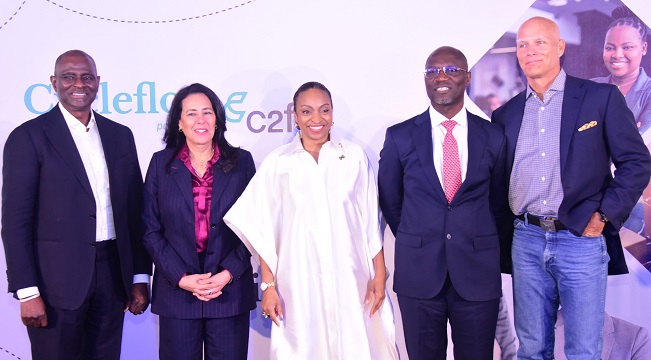
CycleFlow, powered by C2FO, the world’s on-demand working capital platform, has officially launched its operations in Nigeria. This move marks the first phase of a comprehensive Nationwide Working Capital Platform strategy designed for Africa and other emerging markets. With support from various banking partners, the platform has already secured multiple multinational and local customers.

The platform will connect global and local financing institutions with participating anchor buyers and their MSME suppliers. Financial institutions, as well as participating buyers, will be able to extend affordable short-term financing to suppliers by purchasing and discounting invoices accepted for payment by the buyers.
These transactions will allow MSMEs to improve working capital by converting sales receivables immediately to cash, based on the better credit risk of buyers and without any collateral requirements, thus leveling the playing field among larger and smaller suppliers.
The launch marks the beginning of a multi-phase strategy to scale inclusive working capital solutions across the continent and into other emerging markets and has already secured commitments from multiple multinational and local customers.
“The official launch of C2FO’s Working Capital Platform in Nigeria marks a turning point for our financial ecosystem,” said Segun Ogunsanya, Chairman of Nigeria-based CycleFlow. “By enabling immediate access to funds locked in accounts receivable, we are not just financing businesses; we are powering economic growth across the entire ecosystem.
“This innovative technology addresses the biggest financial challenges in Africa and ensures that capital reaches the micro, small and medium enterprises (MSMEs) that drive our economy.”
When fully scaled, the platform has the potential to facilitate $25 to $30 billion in annual financing for local businesses in Nigeria – making it one of the most significant dedicated supply chain financing facilities ever deployed for smaller businesses in Africa.
The multi-bank, multi-buyer platform connects suppliers, including MSMEs, with their larger buyers and financial institutions on a single open infrastructure, removing traditional intermediary barriers and enabling affordable financing at scale.
MSMEs are the engine of Nigeria’s economy and of Africa’s at large. Across the continent, they account for up to 90 percent of all businesses and are responsible for up to 80 percent of employment.
Yet despite their outsized role, these enterprises face a persistent and structural barrier: access to affordable working capital. Traditional financial institutions typically require collateral, established credit histories, and lengthy approval processes that most MSMEs cannot meet.
The result is a financing gap that constrains growth, limits hiring, and leaves viable businesses unable to reach their potential.
The C2FO platform directly addresses this gap. Rather than relying on the creditworthiness of the MSME itself, the platform leverages the stronger credit profile of the buyer, typically a large multinational or established local enterprise to unlock receivables financing for suppliers.
This means that an MSME with an invoice accepted for payment by a large buyer can convert that receivable into immediate cash, without collateral and without the delays of traditional lending. For businesses that routinely operate on payment terms of 60, 90, or even 120 days, this access to liquidity is transformational.
“This initiative is a proof point for what development finance can achieve when it is paired with the right technology and the right partners,” said Mohamed Gouled, IFC’s Vice President for Products & Clients. “Millions of MSMEs across Africa are sitting on receivables they cannot convert into much-needed capital to grow and hire.
“This platform changes that equation. By connecting suppliers, buyers, and financial institutions on a single, open infrastructure, we are helping unlock financing that could support hundreds of thousands of jobs in Nigeria alone and we see this as a replicable model for the rest of the continent.”
The expected economic impact is significant. IFC research indicates that every $1 million financing provided to MSMEs in developing countries creates an average 16.3 direct jobs over a two-year period a trajectory that, when the platform is fully scaled, points to the creation of more than 480,000 direct jobs in Nigeria.
Furthermore, accounting for indirect employment, research points to a multiplier effect of three to five times the initial job creation figure. This surge in stable employment drives consumer spending, as newly employed individuals gain purchasing power and stimulate demand across the local economy, creating a self-sustaining cycle of growth that could boost Nigeria’s GDP by 1 to 2 percent.
“Today marks a crucial milestone for our mission to ensure every business has the capital needed to thrive,” said Alexander “Sandy” Kemper, Founder and CEO of C2FO. “Nigeria is not just a market opportunity; it is a chance to show how innovative financial technology transforms economies.
“By optimizing cash flow for buyers and providing flexible funding options for suppliers, we create a more resilient global economy. This launch kicks off our broader strategy to bring affordable liquidity solutions across Africa and other emerging markets worldwide, utilizing the groundbreaking platform and technology we have spent over 15 years perfecting across 180 countries.”

FG, Others Say Nigeria Wastes 38m Tonnes of Food Annually

Ecobank Assures of Seamless Easter Banking Services

Anchor Gets Nigerian, Canadian Licences as Transactions Crosses $2.5Bn

CycleFlow, IFC Launch Supply Chain Finance Platform in Nigeria

NITDA Strengthens Collaboration with NIPSS to Drive Digital Innovation, Orange Economy Growth

Spotify’s Loud & Clear Report Reveals Over ₦60Bn Revenue for Nigerian Artists in 2025

Madonna University Taps Tech Guru Adote for Strategic Board Role

China Threatens to Shut Nigeria’s Satellite Over $11.44m Unpaid Debt

FCCPC Bans Lagos ‘No Refund’ Policy, Vows Fines and Shutdowns for Traders

Healthcare Under Attack: Why Cybersecurity is Now Critical Care




 E-Financial2 days ago
CBN Says 33 Banks Raise Fresh N4.65 Trillion in Recapitalisation Exercise

 Telecom2 days ago
NITDA Urges Joint Action to Drive Nigeria’s Digital Innovation

 Telecom2 days ago
NCC Insists Telcos Must Compensate Subscribers for Poor Quality of Service

 E-Business2 days ago
Cybersecurity Firm Uncovers CrystalX RAT which Steals Data, Mocks its Victims

 E-Business2 days ago
Oracle Sacks 12,000 in India, Begins Shift to AI

 Telecom2 days ago
Oracle Corporation Axes 30,000 Workers in Brutal AI Shake-Up

 E-Financial2 days ago
Nigeria, Others Lose $88bn Yearly to Illicit Flows —Edun

 General News2 days ago
DBI Unveils Nigeria Digital Economy Outlook 2026: Q1 Report Highlights Strategic Trends, Risks