

General News
CBO Prioritises SMEs Funding For Nigeria’s IT Growth- Nwawudu


Bex Nwawudu, managing partner and co-founder, CBO investment management, has nearly two decades of experience in private equity, investment banking, proprietary trading, and principal investing with a focus on mezzanine products.
Nwawudu possesses over fifteen years experience in Investment Banking and Trading working for ING Barings, and BGC as a senior principal. As debt and mezzanine finance specialist, he previously headed the Fixed Income Division at First City Monument Bank where he oversaw the development of the FGN Bond trading business, and raised over $500 million of debt and equity for Nigerian Companies.
Nwawudu holds an MA in Economics from St John’s College, Cambridge University, and an MBA from London Business School.
He spoke to peter ugwu on the need to funds to support SMEs growth in the sector.
CBO’s Concerns about Investments in the Nigerian IT SMEs Level
Information communications technology sector is one of the drives of any economy. The technology is one of the most important things you can participate in.
Everything we use around us involves technology. Technology has changed the landscape of so many things in the economy.
That is why we deemed it as an area for the development of Nigeria and where we should invest.
It is an area we are highly confident and truly believe that Nigerians can have real impact; we have a sort of mindset that enable us think differently, be creative, but sometimes have not been under-utilized or misapplied.
However, technology is an avenue for those creative thinkers to apply their thoughts and do so in a productive manner.
Assisting the Unstructured SMEs
The Small and Medium Enterprises (SMEs) provide the uplift for a greater impact on the economy. For instance, WasApp that was bought for $19 billion, but it had about 35 employees, are we to regard that as an SME? To us, there are some that will never be structured, while others gain structure.
Meanwhile, if we take the Nigerian commercial banks as another example, some are structured more than others. And those that are structure that will do well, grow, employ and provide impact for growth.
Such are entrepreneurs we are looking for; they will stand, but currently requiring avenues to get structured, partnership and growth.
CBO’s Investment Models to Avoid Mismanagement of Funds by SMEs
Investment models depend more on your opportunities. In some cases, we like to control the funds. There are cases we might want to occupy a position in the corporate governance such as being in the Board, be the financial director or any other strategic role in the organization.
The essence is to help them decide on best ways to manage the funds. We spend a lot of times developing opportunities, traveling globally to find partners or opportunities for these companies in other emerging markets and the developed markets.
So, they join the platform they are exposed to trends in US, Europe, Middle East, Asia and the rest of Africa.
Assessment of Government’s Policies on Funds for SMEs
We regard the Federal Ministry of Communication Technology initiative to an office on the local content development as instructive and a new dawn.
It means we are focusing on local content in the sector. We have seen the success of local content development in the oil & gas sector. It is great to see in the ICT that government has started thinking along that path. It may take some time, but we will get to the destination where the sector will make more impact on the economy. In terms of funding, government has set up a number of funds.
Nevertheless, every government has its priorities. For instance, agriculture has over N100billion intervention fund, CBN mapped out N300 billion intervention fund for the aviation sector, the entertainment (Nollywood) industry also received some interventions, likewise the energy sector.
SURE-P is doing some interventions in several sectors; the call today is that, maybe, the government should add ICT to that list and set aside a fund to be managed by professional fund managers or create multiple sub-funds that will be managed by sub-managers to create competition and growth in that sector.
So, government can set aside N50 billion fund which could be broken down into smaller bits. Thus, each fund manager will raise its fund and manages it; investing it in the sector to develop people.
Investing on ICT Education Space
Education is the key to whatever we are doing. The investments on start-ups, SMEs or interventions should not neglect the importance of the education sector to galvanizing the process.
I have visited few universities in Nigeria, meeting students, deans and other key administrators.
Our universities are generating young people who are excited about life, energetic and intelligent, but they need direction and opportunities so they can understand how their ‘energy’ should be spent during adult life.
You need to work in a firm to understand what work is; you can code or develop software, but if you do not know that somebody can pay you on that ‘little’ code that does a magic, how will you know that you should be working on that code. That is what we are crying to do.
We also want to see that the Office for National Content Development (ONC) brings the Nigerian education-universities, polytechnics and colleges, to now become accredited members, pass through internship that the private sector can give to the candidates. It is important to tie everything together.
CBO’s Assessment of Software Development Community in Nigeria
We are very excited by the commitment, enthusiasms and high-spirited interests shown by these developers. The young coders are building brilliant stuffs. It is a reflection of happening in the Silicon Valley except they do not have the money.
That is what we are driving at. We have seen young graduates who need to pursue their ideas; they need access to the market, mentoring, and those that will show them how it should be done.
Personally, I see it as a commitment that CBO is making; we are not here just to make money. In as much as we want to make profits and make returns to our investors, same time, we want to make major impacts domestically. By creating jobs you are giving peace opportunity to reign.
We cannot have idle Nigerians, watching at others developing their countries. It is high time we created a balance, fair and developed society, intellectually and otherwise.
Other CBO’s Targets in the Market
At the moment, we are assisting in the establishment of infrastructure. We want to support that market. Should investors register, what do they get?
How do we train the students? It means the education establishments have to register before the students can get international grants to get exposed to certain modern trends. Actually, the opportunities are endless, because IT permeates every sector.
What sector does not use technology? In the health, agriculture, manufacturing, aviation, etc., technology does it all. Talking about education, In Brazil today, the internet is used to teach thousands of students.
How about roads and infrastructure? Maybe we still construct roads for the sake of have accessible roads, but modern roads are pathways to several aspects of economic development.
For instance, new roads go with fiber cable dots. Thus, we need to develop our understanding of construction in that way to maximize the roads.
How Young Graduates Can Raise Capitals for Business Development
First of all, the young Nigerian graduates should see themselves bankrolled without applicable ideas. When you are a young person, you need guidance.
Those who have gotten the experiences should be your first chase. Actually, it is a challenge to the society. As time goes on, there should be funds for that class of citizens.
Example, in the UK, there is a Petty Trust. It is a trust you can raise $20,000 to set-up a business. But the key thing for us is, such young person, first goes into the market place, finds a kind of work or labour that enables them to learn.
The truth is that many entrepreneurs first work under successful entrepreneurs to get the out-side school skills. I envisage a time when most of the people working with us would come up with great individual ideas and can raise funds through us to kick-off a business. The whole concept is that the young shall grow.
Plans for Companies in R&D
Research and development (R&D) is very important in Nigeria. It hangs on intellectual property. I know the Office for National Content Development (ONC) is looking at developing a register of national IT property.
For instance, if you look at Facebook, it does not own buildings, it thrives on intellectual property and network. It is protected because of that.
Most of the links between IT companies are patents; they are not even physical. Nigerian banks cannot lend to you on that.
They do not know how to interpret the patent. So, they will be an evolution in the market where we will understand the patents and companies will know where they belong.
The lawyers will have to stand in the law court to protect people. Then, the companies will have room for growth: gain capital in a typical ways through equity and strengthen the case base of the companies.
It will come and this is the first step to it: you need an industry that understands it characteristics.


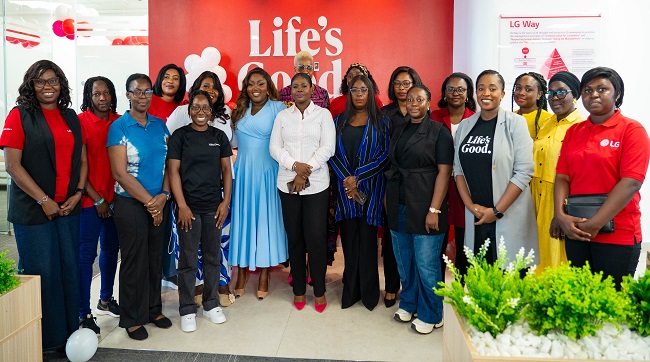
LG Electronics has reinforced its commitment to gender inclusion and women’s empowerment with the successful hosting of its 2026 Women’s Month event, themed “Women Who Power Progress,” at its Lagos office.

The event brought together accomplished women from diverse industries for a thought‑provoking panel discussion that explored their personal journeys, career-defining moments, and the inspiration behind their success in traditionally male-dominated and highly competitive fields.
The distinguished panel featured award‑winning filmmaker Mrs. Biodun Stephen, Mechanical Engineer Engr. Adeola A. Adeleke, Interior Design Leader Dr. Jennifer Chukwujekwe, and MEP Engineer Engr. Moyosore Onabolu. The session was expertly moderated by actress and entrepreneur Blessing Obasi‑Nze, who guided candid conversations around ambition, resilience, and purpose.
Throughout the discussion, panelists shared compelling stories of perseverance, the challenges they overcame, and the values that shaped their professional paths. They also offered practical advice to women navigating their careers, emphasizing the importance of resilience, continuous learning, self-belief, and mentorship as key drivers of long-term success.
A major highlight of the event was the keynote address delivered by Engr. Dr. Funmilade Akingbagbohun, the first female National Chairman of the Nigerian Institution of Mechanical Engineers (NIMechE), Mechanical Engineer, and STEM Advocate. Her keynote address tagged “Women Building, Fixing, Innovating, and Powering the Future of Technology,” delivered a compelling call to action for women, organisations, and society at large.
“Women are building, fixing, innovating, and powering the future of technology. As we mark International Women’s Day, my call to action is simple but urgent: rise, build, break barriers, and lift others along the way,” she said.
“To organisations like LG Electronics, continue to foster inclusive environments where women can thrive, lead, and innovate. To every woman here, be bold, pursue excellence, and never underestimate your potential. To the next generation, embrace STEM careers with confidence and courage. And to all of us, support one another because success is more meaningful when it is shared.”
“While we celebrate progress, we must acknowledge the challenges that still exist, from gender stereotypes and underrepresentation in leadership to the pressure of balancing multiple roles. Yet today’s woman is competent, resilient, and visionary. We are no longer waiting for opportunities; we are creating them, claiming them, and excelling in them. When women rise, organisations grow, and society progresses. There is no limit to what we, as women, can accomplish.”
Speaking at the event, the Managing Director of LG Electronics, Mr. Hyoung Sub Ji, underscored the company’s belief in the transformative power of inclusion.
“At LG Electronics, we believe that empowering women is not just a social responsibility, it is a catalyst for innovation, growth, and sustainable progress. Creating platforms where women’s voices and experiences are celebrated is essential to building a more inclusive future,” he said.
Held in a vibrant and engaging atmosphere, the event also provided a valuable networking platform for attendees to connect, celebrate achievements, and exchange ideas in a relaxed and inspiring environment.
In line with the broader International Women’s Day theme, “Give to Gain,” LG Electronics used the occasion to reaffirm its belief that investing in women strengthens communities, organisations, and society at large.
Through initiatives like “Women Who Power Progress,” LG Electronics continues to champion diversity and inclusion, celebrating women who are not only breaking barriers but actively shaping the future and powering progress across industries.

Economic and Financial Crimes Commission (EFCC) has warned of rising cryptocurrency-related crimes, revealing that illicit digital currency transactions exceeded $160 billion globally in 2025.

Ola Olukoyede, chairman, raised the concern during the inauguration of the United Nations Office on Drugs and Crime Country Programme for Nigeria (2026–2030) in Abuja.
Olukoyede, warned that digital currencies such as Bitcoin are increasingly being exploited by criminal networks to move funds across borders undetected.
According to him, advances in technology, weak regulatory frameworks, and gaps in global financial systems have created fertile ground for cyber-enabled financial crimes.
The anti-graft agency boss stressed that tackling cryptocurrency crime required coordinated national strategies, stronger institutions, and intelligence-driven enforcement.
According to him, the new UNODC programme comes at a critical time when Nigeria and the global community are facing growing threats from organised crime, cybercrime, and illicit financial flows.
Olukoyede described the initiative as a strategic platform to strengthen the rule of law, improve the criminal justice system, and protect citizens from financial and violent crimes.
Musa Aliyu, chairman of the Independent Corrupt Practices and Other Related Offences Commission (ICPC), in his comments, called for stronger inter-agency cooperation.
Aliyu said Nigeria faced interconnected threats, including violent extremism, smuggling, organised crime, and illicit financial flows, warning that no single agency could address them alone.
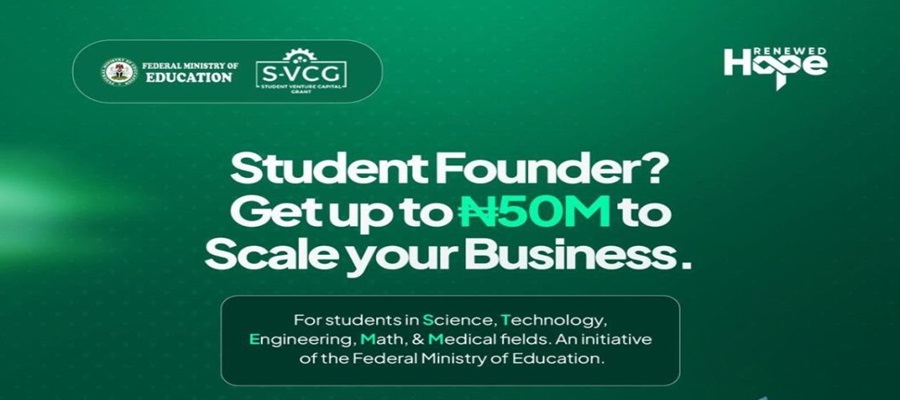
Federal government has awarded N50 million each to 45 students selected from 65 finalists drawn from public and private tertiary institutions nationwide under the Student Venture Capital Grant (S-VCG).

Tunji Alausa, minister of Education, unveiled the initiative at the weekend at the United Nations Development Programme Innovation Hub in Ikoyi, Lagos, describing it as a bold step toward positioning Nigerian youth as drivers of global innovation.
Alausa said the programme marked a significant shift in education policy, aimed at empowering students through innovation, entrepreneurship, and skills development. He noted that the grant offers equity-free funding, mentorship, incubation, and access to digital tools.
He explained that the beneficiaries emerged after a rigorous selection process involving over 30,000 applicants from more than 400 tertiary institutions across the country, culminating in a three-day bootcamp and pitch session before industry experts.
According to the minister, the initiative is designed to transform tertiary institutions into hubs of innovation and economic development, enabling students to move from ideation to commercialisation and become job creators.
“Today is not just another programme event. We are activating a new future for Nigerian students where great ideas are nurtured into impactful solutions,” he said.
Also speaking, Suwaiba Ahmad, minister of State for Education, described student entrepreneurship as a critical national strategy for job creation and economic growth. She emphasised the need for institutions to move beyond theory and support students in translating ideas into viable enterprises.
Similarly, Bosun Tijani, minister of Communications and Digital Economy, commended the initiative, urging beneficiaries to focus on building sustainable and impactful solutions rather than pursuing short-term gains.
He advised students to adopt consistency and long-term thinking, noting that small, sustained efforts could lead to meaningful innovation and societal impact.
In her goodwill message, Elsie Attafuah reaffirmed the commitment of the United Nations to supporting Nigeria’s innovation ecosystem.
She encouraged beneficiaries to refine their ideas, respond to market needs, and contribute meaningfully to national development through innovative solutions.
The minister acknowledged key partners, including the UNDP, Google, and the Bank of Industry, for their support in implementing the initiative and expanding opportunities for young innovators across Nigeria.

LG Electronics Celebrates Women Who Power Progress @ 2026 Women’s Month Event

EFCC Waxes Worriedly over $160Bn Crypto Crime Losses

Dangote Refinery Debunks Speculations on IPO

FG Awards N50m Each to 45 Students under S-VCG

NGX REGCO Fines 5 Firms N291m for Market Manipulation

Spotify’s Loud & Clear Report Reveals Over ₦60Bn Revenue for Nigerian Artists in 2025

Madonna University Taps Tech Guru Adote for Strategic Board Role

China Threatens to Shut Nigeria’s Satellite Over $11.44m Unpaid Debt

Jumia Tech Week 2026 Begins with Tech Deals on Smartphones, Electronics, and Everyday Technology

FCCPC Bans Lagos ‘No Refund’ Policy, Vows Fines and Shutdowns for Traders




 E-Financial2 days ago
CBN bars large‑ticket loan defaulters from banking services in tough new crackdown

 General News2 days ago
ARN Rejects Medical Bill over Attempt to ‘Scrap’ Profession

 Telecom2 days ago
NIGCOMSAT Supports Startups Growth with the Launch of Accelerator 3.0

 Telecom2 days ago
FG Unveils Digital Economy Research Fund Scheme

 News2 days ago
Meningitis Kills a Quarter Million People a Year -Study

 News2 days ago
Stakeholder says AI is Crucial to Nigerian Data Centres Amid Persistent Grid Collapse
- General News2 days ago
Nigeria Advances Digital Governance as NITDA takes over NGEA Portal

 General News2 days ago
Zarttech Reflects on Its Role in Changing Global Perceptions of Africa