

Telecom
Celtel to Zain, Unification Rebranding

The recent rebranding of Celtel
Celtel International was not originally owned by MTC group, it acquired 85% of equity in the then leader is cellular operation in sub-Saharan
MTC’s acquisition of Celtel has helped it achieved a big part of its ambitious vision of becoming a global cellular operator, opened up many promising markets and secured leadership for MTC in sub-Sahara telecom market.
“MTC has built on Celtel’s expertise in sub-Sahara markets to continue its expansion plan in emerging
It is pertinent to note that, the underlining cause of these rebranding to Celtel was as a result of change of ownership, which distinguished the recent rebranding from Celtel to Zain. The recent rebranding is precipitated by the desire of the parent company then MTC of Kuwait to change its name to Zain in September 2007; this led to
Owners of the telecommunication giant felt that there is need to unify its brand required for harmonious operation, and good quality of service that led to rebranding of all Zain operations in Africa to Zain which as well affected its
To some industry watches the rebranding of Celtel to Zain is a good opportunity for the company to change the battered image of GSM operators, if it will match it with actions by improving on its quality of service.
Presently, GSM operators are facing with quality of service issues where many are expecting that the new entrant Etisalat will do the magic by offering them better quality of service. The rebranding and trading with a new name will make most uninformed people to believe that it is a new GSM operator. For instance, this writer had an encounter with some people who were in a hot argument about the emergence of another GSM operator with the name Zain, they are five in number three are arguing that Zain is a new GSM operator that president Yar’adua brought from Arab country to change the face of GSM that is saddle with poor quality of service while the other two more informed, argued in the opposite that it is Celtel that has changed its name to Zain. It took this write a lot of explanation to convince these three gentle men that it is their own Celtel
To mark the launch of its new colourful identity across Africa, Zain also announced the creation of the world’s first cross-continental borderless network, extending and linking its ‘One Network’ service between Africa and the
According to Al-Barrak, ‘this truly is a defining moment in the history of global telecommunications. The connecting of One Network across two continents demonstrates how under one brand, Zain is able to offer enhanced mobile telephony services. Going forward it will now be easier and more affordable for people to keep in touch and support cross-continent trade and enterprise. This is the essence of the Zain brand promise to create ‘A wonderful world’.
This allows all Zain customers (pre-paid and post-paid) in Africa and the
Zain is a leading emerging markets player in the field of telecommunications aiming to become one of the top ten mobile groups in the world by 2011.
Zain was established in 1983 in
Since 2003, it has grown significantly becoming the 4th largest telecommunications company in the world in terms of geographic presence with a footprint in 22 countries spread across the Middle East and
In Africa, Zain now operates in 15 sub-Saharan African countries namely:
In the Middle East, Zain operates in:
Zain is renowned for its pioneering role in bringing technical innovations and modern telecommunication services to the markets it serves. For instance, the launch of its ‘One Network’ service in September 2006 offering Zain customers’ affordable and effective cross-border communications was a world first. Zain also launched the world’s first nationwide 3G and WiMAX network in
It promised to continue to pioneer ‘One Network’, the world’s first borderless network, which has already broken new ground as it is now available for the first time across two continents – Africa and the
Corporate Social Responsibility continues to be high on Zain’s agenda, given its historic role in supporting the communities it serves. Zain is committed to helping to open up an exciting world of new possibilities and opportunities, in culture, health and education, and acting responsibly in the communities where it operates. Zain has pioneered a range of education-based initiatives across
The Zain brand is wholly owned by Mobile Telecommunications Company KSC, which is listed on the Kuwait Stock Exchange (Stock ticker: ZAIN). The company had a market capitalization of US$ 25 billion on 30 June 2008. Financial results for H1 2008 are available on www.zain.com.



Elon Musk, CEO of SpaceX and owner of X, on Sunday criticised his birth country’s government, claiming that Starlink is being denied an operating licence on the basis that he is not black.

In a series of posts on his X handle, the South Africa-born billionaire referenced ongoing regulatory hurdles tied to the country’s Broad-Based Black Economic Empowerment policies.
He claimed the post-apartheid rules require telecommunications licensees to have at least 30 per cent ownership by historically disadvantaged groups, primarily Black South Africans, women, and people with disabilities.
He wrote, “South Africa won’t allow Starlink to be licensed, even though I was born there, simply because I am not black!
“We were offered many times the opportunity to bribe our way to a license by pretending that a black guy runs Starlink SA, but I have refused to do so on principle.
“Racism should not be rewarded no matter to which race it is applied. Shame on the racist politicians in South Africa.
“They should be shown no respect whatsoever anywhere in the world and shunned for being unashamedly racists!”
The dispute centres on licensing requirements enforced by the Independent Communications Authority of South Africa.
Starlink has not formally received a licence and has argued that current telecom regulations do not fully recognise Equity Equivalent Investment Programmes, alternatives to direct ownership transfers that allow companies to invest in skills development, infrastructure, or community projects instead.
South African officials have, over the years, repeatedly dismissed claims of racism, citing other foreign investors operating in the country.
They argued that the company has not submitted a complete formal application compliant with existing rules.
“Sir, that’s not true and you know it! It’s got nothing to do with your skin colour. Starlink is welcome to operate in South Africa provided there’s compliance with local laws.
“This is a global international trade and investment principle. There are over 600 USA companies investing and operating in #SouthAfrica…all complying and thriving! @Microsoft just announced additional investments yesterday,” South Africa’s Head of Public Diplomacy, Clayson Monyela, said in March 2025, when Musk initially raised the allegation.
Replying again via X on Sunday, he wrote, “@elonmusk watching the more than 600 USA companies investing more in, complying with #SouthAfrican laws and thriving. Zero drama!!.”
Telecom
Digital Realty, IXPN Expand Peering Network with New Internet Exchange Point of Presence in Nigeria


Digital Realty, the world’s largest cloud and carrier-neutral data center platform, today announced the activation of a new internet exchange point of presence (PoP) for the Internet Exchange Point of Nigeria (IXPN) at its newly commissioned data center in Ibeju-Lekki, Lagos.

This development marks a significant milestone in strengthening Nigeria’s digital infrastructure and elevating West Africa’s connectivity.
Building on IXPN’s existing PoP at Digital Realty’s campus located in Victoria Island, the newly activated PoP at the company’s Lekki data center extends IXPN’s reach, offering access from 12 data centers across Nigeria. IXPN is now uniquely available in all major data centers in Lagos, further positioning Lagos as a hub for local and regional interconnectivity.
Strategically located, Digital Realty’s Lekki data center serves as the landing point for the 2Africa subsea cable system, one of the world’s most expansive subsea cable projects, linking over 46 locations throughout Africa, Europe, the Middle East, and Asia.
This can deliver reliable, high-speed connectivity and can help enhance Nigeria’s role in the global digital economy. With the opening of Digital Realty’s Lekki data center alongside its campus in Victoria Island, Digital Realty became the first carrier-neutral data center provider in Lagos to operate two campuses, offering enhanced resilience and disaster recovery options for the industry.
With improved access to IXPN at the Digital Realty’s Lekki campus, networks and service providers can benefit from expanded, resilient public peering options. These enhancements can reduce latency, improve efficiency, support robust data exchange for content providers and cloud platforms, and enable enterprises to meet growing demands both locally and internationally.
This activation at our Lekki campus represents a deepening of Digital Realty commitment to connecting the local and regional digital economy to global networks,” said Ike Nnamani, Managing Director, Digital Realty in Nigeria. “By integrating IXPN’s exchange point, we are delivering resilient peering that enables lower latency and can increase operational efficiency for our customers.”
For IXPN, the move supports its expanding community of over 130 peering members – spanning ISPs, global content, and cloud operators – delivering greater resilience and more efficient local internet traffic exchange.
“Expanding IXPN to Digital Realty’s Lekki campus is a significant step in our journey to enhance connectivity across Nigeria,” said Muhammed Rudman, CEO, IXPN. “Our members are expected to benefit from faster, low-latency pathways, allowing broader digital inclusion and fueling Nigeria’s digital economy,” Rudman continued.
IXPN continues to play a pivotal role in localising internet traffic, a key factor in performance improvements and cost reductions. Peak domestic internet traffic at IXPN surpassed 1 terabit per second (Tbps) in April 2025 and grew to over 2 Tbps by March 2026, demonstrating IXPN’s significant role in local traffic exchange. Industry data shows that keeping traffic local reduces latency, boosts connectivity speeds, and delivers substantial annual savings for ISPs and content providers.

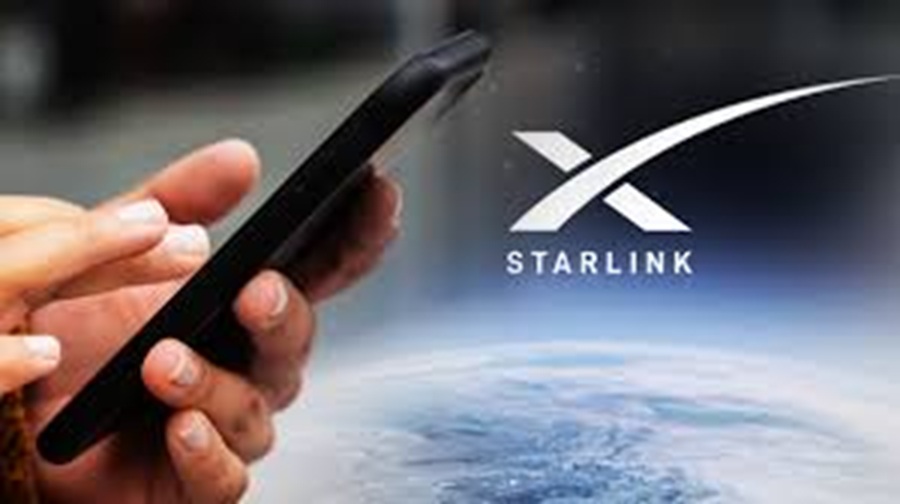
SpaceX is signaling plans to develop its own radio‑frequency chip modules for the Starlink Mobile satellite‑to‑phone service, according to a new job posting for a Senior RF Front‑End Module Design Engineer.

What SpaceX Is Developing
The role is focused on designing “multi‑chip modules” containing RF front‑end components—such as antennas, signal tuners, and power amplifiers—that work alongside the modem in smartphones to transmit and receive 5G, LTE, and Wi‑Fi signals efficiently.
The engineer will integrate these RF modules into mass‑production printed circuit board assemblies and optimise yield and design for high‑volume manufacturing, indicating that SpaceX intends to take tighter control over the phone‑side radio hardware.
Link to Starlink Mobile Upgrade
The hiring move dovetails with SpaceX’s broader push to upgrade Starlink Mobile using valuable radio spectrum it acquired from EchoStar (parent of Boost Mobile), which the company plans to activate via next‑generation satellites launching in mid‑2027.
With that spectrum, SpaceX aims to boost downlink speeds for Starlink Mobile users to up to about 150 Mbps, a significant jump from the current roughly 4 Mbps, enabling 5G‑like connectivity directly from its satellites orbiting over 300 km above Earth.
Device‑Maker and Chip‑Partner Efforts
SpaceX has acknowledged that it will need about two years for phone manufacturers to adopt new chipsets tuned to the EchoStar spectrum bands, and at Mobile World Congress a SpaceX executive said the company is working closely with device and modem makers to enable the service on as many handsets as quickly as possible.
There are also reports that Samsung is developing a modem for the service, suggesting that SpaceX will combine its own RF‑front‑end modules with third‑party modems to deliver a full satellite‑to‑phone stack optimized for its low‑Earth‑orbit constellation.
Current Status of Starlink Mobile
Starlink Mobile today is offered mainly as a paid add‑on on T‑Mobile, while it is free on some of the carrier’s premium plans, and will later expand to Boost Mobile and prepaid carrier US Mobile.
Meanwhile, AT&T and Verizon are pursuing rival satellite‑to‑phone services via Texas‑based AST SpaceMobile, underscoring that direct‑to‑device connectivity is becoming a key battleground in the global telecom‑satellite convergence race.

Meta Files Appeal over $25,000 Damages Awarded to Falana

Teenager Hacks Celebrities Whatsapps, Sells Adult Content in Delta

FG Unveils ePharmacy Platform to Regulate Digital Pharmaceutical Services

Elon Musk Accuses South Africa of Racism over Starlink Licence Block

SERAP Asks Tinubu to Probe Alleged N2.9Bn Fraud In NIGCOMSAT, NNRA

Spotify’s Loud & Clear Report Reveals Over ₦60Bn Revenue for Nigerian Artists in 2025

Kuda MFB Increases Kuda for Her Business Grants to ₦10 Million

Canal+ to Cut Jobs as Part Sweeping Restructuring

Nigeria tops global rankings for USDT, USDC ownership

NBC Boss Urges Content Ceators to Participate in DSO




 Broadcasting3 days ago
FG to Gift Nigerians over 100 Free TV Channels from May 15

 E-Financial3 days ago
CBN Dismisses Polaris Bank Liquidation Claim

 E-Financial3 days ago
AfDB Okays $200m for Nigeria’s Digital Backbone, Others

 General News3 days ago
FG New Approves Biometric Passenger Verification System for Airports Security

 E-Financial3 days ago
Nigeria’s Growth under Threat as Poverty Deepens, World Bank Warns

 General News3 days ago
Breaking Barriers: Cassava Technologies Expands Digital Access Across Africa

 E-Business3 days ago
NESREA, ACMTI, Others Launch Carbon Utilisation Initiative in Nigeria

 News3 days ago
Experts Reveal a Steady Decline of High-severity Incidents Over the Years