

Broadcasting
Chevron Nigeria Local Content Drive: A Credit to President Buhari and Dr. Pantami


By Bode S. Ojerinde – Ph.D
I read with mixed feelings the piece on Chevron Nigeria and its firm belief and support for local content promotion, notably its many years of patronizing Zinox, an indigenous tech giant.

Mixed feelings because, on one hand, I was delighted and extremely proud of the management of Chevron Nigeria for shining the light, leading from the front and even showing the way to government, other sub-national entities in Nigeria, as well as the hordes of other multinationals operating in Nigeria.
The moving article equally made me proud to be a Nigerian because, most times, Nigeria makes the news for the wrong reasons owing to the actions of a misguided few. But to see a renowned, American-based multinational retaining a strong faith in the capacity of a Nigerian tech company, is something worth celebrating.
But on the other hand, the article also elicited some misgivings within me.
Here we are, hailing Chevron Nigeria, an American-headquartered multinational, for choosing a Nigerian brand ahead of other competing foreign brands, including a few known names from the country where it is based, but we can hardly find Nigerian government establishments and their agencies giving a similar fair chance to local businesses.
This was the biggest contradiction that hit me from that well-written article by a Nigerian US-based academic.
Thankfully, the company in question – Zinox – did not betray the trust reposed in it by Chevron Nigeria. It would have been a missed opportunity if Zinox had failed, maybe when it received the first supply contract from Chevron Nigeria, as I doubt that they would have had a second chance and that door would have been closed forever, even to other local players. Such is the merit-driven and highly competitive nature of the tech sector that it would have been virtually impossible for the management of Chevron Nigeria to consider entrusting its supply contract to Zinox for over 16 years without a strong justification.
We must begin to patronize and promote our best brains, rather than accord unnecessary privileges to foreigners. This is the only way we can employ our youths creatively and reduce security challenges confronting the nation.
I have not met Leo Stan Ekeh, the Chairman of the Zinox Group one-on-one but I have followed his landmark strides in the ICT sector. A huge inspiration, I recall when Haroun Adamu, a former Chairman of the Petroleum Trust Fund (PTF) described him at an event as a miracle child, a genius. He had told the story of how Leo Stan returned to Nigeria against the advice of his tutors in the UK, eventually leading the current wave of digital democracy that ushered the Nigerian printing and publishing industry into the next level by computerizing all the newspapers, magazines and book publishing establishments in the country.
According to him, Mr. Ekeh, who used to wear an afro back then as a young man, was like a pastor, an evangelist moving from city to city across Nigeria with a lot of energy, taking his message of digital evangelism to various parts of the country and transforming the landscape with his introduction of technology into the entire printing ecosystem.
Also, in 2001 or thereabouts, I was privileged to attend an oil servicing conference at Eko Le Meridien and during a short break, I was able to sneak into another event taking place at the same venue. The event, which had a long list of dignitaries, prominent Nigerians and even diplomats in attendance including the-then Vice President, Alhaji Atiku Abubakar, the Senate President at the time, Anyim Pius Anyim, many serving Ministers of the Federal Republic and Executive Governors, saw the hall packed full, with many people unable to even get in. That was the launch of Zinox and equally the first time I saw Mr. Ekeh from a distance.
I still recall the emotional gesture he made at that event which left many people in tears. Incidentally, it happened within the short period I spent in the hall. After tracing the history of Nigeria’s disadvantaged status as a country which many in the advanced world believe would not experience technology in the next 30 years, Mr. Ekeh had raised his right hand and declared that he was mentally, physically, financially and spiritually prepared to create an IT identity for Nigeria. That gesture got the hall charged and was a remarkable sight to behold. I left the place highly touched as I had to return to the conference I was attending. But that scene remained with me for a long time.
Same Zinox, a few years later, changed the face of Nigeria and other African countries’ elections by deploying digital democracy tools to aid the process.
Nigerian businessmen are not known to stick to one line of business. The majority are always on the lookout for the next big thing to invest in. However, Leo Stan is one man who has remained consistent in his chosen field of technology and his roadmap.
Therefore, it is hardly surprising that the same man, Leo Stan Ekeh backed by his team, has today achieved all he has in the tech sector.
It is gratifying, a sign of hope and a story that is worth telling, especially with the recent revelation of the long years of patronage from Chevron Nigeria, that this man has achieved so much with little or no support from government, still setting records, creating jobs and a bright future for millions of Nigerian youths.
I recall reading in the same article about Chevron Nigeria how well the administration of former President Olusegun Obasanjo supported local content drive. While I am aware that this was the case, government, at that time, was not really buying a lot of technology products as it was largely analogue in its processes.
There are thousands of Nigerians in the same technology sector who are struggling out there today. Many of them have quietly exited the sector after being unable to keep their heads above water. This brings into sharp relief the commendable efforts of Leo Stan as a shining light who has consistently built new successful businesses, while also expanding the Zinox Group for over 30 years. To see all these happen while not been able to count on the patronage of government is nothing short of a miracle.
Consequently, it was not strange when Zinox made the news early in 2018 with its acquisition of e-commerce brand, Konga. Nevertheless, many had queried the rationale behind Mr. Ekeh’s decision. For some, it was a suicide mission. I also understand that at that juncture, Konga was technically dead, as one of my cousins, who was a merchant trading with the business then, reliably informed me that, before the acquisition, the former managers of Konga had invited them to come and pick up their items warehoused with them. But a new story is being told about that e-commerce giant barely three years down the line. Today, that same Konga was recently reported to have broken a global e-commerce record, becoming the first African e-ecommerce company to turn profitable.
The Chevron Nigeria article represents another eye-opener and I wish to congratulate Zinox and, especially, Leo Stan Ekeh, for what he is building. He has done this for over 30 years without any hint of a scandal which is not an easy feat in a Nigerian business terrain that is prone to blackmail and betrayals. Perhaps, what has saved him from the minefield of subterfuge and the pull-him-down syndrome is the fact that many Nigerians are still analogue and Leo Stan is operating in a sector in which only a few Nigerians really understand.
I would equally like to appreciate the current administration led by President Muhammadu Buhari and the referenced Minister of Communications and Digital Economy, Dr. Ibrahim Pantami, a young man I admire, for their unequivocal commitment to Nigeria. I believe their clear signal is helping domestication in this sector and I advise other Ministers of the Federal Republic to emulate Dr. Pantami to create jobs for our educated youths and reduce security challenges caused by employment. I also urge them to concentrate some of their efforts in pushing our best talents forward.
Certainly, we must support and promote our best so that other emerging ones can be encouraged to outdo their feats, not only in the area of technology, but in other sectors as well. There have been a few surprises in the fintech sub-sector and in agriculture where some young Nigerians are leveraging technology in transforming the space.
However, there is no doubt that Nigeria lacks new model mentors and world class entrepreneurs in the mould of Leo Stan Ekeh.
The government must promote our best names, men and women whose rise to prominence is documented, people we know their background and their history and not fly-by-night entrepreneurs or undeserving foreigners.
It is by so doing that we can assure these patriotic/successful entrepreneurs of government’s support and encourage them to do more, inspire the next wave of budding entrepreneurs and contribute in building the Nigeria of our collective dreams.
Bode S. Ojerinde – Ph.D. wrote in from Lokoja, Kogi State


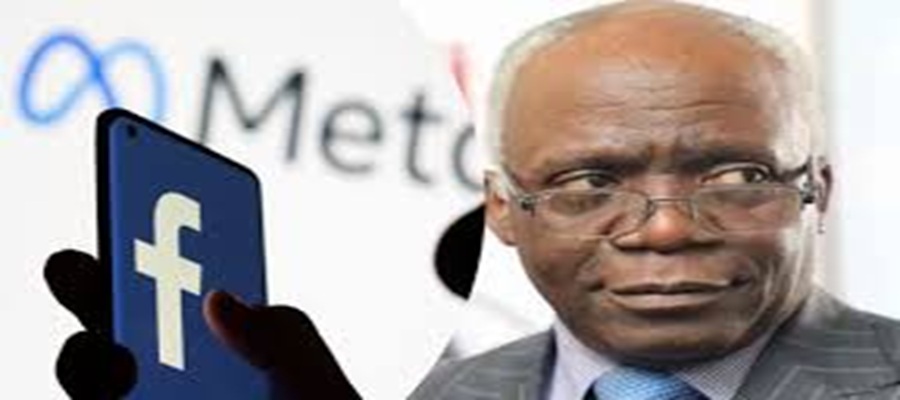
Lagos High Court at TBS has awarded $25,000 in damages in favour of Mr. Femi Falana (SAN) in his $5 million lawsuit against Meta Platforms Inc., the US-based technology company owned by Mark Zuckerberg, over the alleged invasion of his privacy.

Early in 2025, a video was published on Facebook claiming that Falana was suffering from a terminal illness, which prompted the suit
Delivering judgment on Tuesday, January 13, Justice Olalekan Oresanya held that a global technology company such as Meta, which hosts pages for commercial benefit, owes a duty of care to persons affected by content disseminated on its platform.
Falana, through his lawyer, Mr. Olumide Babalola, accused Meta of publishing motion images and voice captions titled “AfriCare Health Centre” on its platform, suggesting that he suffered from a disease known as prostatitis.
He argued that the publication constituted an invasion of his privacy as guaranteed under Section 37 of the Constitution of the Federal Republic of Nigeria, 1999 (as amended).
Falana said the false video about his health status had tarnished his image and reputation built over the years.
He also contended that the publication, which he described as false, offensive and disturbing, painted him in a false light and caused him mental and emotional distress.
In its judgment, the court rejected the argument that digital platforms can rely solely on “hosting” or “intermediary” defences where the platform monetises content and the harm arising from misinformation is reasonably foreseeable.
Falana’s lawyer said the decision reinforces a standard of platform accountability under Nigerian law, aligning with emerging global jurisprudence.
The court further held that “the fact that the applicant is a public figure does not rob him of his right to privacy.” It found that the publication of false medical information intruded into the claimant’s private life, regardless of his public standing.
Babalola said the finding settles an important misconception in Nigerian legal practice and affirms that health data enjoys heightened protection, even for public figures.
The court also held that Meta determines the means and purposes of processing content, monetises pages, and controls distribution algorithms, thereby acting as a joint data controller with page owners.
Consequently, Meta was held vicariously liable for the offensive video.
Babalola said: “This is a major development under the NDPA and weakens the ‘mere platform’ defence traditionally relied upon by Big Tech.”
The court further ruled that Meta breached Section 24 of the NDPA by processing personal data that was inaccurate, harmful, lacked a lawful basis and was unfair to the learned Senior Advocate. The false health information was held to amount to unlawful processing per se.
It emphasised that where the risk of inaccuracy is foreseeable, particularly in relation to sensitive personal data, a platform owes a heightened duty to ensure accuracy and integrity.
The court held that Meta failed to deploy adequate safeguards to prevent or mitigate the harm.
As a global technology company with vast resources, Meta was expected to implement effective content-review mechanisms, rapid takedown processes and safeguards proportionate to the risks posed by misinformation. Its failure to do so, the court held, amounted to regulatory non-compliance.

Drone
The US Department of Homeland Security (DHS) will invest $115 million in counter-drone technology to safeguard the 2026 FIFA World Cup and events marking America’s 250th independence anniversary, creating a dedicated office for rapid drone system deployment.
Homeland Security Secretary Kristi Noem described drones as “the new frontier of American air superiority,” stressing the need to counter threats from drug cartels using unmanned aircraft for smuggling and surveillance, alongside incidents like a 2025 NFL stadium drone flight and 2024 New Jersey sightings.
The funding supports 11 World Cup host cities expecting over one million visitors, building on FEMA’s $250 million grants to those states and addressing risks heightened by cartels’ advancing tech, including a reported FBI tracking plot in Mexico.
DHS has conducted over 1,500 counter-drone missions since 2018, with the new Program Executive Office accelerating acquisitions amid President Trump’s border security push.
Broadcasting
Youth Talent Takes Center Stage as T2 Ignites High-Octane Rap Battles @ Carnival Calabar

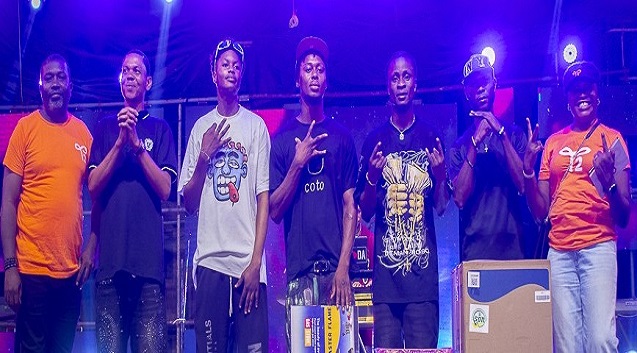
The energy at the Carnival Calabar Music Concert reached a new high as T2 introduced a first-ever rap battle platform, giving young Nigerians an electrifying stage to showcase their talent, creativity, and self-expression while competing for exciting prizes.

Held at the U.J. Esuene Stadium, the activation blended pulsating music, vibrant culture, and youthful energy into a dynamic celebration that kept thousands of carnival-goers fully engaged from start to finish.
Eight fearless contestants stepped into the spotlight, going bar for bar in an intense lyrical showdown. Rappers fused local languages, pidgin, and sharp punchlines, creatively weaving the T2 brand into their verses.
Anchored by the energetic hosting duo MC Double I and MC Princess, the rap battles thrilled over 16,000 attendees, including the Governor of Cross River State, Senator Bassey Otu, delivering an unforgettable showcase of youth talent and cultural expression.
With prizes including fridges, gas cookers, sound systems, and airtime top-ups, the competition remained fierce throughout the night. After two high-energy rounds narrowed the field to a five-man final duel, Emmanuel Eye emerged as the overall winner, taking home the grand prize — a fridge.
“I never expected this at all,” Emmanuel said. “I came to the concert like anyone else, and hearing about the T2 rap battle was a surprise. When I got the chance to perform, I just went for it. Being named the overall winner is amazing, and I’m grateful to T2 for creating this platform to showcase our talent.”
Beyond the stage performances, T2’s presence added a digital layer to the carnival experience. As part of its role as Digital Technology Partner of Carnival Calabar, the brand introduced the MyT2 App as a lifestyle companion, while also enabling line reactivations, airtime top-ups, and instant rewards for hundreds of attendees, blending technology seamlessly into the live celebration.
Commenting on the activation, Chinelo Manefo, Specialist, Events and Sponsorship at T2, said:
“The energy from both the rappers and the crowd was incredible. This platform reflects exactly what T2 aims to create — a celebration of youth, creativity, and culture, enhanced by technology that connects people and experiences. Seeing the audience so immersed shows how music and performance can empower the next generation.”
The Carnival Calabar Music Concert, headlined by Tiwa Savage, Timaya, and top local performers, was further energized by T2’s interactive rap battle platform. By blending music, culture, youth expression, and digital innovation, T2 reinforced its commitment to championing Nigeria’s next generation, giving young creatives a stage to shine while enriching how they experience the festival.

Glo Unveils Immersive Gaming Experience, Travel Saga

Half of Global Companies Build SOCs to Enhance Cybersecurity, with a Focus on Human Expertise

Moniepoint Launches Second Cohort of DreamDevs Initiative to Double Down on Africa’s Tech Talent Pipeline

NITDA DG Reaffirms Nigeria–U.S. Partnership on Data Privacy, AI and Cybersecurity

Falana Wins $25,000 Damages from Meta Over Fake Illness Video

Banks quietly move to enforce new ₦50 transfer levy from Jan. 1

FIRS says NIN, CAC Numbers to Serve as Tax IDs from 2026

Nigeria Takes the Lead in the Global WSIS+20 Digital Agenda

Nigeria Police Arrest Okitipi, Nigerian Allegedly Linked to Microsoft 365 Hack

PalmPay Launches N400 Million World Travel Carnival, Rewarding Users with Free Global Trips




 E-Financial2 days ago
Wema Bank Upgrades ALAT Banking App

 General News2 days ago
Firm Launches AI-powered Platform to Simplify New Tax Laws

 Telecom2 days ago
X Suspends Twitter Account for Rules Violation

 E-Business2 days ago
Study Reveals 88.5% of Phishing Attacks Focus on Stealing Account Credentials

 News2 days ago
Nigeria, Others Lag Behind as Egypt Tops Africa in AI Readiness

 General News1 day ago
PalmPay, Premier Cool to Reward 10,000 Nigerians with ₦100m in “10k for 10k Campaign”

 E-Business1 day ago
Kaspersky Warns Telecom Threats from 2025 will Carry into 2026 as New Technology Adds New Risk

 General News2 days ago
Why Nigeria’s New Tax Regime Will Fail Without Public Trust