

Broadcasting
Coca-cola Empowers Over 2 Million Women Entrepreneurs Across Africa through 5by20 Initiative

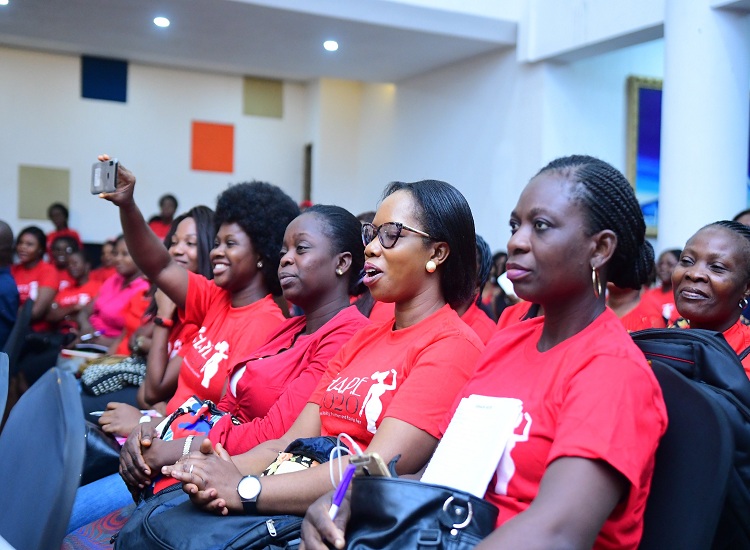
The Coca-Cola Company and its partners are proud to celebrate exceeding our 5by20 goal by enabling the economic empowerment of more than 6 million women around the world. 34% (just over 2 million) of those women enabled by the 5by20 program live and do business in Africa.

This 5by20 iniative is aimed to assist women entrepreneurs across the Coca-Cola value chain – agricultural producers, suppliers, distributors, retailers, recyclers, and artisans – overcome challenges when establishing and growing their business.
By providing access to business skills, financial services, assets and support networks of peers and mentors, women entrepreneurs are enabled to overcome social and economic barriers and succeed as entrepreneurs, while also helping create sustainable communities.
The Coca-Cola Company executed 5by20, a global initiative implemented across 33 countries in Africa, where we rolled out locally relevant initiatives.
The 5by20 goal was ambitious, and we knew that we could not achieve it alone. Over the last 10 years, we have worked with countless partners including our bottling partners, civil society organizations, government stakeholders, other private sector actors, and generous financial grants from The Coca-Cola Foundation to recipients within its Women’s Entrepreneur Empowerment priority giving tier.
The Coca-Cola Foundation has funded some of our 5by20 initiatives, and the Coca-Cola system has worked with several partners to implement over 300 programs in 100 countries to provide women entrepreneurs with business skills training, mentoring networks, financial services and other assets to help enhance their businesses and lives as well as provide more for their families.
Women empowerment and progress against all the Sustainable Development Goals requires the collective effort of governments, civil society, NGOs, and private sector organizations. Over the last 10 years, we have worked with countless partners who helped us bring our aspiration to life. Partnerships with organizations such as UN Women, Inter-American Development Bank (IDB), Women Enterprise Fund (WEF), Department for International Development (DFID), USAID, International Finance Corporation (IFC) MercyCorps, TechnoServe, Bill & Melinda Gates Foundation, Hand in Hand Southern Africa, and several other regional and local partners were critical to the success of the 5by20 program. These partnerships are a demonstration that through collective action we achieve more together than we can on our own.
In 2012, The Coca-Cola Company signed a global agreement with UN Women to enable the economic empowerment of women entrepreneurs in three pilot countries, which included South Africa. At the end of the four-year partnership in South Africa in December 2016, over 25,000 women micro-entrepreneurs had received business skills, leadership training, mentoring and peer networking skills, and access to finance.
According to a report by Harvard Kennedy School Corporate Social Responsibility Initiative, through this program the entrepreneurs increased their revenues by 40% on average and increased their confidence and leadership abilities within their communities.
In Kenya, a partnership with the Women Enterprise Fund (WEF) established in 2014 and rooted in a shared interest in creating a fair equitable environment to help women overcome barriers and build sustainable businesses, aimed to empower 1 million women through entrepreneurship training and access to capital investment. At the end of 2020, nearly 800,000 Kenyan women were empowered through the initiative.
In Nigeria, in partnership with the UK Department for International Development Girls Education, we launched the Educating Nigerian Girls in Nigeria Enterprise (ENGINE) value program, which aimed to strengthen the educational and economic opportunities of the Nigerian girl-child.
Nearly 21,000 young girls and women benefitted from this program and many more over the last 10 years. At the end of 2020, nearly 500,000 Nigerian women were empowered through the initiative.
“This International Women’s Day, we celebrate surpassing our goal to reach 5 million women, but we know that there is still work to be done,” says Patricia Obozuwa, Vice-President: Public Affairs, Communication, and Sustainability Coca-Cola Africa.
“Women entrepreneurs continue to face major hurdles hindering their successes, and we acknowledge that our work must therefore continue, particularly given the significant socio-economic disruption created by the pandemic in so many communities around the world.”
The Coca-Cola Company is a global organization, but a local business and deeply rooted in the local communities we proudly serve. We thrive as communities prosper and numerous studies from the United Nations and academic institutions have repeatedly proven that investment in women spurs economic growth and promotes sustainable development.
“By investing in women’s economic empowerment over the past decade, we have created shared value in hopes of a better shared future – enabling improved livelihoods for women, their families and their communities, while inclusively expanding our business,” says Obozuwa.
“We are proud about the ripple effects that these programs have had on the millions of lives we have touched and will continue to have over the years to come.”
As we look to the future, The Coca-Cola Company remains committed to its purpose to refresh the world and make a difference. Our efforts will be focused on supporting community resilience and as the impact of our continuing efforts multiplies with each passing year, we expect to reach many more women and underprivileged populations around the world.


Nigerian Copyright Commission (NCC) has called for urgent adoption of advanced digital protections after blocking seven piracy sites amid escalating online threats to Nollywood content.

The call was made during a webinar hosted by Greychapel Legal titled “Clicks, Streams, and Copyright: Who Owns Nollywood’s Digital Future?”, which brought together filmmakers, regulators, entertainment lawyers and media strategists to examine how content ownership and copyright enforcement are being reshaped by the digital age.
Lynda Alphaeus, director and head of the NCC Lagos Office, said the Commission has intensified its efforts to combat piracy across digital channels and is upgrading its operations to meet emerging threats.
According to her, Nigeria’s new Copyright Act was deliberately updated to strengthen creators’ rights amid the explosion of online distribution.
“NCC has worked, and is still working tirelessly to adapt Nigeria’s legal framework to cope with digital distribution challenges. We now have the power to block networks publishing illegal content, and we have already blocked seven websites distributing pirated Nigerian works,” Alphaeus said.
She revealed that the Commission has established a special taskforce known as the STOP Unit to coordinate anti-piracy operations online, alongside new awareness campaigns targeting local markets and schools to educate content creators and the public on copyright obligations.
Alphaeus urged filmmakers and producers to take ownership of their digital safety by deploying available technological protections to safeguard their intellectual property.
She explained that tools such as encryption help prevent unauthorised copying, blockchain technology offers immutable proof of ownership, digital watermarking allows creators to trace illegal uploads, while cloud security and regular offline backups protect creative files before they reach the market.
While noting that copyright in Nigeria does not legally require registration, she stressed that registering one’s work strengthens protection and provides legal presumptions that can be vital in enforcement.
“Whatever you register is presumed to be yours until proven otherwise,” she said, urging creators to invest in copyright knowledge as part of their business strategy.
Other speakers at the webinar reinforced the urgency of protecting Nollywood’s digital assets.
James Omokwe, film director, noted that while streaming platforms have created unprecedented opportunities for visibility and monetisation, they have also opened new vectors for intellectual property theft and unauthorised redistribution.
Solafunmi Laelle, media strategist, added that audience data, which streaming platforms rely heavily on, will increasingly determine leverage and value in film licensing negotiations.
According to her, creators who lose control of their intellectual property, whether through piracy or unfavourable contracts, also lose access to valuable data that could shape their long-term earnings.
Nky Ofeimun, entertainment lawyer, emphasised the need for creators to understand the contractual implications of ownership, platform exclusivity, and reversion rights.
She noted that many filmmakers still underestimate how quickly digital copies can be illegally duplicated or uploaded once control is lost.
The panelists agreed that as Nollywood deepens its digital footprint, piracy will continue to evolve and become more sophisticated.
They stressed that the industry must respond with equally sophisticated tools, stronger contract negotiation, and improved education around copyright.


Globacom, just introduced four brand new movies on its premium entertainment platform, Glo TV, and they are completely free for all subscribers. The company says the release marks another major step in its mission to enrich digital entertainment for millions of viewers across the country.

In a statement from Lagos on Wednesday, Globacom explained that the new titles feature some of Africa’s most celebrated actors and filmmakers, offering a colorful mix of romance, comedy, drama, culture, and emotional storytelling. The lineup includes Johnny Just Come (JJC), Eko Vibes, Bound, and Shifting Desire.
“Each of these movies was chosen to spotlight diverse African stories while delivering world class entertainment unavailable in cinemas, on YouTube, or on any other streaming service. Viewers do not need any subscription or extra payment. Access is completely free,” the company said.
Leading the pack is Shifting Desire, featuring Lilian Afegbai and veteran actor Majid Michel. The film is a gripping romantic drama that dives into marriage, intimacy, betrayal, healing, and the emotional journey of a couple using therapy to rebuild trust. Shifting Desire premiered on Glo TV on December 2 and is already streaming for free.
Johnny Just Come (JJC), starring Patience Ozokwor and Nancy Isime, delivers a hilarious cultural crossover story about an American man trying to navigate love and marriage in an African household. The movie explores themes of identity, family, culture, and coexistence in a warm and relatable way.
The third title, Bound, starring Rita Dominic and Eyinna Nwigwe, is a thought-provoking family drama that follows a successful career woman confronting long hidden personal struggles and the impact on her relationship. The film showcases powerful performances from some of Nollywood’s finest.
Rounding out the collection is Eko Vibes, featuring Broda Shaggi, Josh2Funny, and Nkechi Blessing. The movie captures the energy and hustle of Lagos youth culture, spotlighting ambition, humor, and the vibrant spirit of young people chasing success in the city.
Globacom noted that the new releases reinforce its commitment to delivering original African content at the highest quality. “With these exclusive titles, Glo TV is redefining digital entertainment in Nigeria by offering fresh, premium movies not available anywhere else. We remain committed to growing our catalog with rich African stories that celebrate creativity at its best,” the company added.

A new study, conducted by pan-African organisation, Paradigm Initiative (PIN), warns of an alarming surge in the prevalence of Technology-Facilitated Gender-Based violence, with 67 percent of respondents being victims of at least one or multiple forms of digital violence.

Online
Released on International Human Rights Day, the research exposes deep systemic failures, weak accountability, and unsafe online spaces driving a rapidly escalating epidemic across Cameroon, Kenya, Nigeria, Senegal, Zambia, and Zimbabwe.
PIN recognises that this gap limits both the understanding of TFGBV and the development of effective solutions. In response, this study adopts a survivor-centred approach that reframes how TFGBV is researched, discussed, and addressed. By prioritising survivors’ perspectives, the research uncovers the emotional, social, and systemic dimensions of digital violence that formal reports and statistics often obscure. It also interrogates how survivors navigate reporting systems, access justice, and play an informed role in digital spaces that are frequently hostile or unsafe.
A key finding of the study is that young people are disproportionately affected, with those aged 18–34 constituting the vast majority of survivors. Most incidents of TFGBV occurred on Facebook, WhatsApp, and X (formerly Twitter), underscoring how mainstream social media platforms continue to function as structurally unsafe spaces for many users—particularly women, activists, and advocates.
“Victims’ experiences range from sexual harassment, threats, and misogynistic attacks to severe violations such as stalking, non-consensual image sharing, hacking, sextortion, and identity-based harassment,” the report notes. “Personal testimonies reveal profound emotional, psychological, and reputational harm.”
The study also highlights that formal systems such as the police, employers, and public institutions, remain underutilised, largely due to fear, mistrust, or an expectation of inaction. While the findings expose wide-ranging gaps across platforms, institutions, and legal frameworks, they also highlight survivors’ resilience and their continued efforts to seek safer digital environments.
In light of these findings, PIN calls for urgent action to make online spaces safer for everyone, in line with this year’s Human Rights Day theme, “Human Rights, our everyday essentials.” Addressing these systemic gaps is critical to advancing democratic engagement, promoting media pluralism, fostering digital inclusion, and achieving gender equality across Africa.

Preventing Financial Crimes Amid Mounting Insecurity: Why Following the Money is Now a Survival Imperative

NCC Blocks Piracy Sites as Nollywood Faces Rising Digital Theft

Minister Claims Bandits Exploit Poor Network, Bounce Calls Off Multiple Towers

FIRS says MOU with DGFIP Won’t Compromise Nigeria Tax Data Sovereignty

Top Nigerian Startups Secure Funding Boost @ iHatch Demo Day Awards

Nigeria Records Highest Weekly Cyberattacks in Africa — Report

Hackers Breach Phones of Dangote and Otedola, Demand Ransom

Cyber Tsunami Hits Nigeria as Breaches Surge 1,047%, esentry Q3 Report Reveals

MTN Nigeria Has Invested Over ₦32.23 Billion in National Priorities Through Its Foundation

FG Lists Bank Charges Nigerians Will Stop Paying from January 2026



 Telecom2 days ago
Minister Claims Bandits Exploit Poor Network, Bounce Calls Off Multiple Towers
 E-Financial2 days ago
FIRS says MOU with DGFIP Won’t Compromise Nigeria Tax Data Sovereignty
 General News2 days ago
Top Nigerian Startups Secure Funding Boost @ iHatch Demo Day Awards

 Telecom2 days ago
Google.org Backs CyberSafe’s Resilio Africa to Shield 2m People from Cyber Threats

 Telecom2 days ago
CBN, NCC to Launch Short Code for Swift Consumer Complaint Resolution
 Broadcasting2 days ago
NCC Blocks Piracy Sites as Nollywood Faces Rising Digital Theft

 Broadcasting2 days ago
Four Must-Watch African Films Debut Free on Glo TV

 Telecom2 days ago
NASENI Launches FutureMakers to Inspire Innovation in Young Nigerians