

General News
Collocation is About Opex Reduction—Hussain

Fazal Hussain is chief executive officer of Helios Towers, pioneer collocation company. He has executed many international telecommunications projects in his over twenty years working experience that saw him work in several countries around the world. He joined Helios Towers from PTCL (Incumbent operator in Pakistan) where he provided solutions to carriers for both passive and active shared infrastructure. Hussain spoke to chike onwuegbuchi and funmi ilesanmi on collocation initiative in the telecom industry.
Infrastructure Deployment
It has been very supportive as far as we are concerned. As you are aware we just raised another $250 million from the IFC, we are very happy with the opportunities in Nigeria and we will continue to provide basic world class services to operators mainly focusing on helping them to reduce their operational expenses (Opex).
Target of Facility
The idea is that the money is for investing in capital, so that we can put more towers on ground, and as we do that it means we are able to provide services to not only the big GSM players but also the Wimax operators.
Cooperation on Infrastructure Sharing
It’s been very good. If you are a service provider, I can come to you and say I can take 70 percent of your Opex out and I am sure you will want to talk to me. We can help you take Opex out and cut the cost so that operators can be more profitable by providing services to more and more customers. Our focus is solely Opex reduction to manage services and we are a world class company providing services to all the operators.
Challenges in Managing Towers
We have invested over $10 million in our network operation centre in Victoria Island. What happens is that we are getting live pictures, live signals and alarms when somebody enters the site even to check the temperature. We get all the information to our network operation centre in Lagos and we then delegate people who are in the field to go and investigate very quickly. We do a lot of preventive and corrective maintenance as well. Our people go to site two or three times a week just to make sure everything is fine. They check if the battery is fine, check the generators, and check everything basically because that is how to provide 99.9 percent uptime.
Encouraging Operators to Collocate
It is very simple, we provide world class service, and we provide 99.9 percent uptime which nobody does in Nigeria. We are the only company that can provide the uptime with what is called plug and play. The operator does not have to do anything, within two days they can switch on their equipment and its up and running. They don’t have to worry about anything; we provide everything, security and all. At the end of the day, we help them reduce Opex and our objective is to help operators reduce Opex by up to 70 percent. We provide world class service at a very good price.
We build our sites to the highest specification and it is designed for multiple tenants. As you know in Nigeria you get public power supply for about 6 hours in a day so 18 hours in a day you don’t have power. So what we do is to provide battery backup then we have a generator and then back up generator. We have personnel on that site with a mobile generator for quick response if there is a problem with the battery and the two generators. This is to ensure that the site does not go down at all.
Today, quality of service is relatively poor but in two years time and with the emergence of new operators, quality of service will be taken seriously as consumer will not tolerate any operator that provides poor quality of service.
Adding Value to Telecom Infrastructure
When we put a tower in an area there is no need to put more towers. One tower can service the GSM, CDMA and the Wimax operators, so they don’t have to spend any capital; they reduce their Opex so they can go spend it somewhere else. Whenever we put up a tower, the operators are very happy to come and use our towers for the simple reason of the assurance that we can provide 99.9 percent fully managed service.
Leasing Fibre to Operators
We are looking into doing what is called back haul. Our objective is to do collocation, managed services and backhaul so that we can put fibre on our towers.
Assessment of Telecom Industry
The telecom industry in Nigeria is still growing. First it was the voice , 2G the GSM and the CDMA obviously that has been growing after the deregulation and probably at the end there will be about 80 to 100 million subscribers because Nigeria is a large country. The second wave of technology which is to provide value added services on top of the voice and the third which is data base services of broadband internet based on 3G and Wimax. I believe as far as telecom sector is concerned the consumers will benefit because it is a competitive market and it is very positive as far as I am concerned
We are the pioneers and as a matter of fact we started the collocation business so the relationship has been very good.
In essence we provide two services at the moment. We build sites for collocation, meaning sites that allows at least four different operators whether GSM, CDMA, WiMax. Secondly, we manage passive infrastructures on behalf of the operators.
We guarantee 99.9% uptime and so far we have more than 1,000 sites nationwide and we plan to increase it to 2,000 fully managed sites.
Operational Model
The market dynamics is very critical but it is peculiar to emerging markets. Average revenue per user (ARPU) is declining rapidly, interconnect rates are very high, transmission cost is also very high and operating expenses is increasing. The subscribers are becoming increasingly demanding and quality of service is now a big issue. The two key aspects of the lean operator model are managed services and infrastructure sharing. Helios Towers provides these services to enable operators to concentrate in managing their customers, brand, sales and not managed infrastructure.
Capacity to Meet Operators Demand
We are very relevant to speedy roll out of telecom and related services in Nigeria, as a matter of fact; we are the heart of the wireless operators.
We do have the capacity and even with the coming of new entrants into the market. We are rolling out as fast as we can. First of all we are rolling out in the major cities and the smaller cities and then the villages. So far, we have spent over $300 million and recently IFC, granted us $250 funding to roll out additional 1,000 sites. This will bring our sites to over 2,000. Finance is not a problem to us as we are well funded to provide efficient services to the operators.
Managed services allows operators to focus on core strength of managing the business and not running the network, adopt a third party strategy and service consolidation to achieve immediate cost reduction by 70%, achieve operational excellence in a market where average site uptime is only 70% ,focus on service quality improvement to achieve business key performance indicator.
Congestion of the Landscape by the Erection of Towers
We are a very responsible corporate citizen of the country, and therefore obtain approvals from the appropriate authorities before building our sites. We have a high specification of our sites and our towers do not fall as they are designed for 25 years. They are not local standard but international standard, so we ensure that we get the approval of the government entities concerned before we build our sites.
More so, financially we have not really face challenges in the sense that we have been able to raise money internationally, we are actually a company registered in Nigeria but investment comes from abroad. The biggest challenge that we are facing is finding good quality sites. If for example you are given the license to operate telecommunication services in Nigeria, and you want to roll out nationwide, you will spend a lot of money in getting a good quality site and besides it will take you sometime to get it.
Effect of Taxes on Bottomline
Whenever you pay taxes, it affects your bottom line. But whatever taxes we pay, operators have to pay if I have five people or four on a tower; I pay only once so I could pass those savings to them, so they don’t have to pay.
Parameter of Your Charges
Our charges are very affordable. It depends on the space that you want to hang your equipment, if you are a GSM or CDMA operator, you will probably take more space, but the cyber café or Wimax operator, radio station, Television station etc take smaller space and pays lesser than the former. So, our charges depend on the space and specifications of your equipment.
Helios Towers in Future
We hope to see Helios Towers in other African countries. Right now, we are still serving Nigeria because Nigeria is a big market but very soon we are looking forward to exporting our skills to other African countries apart from Nigeria. By 2010, we will probably have close to 2000 towers. We have over a thousand right now.


Ugo Nwokolo, Nollywood actor, has shared a controversial opinion on internet fraud, saying it has been keeping the nation’s economy afloat amid a tougher economic climate.

Ugo Nwokolo, Nollywood Actor
Nwokolo made the assertion in a video interview currently circulating on social media.
According to the actor, the cost of living and soaring house rent have made life unbearable for legitimate income earners.
He said high rent in major cities like Lagos and Abuja has edged out those earning N50,000 and N90,000 monthly.
Nwokolo said, “Personally, I think Yahoo has helped keep the economy afloat. Do you expect a civil servant to afford house rent of N3 million or N5 million in Abuja?”
The actor maintained that only the rich, including fraudsters, could meet up with the rising cost of living.

“If you go to Lagos now, the least you’ll see for a two-bedroom apartment is about N7 million or N8 million. Who is supposed to afford it? The civil servants? Of course, it’s the fraudsters,” he stressed.
However, he argued that he was not justifying crime but merely stating fact.
“I’m not justifying crime, but yes, Yahoo is helping the economy. How do you expect people to live in this kind of economy?” he said.
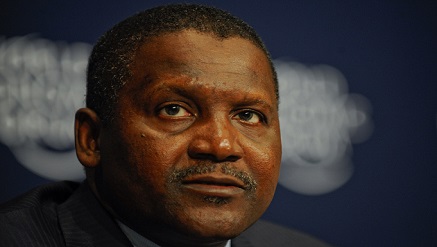
Aliko Dangote, Africa’s richest man, plans to dedicate one-third of his wealth to charity as part of his succession plan, Halima Dangote, his daughter, has revealed.

Aliko Dangote
Halima, a trustee of the Aliko Dangote Foundation, disclosed this in an interview with Bloomberg published on Tuesday, saying the billionaire had secured the support of his family to commit 33 per cent of his estate to philanthropy.
According to the Bloomberg Billionaires Index, Dangote’s net worth is estimated at $35.1 billion, meaning one-third of his current wealth would be worth about $11.7 billion if his fortune remains at that level.
Halima explained that her father views philanthropy as a key part of his legacy and has incorporated it into the family’s long-term succession plans.
She said Dangote had structured his estate to ensure that charitable giving continues across generations, particularly in areas such as healthcare and education.
“He sort of put all the structure in place whereby we focus a lot on health and education. He actually donated 25 per cent to the foundation. If you look at it, it is what we call in Sharia Code in Islam; it means he has donated 33 per cent of his whole inheritance to his foundation,” she said.
Halima added that Dangote believes giving back is central to the success of his businesses and the family’s values.
She said the billionaire asked her, her two sisters, and his mother to sign the agreement allowing 33 per cent of his inheritance to be dedicated to humanitarian causes.
The planned donation builds on Dangote’s longstanding philanthropic activities through the Aliko Dangote Foundation, which was established in 1994.
According to Halima, the foundation received an endowment of $1.25 billion about a decade ago and has since received an additional $700 million in funding.
She said about 70 per cent of the foundation’s spending goes to programmes in Nigeria, while 20 per cent supports projects across Africa, with the remaining funds directed to initiatives in other parts of the world.
The foundation’s interventions focus on healthcare, education, nutrition, and humanitarian support, including partnerships that contributed to the eradication of wild poliovirus in Africa.
Dangote’s planned charitable commitment adds to increasing global attention on billionaire philanthropy.
Although the proposed 33 per cent allocation is below the 50 per cent commitment associated with the Giving Pledge, it would rank among the largest philanthropic commitments announced by an African billionaire.
Earlier this year, Dangote was named among the world’s most influential philanthropists by TIME magazine’s inaugural TIME100 Philanthropy list, recognising the impact of the Aliko Dangote Foundation, which reportedly spends more than ₦50 billion annually on programmes across Africa.
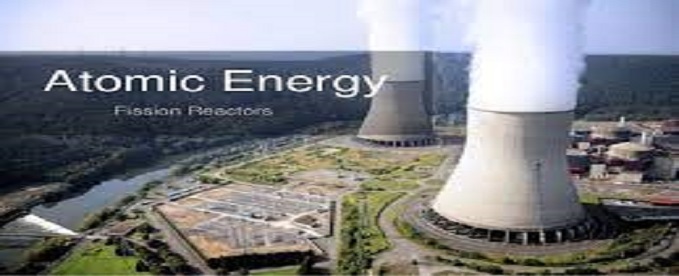
Nigeria Atomic Energy Commission (NAEC), has said that there are plans for Nigeria to begin to generate electricity from nuclear sources.

Mr Anthony Godwin Ekedegwa, chief executive, NAEC stated this when he recently visited Mr Umar Yusuf Girei, acting managing director, National Inland Waterways Authority (NIWA),in Abuja.
He was at NIWA’s office to solicit the support of NIWA in achieving the numerous advantages of using nuclear energy technology in the country.
According to him, the partnership of critical stakeholders in Nigeria will position the country well in developing and maintaining its nuclear power plant.
The NAEC chief said Nigeria intends to begin the generation of electricity from nuclear sources instead of fossil-based power plants and hydro-based power plants, stressing that for Nigeria to develop, there is a need for the country to diversify its energy needs.
In his remarks, Mr Girei assured NAEC of his agency’s readiness to collaborate on the advancement of a nuclear power plant in Nigeria.
He promised the full support of NAEC for the success of a nuclear power plant in the country, saying that as the organisation saddled with the responsibility of regulating and developing Nigeria Inland Waterways, his entity is strategically positioned to play a critical role in the federal government’s quest for sustainable energy through the new technology.

Nwokolo, Nollywood Actor Claims Internet Fraud is “Keeping Economy Afloat’

SEC Begins Full e-Registration for Capital Market Operators

Elon Musk Launches Invite-only X Money with Visa Debit Card

CBN Fines Banks N430m for Ignoring Customers’ Complaints

Kaspersky Uncovers New Mirage Kitten Malware Used in Cyber-espionage Campaign Across Africa, Others

NRC, Ponzi Scheme Collapses Resulting Loss of Billions of Naira

EFCC Busts NIS Visa Overstay Racket, Uncovers N700m in an Account

From Scarcity to Scale: What Africa Can Learn from India’s Agricultural Transformation

Tokenization, Blockchain Technology will Transform Financial Institutions – IMF

BON Establishes Six Ad Hoc Committees to Modernize Broadcasting




 Telecom2 days ago
Fact-Check: Elon Musk’s “Tesla Pi Phone” is Internet Rumor

 News3 days ago
History as Lagos Becomes First Nigerian State to Launch Greenhouse Gas Registry

 E-Business3 days ago
UNN to Partner Firm on AI, Smart Mobility Innovation Centre

 Telecom3 days ago
AI Investment Gap Threatens Africa’s Future Growth

 Telecom3 days ago
AMCON Puts ntel Up for Sale, Seeks Investors

 E-Financial3 days ago
Remita Raises Alarm Over Nigeria’s Digital Divide, Calls for More Investment

 E-Financial2 days ago
Malpass, Ex World Bank Chief Raises Alarm over Nigeria’s Secretive Debt Structures

 Telecom2 days ago
How and Why Apps Deplete Data – ALTON