

News
Concerns as Chinese Importers Smuggle $300m Rosewood Logs from Nigeria


Environmental Investigation Agency (EIA) in its recent reports has revealed that over 1.4 million illegal rosewood logs from Nigeria, worth $300 million, were laundered into China.
The reports by EIA described illegal rosewood logs from Nigeria as one of the largest timber smuggling operations in history, as multiple sources told EIA undercover investigators that over $1 million was paid to top Nigerian officials to release the wood stopped by Chinese authorities.
The reports say that thousands of permits were ultimately signed by the then Minister of Environment, Mrs. Amina J. Mohammed, who currently serves as Deputy Secretary General of the United Nations (UN).
The results of a two-year investigation by EIA, the Rosewood Racket details the journey of illegal African rosewood, also known as kosso, from the remote forests of Nigeria beset by illegal logging to luxury furniture boutiques in China, despite protections placed on this threatened tree species by the Convention on International Trade in Endangered Species of Wild Fauna and Flora (CITES).
Over the past five years, the exploding Chinese demand for kosso has triggered a series of “boom-and-bust” cycles that led to the depletion of forests across West African nations. In most of the countries, kosso has been illegally logged in violation of harvest and log export bans, including in protected areas. Precious trees have been laundered into the international market through regional smuggling routes, using mis-declaration and falsification of official documents. The boom began in Gambia and Benin, but as the supply in those countries was exhausted in a few short years, the Chinese traders rapidly moved on through other countries in the region before settling on the one offering the largest untapped resources – Nigeria.
Since 2013, Nigeria has been transformed from a net importer into the world’s largest exporter of rosewood logs, and is to date one of the top wood exporters on the continent.
The unprecedented and uncontrolled level of logging across the country is causing desertification, putting in peril the livelihoods of millions of people, and threatening national parks and endangered emblematic species such as the most vulnerable chimpanzee (Pan troglodytes ellioti) in the world.
Kosso was added to Appendix II of CITES in 2016, meaning that logging and trade must be strictly controlled and kept at sustainable levels. The results of the new EIA investigation show that the enforcement of the convention faces serious challenges when dealing with transnational criminal networks. The report shows how Sino-Nigerian criminal networks took advantage of an obsolete and opaque permitting system to launder illegal wood using CITES paperwork.
Alexander von Bismarck, EIA Executive Director, explained that, “as a legally binding treaty ratified by nearly all members of the UN, CITES can play a critical role in protecting endangered trees and fragile forests. The international community needs to urgently bring transparency to the CITES permitting process to fight the organised criminals that profit from the extinction of endangered species.”
Mrs. Mohammed was reportedly supposed to start her new position as Deputy Secretary General of the UN on January 1, 2017, but extended her time as Minister of Environment at the request of the Nigerian President Muhammadu Buhari to complete important responsibilities. EIA investigators found that Mrs. Mohammed signed thousands of retroactive CITES permits in January 2017 as one of her last acts as Minister of Environment, and just before she was sworn in as the Deputy Secretary General to the UN.
The permits were used by Chinese importers to release over 1.4 million illegal logs that had been detained at the Chinese border for months, after having left Nigeria in violation of both Nigerian law and international CITES obligations.
Von Bismarck added that, “the power and reach of organised timber criminals in forest rich countries is overwhelming if illegal wood is allowed to be sold overseas without consequences. This is why we urgently need regulatory changes in consuming countries to stop timber shipments based on evidence of being illegally logged, transported or traded. Such laws have already been passed in the US and the EU. This case shows that China has the ability to take action when it stopped thousands of containers of illegal rosewood. But the fact that the wood was ultimately released shows that China urgently needs domestic legislation to ban the import of illegally sourced wood.”



TeamApt Ltd., a subsidiary of Moniepoint Inc. and a leading financial infrastructure provider, has partnered with Awabah, the National Pension Commission’s first licensed Accredited Pension Agent, to expand pension access for millions of Nigerians in the informal economy.

The partnership was unveiled in Abuja at the launch of Awabah’s agent licence, themed “Building Financial Resilience: Securing the Future with Personal Pensions.”
At the event, PenCom Director-General Omolola Oloworaran underscored a major imbalance in Nigeria’s pension system, noting that while pension assets have grown to over ₦27 trillion, the benefits remain largely concentrated among formal-sector workers. She observed that most informal-sector workers—who make up the majority of Nigeria’s workforce—still retire without any form of savings.
This challenge is further highlighted in Moniepoint’s 2025 Informal Economy Report, which reveals that although 65 per cent of informal businesses recorded revenue growth, most lack the structural resilience required for long-term sustainability and succession.
Through the partnership, TeamApt—a Central Bank of Nigeria–licensed switching and processing company—will enable seamless pension registration and contributions for Awabah users via its Direct Debit service on Point of Sale (POS) terminals nationwide. Informal workers can enrol for personal pensions, tokenize their cards, and automate periodic contributions in just a few steps.
The initiative simplifies pension savings by turning what was once a complex, bureaucratic process into a routine transaction, enabling business owners and workers to build financial security beyond their productive years.
“When we started Awabah, we were driven by one core belief—that no African worker should be one accident or crisis away from poverty,” said Tunji Andrews, Chief Executive Officer of Awabah.
“This partnership with TeamApt allows us to scale that vision. By leveraging their Direct Debit service and extensive POS network, we are meeting informal workers where they already operate—markets, workshops, kiosks, and roadside businesses. With small, regular contributions, workers can now access personal pensions bundled with health, accident, and life insurance,” he added.
TeamApt CEO Dennis Ajalie said the collaboration aligns with the company’s long-standing mission to power Nigeria’s informal economy.
“At TeamApt and Moniepoint Inc., our focus has always been on enabling the informal sector,” Ajalie said. “Today, working within our licence framework and alongside our co-subsidiary, Moniepoint Microfinance Bank, we operate across all 774 local government areas, serving millions of Nigerians who drive economic activity.”
He described the partnership as a critical step toward pension inclusion, adding that it demonstrates how financial infrastructure can deliver real, long-term value to everyday Nigerians.
Ajalie also praised PenCom’s leadership for creating an enabling environment for innovation, noting that Oloworaran’s reforms have opened the door for partnerships capable of delivering sustainable pension coverage for informal workers.
The initiative is powered by TeamApt’s robust financial technology ecosystem, which has supported banks, fintechs, and financial institutions for more than a decade. Its omni-channel Direct Debit service allows automated recurring collections—such as pension contributions, subscriptions, and repayments—directly from customers’ bank accounts with their consent.
Beyond pensions, the platform enables informal workers to automate investments in the capital market, access healthcare through HMOs, and secure insurance coverage for themselves and their families—extending financial security far beyond retirement.
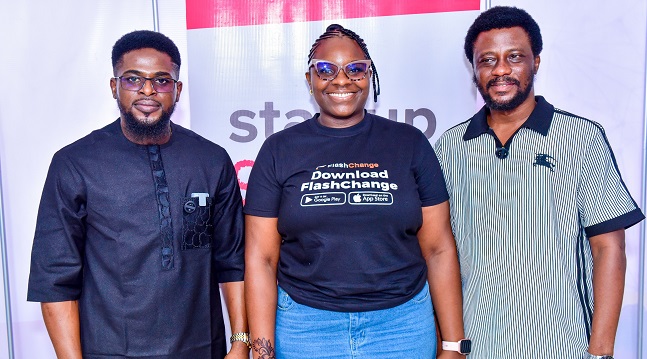
FlashChange, Africa’s fast-rising digital asset management and cross-border payment platform, had its Chief Executive Officer, Bidemi Oke, featured as a speaker at the latest edition of Startup Grind Lagos, one of the largest global communities for entrepreneurs and innovators.

Held on Saturday, February 28, 2026 in Lagos, the event convened founders, investors, developers, and ecosystem builders for a candid conversation on innovation, resilience, and scaling technology ventures in emerging markets. Oke shared insights from FlashChange’s journey building a trusted digital finance brand in Nigeria’s evolving fintech and crypto landscape.
During the fireside chat, Oke shared practical lessons from scaling FlashChange in a highly regulated and fast-changing environment. He emphasized the need for startups to build strong governance structures early, maintain open communication with regulators, and design solutions that solve real economic pain points, particularly around remittances, foreign exchange access, and digital asset utility.
“In markets like Nigeria, trust is not a marketing slogan, it is the product,” Oke said: “For us at FlashChange, growth has always been tied to transparency, compliance, and delivering consistent value to users navigating cross-border payments and digital assets.”
He also addressed the broader opportunity within Africa’s fintech ecosystem, noting that innovation on the continent must balance speed with responsibility.
“The next phase of African fintech will be defined not just by who grows fastest, but by who earns and keeps user confidence. Founders must think beyond valuation headlines and focus on building institutions, he added”
“Innovation is important, but sustainability is critical. At FlashChange, we are building for the long term” Oke noted.”
The session featured an interactive Q&A session where participants engaged him on several topical issues. He underscored the importance of proactive communication, especially in industries where misinformation and volatility can quickly erode public confidence.
Startup Grind Lagos Director, Mayokun Adeoti while commending Oke for offering practical, founder-focused insights, he said, “His experience provides valuable lessons for startups building in complex regulatory environments.”
FlashChange has continued to position itself as a reputable voice within Nigeria’s fintech and digital asset ecosystem, advocating for regulatory clarity, financial literacy, and secure transaction infrastructure. The company’s participation in Startup Grind Lagos reflects its commitment to contributing meaningfully to conversations shaping the future of innovation in Nigeria.
The Startup Grind Lagos appearance marks another milestone in FlashChange’s thought leadership journey and reinforces its growing role in Nigeria’s digital finance ecosystem.
News
Galaxy Backbone Confirms Over 150,000 Active Official Government Email Accounts, Clarifies Status of GOVMAIL


Galaxy Backbone Limited (GBB), Nigeria’s foremost ICT infrastructure and shared services provider to the Federal Government, wishes to reiterate and clarify the availability, maturity, and ongoing expansion of the Federal Government’s official email infrastructure, widely known as GOVMAIL.

GOVMAIL is a secure and centralized official email platform established for use by Ministries, Departments, and Agencies (MDAs) to facilitate professional, auditable, and efficient communication across all arms of government.
The platform was launched by the Office of the Head of the Civil Service of the Federation, Mrs, Didi Esther Walson-Jack as part of a broader digital transformation agenda aimed at modernizing public service workflows and reducing reliance on paper-based correspondence and fragmented, external email services.
Recent statements by the Head of the Civil Service of the Federation, Mrs. Didi Esther Walson-Jack, underscore the strategic importance of GOVMAIL in the wider push towards a paperless civil service.
In late 2025, she announced that over 100,000 official GOVMAIL accounts had been created for civil servants across federal MDAs under an expanding paperless policy and that the transformation reflects a clear shift away from traditional paper correspondence to secure digital communication at scale. Today, that number has grown to over 150,000 Official government email accounts, current in use by government workers across MDAs.
Galaxy Backbone also affirms that these email accounts operate within a protected sovereign government domain environment hosted on secure local infrastructure, supported by enterprise-grade cybersecurity architecture.
The platform underpins centralized identity management and ensures compliance with national data protection standards, reinforcing accountability, audit-trail visibility, and overall digital governance efficiency.
In addition to GOVMAIL, Galaxy Backbone operates secure national Tier III and Tier IV Data Centres, a robust National Fibre Backbone, a Security Operations Centre (SOC), and a Network Operations Centre (NOC) that jointly power mission-critical government digital services. This infrastructure is closely aligned with the Federal Government’s digital economy strategy and its efforts to deepen digital service delivery, transparency, and efficiency across MDAs.
To accelerate adoption and ensure that every government worker who is expected to have an official email has one, GBB is working collaboratively with MDAs to close existing gaps and onboard remaining staff within the shortest possible time. These coordinated efforts reflect the shared objective of equipping public servants with the digital tools necessary for responsive, efficient, and secure inter-agency communication.
Galaxy Backbone remains committed to working with stakeholders across the different arms of government to sustain and build on this progress. The company appreciates the emphasis placed on strengthening digital governance and remains ready to provide technical clarifications and support collaborative engagements that further advance Nigeria’s digital public service ecosystem.

Leo Stan Ekeh at 70; thanks Tinubu, Obasanjo, Nigerians, Global Tech Community

Iran-Israel-US Conflict and CBN’s FX Gains: A Stress Test for Nigeria’s Monetary Stability

JAMB Uncovers AI-Driven Fraud Targeting UTME Candidates, Warns Parents

SERAP Asks FCCPC to Investigate Google, Meta, Others over Alleged Rights Abuses

Reps Mull Commission to Regulate Fintech Operations

Accidental Billionaire Opts for Jail Instead of Returning Money Credited Him by Mistake

New Horizons Nigeria Breaks Ground: First to Fuse Mandarin into ICT Curriculum

Kaspersky Brings more Transparency to Threat Detection with New Hunt Hub

NDPC Commits to Balancing Data Privacy, Protection Information

OADC Lagos Reinforces Commitment to Local Data Hosting and Digital Transformation @ NDPC’s National Privacy Week Summit




 General News3 days ago
More 14m Farmers to Benefit from AfDB-backed Initiative

 Telecom3 days ago
MTN Nigeria Posts Record N1.70 Trillion Pre‑Tax Profit, Declares N20 Dividend for 2025

 Telecom3 days ago
Dimension Data Nigeria Secures ₦20Billion Funding to Strengthen Digital Infrastructure

 News3 days ago
Galaxy Backbone Confirms Over 150,000 Active Official Government Email Accounts, Clarifies Status of GOVMAIL

 Telecom3 days ago
Alerzo Liquidates Delivery Fleet as N4.38bn Moniepoint Loan Row Deepens

 General News3 days ago
Newmark Webinar Explores How AI Could Transform Healthcare in Africa
 General News18 hours ago
SERAP Asks FCCPC to Investigate Google, Meta, Others over Alleged Rights Abuses
 E-Financial18 hours ago
Iran-Israel-US Conflict and CBN’s FX Gains: A Stress Test for Nigeria’s Monetary Stability