

Broadcasting
Copyright Commission Plans New Regulations to Curb Book Piracy


The Nigerian Copyright Commission (NCC) will soon be deploying more proactive measures, including new regulations and anti-piracy devices, to guarantee sustainable growth in the different sectors of the creative industries.

Under the new regulatory framework, major players, including publishers, producers, importers, distributors, marketers and other intermediaries will be held to higher standards of respect for copyright to ensure that authors and investors are adequately rewarded.
Dr. John O Asein, Director-General, NCC, stated this while receiving the President, the Booksellers Association of Nigeria (BAN) and Chairman, Planning Committee of the Nigeria International Book Fair (NIBF), Mr. Dare Oluwatuyi who paid a courtesy visit to the Commission recently.
While noting that there is need for publishers and booksellers to improve on the existing business models, he warned that the Commission will not sit back and watch the destruction of the book ecosystem.
“Destroying the book sector does not only affect the economy but is also a threat to the education system and the future of learning”, Dr. Asein, stressed.
He urged publishers to also improve on their dealings with authors, adding that the Commission is also concerned about the absence of contracts or proper licences between authors and publishers as well as the rampant cases of nonpayment of royalties to authors.
In his words: “We expect publishers to negotiate appropriate contracts with authors as evidence of authorization to reproduce and distribute their works”.
To address this situation, he promised that the Commission will be working with the Nigerian Publishers Association, the Association of Nigerian Authors and the Academic and Non-Fiction Authors Association of Nigeria to develop model publishing contracts.
Speaking earlier, Mr. Oluwatuyi explained that he was at the Commission to solicit the support and participation of the Commission at this year’s Nigeria International Book Fair, holding in Lagos on 10th to 13th May, 2023.
He thanked the Director-General for his participation at the 2022 edition and for the various policies and activities that the Commission has introduced to strengthen the copyright system.
He congratulated Dr. Asein on the extension of his term as Director-General of the Commission and assured him that members of BAN and the other associations represented on the NIBF Trust will continue to support the efforts of the Commission to address copyright piracy and other challenges in the book sector.
As President of BAN, he expressed readiness to sign Memorandum of Understanding with the NCC to enhance the Commission’s mandates and invited the Commission to partner with the NIBF Trust in organizing this year’s edition of the book fair.
The Director-General reaffirmed the Commission’s belief in the NIBF and gave the assurance that it will, as usual, participate at the Book Fair to promote copyright awareness, ensure respect for copyright and encourage the use of the copyright system to grow the creative sector.
The meeting was also attended by the Director Operations, NCC, Mr. Obi Ezeilo.


Broadcasting
DG NCC Tasks University Dons on Research Commercialization, IP Management to Build Global Competitive Ecosystems
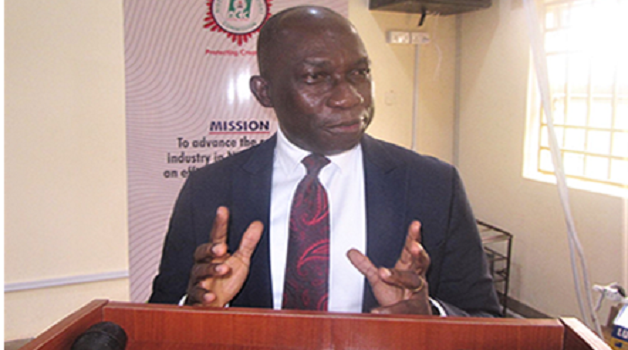
Dr. John Asein, director-general, Nigerian Copyright Commission (NCC), has charged universities to leverage Intellectual Property (IP), innovation management and research commercialisation to build vibrant, sustainable and globally competitive ecosystems.

The DG stated this while delivering a paper on: ‘’Research Commercialisation, IP Policy and Innovation Management’’ at the Committee of Vice-Chancellors of Nigerian Universities (CVCNU) organised Business Clinic themed: Unlocking University-Driven Business Ecosystems: Innovation, Partnerships and Sustainable Enterprise Models in Abuja.
The programme was targeted at engaging Vice-Chancellors, principal officers and other key officers in Nigerian Universities in a practical dialogue on how to transit their institutions into thriving business ecosystems through innovation, enterprise development and strategic partnerships.
In his presentation, Dr. Asein, disclosed that Universities are now recognised as engines of national development and innovation hubs that must connect scholarship to business.
He noted that with over 300 Universities in Nigeria, there is need for structured pathways to turn ideas into commercial outcomes while attention should be focused on IP assets in our universities in order to harness them in a safe, sustainable and satisfactory manner.
The DG NCC speaking further on leveraging resources from the creativity locked up within the university system, harped on the need to harness the soft power of our youth as Nigeria’s most valuable natural resources are its people.
Drawing demography from Nigeria youthful population, he observed that over 70 percent of Nigerians who are under the age of 30 are mostly in the university system studying. These youths, he noted, shape cultures, technology and innovation through creativity and digital skills.
He tasked universities to become innovation factories where young people can explore ideas, protect their IP and grow startups by integrating innovation culture, entrepreneurship training and IP awareness into its learning environment.
He equally urged Universities to look beyond the sciences to commercialize traditional knowledge-based innovations and harness the potentials in the creative arts disciplines like music, visual arts, theatre arts and others for commercial outcomes.
Dr. Asein, recommended that universities as centres of learning, should take the lead in using the IP system for promoting education and learning, wealth creation, revenue generation and institutional development.
Underscoring the need for all universities to have an IP Policy, he noted that the Model developed by the Nigerian Copyright Commission in partnership with the CVCNU is a good starting point.
The Secretary-General, CVCNU, Prof. Andrew Haruna, presented the welcome address at the event while the Director, Technology Innovation and Commercialisation, NOTAP, Mrs. Adah H.N. Mokolo-Oladunke represented the Director-General, NOTAP at the event.
The 2025 CVCNU Business Clinic witnessed attendance from representatives of Public and Private Universities across the 36 States in Nigeria.


Drone
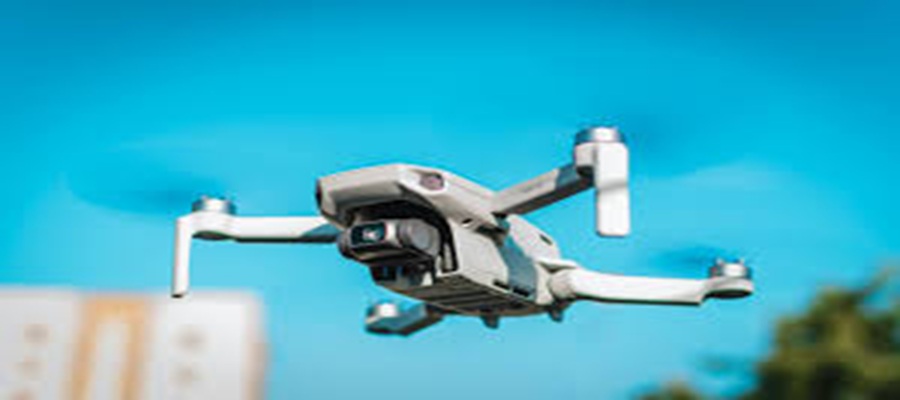
The US Department of Homeland Security (DHS) will invest $115 million in counter-drone technology to safeguard the 2026 FIFA World Cup and events marking America’s 250th independence anniversary, creating a dedicated office for rapid drone system deployment.
Homeland Security Secretary Kristi Noem described drones as “the new frontier of American air superiority,” stressing the need to counter threats from drug cartels using unmanned aircraft for smuggling and surveillance, alongside incidents like a 2025 NFL stadium drone flight and 2024 New Jersey sightings.
The funding supports 11 World Cup host cities expecting over one million visitors, building on FEMA’s $250 million grants to those states and addressing risks heightened by cartels’ advancing tech, including a reported FBI tracking plot in Mexico.
DHS has conducted over 1,500 counter-drone missions since 2018, with the new Program Executive Office accelerating acquisitions amid President Trump’s border security push.
Broadcasting
Youth Talent Takes Center Stage as T2 Ignites High-Octane Rap Battles @ Carnival Calabar
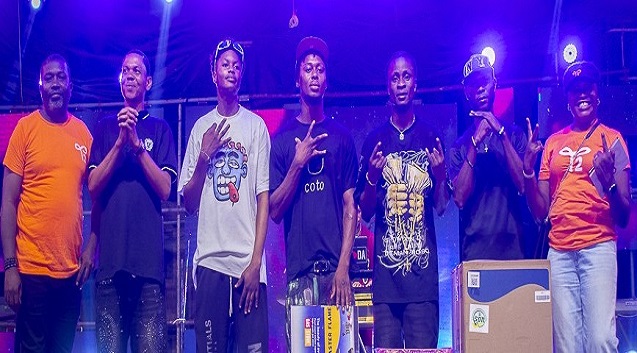
The energy at the Carnival Calabar Music Concert reached a new high as T2 introduced a first-ever rap battle platform, giving young Nigerians an electrifying stage to showcase their talent, creativity, and self-expression while competing for exciting prizes.

Held at the U.J. Esuene Stadium, the activation blended pulsating music, vibrant culture, and youthful energy into a dynamic celebration that kept thousands of carnival-goers fully engaged from start to finish.
Eight fearless contestants stepped into the spotlight, going bar for bar in an intense lyrical showdown. Rappers fused local languages, pidgin, and sharp punchlines, creatively weaving the T2 brand into their verses.
Anchored by the energetic hosting duo MC Double I and MC Princess, the rap battles thrilled over 16,000 attendees, including the Governor of Cross River State, Senator Bassey Otu, delivering an unforgettable showcase of youth talent and cultural expression.
With prizes including fridges, gas cookers, sound systems, and airtime top-ups, the competition remained fierce throughout the night. After two high-energy rounds narrowed the field to a five-man final duel, Emmanuel Eye emerged as the overall winner, taking home the grand prize — a fridge.
“I never expected this at all,” Emmanuel said. “I came to the concert like anyone else, and hearing about the T2 rap battle was a surprise. When I got the chance to perform, I just went for it. Being named the overall winner is amazing, and I’m grateful to T2 for creating this platform to showcase our talent.”
Beyond the stage performances, T2’s presence added a digital layer to the carnival experience. As part of its role as Digital Technology Partner of Carnival Calabar, the brand introduced the MyT2 App as a lifestyle companion, while also enabling line reactivations, airtime top-ups, and instant rewards for hundreds of attendees, blending technology seamlessly into the live celebration.
Commenting on the activation, Chinelo Manefo, Specialist, Events and Sponsorship at T2, said:
“The energy from both the rappers and the crowd was incredible. This platform reflects exactly what T2 aims to create — a celebration of youth, creativity, and culture, enhanced by technology that connects people and experiences. Seeing the audience so immersed shows how music and performance can empower the next generation.”
The Carnival Calabar Music Concert, headlined by Tiwa Savage, Timaya, and top local performers, was further energized by T2’s interactive rap battle platform. By blending music, culture, youth expression, and digital innovation, T2 reinforced its commitment to championing Nigeria’s next generation, giving young creatives a stage to shine while enriching how they experience the festival.

New Investment Fund Targets Acceleration of Emerging Technology in Nigeria

Zenith Bank Gets Regulatory Approval for Full Takeover of Paramount Bank

Firm Detected a Fivefold Surge in QR Code Phishing Attacks in the Second Half of 2025

NITDA Commits to Digital Inclusion for Persons with Disabilities

MTN Nigeria Suffers 9,218 Fibre Cuts in 2025 as Vandalism, Theft Cripple Network

Banks quietly move to enforce new ₦50 transfer levy from Jan. 1

FIRS Declares NIN, CAC Numbers as Tax IDs from 2026

Jumia CEO says Black Friday Signals Nigeria’s E-Commerce Maturity

Galaxy Backbone Celebrates the Federal Government’s Paperless Civil Service Milestone

19 Nigerian Banks Meet CBN Recapitalization Targets Ahead of March Deadline




 Telecom3 days ago
Spacecoin Secures Licenses to Roll Out Satellite Connectivity in Nigeria, Kenya

 Telecom3 days ago
Google Report: Nigeria Leads Global AI Adoption in Learning, Entrepreneurship

 E-Business3 days ago
What the Retail and E-commerce Sector Should Expect in 2026 in Era of AI-driven Shopping and Privacy

 Telecom3 days ago
AVEVA Names Khaled Salah Vice President for Africa to Drive Growth

 E-Financial3 days ago
FG Shops for N900Bn from Domestic Market with High-Yield Bonds

 E-Financial3 days ago
CBN Raises Alarm over Loan Defaults by Households, Corporates

 Telecom3 days ago
Netflix Switches Warner Bros. Bid to $27.75 Cash Offer as MultiChoice Secures HBO Future

 General News3 days ago
Taraba Adopts Electronic Case Management System